
Most home bakers are surprised to learn that over 40 percent of food waste comes from improper storage, costing both families and small businesses valuable resources every month. The quest for perfect cake decoration and lasting freshness starts long before the oven door closes. By understanding essential storage techniques for your ingredients and sweet creations, you can protect your baking investments, reduce waste, and consistently produce high-quality results everyone will remember.
Defining Baking Goods Storage Methods
Baking goods storage encompasses systematic approaches for preserving ingredients and prepared items, focusing on maintaining quality, preventing contamination, and extending shelf life. Effective storage methods are crucial for both professional bakeries and home cooks seeking to protect their culinary investments.
UK food safety regulations, specifically hygiene standards for food storage, mandate precise protocols for handling and storing baking ingredients. These standards require temperature control, contamination prevention, and structured preservation techniques that safeguard food quality and consumer health. Professional and home bakers must understand these fundamental storage principles to ensure their baked goods remain fresh, safe, and delectable.
Storage methods typically involve categorising ingredients based on their specific preservation requirements. Dry goods like flour, sugar, and baking powder require cool, dark environments with minimal humidity. Perishable items such as eggs, butter, and cream demand refrigeration, while prepared baked goods need strategic packaging and temperature management to maintain texture and flavour. Different storage techniques include airtight containers, vacuum sealing, refrigeration, and specialised storage solutions designed to minimise moisture exposure and prevent degradation.
Pro tip: Invest in high-quality, airtight glass or ceramic containers with tight-sealing lids to protect your baking ingredients from moisture, pests, and potential contamination.
Types of Baking Goods and Their Needs
Baking goods represent a diverse range of ingredients and prepared products, each with unique storage requirements and preservation challenges. Warehouse and storage guidance from industry experts highlights the critical importance of understanding the specific needs of different baking categories to maintain optimal quality and extend shelf life.
The primary categories of baking goods include dry ingredients, perishable items, and prepared baked products. Dry ingredients such as flour, sugar, baking powder, and cornflour require cool, dark storage environments with minimal humidity. These pantry staples typically have extended shelf lives when stored correctly in airtight containers. Perishable ingredients like eggs, butter, cream, and fresh yeast demand precise refrigeration and careful temperature management to prevent rapid spoilage and maintain their essential culinary properties.
Prepared baked goods present the most complex storage challenges. Breads, cakes, pastries, and speciality items each require tailored storage approaches. Fresh bread maintains best quality when stored at room temperature in breathable containers, while cream-based cakes demand immediate refrigeration. Delicate items like meringues and custard-filled pastries have particularly sensitive storage needs, often requiring specific humidity levels and protection from temperature fluctuations to preserve their delicate textures and prevent rapid deterioration.
The following table summarises typical storage needs for various categories of baking goods:
| Category | Required Storage Method | Shelf Life Expectancy |
|---|---|---|
| Dry Ingredients | Airtight container, cool place | Several months if undisturbed |
| Perishable Items | Refrigeration, sealed storage | 1-2 weeks, can spoil rapidly |
| Prepared Baked Goods | Packaging, temperature control | 2 days to several weeks (varies) |
Pro tip: Invest in a combination of storage solutions, including vacuum-sealed containers, temperature-controlled spaces, and specialised baking storage accessories to protect different types of baking goods effectively.
Factors Impacting Freshness and Longevity
Maintaining the quality of baking goods requires a comprehensive understanding of the complex factors that influence their shelf life. Food safety guidance from industry experts reveals that multiple environmental and handling variables critically impact the preservation of baked products and ingredients.
Temperature emerges as a primary determinant of freshness, with precise control being essential for different baking goods. Ambient temperature directly affects microbial growth, chemical reactions, and molecular structures within ingredients. Refrigeration slows deterioration for perishable items, while excessive heat can accelerate moisture loss, enzymatic breakdown, and potential spoilage. Humidity levels play an equally significant role, with excessive moisture promoting mould growth and insufficient humidity causing ingredients to dry out and lose their original texture and flavour.
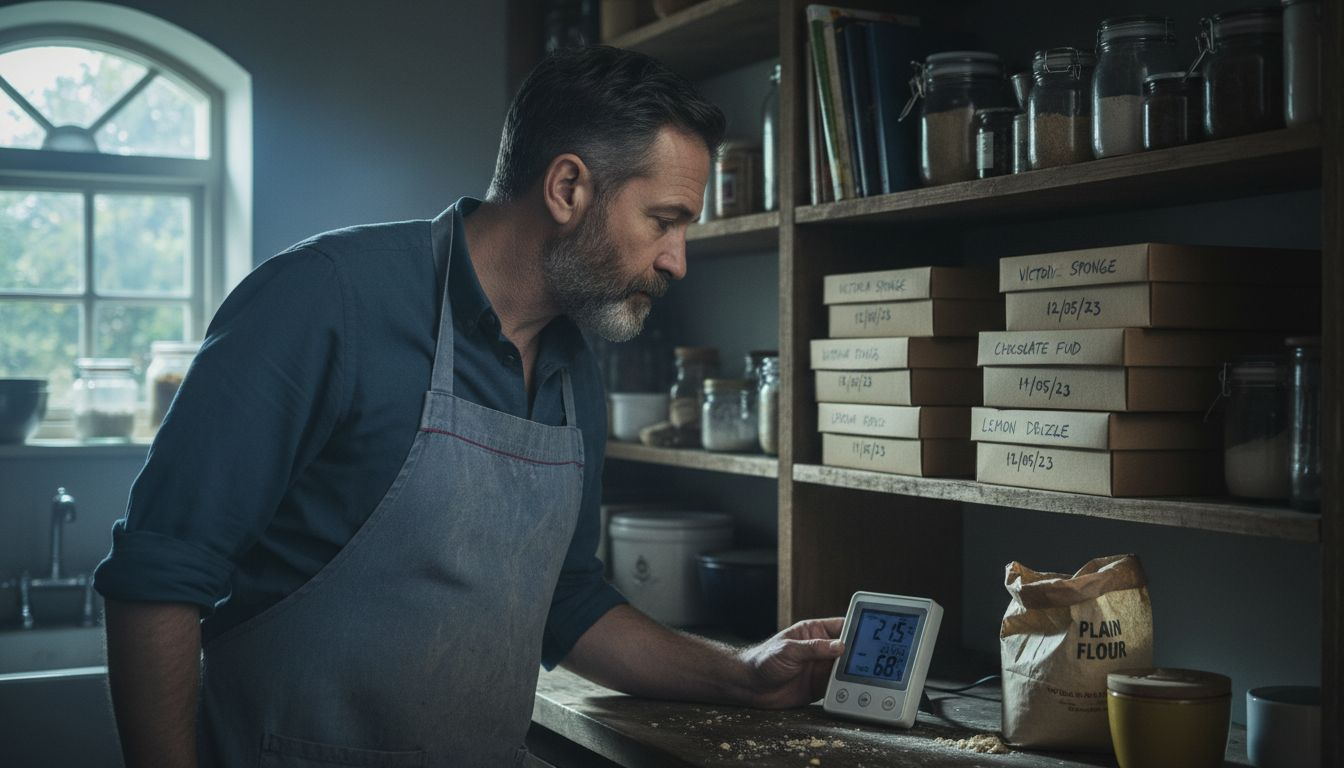
Packaging represents another crucial factor in preserving baking goods. Airtight containers prevent moisture infiltration and protect against environmental contaminants. Specialised packaging materials with moisture-resistant and oxygen-barrier properties can significantly extend the shelf life of both raw ingredients and prepared baked items. Packaging must also consider the specific characteristics of different products, with delicate items requiring more robust protection against physical damage and environmental fluctuations. Additional factors such as light exposure, oxygen interaction, and potential cross-contamination further complicate the storage equation, demanding a nuanced approach to preservation.
Here is a quick comparison of packaging types and their impact on baking goods’ preservation:
| Packaging Type | Benefits | Common Applications |
|---|---|---|
| Airtight Container | Prevents moisture, keeps flavour | Flour, sugar, sponge cakes |
| Vacuum Sealed Bag | Extends freshness, blocks air | Pastries, specialty breads |
| Paper Bag | Allows bread to ‘breathe’ | Artisan loaves, crusty breads |
| Plastic Wrap | Prevents drying, traps moisture | Leftovers, decorated cakes |
Pro tip: Invest in a digital thermometer and hygrometer to monitor storage conditions precisely, ensuring optimal temperature and humidity levels for your baking ingredients and prepared goods.
How Long You Can Store Common Bakes
Best before and shelf life guidelines from food safety experts reveal that storing common baked goods requires understanding their unique preservation characteristics. Different bakes have varying longevity depending on their ingredients, moisture content, and storage conditions, making precise preservation techniques essential for maintaining quality and safety.
Breads represent the most time-sensitive category, typically maintaining optimal quality for 2-3 days at room temperature. Unsliced artisan loaves can last slightly longer, up to 4-5 days, when stored in breathable paper bags. Soft sandwich breads with higher moisture content tend to spoil faster and should be consumed within 2-3 days or refrigerated to extend their usable period. Commercial packaged breads often contain preservatives that extend their shelf life to approximately 7-10 days when sealed properly.
Cakes and pastries present more complex storage challenges. Undecorated sponge cakes can remain fresh for 3-5 days at room temperature when stored in airtight containers. Cream-based and filled cakes demand immediate refrigeration and should be consumed within 2-3 days to prevent bacterial growth. Fruit cakes, thanks to their dense, sugar-rich composition, can remarkably maintain quality for several weeks, and in some traditional recipes, even months when stored in cool, dark conditions with minimal humidity. Delicate meringues and mousses have the shortest preservation window, typically requiring consumption within 24-48 hours of preparation.
Pro tip: Label all stored baked goods with preparation dates and use clear, transparent containers to easily track freshness and prevent forgotten items from spoiling.
Mistakes to Avoid in Storage Practices
Food storage guidelines from safety experts reveal that common mistakes can significantly compromise the quality and safety of baked goods. Understanding and avoiding these errors is crucial for maintaining the freshness and edibility of your culinary creations.
Temperature mismanagement represents one of the most critical storage errors. Many bakers erroneously store items at inconsistent temperatures, which accelerates bacterial growth and deterioration. Refrigerators set too warm or left open frequently can create humidity fluctuations that promote mould development. Similarly, storing different types of baked goods together can cause cross-contamination, with moisture-rich items like cream cakes rapidly degrading more stable products such as bread or pastries.
Improper packaging and container selection also substantially impacts preservation. Using non-airtight containers allows moisture and air to penetrate, causing rapid staleness and texture degradation. Transparent containers exposed to direct light can cause ingredient breakdown, particularly for items containing sensitive fats and proteins. Neglecting to label storage containers with preparation dates leads to forgotten items that exceed safe consumption windows, increasing food waste and potential health risks.
Pro tip: Invest in a dedicated storage thermometer and create a systematic rotation system to track the age of your baked goods, ensuring nothing gets forgotten at the back of the cupboard or refrigerator.
Keep Your Baking Goods Fresh with The Vanilla Valley
Storing baking ingredients and prepared products correctly is essential to maximise freshness and extend shelf life. From airtight containers to temperature control and specialised packaging, the challenges of maintaining quality can feel overwhelming. The Vanilla Valley understands these needs and is here to help you take control of your baking storage. Whether you are protecting delicate cakes or keeping your dry ingredients pest-free, we supply a wide range of cake decorating supplies and storage accessories designed to support your baking goals.
Discover how you can improve your baking storage solutions today with our trusted products and expert advice. Visit The Vanilla Valley for airtight containers, cake boxes, and specialist baking tools that help maintain ideal conditions and preserve your hard work. Act now to benefit from free and next day delivery options plus our customer loyalty club. Enhance your baking experience by shopping with a reliable, independently owned business since 2009 serving bakers across the UK.
Frequently Asked Questions
How should I store dry baking ingredients like flour and sugar?
Dry baking ingredients such as flour and sugar should be stored in airtight containers, kept in a cool, dark place with minimal humidity to maintain their freshness and extend their shelf life.
What are the best storage practices for perishable baking items like eggs and butter?
Perishable baking items must be refrigerated and stored in sealed containers to prevent spoilage. Ensure that they are kept at a consistent temperature to maintain their quality.
How long can I store prepared baked goods like cakes and breads?
Prepared baked goods have varying shelf lives. Breads usually last 2-3 days at room temperature, while undecorated cakes can last 3-5 days in airtight containers. Cream-based cakes should be consumed within 2-3 days if refrigerated.
What common mistakes should I avoid when storing baked goods?
Common mistakes include inconsistent temperature storage, using non-airtight containers, and neglecting to label items with preparation dates. These practices can lead to spoilage and a decrease in quality.