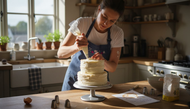
Buttercream Breakdown: Choosing the Right Style
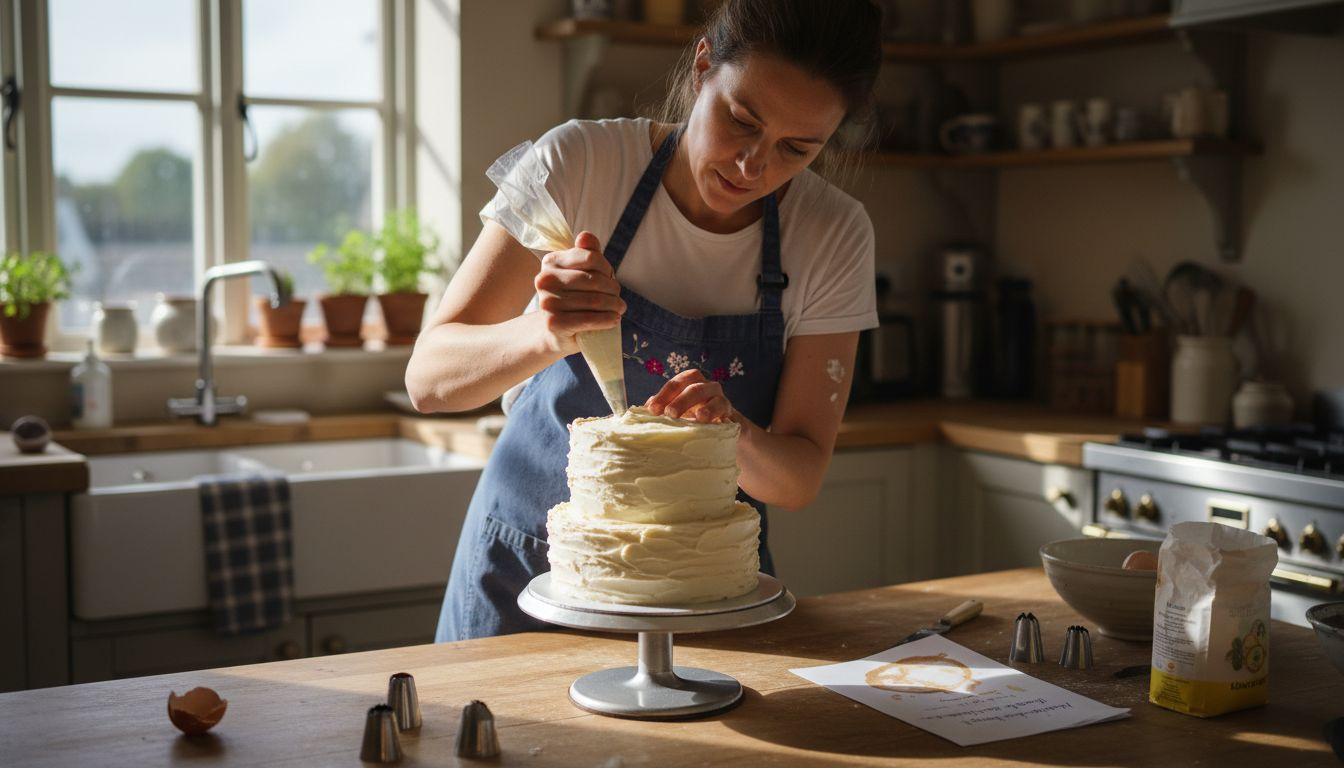
Choosing the right buttercream can stump even the most enthusiastic home baker in South Wales, especially with so many recipes and techniques available. Buttercream is more than just a topping—it is a versatile cake decorating medium that brings both visual appeal and delicious flavour to any bake. Understanding the differences between American, Swiss, and Italian buttercream helps you create cakes that look stunning and taste amazing, no matter your skill level.
Table of Contents
- Buttercream Demystified: Definition and Core Uses
- Comparing American, Swiss, and Italian Buttercream
- How Ganache and Vegan Styles Differ
- Taste, Texture, and Stability Explained
- Best Buttercream Type for Cake Decorating
- Common Pitfalls and How to Avoid Them
Key Takeaways
| Point | Details |
|---|---|
| Understanding Buttercream Types | Familiarise yourself with different buttercream styles, as each offers unique characteristics and is suited for various cake decorating needs. |
| Mastering Preparation Techniques | Pay attention to ingredient temperatures and mixing methods to enhance the quality and stability of your buttercream. |
| Selecting the Right Buttercream | Choose buttercream types based on their stability, taste, and application to achieve the desired aesthetic for your cakes. |
| Avoiding Common Mistakes | Be mindful of common pitfalls like incorrect ingredient ratios and environmental factors to ensure a smooth buttercream application. |
Buttercream Demystified: Definition and Core Uses
Buttercream is a versatile and delectable cake decorating medium that serves both aesthetic and flavour-enhancing purposes. Buttercream serves as a fundamental component in creating delightful desserts, offering bakers a creamy and adaptable icing option.
At its core, buttercream is a rich mixture primarily composed of butter and sugar, creating a smooth, spreadable texture that can be easily manipulated for various decorative techniques. Its primary functions include:
- Providing a delicious outer coating for cakes
- Acting as a smooth filling between cake layers
- Enabling intricate piping and decorative designs
- Enhancing the visual appeal of desserts
Types of Buttercream vary significantly, with each style offering unique characteristics. Versatile cake decorating medium allows bakers to choose from multiple preparations that suit different baking needs and aesthetic preferences.
The key to exceptional buttercream lies in understanding its fundamental composition and potential variations. Professional bakers recognise that buttercream is not just a simple frosting, but a nuanced culinary technique that requires skill and precision.
Pro tip: Always ensure your butter is at room temperature for the smoothest, most consistent buttercream texture.
Comparing American, Swiss, and Italian Buttercream
Buttercream styles represent a fascinating spectrum of culinary techniques, each offering unique characteristics that cater to different baking preferences. Professional cake decorators distinguish between buttercream types based on preparation method, sweetness, and structural integrity.
American Buttercream stands as the simplest and most straightforward style. Characteristics include:
- High sugar content
- Extremely sweet flavour profile
- Grainy texture when first mixed
- Quickest and easiest to prepare
- Most budget-friendly option
By contrast, Swiss Buttercream elevates the complexity. This style involves carefully heating egg whites and sugar before whipping, resulting in a silky-smooth texture that’s less sweet and significantly more luxurious. Professional bakers appreciate its light, fluffy consistency and superior spreadability.
Italian Buttercream represents the pinnacle of technical skill in cake decoration. This sophisticated style involves creating a sugar syrup heated to precise temperatures, which is then carefully incorporated into whipped egg whites. The result is an incredibly stable, glossy buttercream that holds intricate piping designs beautifully and offers a refined, professional finish.
Professional bakers consider Italian Buttercream the gold standard for wedding and high-end celebration cakes.
Each buttercream style demands different techniques and offers unique advantages, making the selection process crucial for achieving desired cake aesthetics and flavour profiles.
To help you decide which buttercream suits your needs, here is a side-by-side comparison highlighting preparation complexity, stability, ideal usage, and taste profile:
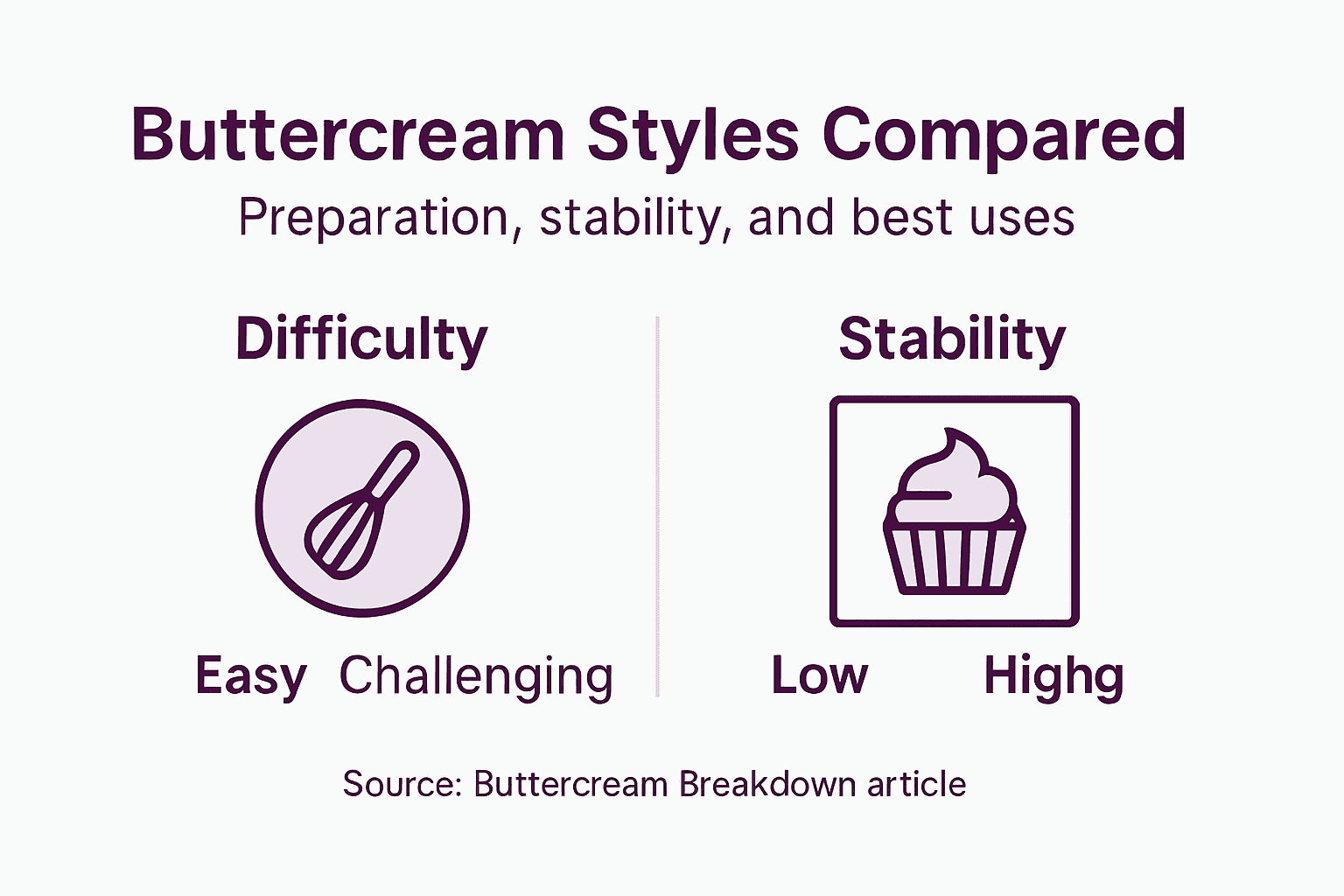
| Buttercream Type | Preparation Difficulty | Stability Level | Best For | Taste Profile |
|---|---|---|---|---|
| American | Very easy | Moderate | Simple home cakes | Very sweet, slightly grainy |
| Swiss | Moderate | High | Smooth finishes, piping | Mellow, silky and less sweet |
| Italian | Advanced | Very high | Wedding/event cakes | Delicate, refined, less sweet |
| Vegan | Easy to moderate | Varies by fat used | Allergen-free decorating | Customisable, creamy texture |
| Ganache | Moderate | Low-moderate | Chocolate glazes/filling | Rich, intense chocolate taste |
Pro tip: Always match your buttercream style to your specific cake design and flavour expectations for the best results.
How Ganache and Vegan Styles Differ
Ganache and vegan buttercream represent two distinctive approaches to cake decorating, each with unique characteristics and preparation techniques. Vegan alternatives offer innovative solutions for bakers seeking dairy-free decorating options.
Ganache Characteristics:
- Composed of chocolate and cream
- Rich and glossy appearance
- Less stable at warmer temperatures
- Provides smooth, luxurious finish
- Ideal for glazing and filling
In contrast, Vegan Buttercream reimagines traditional recipes by substituting dairy ingredients with plant-based alternatives. These innovative fats - including coconut oil, vegetable margarines, and specialised vegan butter replacements - create a creamy texture remarkably similar to conventional buttercream.
Vegan buttercream proves that dietary restrictions need not compromise cake decorating creativity.
Dairy-free buttercream techniques allow bakers to maintain the luxurious texture and aesthetic appeal of traditional styles while accommodating diverse dietary requirements. The key difference lies in fat composition: traditional buttercream uses dairy butter, while vegan versions leverage plant-based alternatives that mimic similar structural and flavour profiles.
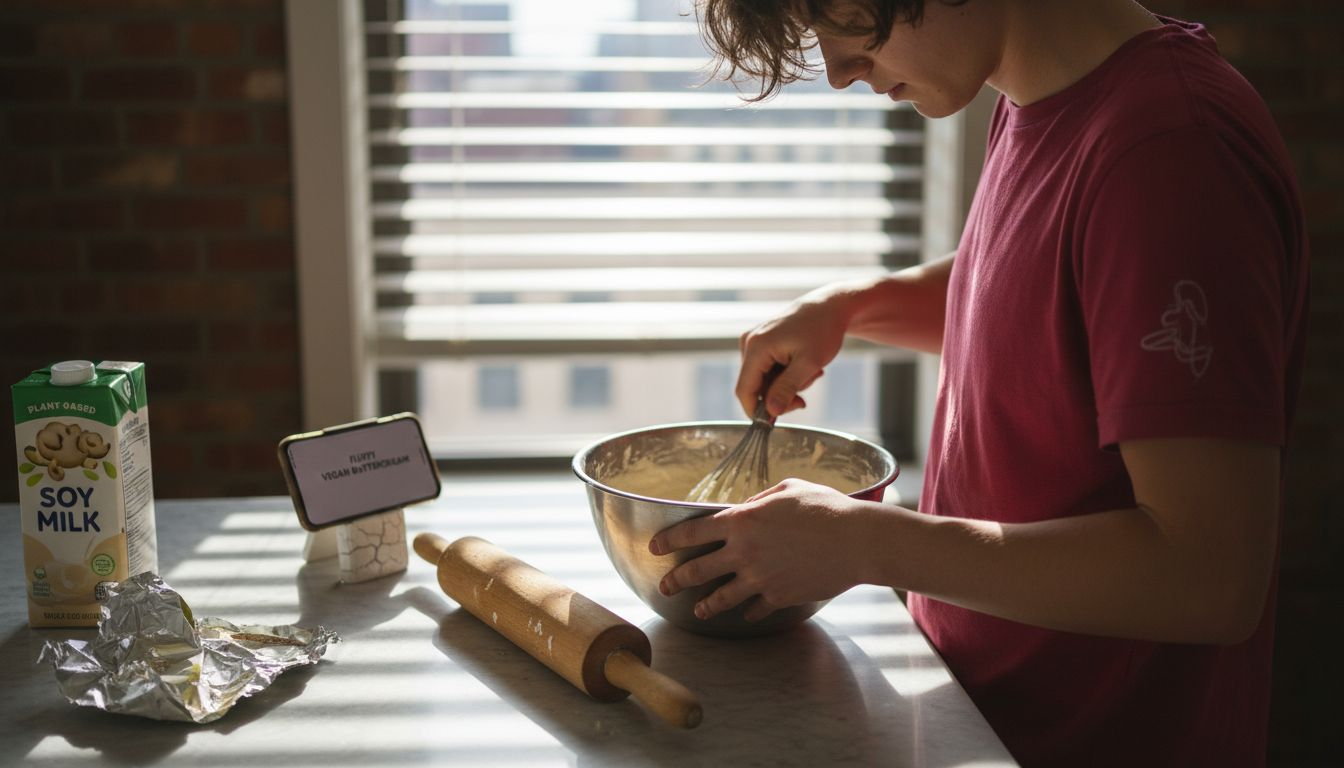
While ganache offers a chocolate-based coating with distinct mouthfeel, vegan buttercream provides greater versatility in flavour and decoration, making it an increasingly popular choice for modern cake designers.
Pro tip: Experiment with different plant-based fats to find the perfect vegan buttercream consistency for your specific cake design.
Taste, Texture, and Stability Explained
Buttercream represents a complex culinary art form where ingredients profoundly impact final characteristics. Understanding the nuanced interplay between taste, texture, and stability requires a deep dive into the scientific principles underlying cake decoration.
Taste Dynamics:
- Sweetness varies dramatically between styles
- Fat content influences richness
- Sugar-to-butter ratio determines flavour profile
- Temperature affects perceived sweetness
- Ingredient quality dramatically impacts overall taste
Textural differences emerge from preparation techniques and ingredient selection. Professional bakers understand that texture isn’t simply about smoothness, but about creating a sensory experience that complements the cake’s fundamental structure.
The perfect buttercream balances technical precision with artistic expression.
Stability Considerations play a crucial role in selecting the appropriate buttercream style. Factors such as ambient temperature, display duration, and intended cake design significantly influence which buttercream will perform optimally. Some styles maintain structural integrity better than others, with Swiss and Italian buttercreams typically offering superior heat resistance compared to traditional American variants.
The intricate relationship between taste, texture, and stability demands a nuanced approach. Bakers must consider not just flavour, but how the buttercream will interact with the cake’s environment and aesthetic requirements.
Pro tip: Always conduct a temperature stability test before finalising your buttercream selection for important cake designs.
Best Buttercream Type for Cake Decorating
Professional cake decorators prioritise specific buttercream styles based on their unique performance characteristics and design requirements. Understanding the strengths of each buttercream variant is crucial for achieving exceptional cake presentations.
Professional Buttercream Rankings:
- Italian Buttercream: Top professional choice
- Swiss Buttercream: Excellent for delicate designs
- American Buttercream: Best for home baking
- Ganache: Superior for chocolate-based cakes
- Vegan Buttercream: Versatile alternative option
Italian Buttercream stands out as the gold standard for professional cake decorators. Its exceptional stability, smooth texture, and less sweet profile make it ideal for complex, intricate cake designs that require precision and longevity.
Professional bakers understand that buttercream selection is an art form, not just a technical decision.
While Swiss Buttercream offers a lighter, silkier finish, it remains a close second for professional applications. American Buttercream, though popular among home bakers, typically lacks the refinement needed for high-end cake decoration.
The selection process involves carefully evaluating factors such as temperature resistance, piping capability, and overall aesthetic appeal. Each buttercream style brings unique qualities that can elevate or compromise a cake’s visual and gustatory experience.
Pro tip: Match your buttercream style to your specific cake design, considering factors like ambient temperature and decoration complexity.
Common Pitfalls and How to Avoid Them
Buttercream preparation requires precision and careful technique to prevent common mistakes that can compromise your cake’s final appearance and texture. Understanding these potential challenges is crucial for achieving professional-quality results.
Primary Buttercream Pitfalls:
- Temperature inconsistencies
- Incorrect ingredient ratios
- Rushed mixing techniques
- Inadequate ingredient preparation
- Environmental humidity impacts
Ingredient Temperature represents the most critical factor in buttercream success. Butter must be softened to precisely room temperature - not too cold, not melting. Cold butter creates lumpy, uneven mixtures, while overheated butter causes separation and structural failure.
Professional bakers know that buttercream is as much science as it is art.
Mixing techniques dramatically influence buttercream quality. Cake decorators must avoid common mixing errors like adding sugar too quickly or over-whipping, which can introduce unwanted air pockets or create grainy textures.
Environmental factors such as kitchen temperature and humidity can unexpectedly impact buttercream stability. Warm environments can cause buttercream to become runny, while excessively cold conditions might create an unworkable, hard texture that resists smooth application.
Here is a summary of key factors influencing buttercream quality and their impact on your cake outcome:
| Factor | Impact on Buttercream | Cake Result |
|---|---|---|
| Ingredient temperature | Affects texture and consistency | Smoother finish, easier spread |
| Mixing speed | Controls air incorporation | Fluffy or dense texture |
| Fat content | Alters richness and stability | Richer flavour, longer shelf life |
| Environmental humidity | Changes firmness and structure | Runny or resistant to piping |
Pro tip: Always use a digital kitchen thermometer to ensure precise ingredient temperatures and prevent buttercream disasters.
Elevate Your Buttercream Creations with Expert Tools and Supplies
Mastering the perfect buttercream demands precision and the right ingredients to conquer common challenges like temperature control and mixing techniques. Whether you are crafting delicate Italian Buttercream or rich American styles, having reliable cake decorating supplies can transform your baking experience and ensure stunning results every time.
Discover an extensive range of essential tools and decorations at The Vanilla Valley. From premium cake boards and boxes to vibrant food colours and speciality sprinkles, you can find everything you need to bring your buttercream artistry to life. Act now to benefit from our free and next day delivery options and join our customer loyalty club for exclusive offers. Start perfecting your cake designs today by exploring our trusted selection of professional baking accessories at The Vanilla Valley Online Store.
Frequently Asked Questions
What is buttercream used for in cake decorating?
Buttercream is primarily used as an outer coating for cakes, a filling between layers, and for intricate piping and decorative designs, enhancing both flavour and visual appeal.
What are the main types of buttercream?
The main types of buttercream include American, Swiss, Italian, vegan, and ganache, each offering different characteristics in terms of sweetness, texture, and stability for various decorating needs.
How does Swiss buttercream differ from Italian buttercream?
Swiss buttercream is made by heating egg whites and sugar, resulting in a silky texture that’s less sweet, while Italian buttercream involves a sugar syrup heated to high temperatures, yielding a stable and glossy finish, ideal for intricate designs.
What common mistakes should I avoid when making buttercream?
Common mistakes include using butter that’s too cold or melted, incorrect ingredient ratios, rushed mixing, and failing to account for environmental factors like humidity, which can affect the final texture and stability of the buttercream.
Recommended
- 7 Easy Ways to Fix Common Buttercream Problems at Home - The Vanilla Valley
- Buttercream Covered Cake - The Vanilla Valley
- Perfect Textured Buttercream: Elevate Your Cake Designs - The Vanilla Valley
- 7 Essential Creative Buttercream Techniques for Beginners - The Vanilla Valley
- Moose’s Tallow – Moose’s Tallow