Cake Boards Explained: Types, Uses, and Buying Tips
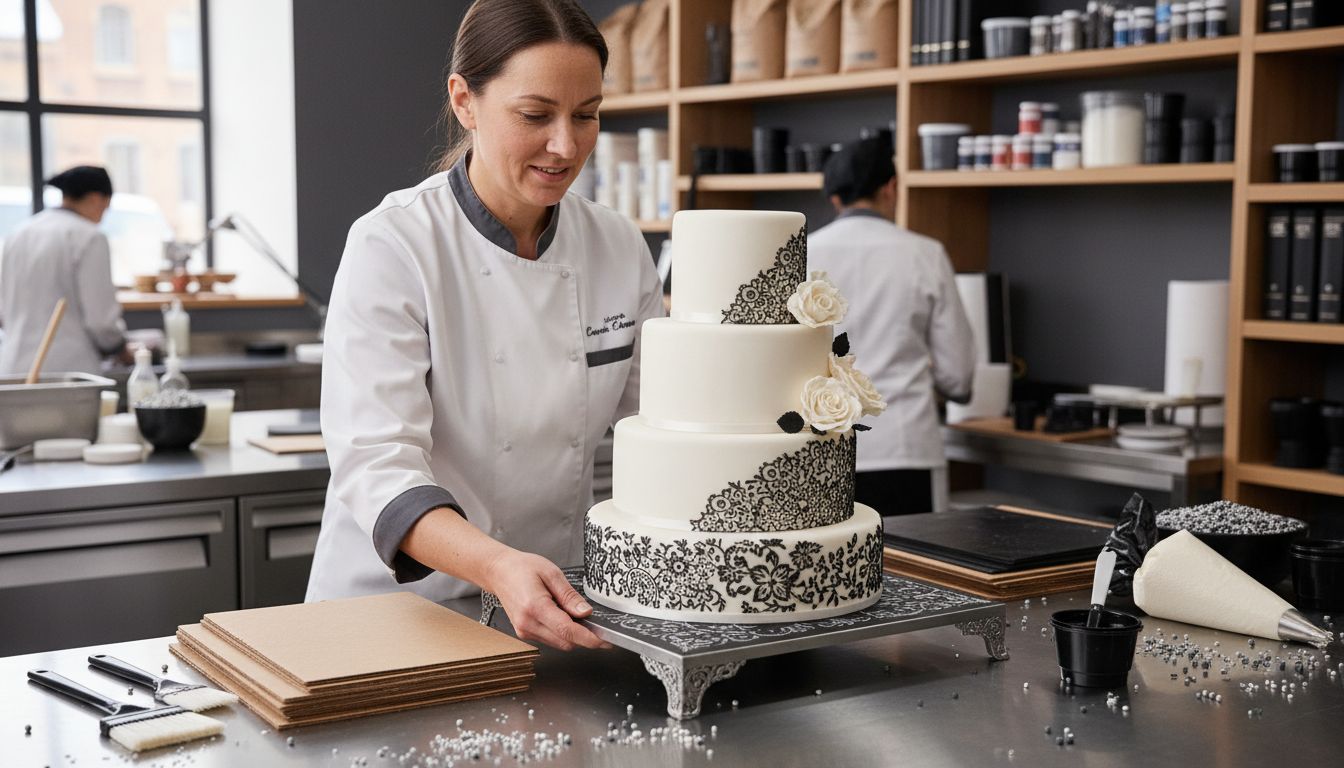
A cake can weigh several kilograms, yet a single board often carries the entire masterpiece from kitchen to celebration. Many bakers overlook the importance of this simple support, but one wrong choice can mean disaster during transport. Understanding cake boards matters whether you bake at home or create showstopping wedding cakes for clients. This guide breaks down the essentials so you can pick the best type, size, and material to keep every creation safe and stunning.
Table of Contents
- What Are Cake Boards? Essentials Defined
- Main Types of Cake Boards Compared
- Choosing the Right Size and Material
- Best Practices for Supporting Cakes Safely
- Costs, Storage, and Where to Buy UK-Wide
Key Takeaways
| Point | Details |
|---|---|
| Importance of Cake Boards | Cake boards are essential for structural support, presentation, and safe transportation of cakes. |
| Material Selection | Choose cake boards based on weight and complexity; options include cardboard for light cakes and aluminium for heavier tiers. |
| Size Guidelines | Select boards 2-4 inches larger than the cake’s diameter to ensure stability, especially for multi-tier designs. |
| Safety and Hygiene | Maintain cleanliness by inspecting and replacing damaged boards, and ensure boards are made from food-safe materials. |
What Are Cake Boards? Essentials Defined
A cake board is the unsung hero of cake presentation and transportation. According to Food Compliance HQ, these foundational bases serve critical roles in ensuring a cake’s structural integrity and facilitating safe handling. Think of them as the reliable stage where your culinary masterpiece will shine.
Cake boards come in various materials and dimensions, designed to support different cake weights and design requirements. Typically, they are crafted from sturdy materials like:
- Cardboard
- Thick food-grade paperboard
- Plastic
- Aluminium
- Decorated specialty boards
Their primary functions extend beyond mere decoration. A quality cake board provides essential stability, prevents structural collapse during transportation, and creates a professional presentation platform. Learn more about covering cake boards in our detailed tutorial.
Professional bakers understand that selecting the right cake board isn’t just about aesthetics—it’s about engineering a reliable foundation for your sweet creation. The board’s thickness, size, and material directly impact how well your cake will be supported, transported, and displayed. Whether you’re crafting a delicate single-tier birthday cake or an elaborate multi-tiered wedding showstopper, the right cake board makes all the difference.
Main Types of Cake Boards Compared
Cake boards come in several distinct types, each designed to meet specific baking and presentation needs. Understanding these variations helps bakers select the perfect foundation for their culinary creations. Learn more about when to use cake boards between tiers to enhance your cake structuring techniques.
Here’s a comprehensive breakdown of the main cake board types:
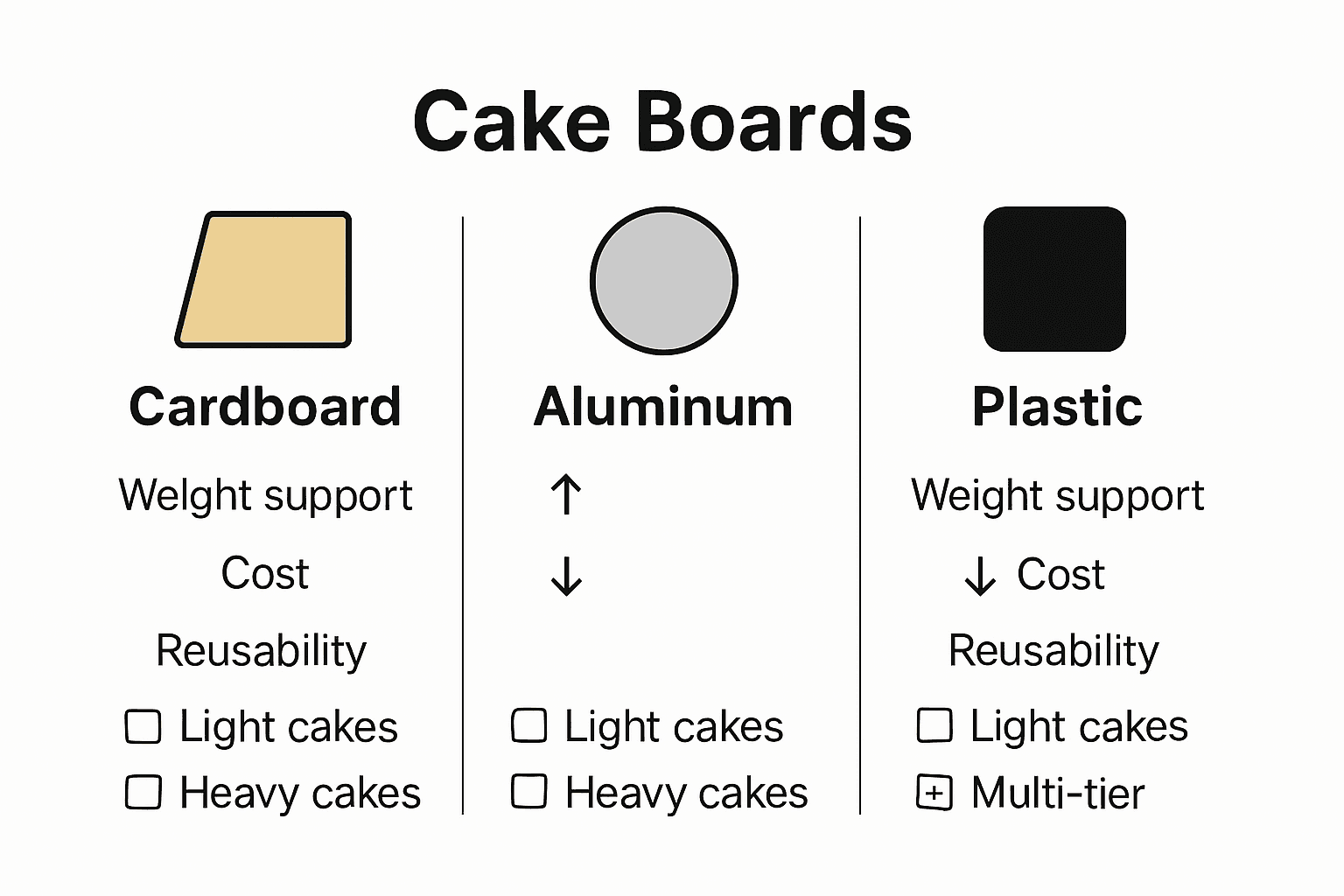
Cardboard Cake Boards
- Lightweight and economical
- Perfect for smaller, lighter cakes
- Available in standard round and square sizes
- Ideal for home bakers and budget-conscious projects
Aluminium Cake Boards
- Extremely sturdy and professional-grade
- Supports heavier multi-tiered cakes
- Provides superior stability during transportation
- Smooth, uniform surface for elegant presentations
Decorated Specialty Boards
- Pre-designed with elegant patterns and colours
- Eliminates need for additional cake decorating
- Often used for wedding and celebration cakes
- Available in various themes and styles
Professional bakers typically choose their cake board based on three critical factors: cake weight, design complexity, and transportation requirements.
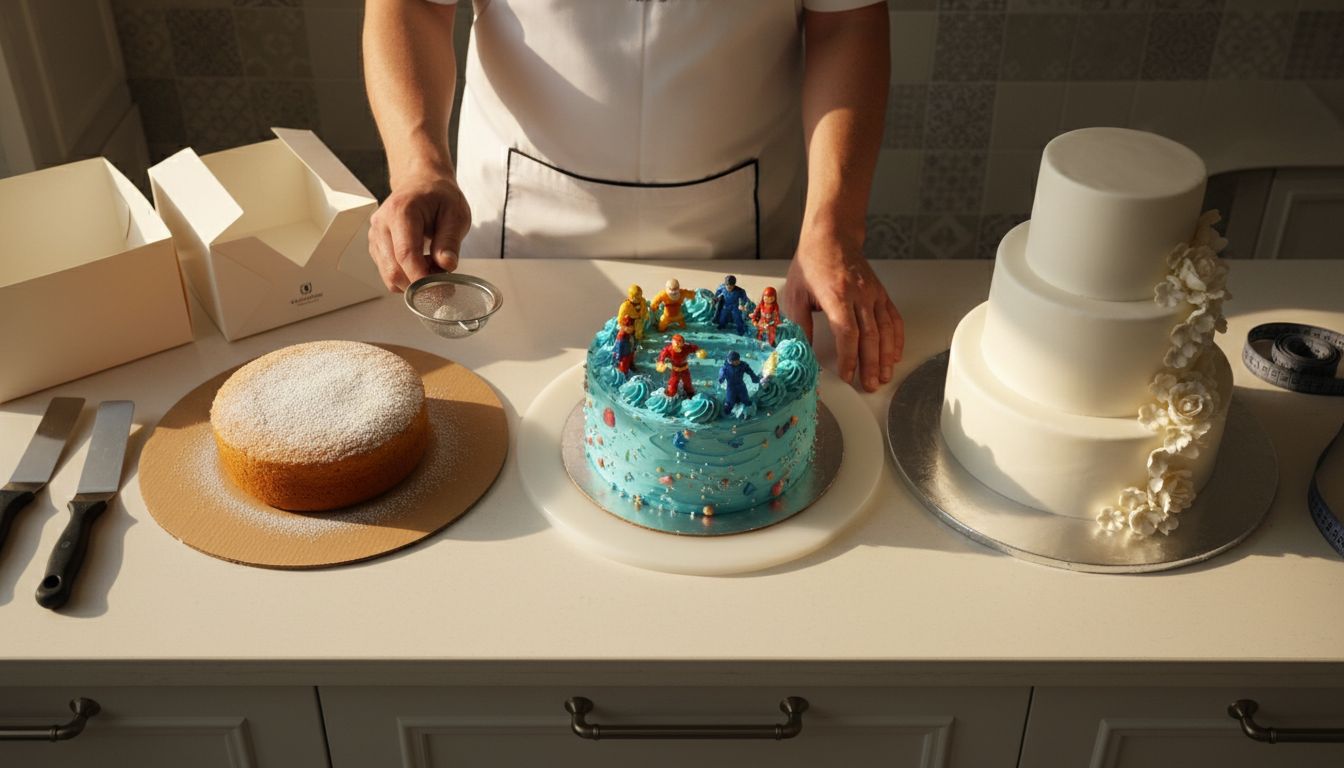 While cardboard boards work brilliantly for light sponge cakes, more elaborate wedding or celebration cakes demand the robust support of aluminium or reinforced boards.
Consider your specific project’s needs when selecting a cake board. A delicate birthday cake might shine on a simple cardboard base, whereas a towering wedding masterpiece requires the structural integrity of a professional-grade aluminium board.
 The right choice can make the difference between a stunning presentation and a potential cake catastrophe.
Choosing the Right Size and Material
Selecting the perfect cake board is a critical decision that can make or break your baking project. Size and material are the two most crucial factors to consider when choosing a cake board. Learn more about transporting delicate cakes safely to understand why these choices matter.
Board Size Guidelines:
- Add 2-4 inches larger than your cake’s diameter
- For round cakes: Select board 2 inches wider than cake base
- For square cakes: Choose board 1-2 inches larger on each side
- Multi-tier cakes: Bottom board should accommodate entire cake structure
Material Considerations
Each cake board material offers unique advantages:
- Cardboard Boards
- Lightweight and cost-effective
- Best for smaller, lighter cakes
- Limited moisture resistance
- Ideal for home baking and simple designs
- Aluminium Boards
- Professional-grade durability
- Excellent for heavy and multi-tiered cakes
- Smooth, uniform surface
- Superior stability during transportation
- Slightly more expensive
- Plastic Boards
- Moderate weight
- Good moisture resistance
- Reusable
- Mid-range pricing
- Suitable for moderate-weight cakes
Professional bakers recommend matching your board to your specific cake requirements. A delicate sponge cake might thrive on a thin cardboard board, while an elaborate wedding cake demands the structural integrity of a thick aluminium platform. Your choice isn’t just about aesthetics—it’s about ensuring your culinary masterpiece arrives intact and looks spectacular.
Remember, the right cake board is like a reliable stage for your sweet performance. It supports, protects, and showcases your creation, turning a simple dessert into a memorable experience.
Best Practices for Supporting Cakes Safely
Ensuring the structural integrity and safety of your cake requires more than just selecting a beautiful board. According to Shropshire Council, proper storage and transportation are crucial for maintaining cake quality and preventing potential disasters.
Key Safety Considerations
Structural Support Techniques:
- Use boards at least 2 inches wider than your cake
- Choose boards matching cake weight and complexity
- Ensure boards are completely level and stable
- Add support dowels for multi-tiered cakes
Hygiene and Maintenance
Hammersmith & Fulham Council emphasizes the importance of equipment cleanliness. Best practices include:
- Thoroughly clean cake boards before each use
- Inspect boards for damage or wear
- Replace compromised boards immediately
- Use food-safe materials
Professional bakers understand that a cake board is more than just a decorative element—it’s a critical safety component. The right board prevents structural collapse, contains potential mess, and ensures your cake arrives looking as stunning as when it left your kitchen.
Remember, supporting your cake safely isn’t just about aesthetics. It’s about creating a memorable experience that delights your guests and showcases your baking skills. Check out our tutorial on cake transportation to master the art of cake presentation.
Costs, Storage, and Where to Buy UK-Wide
Navigating the world of cake boards requires understanding pricing, quality, and purchasing options. According to Advanced Disposables, selecting the right supplier can dramatically impact both your budget and cake presentation.
Price Ranges by Material
Cake Board Cost Breakdown:
- Cardboard Boards: £1-£5
- Plastic Boards: £3-£8
- Aluminium Boards: £5-£15
- Specialty Decorated Boards: £8-£25
Bulk Purchasing Strategies
- Order in larger quantities for better unit pricing
- Consider mixed material packs for variety
- Check for seasonal discounts
- Compare online and local baking supply stores
Storage Best Practices
- Store in cool, dry locations
- Keep boards flat to prevent warping
- Protect from direct sunlight
- Stack carefully to avoid damage
- Use protective packaging for unused boards
Professional bakers know that investing in quality cake boards isn’t just an expense—it’s a critical component of cake design. While prices vary, choosing the right board can elevate your entire cake presentation.
Check our delivery and returns policy to understand how we support your cake board purchasing experience. Whether you’re a home baker or professional, finding the right board at the right price is key to creating stunning culinary masterpieces.
Secure Your Cake’s Foundation With Confidence
Choosing the perfect cake board is more than a practical step in baking it is the key to ensuring your masterpiece stays flawless from kitchen to celebration. If you have ever worried about your cake collapsing or losing its professional look during transport this article has highlighted how important it is to select the right size and material for stability and safety. With essential tips on cardboard, aluminium and specialty boards there is no reason to leave your cake’s support to chance.
Discover a wide selection of high-quality cake boards and essential cake decorating supplies at The Vanilla Valley. Whether you need sturdy aluminium boards for your multi-tier wedding creations or lightweight cardboard bases for everyday baking projects we stock everything to meet your needs. Plus with free next day delivery and expert advice you can shop with ease and confidence today. Start mastering cake support safely and beautifully by visiting The Vanilla Valley online store and explore our comprehensive baking accessories to complete your setup.
Frequently Asked Questions
What are cake boards used for?
Cake boards are essential for providing stability and support for cakes during transportation and presentation. They prevent structural collapse and ensure a professional look.
What are the different types of cake boards available?
The main types of cake boards include cardboard boards, aluminium boards, plastic boards, and decorated specialty boards. Each type has its own advantages based on the weight and design requirements of the cake.
How do I choose the right size cake board for my cake?
Select a cake board that is 2-4 inches larger than your cake’s diameter. For round cakes, choose a board 2 inches wider; for square cakes, select 1-2 inches larger on each side. Multi-tiered cakes require a bottom board that can accommodate the entire structure.
What should I consider when selecting a cake board material?
Consider the cake’s weight, design complexity, and transportation needs. Cardboard boards are best for lighter cakes, while aluminium boards offer the durability needed for heavy and multi-tiered creations.