How to Colour Buttercream Without Ruining the Texture Easily
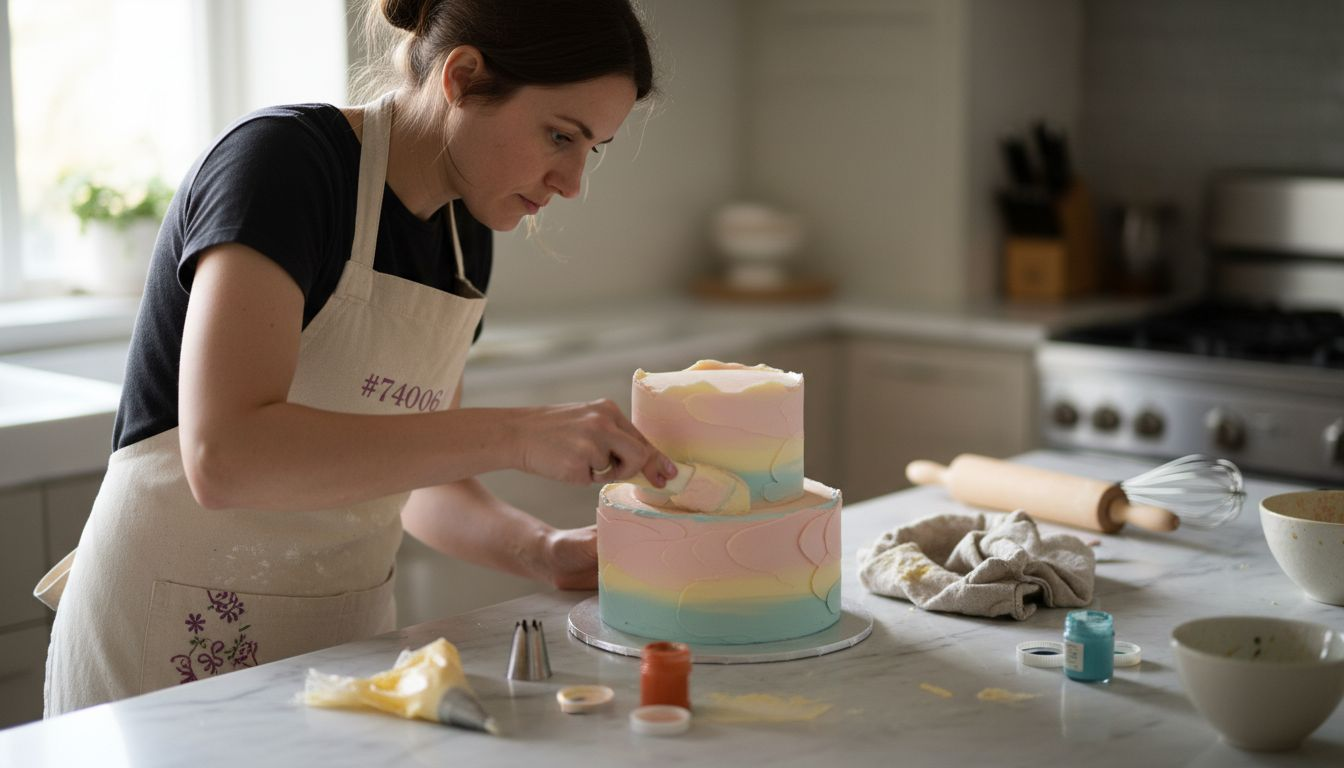
Trying to achieve smooth, vibrant buttercream that doesn’t lose its texture during colouring can feel tricky for amateur bakers in South Wales, especially when every festive cake relies on perfect decoration. Texture matters because it impacts both the look and taste of your creations. This guide outlines how balancing your ingredients, choosing approved colourings, and storing buttercream between 0 and 5°C are all critical steps for cake designs that impress without compromise.
Table of Contents
- Step 1: Prepare Buttercream With The Right Consistency
- Step 2: Select Suitable Food Colourings For Buttercream
- Step 3: Add Colour Gradually And Combine Thoroughly
- Step 4: Adjust Consistency If Needed After Colouring
- Step 5: Test And Store Coloured Buttercream Correctly
Quick Summary
| Important Insight | Explanation |
|---|---|
| 1. Use Softened Butter at Room Temperature | Ensure butter is soft yet firm by letting it sit for 30-45 minutes at room temperature before mixing for best buttercream texture. |
| 2. Choose the Right Food Colouring Type | Opt for gel or paste food colourings for vibrant shades without altering the buttercream’s texture negatively. |
| 3. Add Colour Gradually in Small Increments | Introduce colour using minimal amounts and mix thoroughly to maintain a smooth, consistent buttercream. |
| 4. Adjust Texture if Necessary After Colouring | If too soft, add icing sugar gradually or refrigerate briefly to restore the ideal consistency. |
| 5. Store Buttercream Correctly in Airtight Containers | Refrigerate buttercream at 0-5°C in clean, labelled containers to preserve quality and prevent spoilage. |
Step 1: Prepare Buttercream with the Right Consistency
Preparing buttercream with a perfect texture is crucial before adding any colour. The consistency determines how smoothly your food colouring will blend and how beautifully your final decoration will look. Getting this step right means understanding the fundamental balance between your ingredients.
To create the ideal buttercream, start by ensuring your butter is at the perfect temperature - soft but not melting. This means letting it sit at room temperature for about 30-45 minutes before mixing. Your butter should be pliable and creamy but still hold its shape. When you press it gently, it should yield slightly without breaking apart.
Your mixing technique matters tremendously. Use an electric mixer on medium speed, gradually adding icing sugar to create a smooth, stable base. The goal is achieving a consistency that’s precisely balanced between spreadable and firm. Too soft, and your buttercream will droop; too stiff, and it won’t blend colours evenly.
- Start with room temperature butter
- Use an electric mixer
- Add icing sugar gradually
- Mix until smooth and consistent
The secret to perfect buttercream is maintaining a steady, medium-speed mix that incorporates air without over-beating.
Kitchen Tip: If your buttercream feels too stiff, add a teaspoon of milk to soften the texture gradually.
Step 2: Select Suitable Food Colourings for Buttercream
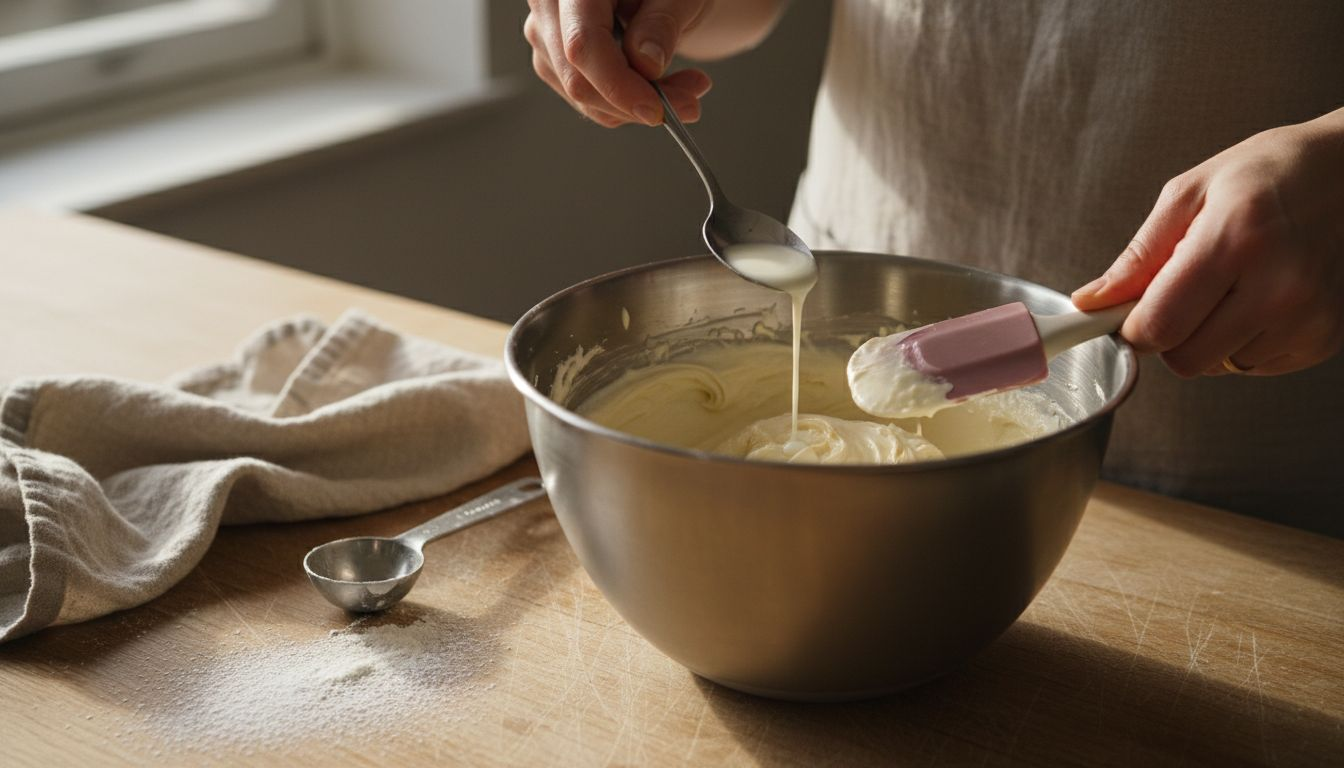
Choosing the right food colouring is a critical step in creating beautifully decorated buttercream without compromising its delicate texture. The type of colouring you select will dramatically impact both the appearance and consistency of your final product.
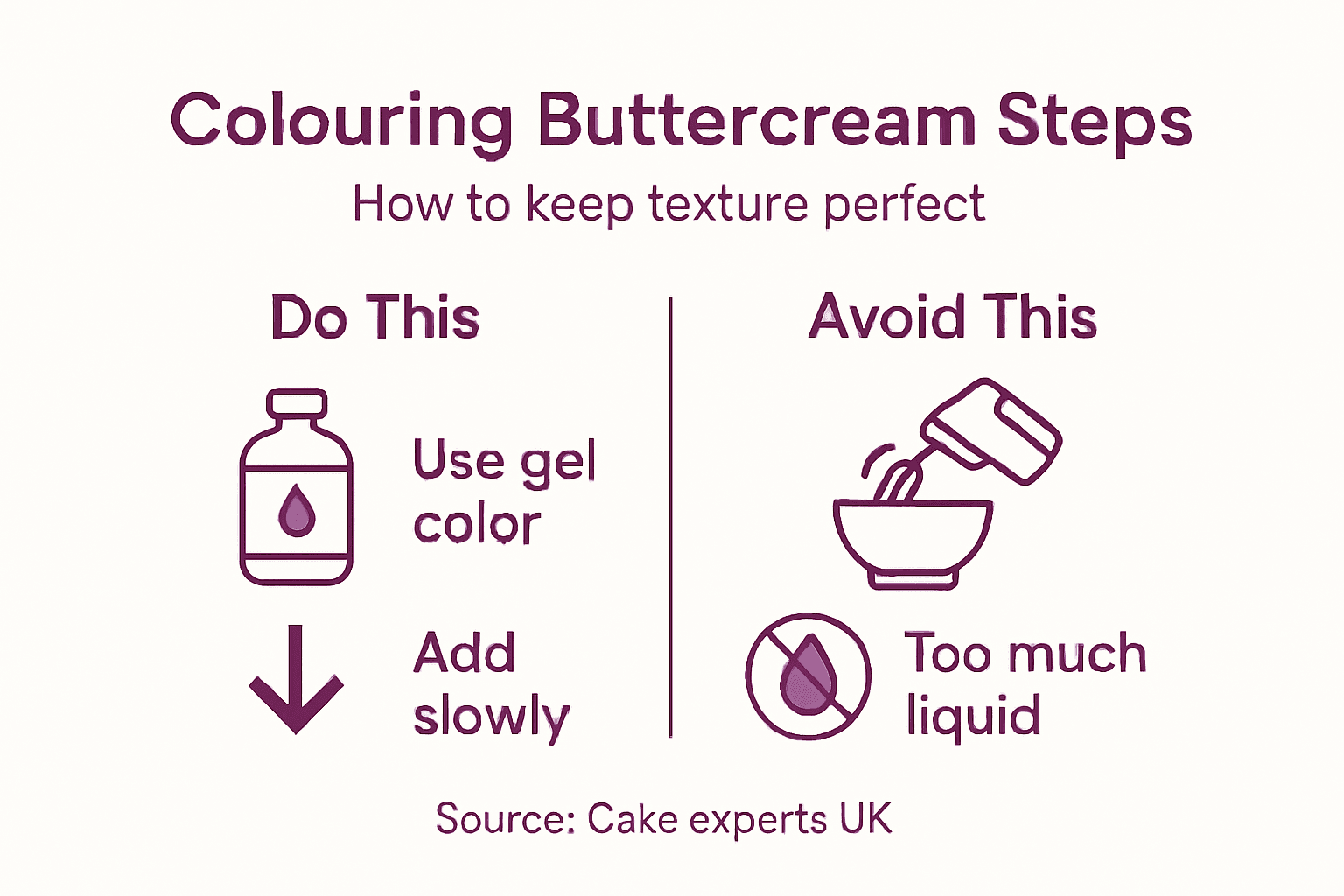
When selecting food colourings, prioritise options specifically designed for safe food additive use. Professional bakers recommend using gel or paste food colourings over liquid varieties, as they provide more intense colour with minimal liquid addition. Concentrated gel colours are particularly excellent because they:
- Deliver vibrant colours with minimal volume
- Maintain buttercream’s original consistency
- Offer precise colour control
- Prevent potential texture breakdown
Always check the legal food colouring regulations to ensure your chosen colours comply with UK safety standards. Synthetic and natural colours have different properties, so understanding their characteristics helps prevent potential texture issues.
Here is a comparison of common types of food colouring suitable for buttercream:
| Colouring Type | Colour Intensity | Effect on Texture | Best For |
|---|---|---|---|
| Gel colouring | Very strong | Maintains firmness | Precise, bold decorations |
| Paste colouring | Excellent depth | Minimal softening | Intricate piping designs |
| Liquid colouring | Mild to moderate | Softens buttercream | Pastel shades, small batches |
| Natural powders | Gentle, muted | May add graininess | Earthy tones, organic bakes |
Professional bakers know that the right colouring technique is as important as the colour itself.
Kitchen Guidance: Start with a tiny amount of colour and gradually increase, mixing thoroughly between additions to achieve your desired shade.
Step 3: Add Colour Gradually and Combine Thoroughly
Adding colour to buttercream requires a delicate touch and precise technique to maintain its smooth, creamy texture. Your goal is to create a uniformly coloured mixture without compromising the buttercream’s original consistency.
Begin by adding colour in minimal increments, using a toothpick or the tip of a small spoon to introduce gel colour. Mix thoroughly after each tiny addition, ensuring complete integration before deciding if more colour is needed. Professional bakers recommend these key strategies:
- Use a clean spatula for mixing
- Add colour in pinhead-sized amounts
- Mix from bottom to top in folding motions
- Pause between additions to assess colour depth
- Use white or clear gel colours for maximum control
The critical technique involves incorporating colour slowly and methodically. Think of it like adding seasoning to a dish - you can always add more, but you cannot remove excess. Gentle, consistent folding prevents air bubbles and maintains the buttercream’s luxurious texture.
Precision in colour addition is the hallmark of a skilled baker.
Kitchen Guidance: Work under good lighting and use a white background to accurately judge the true colour progression during mixing.
Step 4: Adjust Consistency if Needed After Colouring
Adding food colouring can subtly alter your buttercream’s texture, requiring careful monitoring and potential adjustments to maintain its perfect spreadability and structure. Understanding how to rebalance mixture components ensures your final product remains professional and visually appealing.
When your buttercream becomes too soft after adding colour, you have several strategic options for restoration. Professional recovery techniques include:
- Add small amounts of icing sugar (1 teaspoon at a time)
- Briefly refrigerate the mixture
- Whip at medium speed to reincorporate air
- Use a cool metal spatula for mixing
- Avoid overworking the buttercream
The key principle is making minimal interventions. Think of adjusting buttercream like fine-tuning an instrument - small, precise movements create the best results. Mechanical mixing and ingredient balancing can rescue a buttercream that has become too liquid or dense.
Precision and patience transform good buttercream into extraordinary buttercream.
Kitchen Guidance: Always keep your mixing bowl chilled and work in a cool environment to maintain optimal buttercream consistency.
Step 5: Test and Store Coloured Buttercream Correctly
After carefully colouring your buttercream, the final crucial steps involve testing its quality and storing it correctly to preserve both texture and visual appeal. Proper storage ensures your hard work maintains its professional finish and remains food-safe.
Begin by safely storing perishable food items in clean, airtight containers. Refrigeration temperature is critical: aim to keep your buttercream between 0 and 5°C to prevent bacterial growth and maintain its delicate consistency. Professional bakers recommend these testing and storage techniques:
- Check colour uniformity under good lighting
- Taste test for flavour consistency
- Assess texture before and after refrigeration
- Use clean, transparent containers
- Label with date and colour used
- Store in the coldest part of the refrigerator
Before final storage, perform a quick visual and textural inspection. Your buttercream should hold its shape, display an even colour distribution, and remain smooth when spread. Minor temperature fluctuations can dramatically impact its quality, so handle with care.
This table summarises key tests for ensuring buttercream is ready for use or storage:
| Test | How to Perform | What to Look For |
|---|---|---|
| Colour consistency | Mix and check under bright light | Even shade throughout batch |
| Texture assessment | Spread a small sample | Smooth, holds shape easily |
| Flavour check | Taste a small portion | No bitterness or off flavours |
| Storage readiness | Inspect before refrigerating | No separation or weeping |
Precision in storage is as important as precision in preparation.
Kitchen Guidance: Always allow buttercream to come to room temperature for 10-15 minutes before use to restore its original creamy consistency.
Elevate Your Buttercream Colouring Experience with Expert Supplies
Colouring buttercream without ruining its delicate texture can be challenging. The article emphasises crucial steps like preparing buttercream with the right consistency and choosing concentrated gel or paste food colourings to maintain firmness and vibrancy. Many bakers struggle with uneven colour blending or softened textures after adding liquid colourings. You deserve tools that support precision and control in every stage of your decorating journey.

Unlock flawless buttercream creations by exploring premium food colourings and essential cake decorating supplies at The Vanilla Valley. Our trusted selection, supported by expert advice, is designed to help you master gradual colour addition and consistency adjustment techniques with ease. Whether you are a passionate hobbyist or a professional bakery, discover how the right products make all the difference. Visit The Vanilla Valley online store today and take advantage of our special offers, free delivery options, and customer loyalty club to start perfecting your buttercream colours now.
Frequently Asked Questions
How can I prepare buttercream with the right consistency for colouring?
To achieve the ideal buttercream consistency, ensure your butter is soft but not melting. Mix it with icing sugar using an electric mixer on medium speed until it becomes smooth and stable, adjusting by adding a teaspoon of milk if it’s too stiff.
What type of food colouring should I use for buttercream?
Use concentrated gel or paste food colourings designed for safe food use, as they provide intense colour without altering the buttercream’s texture. Start with a tiny amount and gradually add more for precise colour control.
How do I add colour to buttercream without ruining the texture?
Add colour in minimal increments using a toothpick or small spoon to introduce gel colour. Mix thoroughly after each addition, folding gently to combine while maintaining a smooth texture.
What should I do if my coloured buttercream becomes too soft?
If your buttercream is too soft after adding colour, you can restore its consistency by adding small amounts of icing sugar, about 1 teaspoon at a time. Alternatively, briefly refrigerate the mixture to firm it up before using it.
How can I store my coloured buttercream properly?
Store your coloured buttercream in clean, airtight containers in the refrigerator, maintaining a temperature between 0 and 5°C. Label the containers with the date and observed colour to keep track of freshness and quality.
How do I test the quality of my coloured buttercream?
Check the colour consistency under bright light and perform a texture assessment by spreading a small amount. Ensure it holds its shape and appears smooth for optimal quality before using or storing.