
How to Create Edible Toppers for Stunning Cakes
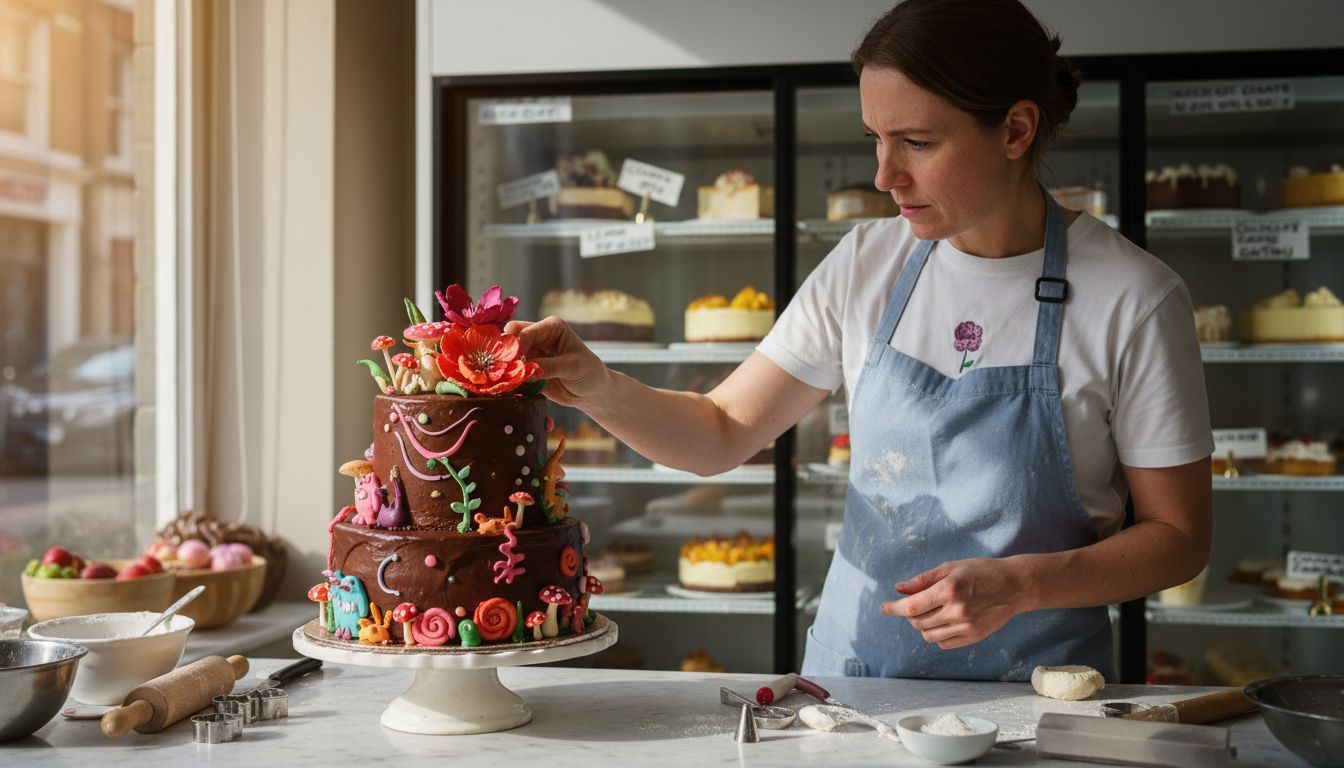
Every celebration deserves a cake that stands out, yet crafting edible toppers can feel like a daunting task for many home bakers in South Wales. With the right tools and preparation, transforming your ideas into eye-catching decorations becomes much more achievable. By learning how to handle specialised cake decorating equipment and essential ingredients, you’ll gain the confidence to add beautiful, professional touches to cakes for any special event.
Table of Contents
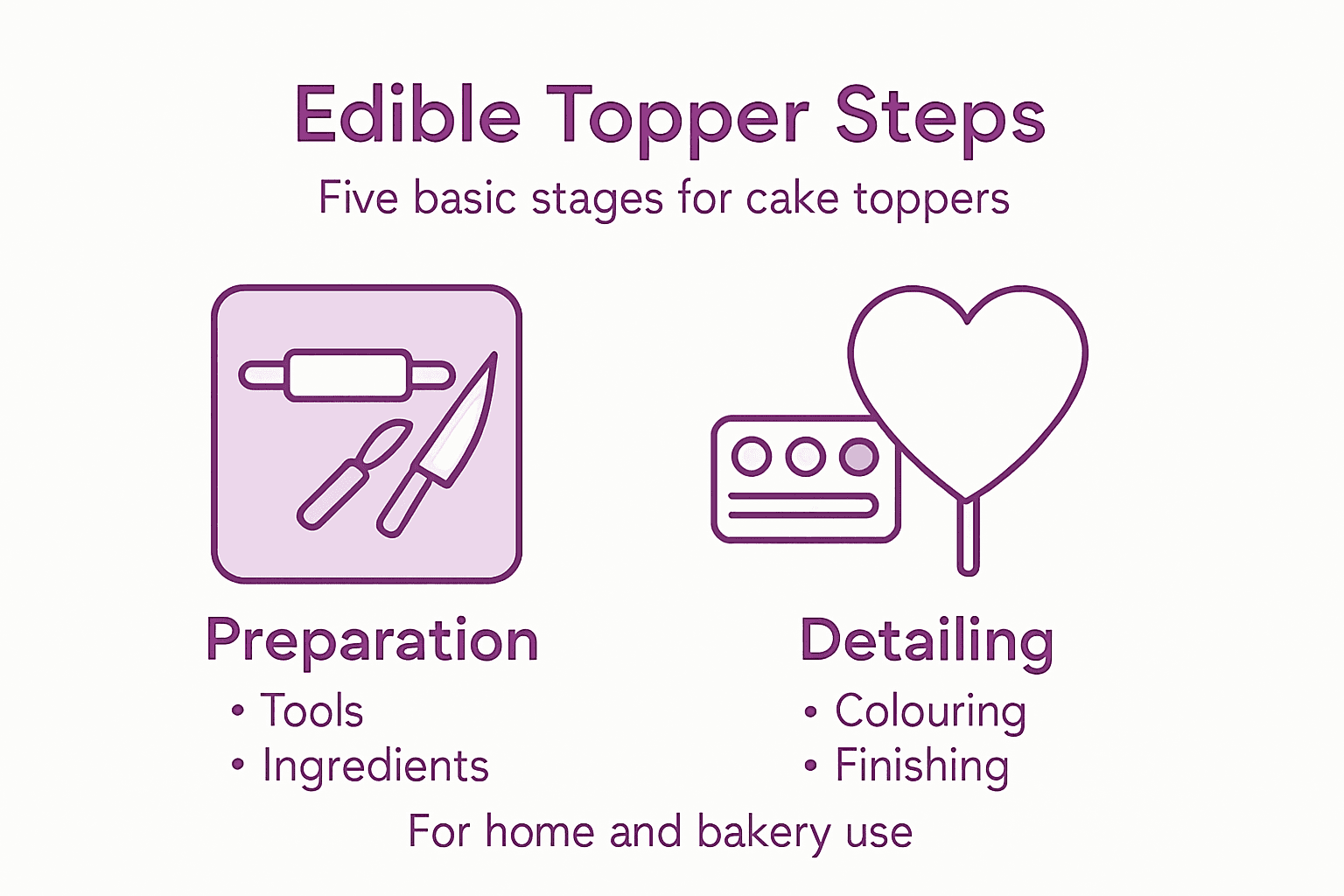
- Step 1: Gather Essential Cake Decorating Tools And Ingredients
- Step 2: Prepare Fondant Or Modelling Paste For Shaping
- Step 3: Shape And Sculpt Toppers Using Cutters And Moulds
- Step 4: Add Vibrant Colour And Detail With Food-Safe Paints
- Step 5: Verify Topper Stability And Finish For Safe Placement
Quick Summary
| Key Point | Explanation |
|---|---|
| 1. Gather essential tools and ingredients | Assemble specialised tools like fondant rolling pins and quality ingredients for effective cake decoration. |
| 2. Prepare fondant or modelling paste correctly | Knead and roll out paste to achieve optimal consistency for detailed shaping and design. |
| 3. Use sculpting techniques for toppers | Select appropriate cutters and moulds, ensuring accurate pressing and refined edges for stunning designs. |
| 4. Apply food-safe colour with care | Use gel colours and soft brushes to achieve vibrant finishes without bleeding or unevenness. |
| 5. Verify stability before placement | Conduct stability checks to ensure toppers are durable and secure before putting them on cakes. |
Step 1: Gather essential cake decorating tools and ingredients
Creating stunning edible toppers begins with assembling the right equipment and supplies. Proper preparation ensures smooth cake decoration and transforms your baking project from ordinary to extraordinary.
Your essential toolkit should include a range of specialised items that professional cake decorators recommend. When preparing to craft edible toppers, gather these key tools:
- Fondant rolling pin for smooth, even surfaces
- Sharp cutting tools like craft knives and precision scissors
- Edible food colour palette for vibrant designs
- Work surface mat to protect countertops
- Piping bags and tips for intricate detail work
- Digital kitchen scale for precise measurements
Ingredient selection is equally critical. Choose high-quality cake decorating ingredients that provide both flavour and structural integrity for your toppers. Professional decorators recommend using:
- Rolled fondant or gum paste
- Edible food colouring (gel-based preferred)
- Cornflour or icing sugar for dusting
- Clear alcohol or clear extract for painting details
Precision and preparation are the hallmarks of exceptional cake decorating.
Insider tip: Always have a small bowl of cornflour nearby to prevent sticking and ensure smooth handling of your edible topper materials.
Step 2: Prepare fondant or modelling paste for shaping
Transforming your cake decoration vision starts with properly preparing your foundational medium. Whether you choose fondant or modelling paste, the key is achieving the right consistency and texture for precise shaping and intricate design work.
Begin by working with cake decorating ingredients at room temperature to ensure optimal malleability. Follow these essential preparation steps:
- Knead the paste thoroughly to remove air bubbles
- Dust your work surface with cornflour to prevent sticking
- Roll out paste to an even thickness using a smooth rolling pin
- Check consistency by testing flexibility and smoothness
When working with modelling paste, consider these crucial techniques:
To clarify the differences between fondant and modelling paste, see the table below:
| Medium Type | Texture & Handling | Best For | Difficulty Level |
|---|---|---|---|
| Fondant | Soft, smooth, easy to knead | Covering cakes, simple shapes | Beginner-friendly |
| Modelling Paste | Firmer, retains fine details | Figurines, intricate toppers | Advanced designs |
- Start with small amounts of paste to maintain control
- Keep unused paste covered to prevent drying
- Use gentle, consistent pressure when shaping
- Work quickly before the paste begins to dry
Professional cake decorators know that preparation determines the quality of your final design.
Top tip: Warm your hands slightly before kneading to help the paste become more pliable and easier to manipulate.
Step 3: Shape and sculpt toppers using cutters and moulds
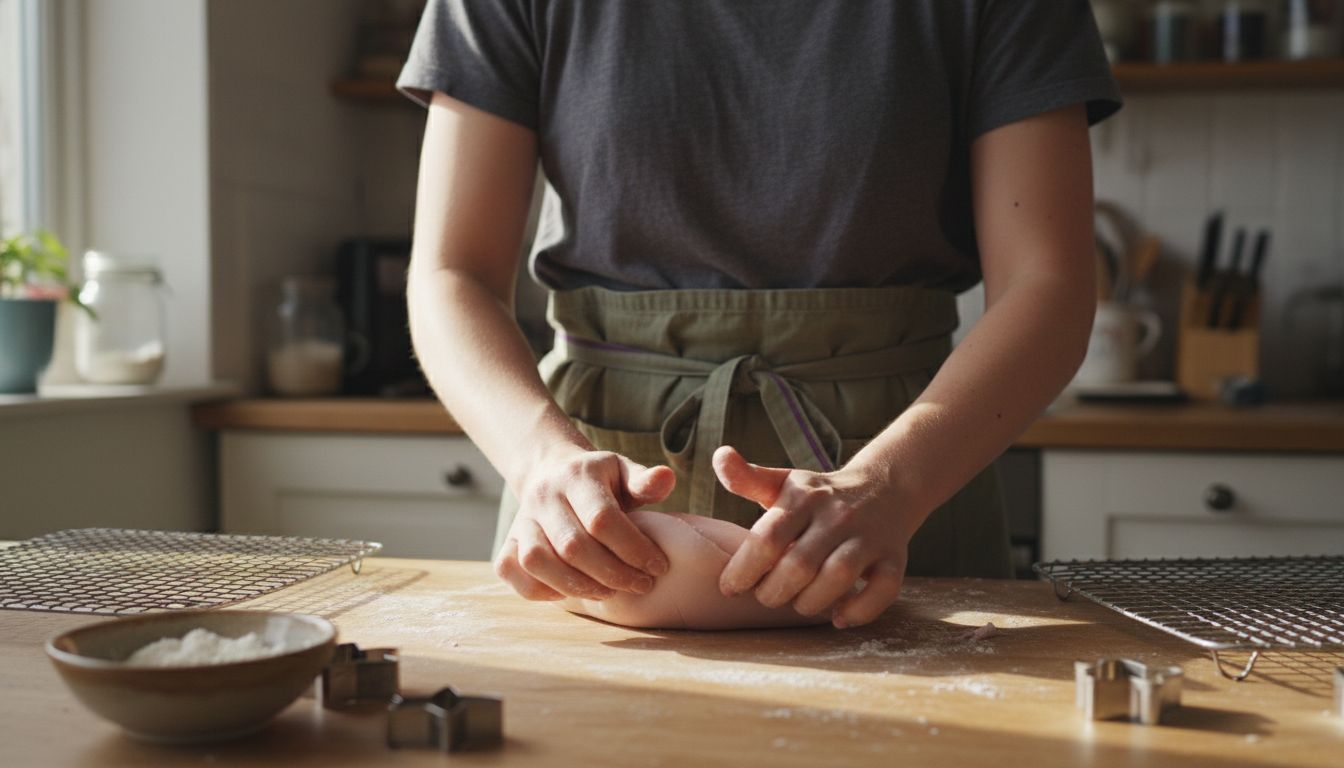
Transforming your prepared fondant or modelling paste into beautiful cake toppers requires precision, creativity, and the right techniques. Professional bakers understand that cake topper shaping skills are essential for creating stunning cake decorations.
To begin sculpting your edible masterpiece, gather your essential tools:
- Sharp cutting tools for precise edges
- Various sized cutters for different design elements
- Silicone moulds for intricate shapes
- Soft modelling tools for detailed work
- Cornflour for preventing sticking
Follow these systematic sculpting techniques:
- Select the appropriate cutter or mould for your design
- Dust your work surface and tools with cornflour
- Press fondant firmly into moulds or use cutters with consistent pressure
- Carefully remove shaped elements using gentle lifting techniques
- Refine edges and details with small modelling tools
Patience and attention to detail transform simple ingredients into edible art.
Top tip: Work in a cool room and keep your hands slightly cool to prevent the paste from becoming too soft and losing its defined shape.
Step 4: Add vibrant colour and detail with food-safe paints
Bringing your edible toppers to life requires careful application of food-safe colouring techniques that transform simple shapes into artistic masterpieces. The right painting approach can elevate your cake decoration from ordinary to extraordinary.
Select your painting tools and materials carefully:
- Soft-bristled food-safe brushes for precise detailing
- Gel food colours for vibrant, concentrated hues
- Clear alcohol or clear extract as painting medium
- Fine-tipped brushes for intricate designs
- Palette or white plate for colour mixing
Follow these professional painting techniques:
Here’s a summary of common issues when painting toppers and their solutions:
| Challenge | Cause | Solution |
|---|---|---|
| Colour streaks | Brushes too wet | Use less alcohol in mixture |
| Uneven colour coverage | Insufficient drying time | Allow toppers to fully dry |
| Colours bleeding together | Using water as medium | Choose clear alcohol or extract |
| Loss of details | Overpainting layers | Apply thinner layers, allow drying |
- Ensure your fondant topper is completely dry
- Mix food colours with clear alcohol or extract
- Start with light layers of colour
- Build depth gradually with multiple thin applications
- Allow each layer to dry before adding additional details
Patience and precision are the secrets to stunning edible artwork.
Top tip: Use a white ceramic plate as your mixing palette to see true colour clarity and prevent unwanted colour contamination.
Step 5: Verify topper stability and finish for safe placement
Ensuring the structural integrity and professional appearance of your edible toppers is crucial for a stunning cake presentation. Cake topper stability techniques require careful assessment and finishing to guarantee both aesthetic appeal and safe positioning.
Conduct a comprehensive stability check using these essential criteria:
- Structural strength of the topper
- Weight distribution across the design
- Moisture resistance of the decorative elements
- Surface smoothness and professional finish
- Attachment point durability
Follow these systematic verification steps:
- Allow toppers to dry completely before handling
- Test structural integrity by gentle handling
- Check for any soft or weak points in the design
- Ensure edges are smooth and sealed
- Verify the topper can support its own weight
Precision in finishing transforms good cake decorations into exceptional culinary art.
Top tip: Create a small support structure using food-safe wires or toothpicks if your topper requires additional stability.
Elevate Your Cake Decorating with Expert Tools and Supplies
Creating flawless edible toppers requires more than talent it demands the right materials and preparation to conquer challenges like fondant consistency and intricate detailing. If you have ever struggled with achieving perfect shapes, vibrant colour application or topper stability you are not alone. These common pain points can be overcome with high-quality ingredients and specialised tools designed for precision and ease.
At The Vanilla Valley we share your passion for exceptional cake decorating and make your creative vision effortless to realise. Discover our extensive range of professional-grade fondants, gel food colours and essential modelling tools that help you master every stage from kneading to sculpting and painting. Whether you are a beginner striving for smooth finishes or an advanced baker focusing on intricate designs we provide trusted products to boost your confidence and craftsmanship.
Explore our cake decorating supplies and experience expert support as you transform simple cakes into stunning edible works of art. Don’t wait for the perfect moment make it happen today with reliable tools, fast delivery and customer satisfaction guaranteed.
Frequently Asked Questions
What tools do I need to create edible toppers for cakes?
To create edible toppers, gather essential tools such as a fondant rolling pin, sharp cutting tools, piping bags and tips, and a work surface mat. Assemble these items before starting your project to ensure a smooth decorating process.
How do I prepare fondant or modelling paste for shaping?
Begin by kneading the paste thoroughly to remove air bubbles, then dust your work surface with cornflour to prevent sticking. Roll out the paste to an even thickness and test its consistency for flexibility and smoothness before shaping.
What techniques can I use to shape and sculpt cake toppers?
Use sharp cutting tools and various sized cutters or silicone moulds to create the desired shapes. Gently press the fondant into moulds or use consistent pressure with cutters, then refine the edges with soft modelling tools for precise detailing.
How can I add colour and detail to my cake toppers?
Mix gel food colours with clear alcohol or extract to create a vibrant painting medium. Apply thin layers of colour using soft-bristled food-safe brushes, allowing each layer to dry fully before adding more details to achieve the desired effect.
How do I ensure my cake toppers are stable for placement?
Check the structural strength of your toppers by testing their weight distribution and ensuring the edges are smooth. Allow the toppings to dry completely and reinforce them with food-safe wires or toothpicks if necessary to maintain stability during placement.