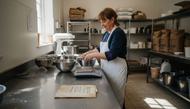
Professional Baking Tools – Elevating Bakery Standards
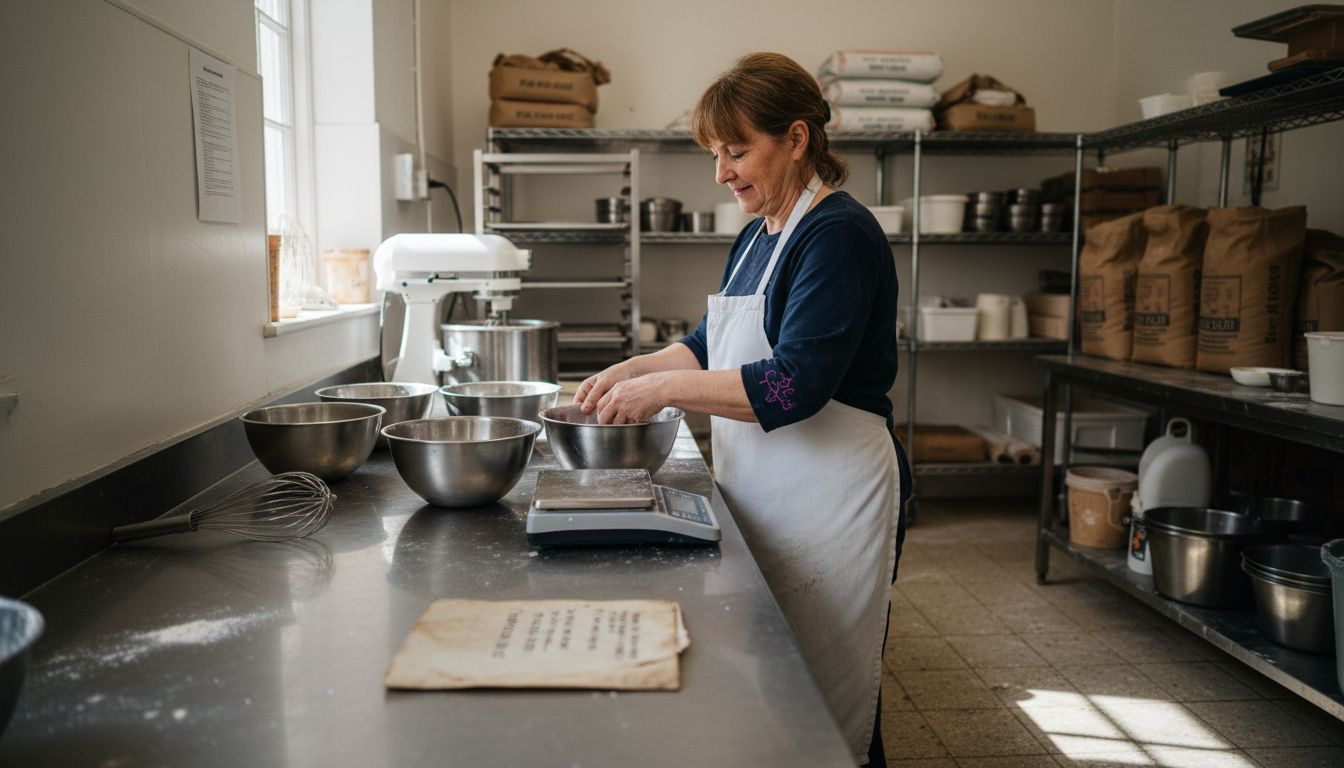
Finding the right baking tools can quickly set apart a South Wales bakery striving for excellence from the rest. In a busy professional kitchen, even the smallest piece of equipment makes a difference to speed, quality, and presentation. For cake decorators and bakery owners, knowing which tools offer the most precision and durability is key. Discover what separates professional-grade baking equipment from standard utensils and how the right investment leads to consistent, beautiful results every time.
Table of Contents
- Defining Professional Baking Tools For Bakeries
- Categories And Key Functions Of Baking Equipment
- Essential Tools For Consistent Quality Control
- Impact On Efficiency, Hygiene, And Compliance
- Costs, Maintenance, And Comparing Alternatives
- Avoiding Common Errors With Basic Tools
Key Takeaways
| Point | Details |
|---|---|
| Durability and Precision | Professional baking tools are built for durability and precision, ensuring consistent quality in high-volume production environments. |
| Comprehensive Equipment Categories | Various categories of baking equipment, such as mixing and baking apparatus, enhance operational efficiency and product consistency. |
| Importance of Quality Control | Investing in quality control tools mitigates risks associated with measurement errors, ensuring every product meets high standards. |
| Strategic Investment Considerations | Choosing the right baking equipment requires evaluating total ownership costs, long-term maintenance, and overall impact on production efficiency. |
Defining Professional Baking Tools for Bakeries
Professional baking requires precision and specialised equipment that goes far beyond home kitchen capabilities. Professional baking technologies represent a critical infrastructure enabling consistent, high-quality production in commercial bakery environments.
These specialised tools are distinguished by several key characteristics that separate them from amateur equipment:
- Durability: Constructed to withstand continuous commercial use
- Precision: Engineered with exact measurement capabilities
- High-volume capacity: Designed to produce large quantities efficiently
- Advanced temperature control: Enables consistent baking results
- Industrial-grade materials: Typically stainless steel or commercial-grade aluminium
Professional bakery tools are not merely upgraded home appliances but sophisticated machines engineered for consistent performance. Commercial mixers, industrial ovens, proofing cabinets, and specialised preparatory equipment form the backbone of professional baking infrastructure.
Understanding these tools requires recognising their role in transforming raw ingredients into consistently excellent baked products. Each piece of equipment serves a specific function in creating precise textures, temperatures, and production workflows that simply cannot be replicated with standard household tools.
Professional baking equipment represents an investment in quality, efficiency, and reproducible culinary excellence.
Pro tip: When selecting professional baking tools, prioritise versatility and durability over initial cost, as high-quality equipment pays for itself through consistent performance and longevity.
Categories and Key Functions of Baking Equipment
Professional bakeries require a comprehensive range of baking tools and equipment classifications that support every stage of the production process. These specialised tools are strategically grouped to address specific functional requirements in commercial baking environments.
The primary categories of professional baking equipment include:
- Mixing Equipment
- Stand mixers
- Industrial planetary mixers
- Dough kneaders
- Spiral mixers
- Preparation Tools
- Commercial food processors
- Scales and measuring equipment
- Pastry cutters and shapers
- Proofing cabinets
- Baking Apparatus
- Convection ovens
- Deck ovens
- Rotating rack ovens
- Steam-injection ovens
- Cooling and Storage
- Blast chillers
- Commercial refrigeration units
- Cooling racks
- Temperature-controlled storage cabinets
Each equipment category plays a critical role in transforming raw ingredients into consistently high-quality baked products. Commercial mixers, for instance, provide powerful, uniform mixing capabilities that home kitchen appliances cannot match, enabling bakeries to process large volumes with precision and speed.
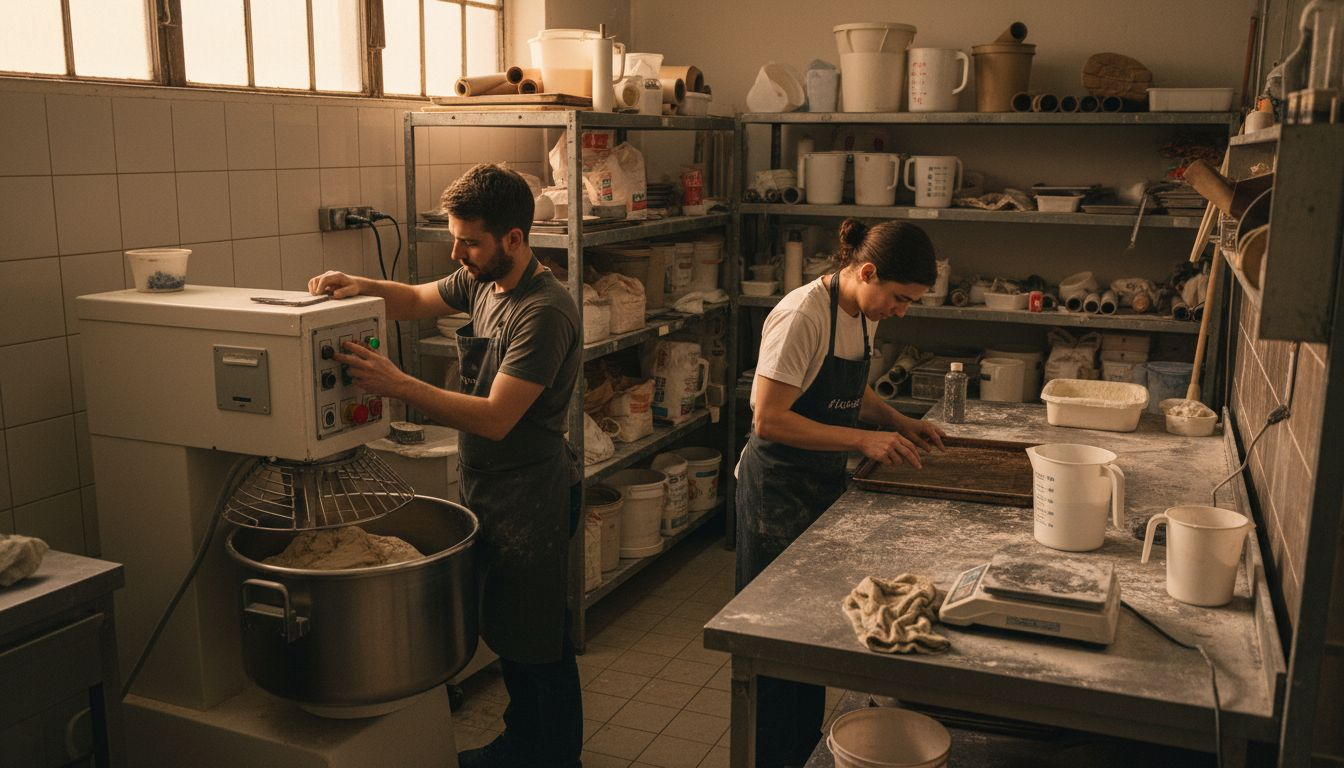
Here is a comparison of core professional bakery equipment categories and their typical business impacts:
| Equipment Category | Typical Use Case | Business Impact |
|---|---|---|
| Mixing Equipment | Bulk dough preparation | Increases throughput, lowers manual effort |
| Preparation Tools | Ingredient weighing and shaping | Improves accuracy, ensures product uniformity |
| Baking Apparatus | Large-scale baking cycles | Boosts capacity, enhances temperature control |
| Cooling & Storage | Rapid chill and storage | Maintains food safety, supports batch scheduling |
Professional baking equipment represents a strategic investment in efficiency, quality, and scalable production capabilities.
Pro tip: When investing in baking equipment, prioritise multi-functional tools that offer versatility across different baking processes to maximise your operational flexibility and return on investment.
Essential Tools for Consistent Quality Control
Professional bakeries rely on precise quality control tools and measuring equipment to maintain exceptional product standards. Consistency is the hallmark of successful commercial baking, requiring sophisticated measurement and monitoring instruments that go beyond basic kitchen implements.
Key quality control tools for professional bakeries include:
- Precision Measurement Devices
- Digital scales with 0.1g accuracy
- Calibrated thermometers
- Volume measuring cups
- Laser temperature scanners
- Product Consistency Tools
- Dough weight dividers
- Uniform cake ring moulds
- Pastry cutting templates
- Ingredient portion scales
- Environmental Monitoring Equipment
- Humidity controllers
- Oven temperature probes
- Refrigeration monitoring systems
- Air circulation sensors
These specialised tools enable bakers to track and replicate precise conditions across multiple production batches. By eliminating human error and standardising processes, bakeries can ensure every product meets exacting quality benchmarks, from ingredient proportions to final presentation.
This table summarises common quality control risks and proactive solutions for professional bakeries:
| Quality Risk | Example | Prevention Strategy |
|---|---|---|
| Inconsistent batch size | Uneven dough division | Calibrate dividers regularly |
| Temperature drift | Oven fluctuations | Use digital monitoring sensors |
| Measurement error | Incorrect ingredient weights | Conduct weekly scale calibration |
| Equipment contamination | Poor cleaning habits | Implement strict sanitising routines |
Consistent quality is not an accident, but a meticulously engineered result of precise measurement and controlled production processes.
Pro tip: Invest in calibration services for your measurement tools every six months to maintain accuracy and prevent gradual performance drift in your quality control equipment.
Impact on Efficiency, Hygiene, and Compliance
Professional bakeries increasingly recognise the critical importance of baking equipment in maintaining operational standards, where the right tools directly influence efficiency, hygiene, and regulatory compliance. Modern bakery management goes far beyond simply producing delicious products, requiring a holistic approach to workplace performance and safety.
Key areas of impact include:
- Operational Efficiency
- Reduced manual processing time
- Standardised production workflows
- Minimised human error
- Increased batch consistency
- Hygiene Management
- Easy-to-clean equipment surfaces
- Stainless steel construction
- Sealed electrical components
- Anti-bacterial material designs
- Regulatory Compliance
- Food safety certification standards
- Temperature monitoring capabilities
- Documented production processes
- Traceability of manufacturing conditions
Sophisticated baking equipment serves as more than just production tools; they are comprehensive systems that integrate precision engineering with stringent health and safety requirements. By investing in high-quality, compliant equipment, bakeries can streamline their operations while meeting increasingly complex regulatory frameworks.
Efficiency is not about working harder, but about creating intelligent systems that reduce unnecessary complexity and maximise consistent output.
Pro tip: Conduct quarterly equipment audits to ensure your baking tools remain compliant with the latest UK food safety regulations and maintain optimal performance levels.
Costs, Maintenance, and Comparing Alternatives
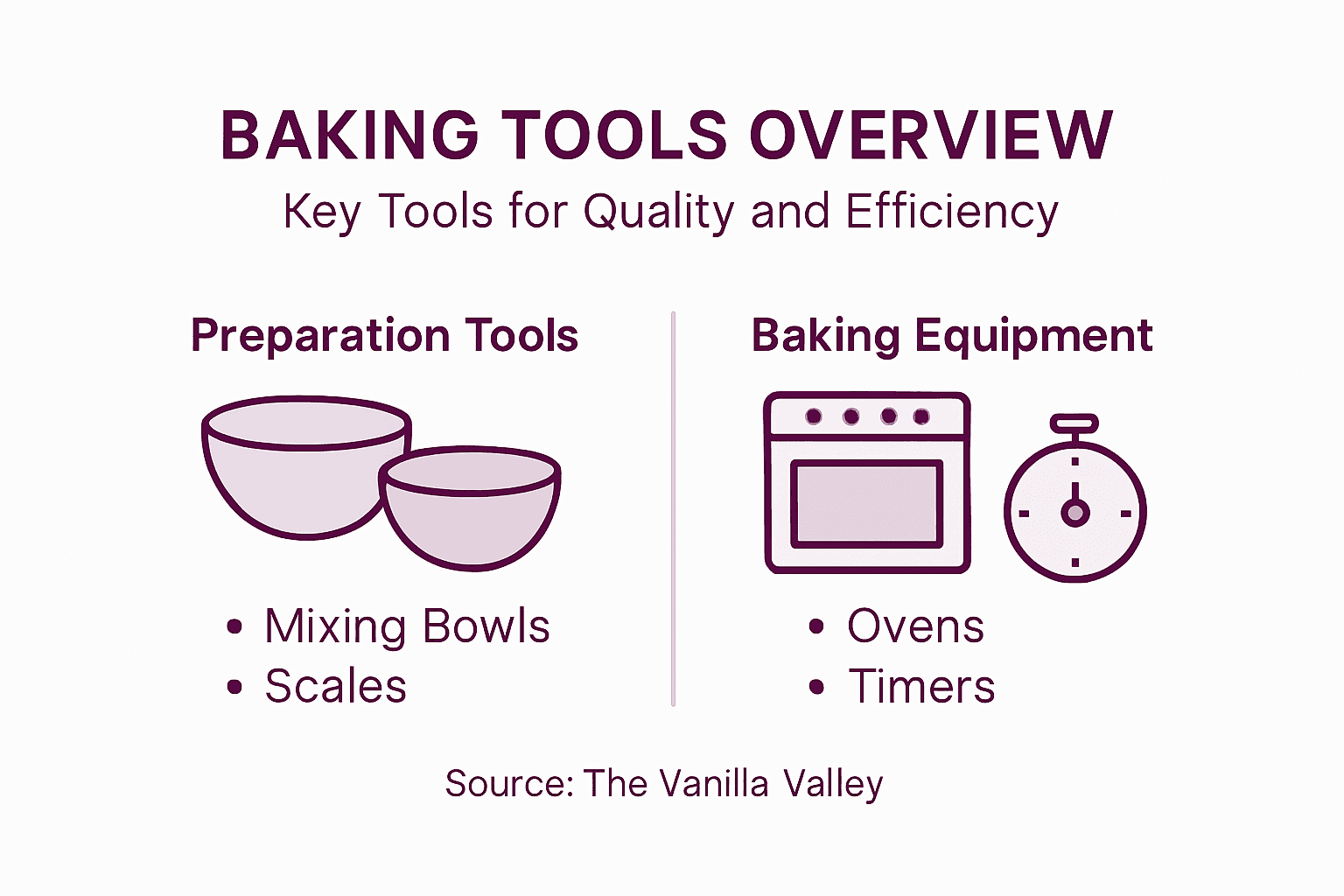
Professional bakeries must carefully navigate the complex landscape of baking equipment investment and maintenance to balance quality, performance, and budgetary constraints. Selecting the right tools involves a strategic approach that considers long-term value beyond initial purchase price.
Key cost and maintenance considerations include:
- Initial Investment Factors
- Equipment quality grades
- Manufacturing specifications
- Warranty coverage
- Brand reputation
- Maintenance Cost Analysis
- Annual servicing requirements
- Replacement part availability
- Energy efficiency ratings
- Repair versus replacement costs
- Performance Comparison Metrics
- Production capacity
- Durability
- Precision capabilities
- Technology integration
Sophisticated bakery equipment represents a significant capital investment that extends far beyond simple monetary value. Professional bakers must evaluate tools not just on their immediate functionality, but on their potential to enhance overall operational efficiency, reduce long-term maintenance expenses, and contribute to consistent product quality.
Intelligent equipment selection is about understanding total cost of ownership, not just the price tag.
Pro tip: Create a comprehensive spreadsheet tracking equipment lifecycle costs, including purchase price, annual maintenance, energy consumption, and potential productivity gains to make more informed purchasing decisions.
Avoiding Common Errors with Basic Tools
Professional bakers must be vigilant about preventing common measurement and handling errors that can compromise product quality and consistency. Understanding the nuanced ways basic tools can be misused is crucial for maintaining high standards in commercial baking environments.
Frequent errors and their prevention strategies include:
- Measurement Mistakes
- Using uncalibrated scales
- Inconsistent ingredient portioning
- Incorrect liquid measurement techniques
- Failing to level dry ingredients
- Temperature Control Errors
- Inaccurate oven temperature readings
- Improper ingredient temperature management
- Inconsistent proofing conditions
- Neglecting humidity factors
- Equipment Handling Errors
- Inappropriate cleaning techniques
- Overlooking equipment maintenance
- Incorrect tool storage
- Using damaged or worn utensils
Each basic tool represents a potential point of failure in the baking process. Professional bakers must develop a meticulous approach that treats every measuring cup, scale, and thermometer as a critical component of their quality control system.
Precision is not about perfection, but about consistent, reproducible results that meet professional standards.
Pro tip: Create a weekly calibration and inspection checklist for all measuring tools, ensuring they remain accurate and reliable throughout your baking operations.
Elevate Your Baking with Trusted Tools from The Vanilla Valley
Professional baking demands precision, durability, and consistency to successfully meet quality control and efficiency challenges. Whether you are tackling batch size uniformity or investing in multi-functional mixing equipment, the right tools make all the difference. At The Vanilla Valley, we understand these specific needs and offer an extensive range of cake decorating supplies and baking accessories designed to support both amateur and professional bakers in achieving exceptional results every time.

Explore our carefully selected products that align perfectly with the standards outlined in “Professional Baking Tools – Elevating Bakery Standards.” From precision scales and quality cake boards to professional-grade decorations and bulk-buy options, we provide solutions that help you maintain product consistency, save time, and enhance hygiene. Take advantage of our special offers and reliable delivery services by visiting The Vanilla Valley online store. Start transforming your baking workspace today with trusted tools and expert support at your fingertips.
Frequently Asked Questions
What are the key characteristics of professional baking tools?
Professional baking tools are distinguished by their durability, precision, high-volume capacity, advanced temperature control, and use of industrial-grade materials. They are built to withstand continuous use in commercial settings.
How do different categories of baking equipment impact production in a bakery?
Different categories of baking equipment, such as mixing equipment, preparation tools, baking apparatus, and cooling/storage, each serve specific functions that enhance efficiency, reduce manual effort, and ensure uniformity in product quality.
What role do quality control tools play in professional baking?
Quality control tools, such as precision measurement devices and product consistency tools, are essential for maintaining high standards in a bakery. They help ensure that every product meets exacting specifications for ingredients, size, and presentation.
What are common errors associated with basic baking tools, and how can they be avoided?
Common errors include measurement mistakes, temperature control errors, and improper equipment handling. These can be avoided by using calibrated tools, monitoring conditions closely, and adhering to strict cleaning and maintenance protocols.