The Essential Guide to Fondant in Baking
Over 80 percent of british cake decorators prefer fondant for its smooth finish and flexible use in stunning designs. Whether you bake at home or run a professional kitchen, knowing the difference between fondant, icing, and sugarpaste can save time and improve your results. This guide explains how these key ingredients work together to create flawless cakes, highlights trusted brands, and offers practical tips for anyone hoping to master the art of cake coverage.
Table of Contents
Key Takeaways
| Point | Details |
| Understanding Fondant | Fondant is a pliable sugar-based covering that creates smooth finishes on cakes, differentiated from traditional buttercream by its firm texture and ability to be sculpted. |
| Choosing Fondant Brands | Leading brands like Renshaw and Couture offer various strengths, such as elasticity and smooth finishes, catering to both amateur and professional bakers. |
| Effective Cake Covering Techniques | A smooth buttercream base is essential; ensure a cool, dry environment while applying fondant to maintain its integrity and prevent stickiness. |
| Packaging Considerations | Select between 250g packs for occasional use and 5kg boxes for bulk purchasing based on baking frequency and storage needs. |
What Is Fondant, Icing, and Sugarpaste?
Fondant is a versatile sugar-based confectionery covering used in cake decorating, which functions essentially as an edible icing designed to create smooth, professional-looking cake surfaces. Often referred to interchangeably as icing, sugarpaste, or rolled fondant, this remarkable ingredient transforms ordinary cakes into stunning culinary masterpieces.
At its core, fondant is a sugar-based mixture comprising sugar, water, gelatin, and sometimes vegetable shortening, which produces an incredibly pliable substance remarkably similar to modelling clay. Professional bakers and home decorators alike appreciate fondant for its unique properties: it can be rolled out thinly, draped smoothly over cakes, and sculpted into intricate decorative elements with remarkable precision.
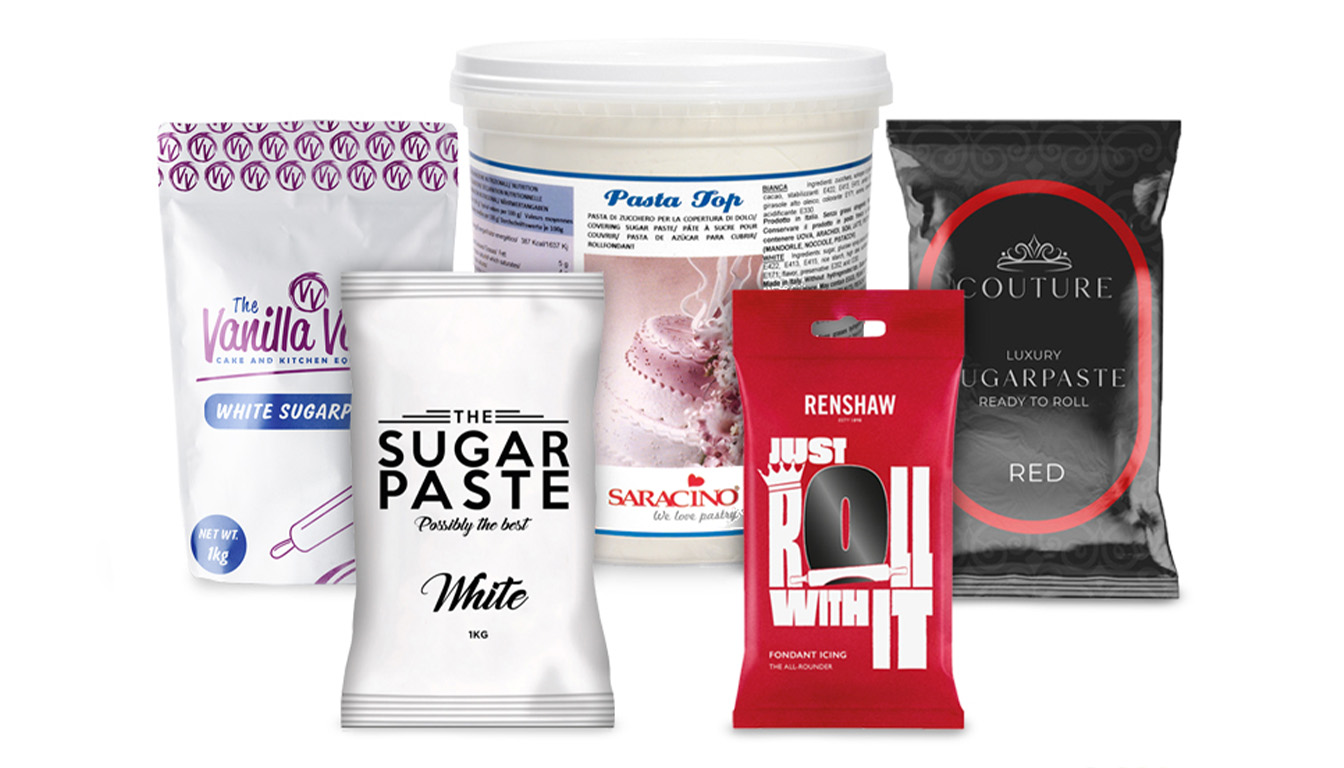
The primary characteristics that distinguish fondant from traditional buttercream include its firm texture and ability to create ultra-smooth cake surfaces. Unlike soft, spreadable icings, rolled fondant can be kneaded, stretched, and shaped, allowing cake decorators to achieve professional finishes that look pristine and polished. Brands like Renshaw, The Sugar Paste, Couture, Select Ireland, and Saracino offer various fondant options - from smaller 250g packs perfect for hobbyist bakers to larger 5kg boxes ideal for professional kitchens.
Whether you’re a beginner learning cake decoration or an experienced baker seeking flawless cake coverings, understanding fondant’s unique properties will elevate your baking skills. Its versatility means you can create everything from elegant wedding cakes to playful children’s birthday designs, all with a professional, sophisticated finish.
Leading Fondant Brands and Their Strengths
The world of fondant is rich with exceptional brands, each offering unique characteristics that cater to different baking needs and skill levels. Renshaw stands out as a leading fondant brand in the UK, renowned for its consistently high-quality ready-rolled fondant icing discs that simplify cake decorating processes for both amateur and professional bakers.
Brands like Renshaw, The Sugar Paste, Couture, Saracino, and Select Ireland provide diverse options to suit various decorating styles. The Sugar Paste, for instance, offers exceptional elasticity perfect for intricate modelling work, while Couture fondant is celebrated for its satin-smooth finish and superior handling characteristics. Professional bakers often prefer brands that offer both convenience and quality, with ready-to-use options that save time without compromising on aesthetic appeal.
Understanding the strengths of different fondant brands can significantly enhance your cake decorating experience. Some brands excel in colour vibrancy, others in texture, and a few provide specialised formulations for specific techniques. For hobbyist bakers, smaller 250g packs offer flexibility and minimal waste, whereas professional kitchens might opt for larger 5kg boxes that provide better value and consistency.
When selecting a fondant brand, consider factors like elasticity, colour range, taste, and ease of use. Each brand brings something unique to the table, whether it’s Renshaw’s reliability, Saracino’s rich colours, or Select Ireland’s smooth texture. Your choice will ultimately depend on your specific cake decorating requirements and personal preference.
Expert Techniques for Covering Cakes Successfully
Successful fondant cake covering requires precise preparation and meticulous technique. Before you begin, ensure your cake has a perfectly smooth buttercream base - this creates the essential foundation for a flawless fondant finish. The crumb coat is crucial, providing a level surface that prevents imperfections from showing through your final fondant layer.
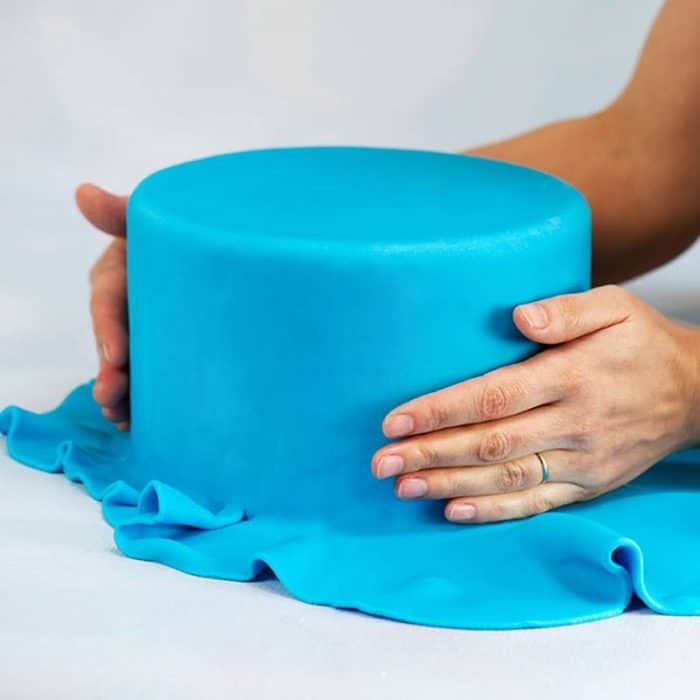
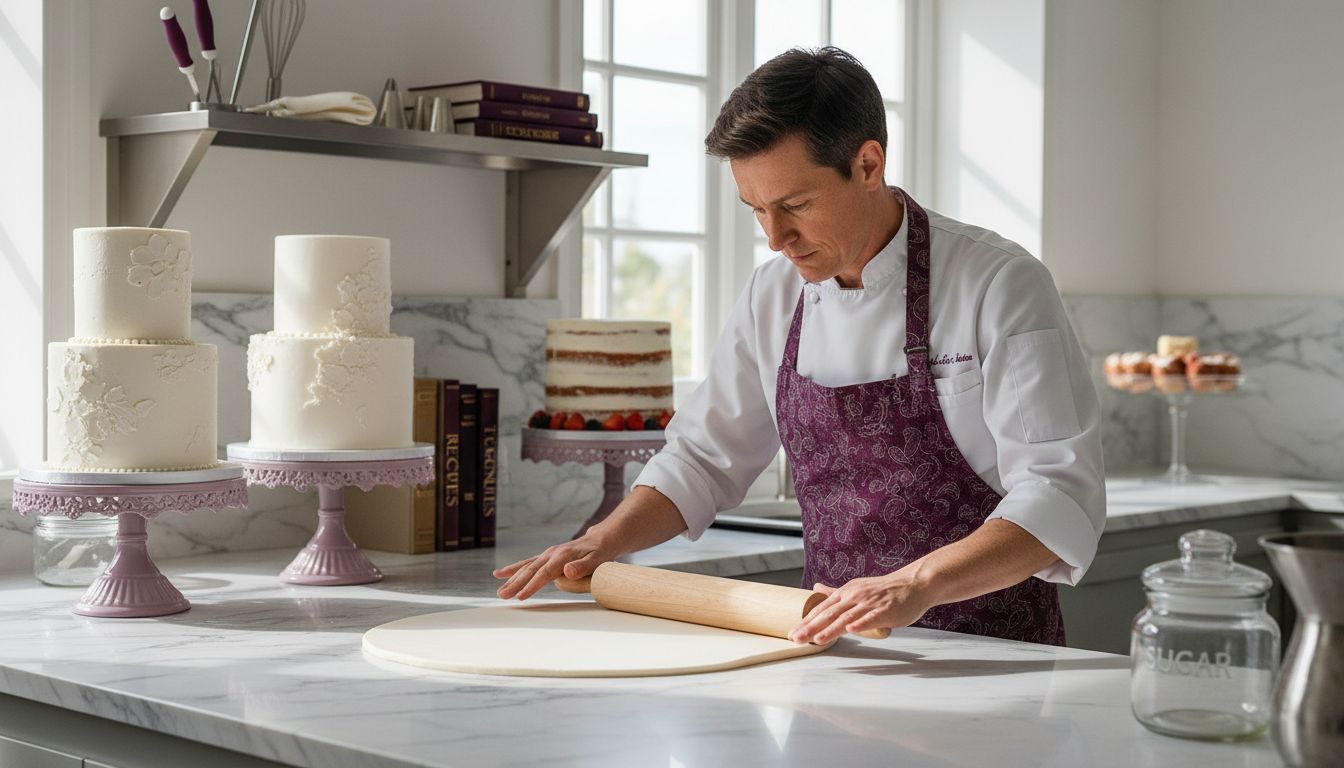
The actual fondant application involves several critical steps. Roll your fondant to an even thickness, typically around 3-4 millimetres, using cornflour sparingly to prevent sticking. When draping the fondant over your cake, work carefully to avoid air bubbles and wrinkles. Start at the top and gently ease the fondant down the sides, using a fondant smoother to press out any trapped air and create a seamless, polished appearance.
Temperature and humidity play significant roles in fondant success. Work in a cool, dry environment to prevent the fondant from becoming too soft or sticky. Professional bakers recommend keeping your workspace around 18-20 degrees Celsius, with low humidity. Have your tools ready before starting - including a sharp trimming knife, fondant smoother, and cornflour for dusting - to ensure a smooth, uninterrupted process.
Mastering fondant covering takes practice and patience. Each cake presents unique challenges, from uneven surfaces to tricky corner techniques. Don’t be discouraged by initial imperfections. With careful technique and consistent practice, you’ll develop the skills to create stunning, professionally finished cakes that look as beautiful as they taste.
Choosing Between 250g Packs and 5kg Boxes
Fondant packaging comes in various sizes, with 250g packs and 5kg boxes representing two primary options that cater to different baking needs and skill levels. Smaller 250g packs are perfect for hobbyist bakers, home cake decorators, and those experimenting with new techniques, offering flexibility and minimal product waste.
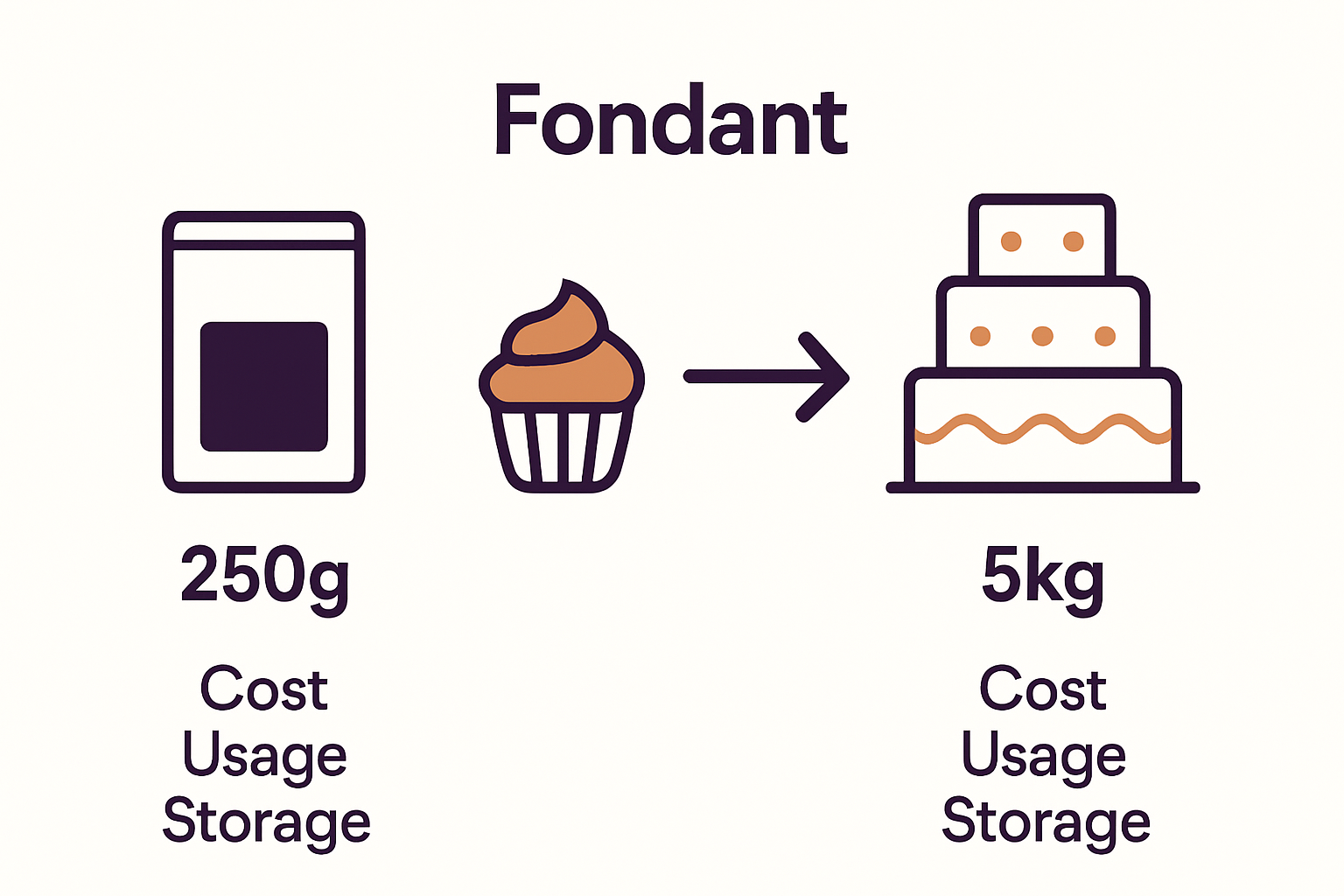
For professional bakeries and small catering businesses, bulk purchasing through 5kg boxes becomes significantly more economical. These larger quantities not only reduce per-kilogram costs but also ensure consistent colour and texture across multiple cake projects. Professional bakers benefit from having a reliable, substantial supply of fondant that can be used across multiple cake orders without frequent reordering.
When selecting between pack sizes, consider several key factors beyond just price. Smaller 250g packs are ideal for:
-
Occasional bakers
-
Testing new fondant brands
-
Creating small celebration cakes
-
Minimising storage requirements
Conversely, 5kg boxes suit businesses and serious bakers who require:
-
Cost-effective bulk purchasing
-
Consistent colour and texture
-
Reduced packaging waste
-
Long-term storage capabilities
Ultimately, your choice depends on your specific baking frequency, storage capacity, and budgetary constraints. Some bakers even mix strategies, using smaller packs for experimentation and larger boxes for regular production work.
Storage, Handling, and Common Mistakes
Proper fondant storage is critical to maintaining its quality and workability. Keep unopened fondant in a cool, dry place away from direct sunlight, and always seal unused portions in an airtight container to prevent drying. Once opened, wrap the remaining fondant tightly in cling film and store at room temperature, avoiding humid environments that can compromise its texture.
Common handling mistakes can significantly impact your fondant’s performance. Rolling fondant too thin or not kneading it sufficiently can result in structural weakness and uneven textures. Professional bakers recommend warming fondant slightly in your hands before use, which increases its elasticity and makes it easier to work with. Always use cornflour sparingly to prevent drying, and work on a clean, smooth surface to avoid introducing unwanted debris.
Key mistakes to avoid include:
-
Overworking fondant, which can make it tough
-
Using wet hands or tools that introduce excess moisture
-
Storing fondant in refrigerators or extremely humid spaces
-
Exposing fondant to direct heat or sunlight
Temperature and humidity are crucial factors in fondant handling. Ideally, maintain a workspace around 20 degrees Celsius with moderate humidity. If your fondant becomes too soft, let it rest for a few minutes or knead in a small amount of powdered sugar to restore its consistency. Practice and patience are essential in mastering the delicate art of fondant manipulation.
Elevate Your Cake Decorating with Professional-Grade Fondant Supplies
Mastering the art of fondant can be challenging when facing issues like achieving a smooth finish, selecting the right fondant brand, or choosing ideal pack sizes for your baking needs. Whether you are a hobbyist seeking to experiment with 250g packs or a professional requiring consistent quality from bulk 5kg boxes, having reliable, high-quality materials is essential to bring your cake designs to life.
Discover trusted solutions with The Vanilla Valley where you will find a wide range of premium fondant options alongside essential cake decorating supplies. Our carefully selected brands ensure you get the elasticity, colour vibrancy, and texture that the article highlights as key to flawless finishes. Benefit from our decades of experience serving both local and national baking enthusiasts since 2009.
Ready to transform your fondant creations from challenging to effortlessly beautiful Take the next step now by exploring our extensive collection of cake decorating essentials at The Vanilla Valley. Visit our online store for expert-approved fondant, bulk buying options, and tools designed to help you conquer every technique with confidence. Start creating cakes that look as professional as they taste today.
Frequently Asked Questions
What is fondant and how is it used in baking?
Fondant is a sugar-based icing used to cover cakes, providing a smooth, professional finish. It can be rolled out and draped over cakes, as well as sculpted into decorative elements, making it versatile for various baking projects.
How do I prepare my cake before applying fondant?
Before applying fondant, ensure your cake has a smooth buttercream base, also known as a crumb coat. This provides a level surface, preventing imperfections from showing through the fondant layer.
What are the differences between 250g packs and 5kg boxes of fondant?
250g packs are ideal for hobbyist bakers and small projects, as they minimise waste and allow for experimentation. In contrast, 5kg boxes are more cost-effective for professional bakers, providing consistent colour and texture across multiple projects.
How should I store leftover fondant?
Store unopened fondant in a cool, dry place away from sunlight. Once opened, wrap it tightly in cling film and keep it at room temperature in an airtight container to prevent drying out.