
Why Sprinkles Bleed Colour – Impact on Cake Decorating
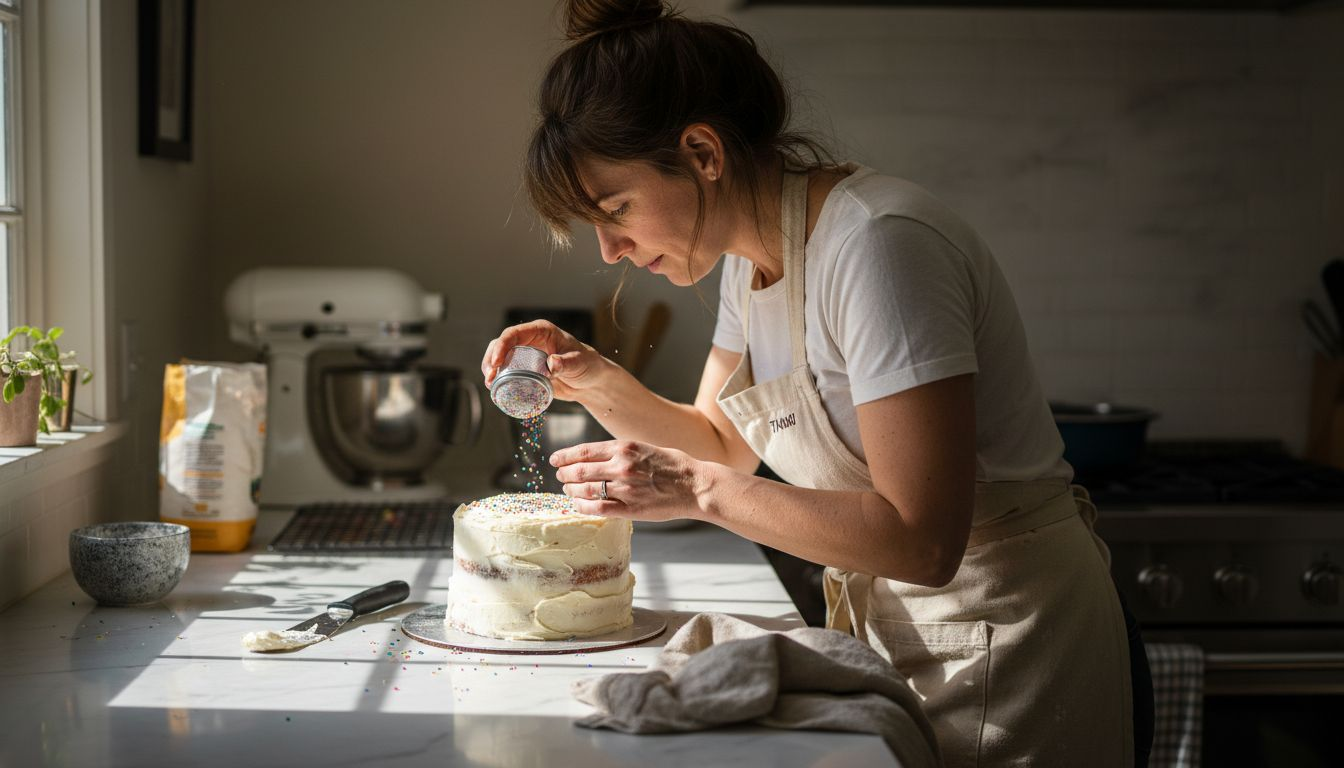
Every amateur baker in South Wales knows the disappointment when vibrant sprinkles turn into streaks across a freshly decorated cake. The challenge of keeping colours crisp is more than just artistry—it demands understanding how moisture breaking down the sugar coating triggers colour bleeding. With local humidity complicating the process, discovering practical ways to prevent this common issue will help you achieve professional-looking results every time you decorate.
Table of Contents
- Sprinkle Colour Bleeding Explained
- Factors That Cause Sprinkles to Run
- Types of Sprinkles and Colour Stability
- Preventing Colour Bleed When Decorating
- Best Practices for Moisture Management
Key Takeaways
| Point | Details |
|---|---|
| Moisture Control is Crucial | Allow frosting to dry completely before adding sprinkles to avoid colour bleed. |
| Quality of Sprinkles Matters | Use premium sprinkles with stable dyes to reduce the risk of colour bleeding. |
| Barrier Methods Prevent Bleeding | Apply a clear piping gel or edible glue to create a protective layer before adding sprinkles. |
| Environmental Factors Impact Results | Manage humidity and temperature to minimise moisture-related issues when decorating cakes. |
Sprinkle Colour Bleeding Explained
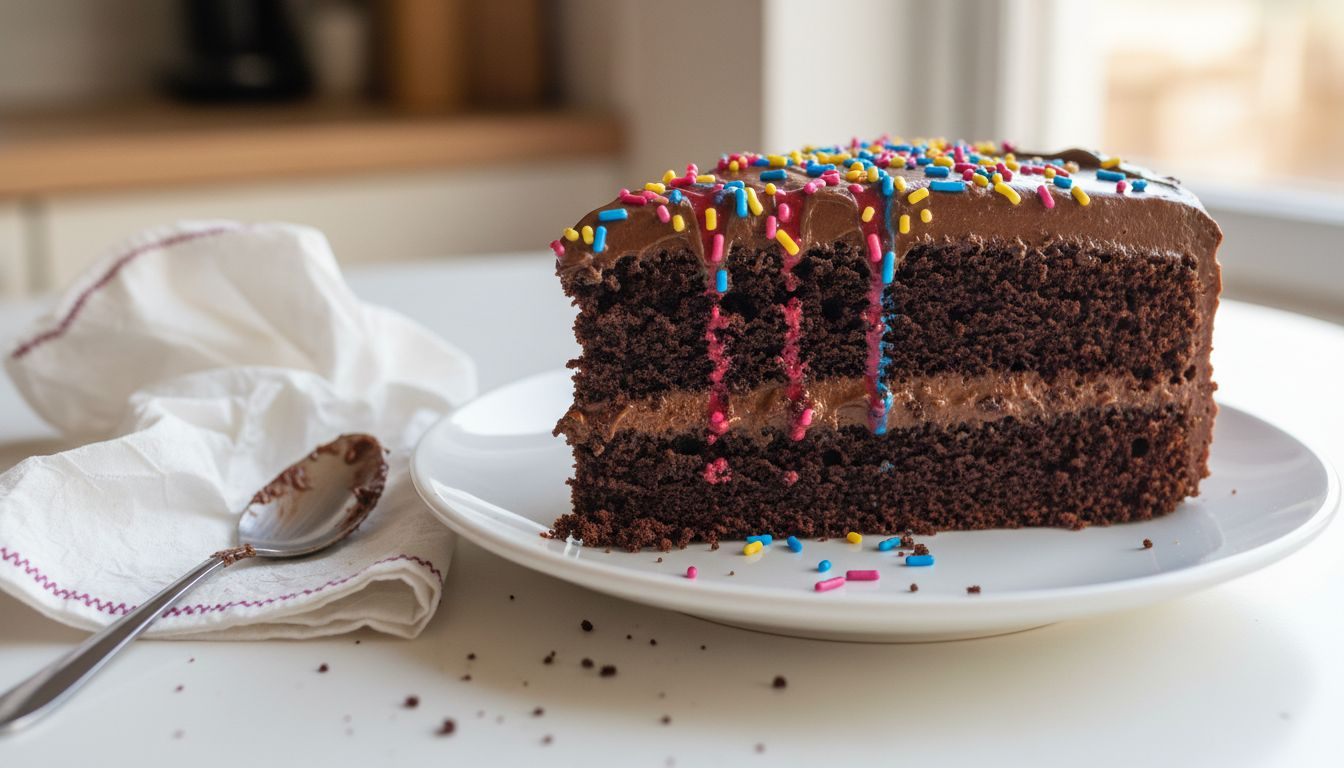
Sprinkle colour bleeding happens when the dyes in your sprinkles dissolve into the moisture of your frosting or icing. The result? Colours run, spread, and leave unsightly stains on your beautifully piped designs. Understanding why this occurs is the first step to preventing it.
The culprit behind colour bleeding is straightforward: water-soluble dyes mixed with moisture. When sprinkles sit on wet icing, the sugar coating absorbs water from the frosting, causing the dyes to dissolve and bleed outwards. This process accelerates in humid environments or when temperature fluctuations occur.
What Triggers the Bleeding Process
Three main factors work together to cause colour bleeding:
- Moisture content: Wet or freshly applied frosting provides the perfect environment for dyes to dissolve and spread
- Sprinkle composition: Lower quality sprinkles with unstable dyes bleed far more readily than premium alternatives
- Environmental conditions: High humidity and warm temperatures speed up the dissolution process
Moisture breaking down the sugar coating is the core mechanism. Your frosting acts like a sponge, drawing moisture into the sprinkle and reactivating the dyes.
Why Quality Matters
Not all sprinkles are created equal. Budget sprinkles often contain less stable dye formulations that dissolve more easily. Premium sprinkles use better quality colouring that resists moisture more effectively.
This is why investing in quality products from trusted suppliers makes a real difference. Bake-stable sprinkles, in particular, are engineered specifically to resist colour migration and moisture damage.
Quality sprinkles with stable dyes can dramatically reduce or eliminate colour bleeding issues entirely.
When you’re decorating a cake that needs to look pristine for hours—especially for events or celebrations—the sprinkle quality becomes your unspoken guarantee of success.
Pro tip: Apply sprinkles to completely dry frosting using a barrier method, such as brushing a thin layer of clear piping gel or edible glue onto your cake first, then pressing sprinkles into it before the gel sets fully.
Factors That Cause Sprinkles to Run
Sprinkles don’t just bleed randomly. Several specific factors work together to make colour run into your frosting, and understanding each one helps you prevent the problem before it starts.
The primary culprit is moisture content. When sprinkles sit on wet or freshly applied frosting, water from the icing seeps into the sprinkle coating and reactivates the dyes. The longer sprinkles remain in contact with moist surfaces, the worse the bleeding becomes.
The Main Triggers
Four key factors determine whether your sprinkles will run:
- Moisture in frosting: Freshly piped, wet icing accelerates colour bleeding dramatically
- Sprinkle composition: Water-soluble dyes in budget sprinkles dissolve far more readily than stable alternatives
- Environmental humidity: High humidity speeds up moisture absorption into the sprinkle coating
- Temperature fluctuations: Warm conditions cause moisture to move more actively through frosting layers
Sprinkle shape and surface area also matter. Thin, delicate sprinkles with greater exposed surface area bleed more quickly than thicker varieties. Jimmies and rod-shaped sprinkles tend to perform better than round ball sprinkles for this reason.
Frosting Ingredients Make a Difference
Not all frostings are equally problematic. Buttercream with higher water content causes more bleeding than cream cheese frosting, which is naturally thicker and less moisture-laden.
Fondant, by contrast, creates a moisture barrier that actually prevents sprinkles from bleeding into the cake surface beneath. This is why professional decorators often use fondant bases before applying sprinkles.
The protective coating on quality sprinkles acts as a shield against moisture, making premium sprinkles far superior for preventing colour run.
When you understand these factors, you can control them. Choose the right sprinkles, apply them to dry frosting, and manage your environment. The difference in results will be immediately obvious.
Pro tip: Store sprinkles in airtight containers away from humidity, and apply them only after your frosting has set for at least 30 minutes—the drier your base, the less bleeding you’ll experience.
Types of Sprinkles and Colour Stability
Not all sprinkles are created equal. The type you choose directly impacts how resistant your decoration will be to colour bleeding. Understanding the differences helps you pick the right sprinkle for every cake design.
Nonpareils are tiny, delicate beads of sugar with a crispy texture. They look beautiful but are notoriously prone to bleeding. The small bead shape means high surface area exposure, making them vulnerable to moisture absorption. Save these for dry fondant surfaces or cakes served immediately after decoration.
Jimmies (rod-shaped sprinkles) perform far better for colour stability. Their elongated form provides less exposed surface area, and rod-shaped sprinkles typically resist colour run far more effectively than rounded alternatives. This makes them ideal for buttercream or cream cheese frosting.
Composition Matters
All sprinkles contain similar base ingredients, but their formulation varies significantly:
- Sugar coating: The primary ingredient that provides structure
- Vegetable oil: Helps create the glossy finish and protective layer
- Starch: Binds ingredients and improves stability
- Glazing agents: These seal the sprinkle and determine colour stability
Budget sprinkles use cheaper glazing agents that fail quickly under moisture. Premium sprinkles invest in superior coatings that repel water effectively.
Crystalline Sugars and Alternatives
Crystalline sugar decorations offer excellent colour stability. Because they’re purely crystallised sugar without added dyes, they don’t bleed at all. They work beautifully on any frosting type, including wet buttercream. However, they lack the vibrant colours many decorators want.
Bake-stable sprinkles are specifically engineered to withstand both heat and moisture. These premium options use heat-set dyes and protective coatings that prevent bleeding entirely, making them worth the investment for important occasions.
Choose jimmies or bake-stable sprinkles for wet frostings; reserve nonpareils for dry surfaces or immediate serving.
When decorating cakes in South Wales’ humid climate, the sprinkle type becomes even more critical. The moisture in the air compounds frosting wetness, making premium options essential for lasting results.
Pro tip: Test sprinkles on a small frosting sample first, waiting 15 minutes to see if colour bleeds before committing to your finished cake.
Here is a comparison of popular sprinkle types and their resistance to colour bleeding:
| Sprinkle Type | Colour Stability | Best Use Case | Caution Points |
|---|---|---|---|
| Nonpareils | Low | Fondant or fast serving | Bleed easily on moist frostings |
| Jimmies | High | Buttercream, cream cheese | More resistant, but check quality |
| Crystalline Sugars | Excellent | Any frosting, no colour needed | Often limited colour vibrancy |
| Bake-Stable Sprinkles | Superior | High humidity or moist cakes | Typically costlier than alternatives |
Preventing Colour Bleed When Decorating
Preventing colour bleed isn’t difficult once you understand the core strategies. Most problems stem from applying sprinkles to wet frosting, but there are proven techniques that work every time.
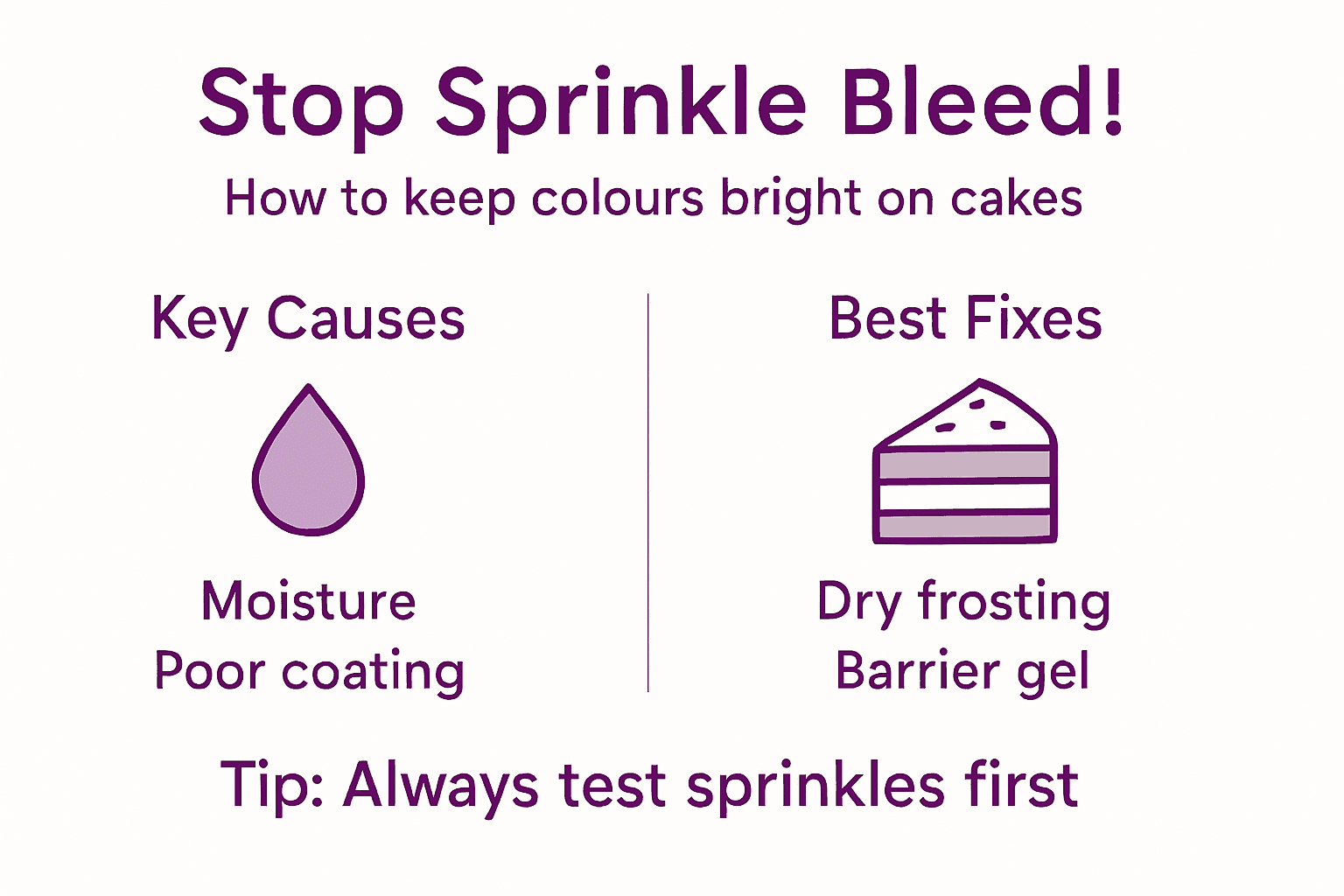
The foundation of prevention is drying time. Allow your frosting to set for at least 30 minutes before adding sprinkles. Royal icing and powdered sugar icings work brilliantly because they naturally dry quickly and have far lower moisture content than buttercream. The drier your base layer, the safer your sprinkles become.
Four Proven Prevention Methods
Use these techniques alone or combine them for maximum protection:
- Dry your frosting completely: Wait 30-45 minutes before decorating; the longer, the better
- Choose low-moisture icing: Royal icing and powdered sugar icing provide excellent colour stability
- Apply a protective barrier: Use piping gel, edible glue, or clear piping gel between frosting and sprinkles
- Select premium sprinkles: High-quality, bake-stable sprinkles resist bleeding far better than budget alternatives
The barrier method is particularly effective. Brush a thin layer of clear piping gel onto your dried frosting, then immediately press sprinkles into it. The gel seals the frosting surface before moisture can reactivate dyes.
The Barrier Layer Strategy
A barrier acts as a protective shield. Edible glue works beautifully and sets clear. Apply it sparingly—just enough to hold sprinkles in place without creating visible glossiness.
Clear piping gel offers similar benefits. It’s thicker than glue, giving you more control during application. Press sprinkles into the gel whilst it’s still tacky for best results.
The barrier method virtually eliminates colour bleed regardless of frosting type or environmental humidity.
This approach works particularly well in South Wales’ humid climate, where moisture in the air compounds traditional bleeding issues. Even buttercream becomes safe when you use a protective barrier.
Storage and Timing Tips
Store decorated cakes in a cool, dry location away from direct sunlight and humidity. Keep them in airtight cake boxes if possible, which stabilise the internal environment. Apply sprinkles as close to serving time as feasible—this is the safest approach for important occasions.
Pro tip: Assemble your cake components in reverse order: decorate with sprinkles first, refrigerate for 15 minutes, then stack with other cake layers when everything has fully set.
Best Practices for Moisture Management
Moisture management is the cornerstone of preventing sprinkle colour bleed. Control your environment and frosting composition, and bleeding becomes a non-issue. This is where precision matters.
Start with your frosting formulation. Reducing liquid ingredients directly lowers moisture content. Instead of adding extra milk to buttercream, use a stiffer consistency that holds its shape better. This single change dramatically improves sprinkle stability.
Three Essential Moisture Control Strategies
Implement these techniques to master your decorating environment:
- Reduce liquid in frostings: Use less milk, cream, or water when preparing buttercream and icing
- Allow complete drying: Applying sprinkles onto completely dry surfaces eliminates the moisture activation problem entirely
- Maintain stable temperatures: Avoid warm kitchens where condensation builds up on frosted cakes
Temperature control prevents condensation from forming on your finished cake. When warm frosting moves to a cool environment, moisture condenses on the surface. This seemingly harmless moisture is precisely what reactivates dye and causes bleeding.
The following table summarises effective moisture control strategies for lasting sprinkle decoration:
| Strategy | How It Works | Result for Sprinkles |
|---|---|---|
| Reduce liquid in frosting | Lowers overall water content | Dramatically less colour bleed |
| Allow frosting to dry | Creates a protective crust | Decreases dye dissolution risk |
| Stable temperature and humidity | Prevents condensation on cake surface | Maintains sprinkle colour sharpness |
Managing Your Decorating Environment
Your kitchen’s humidity level matters more than you might think. In South Wales, where moisture in the air is naturally higher, environmental control becomes critical. Air conditioning or a dehumidifier can dramatically improve results during humid months.
Store decorated cakes correctly. Keep them in cool, dry spaces away from direct sunlight. An airtight cake box stabilises the internal environment, preventing external humidity from affecting your sprinkles. Even a sealed cardboard box works better than open air exposure.
Low-water frostings combined with stable temperatures create the ideal conditions for colour-stable sprinkles.
Some professional decorators apply a protective glaze or sealant over sprinkles after decoration. This locks in colour and prevents moisture from penetrating the sprinkle coating. It’s an extra step, but worth considering for high-stakes occasions.
Timing Your Decoration
Decorate as close to serving time as possible. The less time sprinkles spend on frosting, the lower your bleed risk. For events, wait until the morning of serving rather than decorating days in advance.
Pro tip: Place your frosted cake in the refrigerator for 15 minutes before applying sprinkles, ensuring the frosting surface is completely set and dry before any moisture can cause problems.
Prevent Colour Bleed and Elevate Your Cake Decorating
Sprinkle colour bleeding can be frustrating and heartbreaking when your masterpiece doesn’t look its best due to running dyes and messy stains. The key challenges are moisture in frosting, low-quality sprinkles, and environmental humidity. At The Vanilla Valley, we understand these struggles and offer a curated range of premium bake-stable sprinkles alongside essential tools like clear piping gels and edible glues to help you create stunning, bleed-free decorations every time.

Why settle for disappointment when you can invest in supplies trusted by professional and amateur bakers since 2009? Browse our full selection of cake decorating essentials today at The Vanilla Valley and gain access to expert tips, special offers, and reliable next day delivery. Don’t let colour bleed ruin your hard work — start decorating with confidence now and make every celebration unforgettable. Explore our cake decoration supplies and find the perfect sprinkles and accessories tailored to your needs.
Frequently Asked Questions
What causes sprinkles to bleed colour?
Sprinkle colour bleeding occurs when moisture from icing or frosting activates water-soluble dyes in the sprinkles, causing them to dissolve and spread outwards.
How can I prevent sprinkles from bleeding on my cake?
To prevent bleeding, apply sprinkles to completely dry frosting, use a protective barrier like piping gel or edible glue, and choose high-quality, bake-stable sprinkles.
Which types of sprinkles are least likely to bleed?
Jimmies (rod-shaped sprinkles) and bake-stable sprinkles generally have higher resistance to colour bleeding compared to nonpareils, which are more prone to absorbing moisture.
How does humidity affect sprinkle colour bleeding?
High humidity levels can accelerate the bleeding process as they increase the moisture absorption into the sprinkle coating, making it essential to manage environmental conditions when decorating.