
Baking Basics People Always Get Wrong – Explained
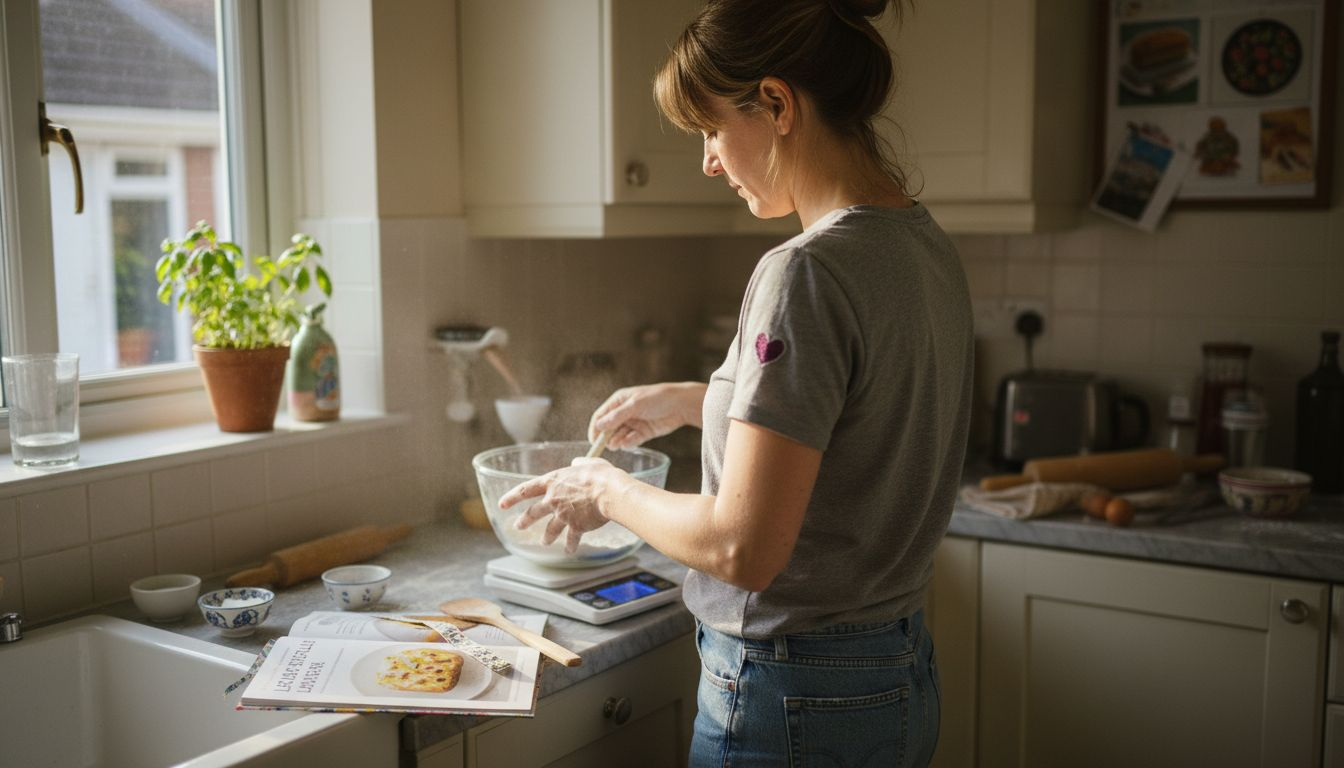
Baking mistakes can turn a promising cake into a disappointment, leaving many South Wales bakers feeling frustrated. Understanding the science behind baking reveals that ingredient interactions and oven temperatures are just as important as decoration skills. By grasping baking science fundamentals and learning how mixing and fat choices affect your results, you will refine both your cake’s taste and appearance. This guide demystifies common misconceptions, helping you create consistently beautiful and delicious bakes.
Table of Contents
- Baking Basics: What Every Baker Should Know
- Oven Temperatures And Why They Matter
- Butter Versus Oil: Choosing The Right Fat
- The Truth About Overmixing And Texture
- Why Cakes Sink: Causes And Solutions
- Common Baking Myths That Ruin Results
Key Takeaways
| Point | Details |
|---|---|
| Understanding Baking Principles | Successful baking hinges on mastering ingredient interactions, precise measurements, and the right temperatures. |
| Fat Selection Matters | Choosing between butter and oil affects texture and flavour; each has specific applications depending on the desired outcome. |
| Oven Temperature is Critical | Maintaining the correct oven temperature is essential for achieving the right texture and preventing common baking issues. |
| Beware of Baking Myths | Dispel common misconceptions about ingredients and techniques to enhance baking results and avoid mistakes. |
Baking Basics: What Every Baker Should Know
Baking is both an art and a precise science that demands understanding fundamental principles. Baking science fundamentals reveal that successful baking requires more than just following a recipe - it involves comprehending ingredient interactions, heat transfer mechanisms, and chemical transformations.
Every aspiring baker should master several critical foundational skills:
- Understanding ingredient functions
- Measuring ingredients accurately
- Recognising temperature impacts
- Comprehending mixing techniques
- Managing oven variations
Ingredient quality and preparation are paramount in creating exceptional baked goods. Flour, sugar, butter, and eggs each play unique roles in texture, structure, and flavour. Professional bakers know that slight variations in ingredient temperature, measurement precision, and mixing methods can dramatically alter the final product.
Here’s a concise summary of how key baking ingredients influence texture and structure:
| Ingredient | Main Function | Effect on Texture | Impact on Flavour |
|---|---|---|---|
| Flour | Provides structure | Creates crumb and bite | Neutral, slight nuttiness |
| Sugar | Sweetens and tenderises | Adds moisture and softness | Enhances caramel notes |
| Butter | Builds layers and richness | Flaky or tender crumb | Distinct, rich dairy notes |
| Eggs | Bind and leaven | Stabilises and lightens | Contributes subtle richness |
Mastering basic techniques requires practice and scientific understanding. Baking temperatures, ingredient ratios, and mixing methods fundamentally influence your final creation. Experienced bakers develop an intuitive sense of how ingredients interact, learning to adjust techniques based on environmental conditions and specific recipe requirements.
Pro tip: Always measure ingredients precisely and bring them to the recommended temperature before starting your baking process.
Oven Temperatures And Why They Matter
Oven temperature is far more than a simple numerical setting - it’s the critical foundation of successful baking. Oven temperature profiles dramatically influence the chemical reactions, moisture content, and final texture of baked goods.
Bakers must understand the nuanced impacts of different temperature ranges:
-
Low temperatures (150-160°C)
- Slow, even cooking
- Ideal for delicate pastries
- Retains moisture
- Creates soft, tender crumb
-
Medium temperatures (170-180°C)
- Balanced heat distribution
- Good for most cake and bread recipes
- Promotes even rising
-
High temperatures (190-220°C)
- Rapid moisture evaporation
- Creates crisp exteriors
- Accelerates browning reactions
- Perfect for crusty breads and pies
Understanding thermal dynamics is crucial. Different baked goods require specific temperature ranges to achieve optimal results. Academic research confirms that precise temperature control affects starch gelatinization, browning reactions, and overall product quality.
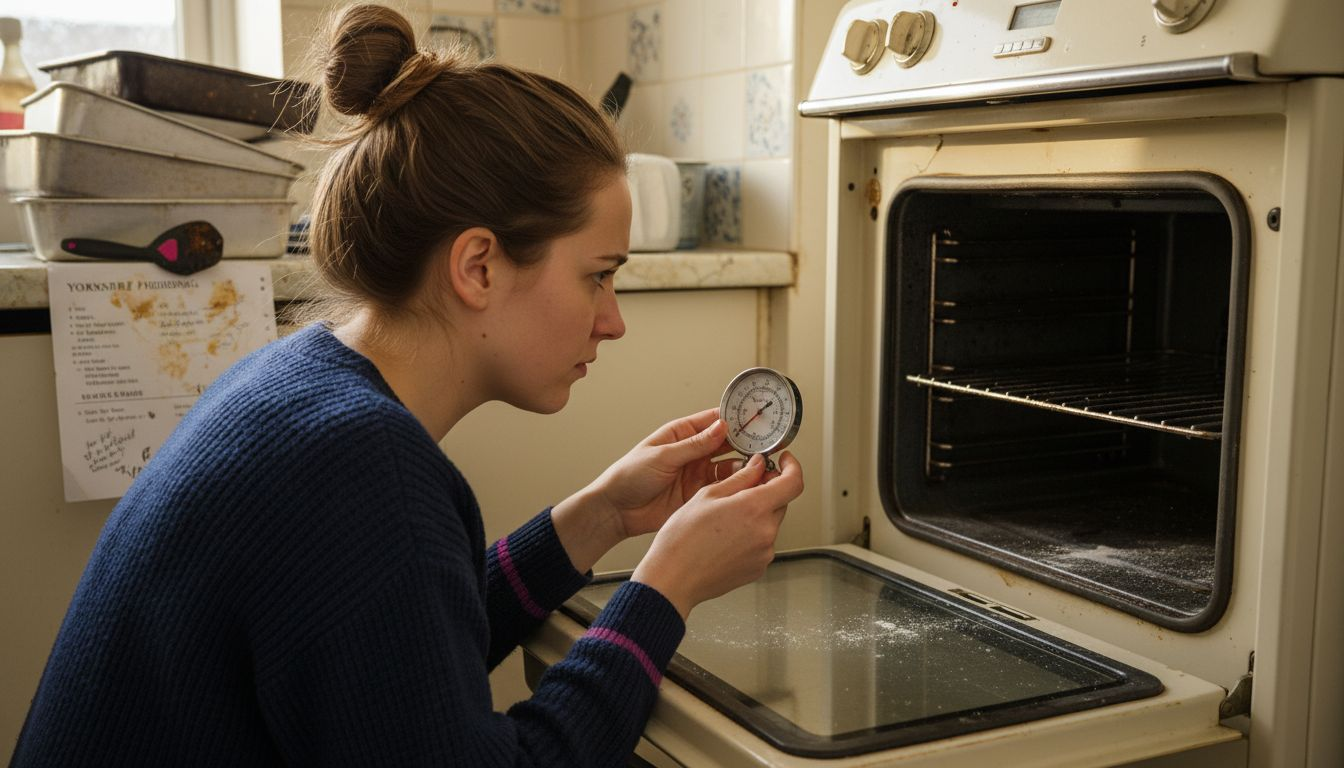
Professional bakers meticulously monitor oven conditions, recognising that slight temperature variations can transform a potential masterpiece into a culinary disappointment. Factors like oven calibration, ingredient temperatures, and baking vessel materials all interact to influence final baked product characteristics.
The following table highlights typical oven temperature issues and their possible effects in baking:
| Issue | Common Cause | Likely Outcome |
|---|---|---|
| Underbaking | Low temperature or door opening | Dense, collapsed centre |
| Overbaking | High temperature or thin pans | Dry, overly brown edges |
| Uneven Baking | Poor rack placement | Lopsided or patchy browning |
| Inaccurate Thermostat | Uncalibrated oven | Inconsistent results each bake |
Pro tip: Invest in an oven thermometer to verify and calibrate your oven’s actual temperature, ensuring consistent baking results every time.
Butter Versus Oil: Choosing The Right Fat
Fat selection is a critical decision in baking that dramatically impacts texture, flavour, and overall recipe success. Distinct fat properties influence the structural and sensory qualities of baked goods in ways many home bakers overlook.
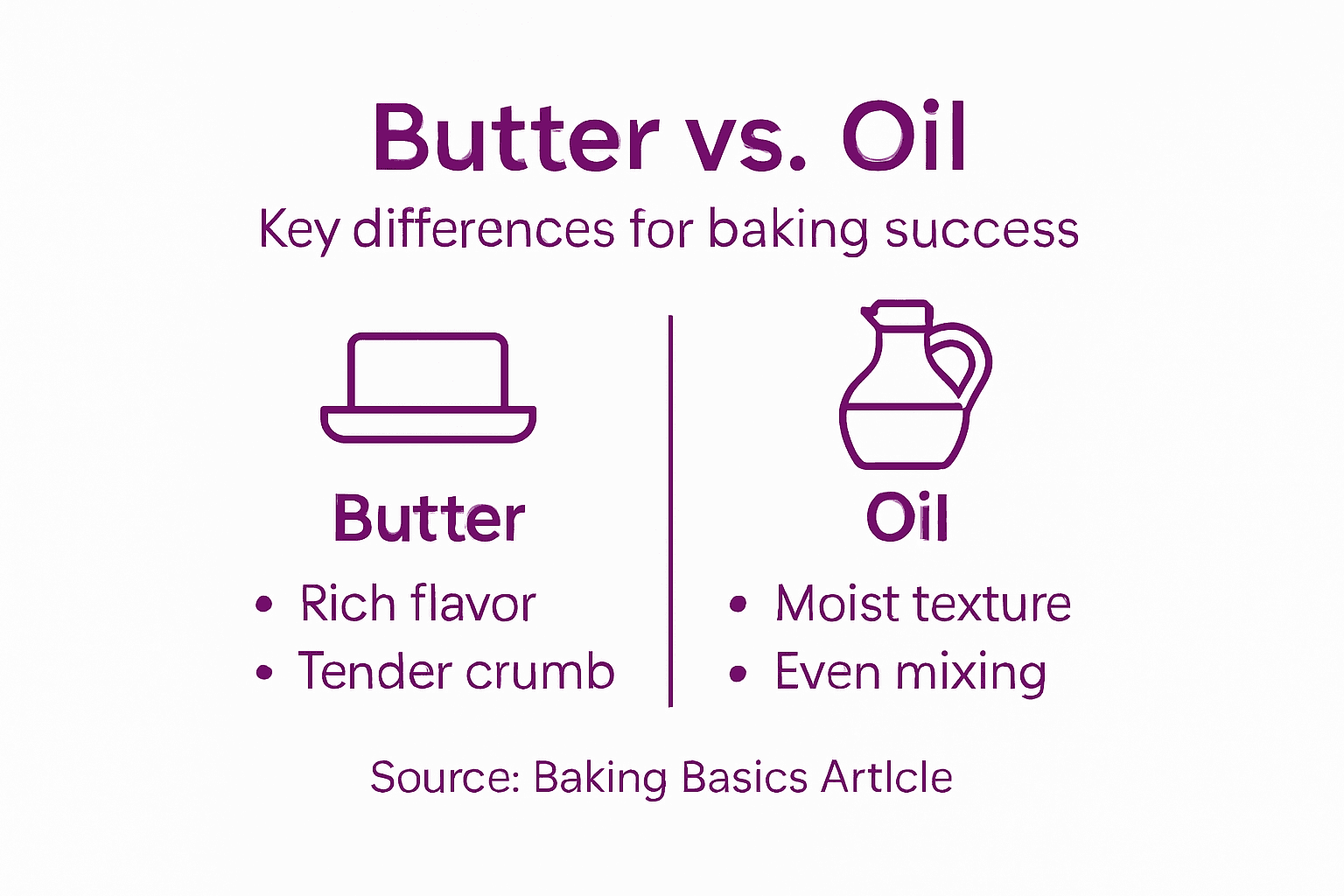
The key differences between butter and oil include:
-
Butter
- Solid at room temperature
- Rich, complex flavour
- Creates flakier textures
- Contains milk solids
- Adds structural integrity
-
Oil
- Liquid at room temperature
- Neutral flavour profile
- Produces more tender crumb
- Increases moisture retention
- Creates softer baked goods
Professional bakers understand that each fat type serves a unique purpose. Butter excels in pastries and cakes requiring structure and flavour, while oils work brilliantly in moist quick breads, dense cakes, and recipes needing consistent moisture. The choice depends entirely on the specific baking outcome you’re seeking.
Understanding molecular composition helps bakers make informed decisions. Butter’s saturated fats provide stability and flavour, whereas oils’ unsaturated composition contributes to tenderness and lightness. Some recipes even combine both fats to achieve optimal texture and taste.
Pro tip: When substituting butter for oil, reduce liquid quantities by 20% and expect slightly different texture results.
The Truth About Overmixing And Texture
Mixing techniques are fundamental to creating perfect baked goods, yet many home bakers unknowingly sabotage their recipes through improper handling. Mixing directly influences ingredient interactions and can dramatically alter the final texture of your baking.
The consequences of overmixing vary across different types of baked goods:
-
Cakes
- Develops excessive gluten
- Creates dense, tough texture
- Reduces air pockets
- Diminishes rising potential
-
Muffins
- Produces rubbery consistency
- Develops uneven crumb
- Reduces overall softness
- Creates tunnels in batter
-
Pastries
- Breaks down delicate fat structures
- Reduces flakiness
- Eliminates layered textures
- Increases toughness
Professional bakers understand that mixing is an art of precision. The goal is to combine ingredients just until they’re incorporated, allowing chemical reactions to occur naturally without forcing unnecessary gluten development. This gentle approach preserves the delicate structure of baked goods, ensuring a tender, light result.
The science behind mixing is complex. Gluten development occurs when flour proteins interact with liquid, creating elastic networks. Overmixing causes these networks to become too strong, resulting in tough, chewy textures instead of the light, delicate crumb most bakers desire.
Pro tip: Stop mixing the moment your ingredients are just combined - those last few stirs can make the difference between a perfect and a mediocre bake.
Why Cakes Sink: Causes And Solutions
Cake failures can be frustrating, but understanding the science behind sinking helps bakers prevent these disappointing outcomes. Cake collapse occurs through multiple mechanisms that skilled bakers can systematically address.
Common causes of cake sinking include:
-
Oven-Related Issues
- Incorrect temperature settings
- Opening oven door too early
- Uneven heat distribution
- Improper preheating
-
Ingredient Problems
- Excess leavening agents
- Inaccurate ingredient measurements
- Old or expired raising agents
- Incorrect flour-to-liquid ratios
-
Mixing Technique Errors
- Overmixing batter
- Undermixing critical ingredients
- Not incorporating air properly
- Inadequate batter homogenisation
Professional bakers understand that cake structure requires precise baking conditions to maintain integrity. The delicate balance of chemical reactions during baking demands careful attention to temperature, mixing, and ingredient quality. A cake’s rise depends on trapped air bubbles and precise protein network formation, which can easily be disrupted by common baking mistakes.
The internal structure of a cake is remarkably complex. Protein networks and gas bubble distribution determine whether your cake will rise beautifully or collapse disappointingly. Understanding these microscopic interactions helps bakers create consistently perfect baked goods.
Pro tip: Always check cake doneness using multiple methods, including the toothpick test, gentle surface touch, and internal temperature measurement to prevent premature removal from the oven.
Common Baking Myths That Ruin Results
Baking myths can sabotage even the most well-intentioned culinary efforts, transforming potential masterpieces into disappointing disasters. Baking misconceptions persistently mislead home bakers about fundamental ingredient and technique principles.
Most pervasive baking myths include:
-
Ingredient Misconceptions
- Salt is unnecessary in sweet bakes
- All sugars function identically
- Ingredient temperatures don’t matter
- Baking powder and soda are interchangeable
-
Technique Myths
- Opening oven doors always ruins bakes
- Recipes work perfectly every time
- More ingredients mean better results
- Precise measurements aren’t crucial
-
Temperature Fallacies
- Room temperature means exactly 20°C
- Preheating is optional
- All ovens heat uniformly
- Baking time is universal across recipes
Debunking popular baking misconceptions reveals the nuanced science behind successful baking. Professional bakers understand that each ingredient plays a complex role, with subtle interactions that dramatically influence final texture, flavour, and appearance.
Understanding ingredient functionality transforms amateur baking attempts. Salt isn’t just a flavour enhancer - it controls fermentation, strengthens gluten, and balances sweetness. Similarly, different sugars aren’t interchangeable; they impact moisture, caramelisation, and chemical reactions uniquely.
Pro tip: Always read a recipe thoroughly and understand the scientific principles behind each ingredient before attempting to modify or substitute.
Master Baking Basics With The Right Tools From The Vanilla Valley
Many bakers struggle with challenges like inconsistent oven temperatures, choosing the perfect fat, and avoiding overmixing that ruins texture. These common pitfalls can turn baking frustration into disappointment despite your best efforts. Understanding the science behind baking is vital but pairing that knowledge with quality equipment and ingredients is what truly elevates your creations.
At The Vanilla Valley, we support your baking journey by offering dependable cake decorating supplies and essential accessories that help you control every stage of the process. Whether you need precise measuring tools, temperature monitoring accessories, or professional-grade fats and fondants, our range is designed to make sure every bake is a success. Discover trusted products with excellent customer support from our independently owned business serving both hobbyists and professionals since 2009.

Ready to transform your baking results by eliminating common mistakes? Explore our carefully curated collections and take advantage of special offers to get exactly what you need for consistent perfect bakes. Visit The Vanilla Valley today and bring scientific precision and expert tools together to master every batch. Start shopping now and join our community of confident, creative bakers.
Frequently Asked Questions
What are common baking myths that can affect my results?
Many baking myths include beliefs such as salt is unnecessary in sweet bakes, all sugars function identically, and that oven temperatures are uniform. Understanding these myths can improve your baking outcomes significantly.
Why is accurate measurement of ingredients important in baking?
Accurate measurement is crucial because slight variations can alter the chemical reactions that occur during baking, affecting texture, structure, and flavour.
How does oven temperature impact baked goods?
Oven temperature influences the rate of chemical reactions, moisture content, and final texture. Understanding the appropriate temperature ranges for different baked goods is essential for achieving optimal results.
What are the effects of overmixing during the baking process?
Overmixing can lead to excessive gluten development, resulting in tough textures in cakes, muffins, and pastries. It’s important to mix just until ingredients are combined to maintain the intended texture.
Recommended
- 7 Common Christmas Baking Mistakes and How to Avoid Them - The Vanilla Valley
- How to Make Your Cake Bake Evenly Every Time - The Vanilla Valley
- 7 Essentials Beginner Bakers Need to Get Started Right - The Vanilla Valley
- 8 Baking Tools Essentials Every Baker Must Have - The Vanilla Valley
- 7 Essential Cornish Baking Tips for Authentic Results – St Mawes bakery, family run bakery.