Most home bakers face uneven cakes more often than they admit. That sinking feeling when your bake emerges with a domed top or a soggy centre can be frustrating, especially after hours spent in the kitchen. Consistent results come down to preparation and using reliable supplies, which is why understanding proven techniques matters so much. Discover practical solutions that professional bakers swear by and learn how choosing the right tools and methods makes a surprising difference in your kitchen.
Step 1: Prepare your cake tin for even heat
Creating a perfectly baked cake starts with proper tin preparation. When you understand proper tin preparation guidelines, you set yourself up for a beautiful bake with consistent texture and colour.
To achieve an even bake, you need to focus on two critical aspects: lining and heat distribution. Begin by selecting the right tin for your recipe - preferably a light-coloured aluminium or steel tin that conducts heat evenly. Grease the entire interior with softened butter, ensuring you cover every nook and cranny, including the corners. Then dust the buttered surface with a light coating of flour, tapping out any excess to create a non-stick surface that will help your cake release smoothly.
PME cake nails can be an excellent addition to your baking toolkit, helping distribute heat more uniformly through the centre of dense cakes. By inserting a metal cake nail through the middle of your tin, you create an additional heat conductor that helps thicker batters bake more consistently.
Expert Tip: Always line your tin with parchment paper for foolproof cake release and even baking consistency.
Here’s a comparison of common cake tin preparation methods and their impact on baking results:
| Method | Benefit | Ideal For |
|---|---|---|
| Butter & flour lining | Prevents sticking, even release | Most vanilla/sponge cakes |
| Parchment paper lining | Reliable non-stick, easy removal | Fragile cakes, cheesecakes |
| Cake nail insertion | Improves core baking consistency | Dense cakes, large tins |
| Baking belt fitted | Prevents doming, level surface | Professional layer cakes |
Step 2: Use a cake nail to distribute heat
Using a cake nail is a professional baking technique that helps ensure your cake bakes evenly from core to edge. When you monitor core temperatures and heat distribution, you can significantly improve your baking results.
A cake nail is a slender metal rod typically made from stainless steel that conducts heat directly through the centre of your cake. To use it effectively, insert the nail vertically through the centre of your cake batter before placing the tin in the oven. The metal rod acts as a direct heat conductor, helping dense cake mixtures bake more uniformly by transferring heat to the cake’s core and reducing the risk of a soggy or undercooked middle.
Start by selecting a cake nail that matches the size of your cake tin. Insert it gently into the centre of your prepared tin, ensuring it stands upright and does not touch the tin’s sides. When you pour your batter around the nail, it will help distribute heat more efficiently, creating a more consistent bake from edge to centre.
Expert Tip: Always clean your cake nail thoroughly between uses and store it in a dry place to prevent rust and maintain its heat conducting properties.
Step 3: Fit a baking belt to prevent doming
A baking belt is a professional baker’s secret weapon for achieving perfectly level cakes with minimal surface doming. Strategic heat distribution can transform your baking results.
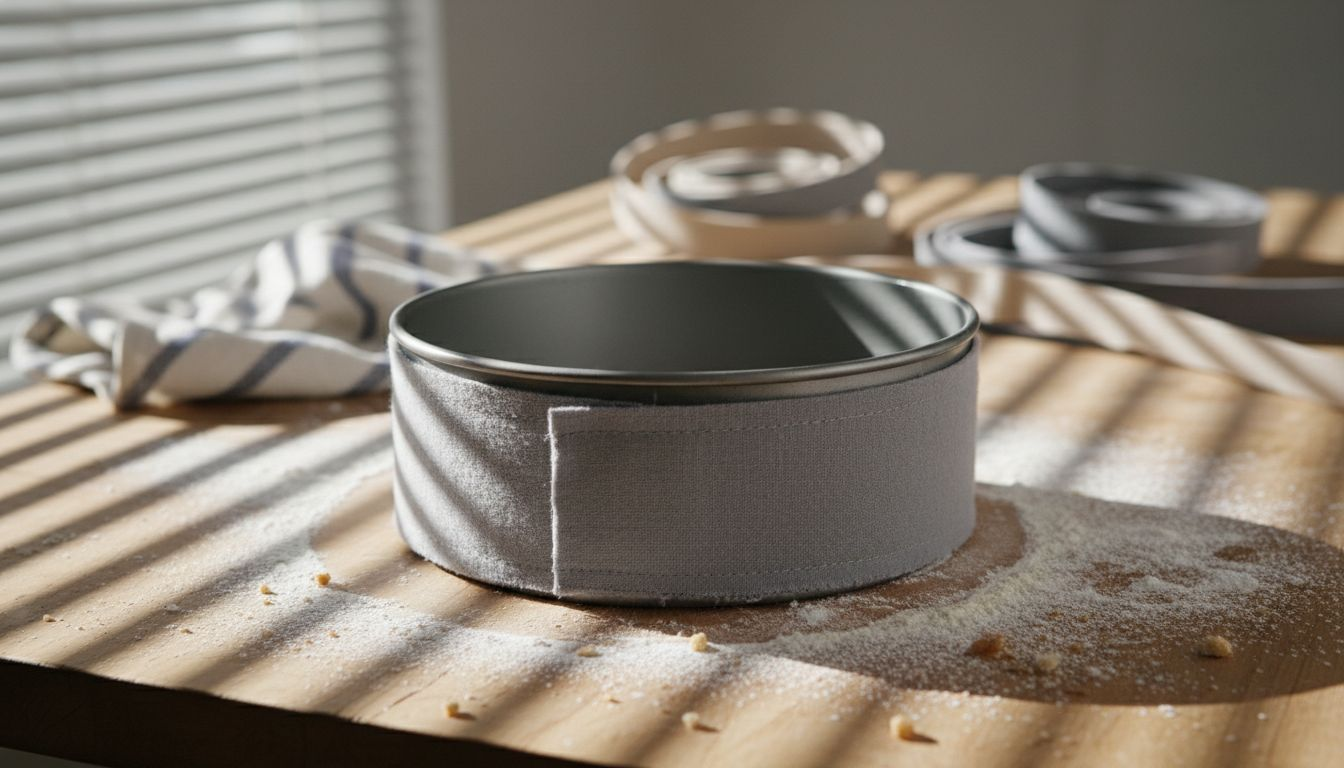
To fit a baking belt, start by selecting a fabric strip that wraps completely around your cake tin with a slight overlap. Soak the belt in cold water and wring it out thoroughly, leaving it damp but not dripping. Wrap the wet belt snugly around the outside of your tin, ensuring it sits level and covers the entire circumference of the tin. The moisture in the fabric helps regulate the tin’s temperature, preventing the edges from heating too quickly and causing the cake to dome in the centre.
The science behind baking belts is simple yet brilliant. By creating a cooler exterior environment around the tin, the belt slows down the outer edges’ heat absorption. This means your cake batter heats more evenly, resulting in a flat top and consistent texture from centre to edge. For best results, ensure the belt is secure but not so tight that it restricts air circulation around the tin.
Expert Tip: Reuse silicone baking belts multiple times by washing them gently and allowing them to air dry completely between uses.
Step 4: Select PME tools for professional results
Choosing the right baking tools can transform your cake from amateur to professional quality. Professional baking equipment such as PME are verified by UK government standards, ensuring you invest in reliable and high performance baking accessories.
PME tools are renowned for their precision and durability. When selecting your equipment, focus on specific items that will improve your baking consistency such as cake nails, icing sets, and specialised measuring tools. Look for stainless steel construction which provides even heat distribution and long lasting performance. Pay attention to the weight and balance of each tool ensuring they feel comfortable and controlled in your hand.
Consider building a professional toolkit that includes essential PME items like accurate measuring spoons, offset spatulas, cake levellers, and professional grade piping equipment. Each tool should serve a specific purpose in creating perfectly balanced and beautifully finished cakes. Remember that investing in quality tools is an investment in your baking skills and the consistent results you will achieve.
Expert Tip: Always purchase PME tools from reputable suppliers who can provide authenticity verification and product warranties.
Key PME tools for professional baking and their recommended uses:
| Tool | Primary Use | Professional Advantage |
|---|---|---|
| Stainless cake nail | Core heat distribution | Avoids undercooked centres |
| Offset spatula | Precise icing/smoothing | Achieves flawless finishes |
| Cake leveller | Even layer slicing | Consistent cake stacking |
| Measuring spoons | Exact ingredient quantities | Reliable baking outcomes |
| Piping equipment | Decorative icing work | Advanced presentation |
Step 5: Check your cake for even baking
Checking your cake for even baking is the final and most crucial step in achieving professional results. Food safety guidelines recommend thorough sensory and visual assessments to ensure optimal cake quality, making this process essential for both taste and texture.
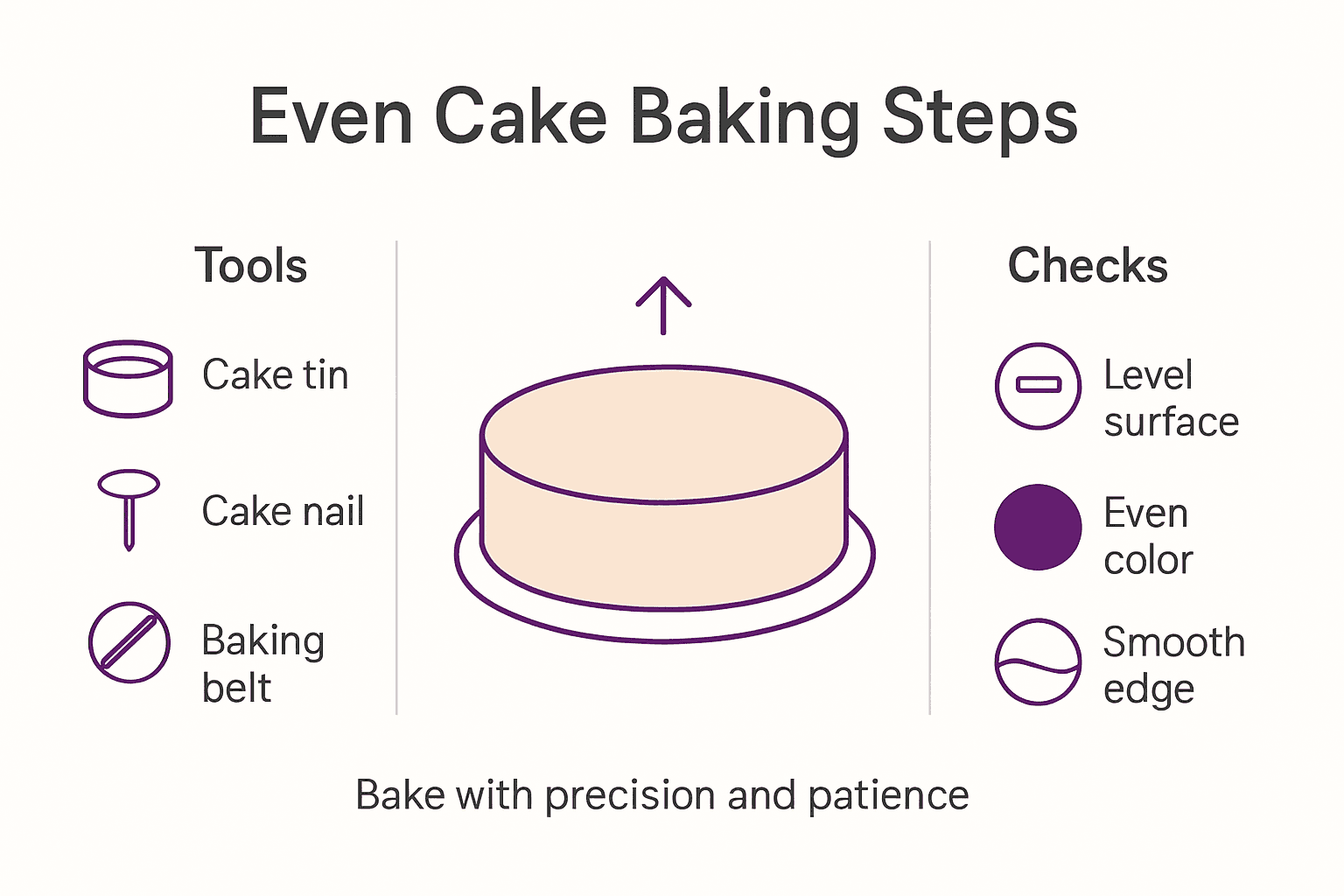
To determine whether your cake has baked evenly, start by removing it from the oven and performing a series of precision checks. First, gently press the centre of the cake with your fingertip it should spring back immediately and feel firm. Then conduct a skewer test by inserting a thin metal skewer or toothpick into the cake’s centre look for minimal to no batter residue when you remove it. Observe the cake’s surface for uniform colour and consistent rising across the entire surface area.
If you notice any uneven areas like a sunken centre or darker edges, this indicates potential heat distribution issues. Consider adjusting your baking techniques such as using a baking belt or rotating the tin midway through baking to promote more consistent results. Slight variations are normal but significant differences suggest the need for technique refinement.
Expert Tip: Allow your cake to cool completely on a wire rack before making final assessments to ensure accurate texture evaluation.
Elevate Your Cake Baking with Professional Tools from The Vanilla Valley
Achieving an even bake every time requires more than just following the steps it demands the right tools to master heat distribution and flawless cake release. Whether you are lining tins with parchment paper, using a cake nail for core heat, or fitting a baking belt to prevent doming, the quality of your equipment directly impacts your success. Key challenges like avoiding soggy centres or uneven rising are solved by precision PME tools and baking accessories proven to deliver professional results.
Frequently Asked Questions
How can I prepare my cake tin for even baking?
To prepare your cake tin for even baking, grease the entire interior with softened butter and dust it lightly with flour. This creates a non-stick surface that supports smooth cake release, ensuring a more evenly baked result.
What is the purpose of using a cake nail in my cake?
A cake nail provides direct heat conduction to the centre of your cake, promoting even baking throughout. Insert the cake nail vertically into the batter before baking to help prevent a soggy centre and achieve consistent results.
How do baking belts help in achieving level cakes?
Baking belts regulate the temperature around your cake tin, preventing doming and ensuring the cake bakes evenly. Wrap a damp baking belt snugly around the tin, allowing it to work effectively during the baking process.
What tools should I include in my professional baking toolkit?
Include tools like stainless steel cake nails, offset spatulas, and cake levellers in your professional baking toolkit. These items enhance precision and consistency, ensuring your cakes look and taste professionally baked.
How can I check if my cake has baked evenly?
To check if your cake has baked evenly, gently press the centre to see if it springs back, and perform a skewer test by inserting a skewer to check for batter residue. Ensure the cake has a uniform colour and texture across its surface before removing it from the oven.