Cake Decoration Terminology Explained for Beginners

Most amateur cake decorators in South Wales find themselves puzzled by the wealth of british baking terms shared in classes and tutorials. Clear terminology is not just a detail, it is the cornerstone of effective decoration and communication. With over 80 percent of successful cake projects relying on accurate technique and precise language, building a strong vocabulary can dramatically improve your skills and confidence in creating stunning cakes.
Table of Contents
- Defining Cake Decoration Terminology Simply
- Types Of Cake Decorating Techniques
- Essential Tools And Materials Explained
- Popular Terms Used By Uk Decorators
- Avoiding Common Terminology Mistakes
Key Takeaways
| Point | Details |
|---|---|
| Understanding Terminology | Familiarity with cake decorating terminology is crucial for effective communication and skill development. |
| Mastering Techniques | Focus on mastering one decorating technique at a time to build confidence and technical proficiency. |
| Essential Tools | Invest in quality basic tools to create professional-looking cakes, expanding your toolkit as your skills grow. |
| Avoiding Mistakes | Be precise with terminology to prevent misunderstandings and improve your technical language in cake decoration. |
Defining cake decoration terminology simply
Cake decoration involves a rich vocabulary that can initially seem overwhelming to beginners. The terminology describes specific techniques, tools, and artistic processes used to transform a simple cake into an edible masterpiece. Understanding standard cake craft definitions helps aspiring decorators communicate effectively and develop their skills with clarity and precision.
Fundamental cake decorating terms typically fall into several key categories: surface preparation, piping techniques, edible embellishments, and structural design. Surface preparation might include crumb coating (a thin layer of frosting applied to seal cake crumbs before final decoration), while piping techniques involve using specialised bags and nozzles to create intricate designs, patterns, and textures on cake surfaces.
Mastering cake decoration language means understanding both technical and creative terminology. Fondant, for instance, refers to a smooth sugar paste used to create sleek, uniform cake coverings, while buttercream describes a creamy frosting used for both filling and decorative purposes. Transparent terminology helps beginners and professionals accurately describe craft techniques, enabling more precise communication and skill development.
Pro Tip for Beginners: Practice pronouncing and using new cake decorating terms in context to build confidence and technical vocabulary. Start by learning five new terms with each baking project to gradually expand your decorative language skills.
Types of cake decorating techniques
Cake decorating offers a diverse range of artistic techniques that transform simple baked goods into stunning culinary creations. Professional cake decorators use multiple methods for creating intricate designs, each requiring unique skills and approaches. These techniques range from foundational methods to advanced artistic expressions that challenge the decorator’s creativity and technical expertise.
Piping techniques represent one of the most fundamental and versatile decorating approaches. This method involves using specialised bags and nozzles to create intricate patterns, borders, and detailed designs directly onto cake surfaces. The National 5 Practical Cake Craft course highlights piping as a core decorating skill, demonstrating its importance in professional and amateur cake decoration. Different piping tips produce varied effects, from delicate rosettes to bold geometric patterns.
Additional cake decorating techniques include fondant modelling, which allows decorators to create three-dimensional figures and elaborate decorative elements, and airbrushing, a modern technique that enables smooth colour gradients and intricate background designs. Royal icing techniques provide another sophisticated method for creating delicate, precise decorations, particularly popular for wedding and celebration cakes. Each technique requires practice, patience, and a keen eye for detail.
Pro Tip for Decorators: Start by mastering one technique at a time, practising consistently with affordable materials like buttercream or basic fondant. Gradually build your skills by watching online tutorials and experimenting with different tools and approaches.
Essential tools and materials explained
Cake decoration requires a carefully curated collection of specialised tools and materials that transform basic baking into an artistic endeavour. Comprehensive equipment guides highlight the essential tools needed for successful cake crafting, ensuring beginners understand the purpose and function of each instrument in their decorating toolkit.
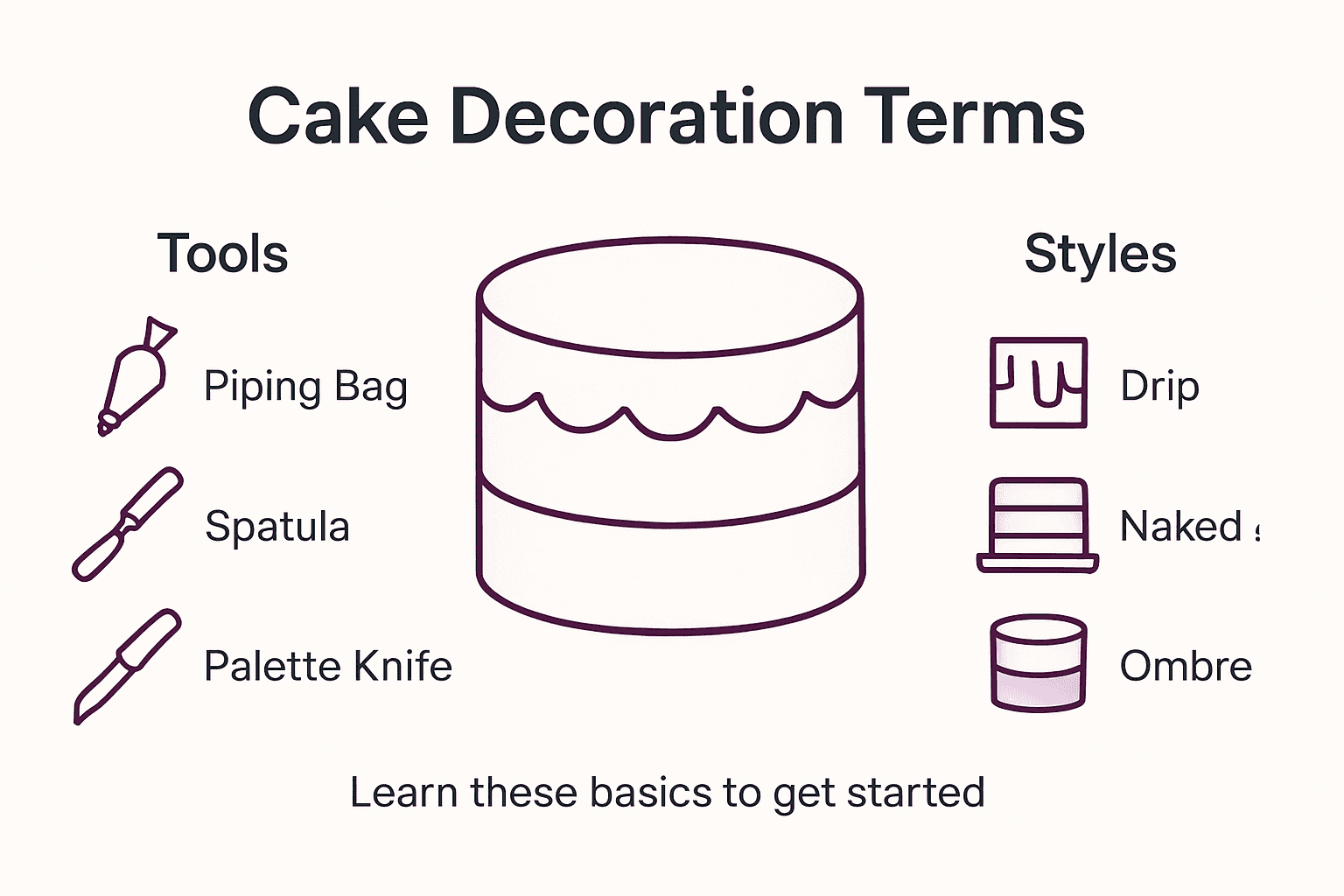
Fundamental tools for cake decoration include precision measuring equipment like digital scales, offset spatulas for smooth frosting application, and various piping bags and tips. The National 5 Practical Cake Craft course emphasises the importance of understanding each tool’s specific role in creating professional-looking cake designs. Decorators will need different sizes of mixing bowls, turntables for smooth rotating while decorating, and a range of palette knives for achieving different textures and finishes.
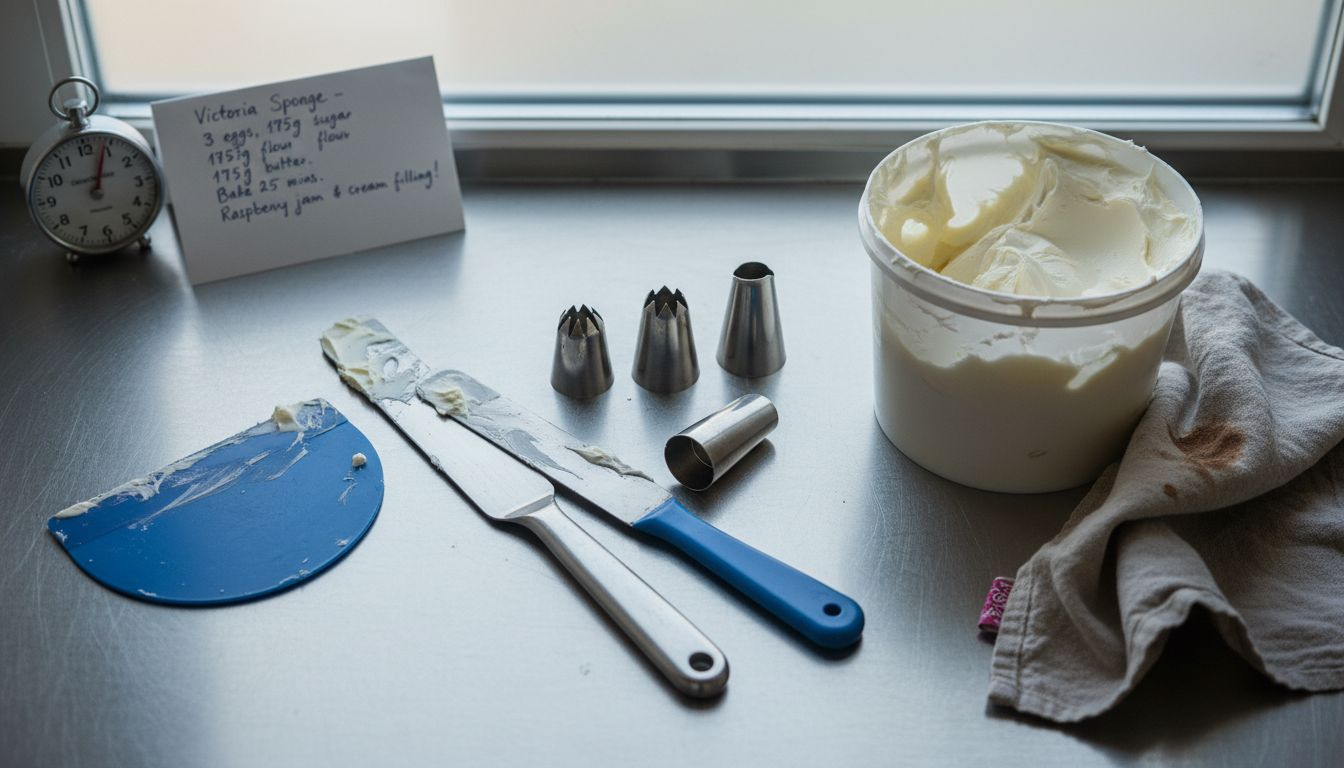
Materials are equally crucial in cake decoration, with fondant, royal icing, buttercream, and gum paste serving as primary mediums for creative expression. Each material has unique properties that make it suitable for different decorative techniques. Fondant provides a smooth, sculptable surface perfect for elaborate designs, while royal icing allows for intricate piped details and delicate decorative elements. Specialised food colourings, edible glitters, and painting brushes expand a decorator’s creative possibilities, enabling precise and imaginative cake embellishments.
To help you distinguish between popular cake decorating mediums, see this quick comparison:
| Medium | Texture & Finish | Best Use |
|---|---|---|
| Fondant | Smooth, pliable, matte | Covering cakes, sculpted shapes |
| Buttercream | Creamy, soft, slightly glossy | Filling, surface icing, piping |
| Royal Icing | Stiff, dries hard, crisp | Intricate piping, decorative details |
| Ganache | Glossy, rich, sets firm | Coatings, fillings, drip effects |
Pro Tip for Equipment Selection: Invest in quality basic tools rather than purchasing every fancy gadget. Start with versatile, multipurpose tools that can be used across different decorating techniques, and gradually expand your collection as your skills improve.
Popular terms used by UK decorators
Cake decorating in the United Kingdom has developed a rich and specialised vocabulary that reflects the artistry and technical skill required in this craft. The National Careers Service provides insight into the professional terminology used by cake decorators, highlighting the nuanced language that professionals use to describe their intricate work.
Technical terms dominate the professional decorator’s lexicon, with specific words describing techniques, tools, and artistic processes. Piping refers to the technique of using a decorating bag and specialised tips to create intricate designs, while modelling describes the art of sculpting edible decorations from materials like fondant or gum paste. The Scottish Qualifications Authority’s cake craft documentation outlines standard terminology used in professional and educational settings, ensuring consistency in how decorators communicate their craft.
Beyond technical language, UK decorators use specific descriptive terms to classify cake styles and design approaches. Naked cakes describe minimally frosted cakes that showcase the cake’s natural texture, while mirror glaze refers to a glossy, reflective coating technique popular in contemporary cake design. Terms like crumb coat (a thin layer of frosting that seals cake crumbs), ganache (a rich chocolate cream used for filling and coating), and sugar work (creating decorative elements from heated sugar) demonstrate the sophisticated language of professional cake decoration.
Pro Tip for Language Mastery: Practice using professional cake decorating terms in context by watching British baking shows and reading professional cake decorating blogs. This immersive approach helps you internalise the vocabulary naturally and confidently.
Avoiding common terminology mistakes
Misunderstanding or misusing cake decorating terminology can lead to confusion and potentially compromise the quality of your baking projects. The Scottish Qualifications Authority emphasises the critical importance of precise technical language in cake craft assessments, highlighting how accurate terminology directly impacts professional understanding and performance.
Common misconceptions often arise from interchanging similar but distinct decorating terms. For instance, many beginners confuse buttercream and frosting, believing them to be identical when they have subtle differences in preparation and texture. Ganache is frequently mistaken for a simple chocolate sauce, whereas it is a specific emulsion of chocolate and cream used for both filling and coating cakes. Terminology guidance from professional organisations recommends strategies for maintaining clarity and avoiding ambiguous language, ensuring decorators communicate their techniques accurately.
Professional decorators also caution against using generic terms that lack specificity. Instead of saying “decoration”, be precise about the technique used, such as piping, modelling, or sugar work. Understanding the nuanced differences between terms like fondant (a pliable sugar paste) and royal icing (a hard-setting icing) can significantly improve your technical communication and demonstrate professional expertise in cake decoration.
Below is a table summarising key terminology mistakes and how to avoid them:
| Mistaken Term Pair | Difference Highlighted | Proper Usage Tip |
|---|---|---|
| Buttercream vs Frosting | Texture and ingredients vary | Check recipes for exact needs |
| Ganache vs Chocolate Sauce | Ganache contains cream, thicker | Use for coatings and fillings |
| Fondant vs Royal Icing | Fondant is soft, royal icing sets hard | Choose based on design required |
| Decoration vs Piping/Modelling | Decoration is generic, others are specific | Always specify the exact technique |
Pro Tip for Terminology Precision: Create a personal glossary of cake decorating terms, noting the specific definitions and unique characteristics of each technique. Review and update this glossary regularly to reinforce your understanding and prevent common linguistic mix-ups.
Master Cake Decoration Terminology with The Vanilla Valley
Understanding cake decoration language is the first step to turning your baking projects into stunning creations. If you find yourself confused by terms like fondant, crumb coat, or piping techniques, you are not alone. The challenge lies in mastering these concepts and having the right tools to put them into practice. Whether you are a beginner eager to build confidence or an experienced decorator aiming for professional results, getting familiar with terminology is essential for success.
Unlock your full creative potential with The Vanilla Valley. We offer a wide selection of essential cake decorating supplies including fondant, food colours, decorations and piping bags to help you practise and perfect every term you learn. Start your journey today and access expert resources alongside quality products with fast delivery and exclusive offers. Visit our online store now and transform your passion for cake decoration into beautiful edible art.
Frequently Asked Questions
What is the difference between buttercream and frosting?
Buttercream is a type of frosting made primarily from butter and sugar, resulting in a creamy texture. Frosting, on the other hand, can refer to various types of sweet toppings applied to cakes and may include different bases, such as whipped cream or cream cheese.
What is a crumb coat in cake decorating?
A crumb coat is a thin layer of frosting applied to the surface of a cake to seal in crumbs and create a smooth foundation for the final layer of decoration. It helps achieve a cleaner finish and prevents crumbs from mixing into the outer frosting layer.
How do I choose the right piping tip for cake decorating?
Choosing the right piping tip depends on the desired design or effect you want to create. Different piping tips produce varying textures and patterns; for example, a star tip creates rosettes, while a round tip is perfect for writing or fine lines. Experimenting with different tips helps you achieve the best results.
What materials are commonly used in cake decoration?
Common materials used in cake decoration include fondant, buttercream, royal icing, and gum paste. Each material has distinct properties that make it suitable for specific techniques, such as smooth coverings, intricate piped details, or sculpted decorations.