Cake Toppers Explained: Creative Impact for Bakers
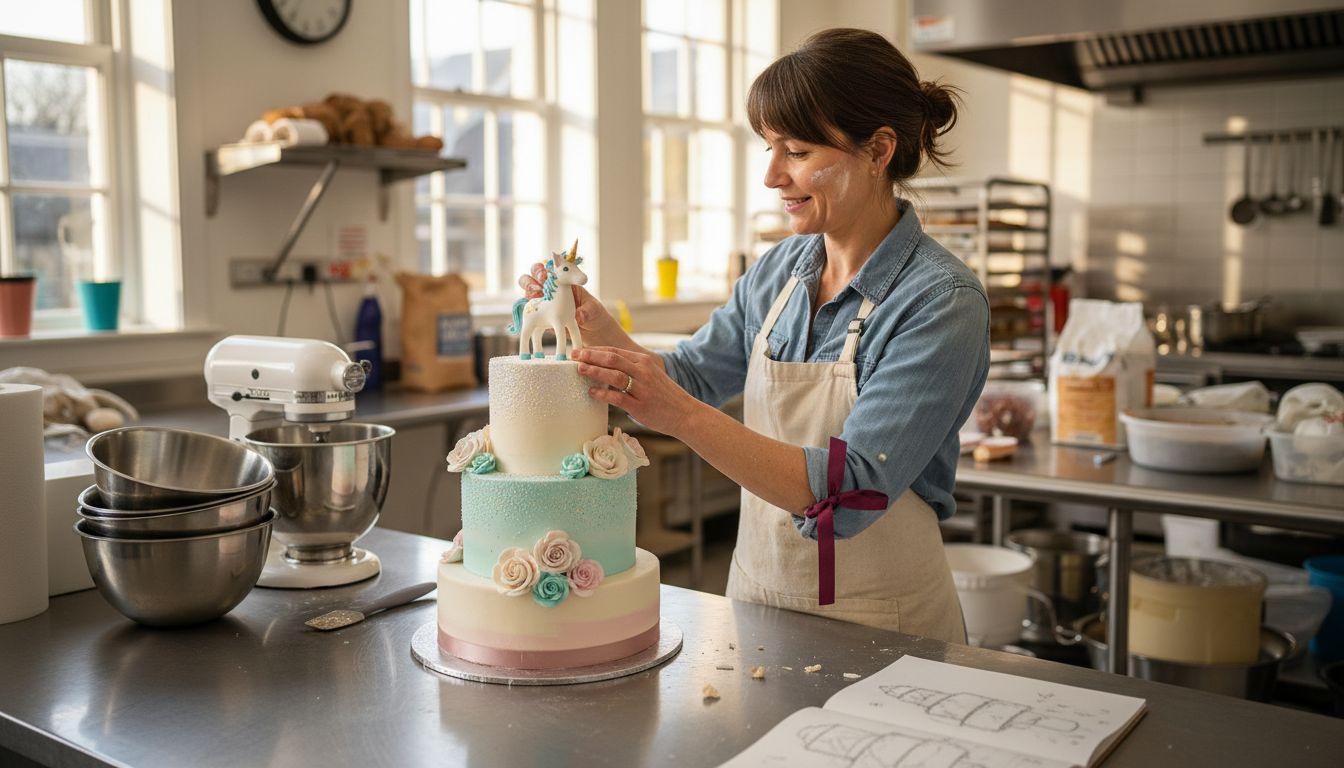
Every cake project brings a special moment for creativity, where the right topper can turn a simple bake into a striking centrepiece. For amateur bakers in South Wales, choosing between edible fondant or reusable acrylic designs adds both excitement and challenge. Cake toppers play an important role in expressing themes and capturing memories, offering endless possibilities for personalisation and flair. This guide provides practical advice and inspiration to find the perfect topper that fits your vision and helps your cakes truly stand out.
Table of Contents
- What Are Cake Toppers And Their Purpose
- Types Of Cake Toppers Used In The UK
- Materials And Key Features Of Cake Toppers
- How To Choose And Use Safely
- Costs, Care And Common Mistakes
Key Takeaways
| Point | Details |
|---|---|
| Functionality of Cake Toppers | Cake toppers enhance a cake’s aesthetics, communicate themes, and can represent personal or cultural significance. |
| Types of Cake Toppers | There are edible and non-edible cake toppers, each offering distinct advantages for various occasions and preferences. |
| Choosing the Right Toppers | When selecting a topper, consider size, weight, and material compatibility with the cake to ensure stability and safety. |
| Cost Considerations | Cake topper prices vary widely based on design complexity, from budget options to bespoke luxury pieces. |
What Are Cake Toppers And Their Purpose
Cake toppers are decorative elements strategically placed atop cakes to enhance their visual appeal and communicate a specific message or theme. These artistic additions transform ordinary baked goods into personalised centrepieces that capture attention and reflect the unique personality of an event or celebration.
In the world of cake decorating, toppers serve multiple essential functions beyond mere ornamentation. They can:
- Convey a specific event or milestone
- Add personality and storytelling to the cake design
- Create visual interest and focal points
- Represent cultural or personal symbolism
- Complement the overall cake aesthetic
Designers and bakers use cake toppers as powerful visual storytelling tools that instantly communicate the purpose of the celebration. The comprehensive guide to cake toppers reveals how these small decorative elements can dramatically transform a cake’s entire presentation.
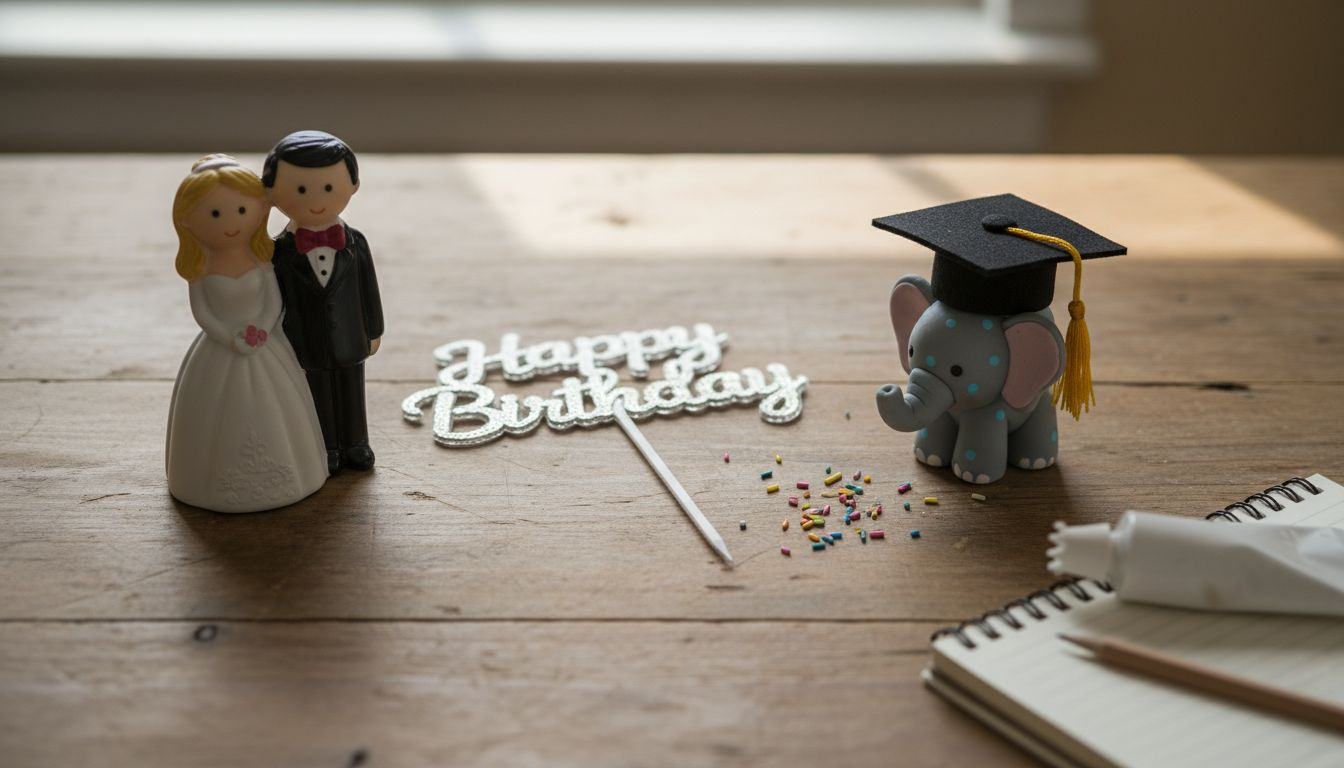
Toppers range from traditional figurines representing wedding couples to whimsical designs celebrating birthdays, graduations, or special achievements. They can be crafted from various materials including sugar paste, fondant, acrylic, wooden elements, and even fresh flowers, each offering unique aesthetic possibilities for creative bakers.
Pro tip: When selecting a cake topper, consider the event’s theme, colour scheme, and overall cake design to ensure a harmonious and visually striking final presentation.
Types Of Cake Toppers Used In The UK
The United Kingdom offers a diverse range of cake toppers that cater to various events, styles, and personal preferences. UK cake toppers typically fall into two primary categories: edible and non-edible designs, each providing unique decorative possibilities for bakers and celebration planners.
Edible cake toppers represent a popular choice among British bakers, offering versatile options such as:
- Fondant toppers: Soft, malleable sugar decorations
- Printed icing sheets: Custom designs that can be directly applied to cakes
- Wafer paper toppers: Delicate, translucent decorative elements
- Sugar paste figurines: Detailed, three-dimensional edible sculptures
Non-edible toppers provide additional creative opportunities, including:
- Acrylic personalised designs
- Wooden themed decorations
- Metal wire lettering
- Cardboard cut-out figures
- Laser-cut intricate patterns
These non-edible options offer durability and can be kept as mementoes after the celebration. Some acrylic toppers are particularly versatile, allowing reuse across multiple events and providing cost-effective decoration solutions for budget-conscious bakers.
Pro tip: When selecting between edible and non-edible cake toppers, consider the event’s formality, budget, and whether you want to preserve the topper as a keepsake.
Materials And Key Features Of Cake Toppers
Cake toppers are intricate decorative elements crafted from a diverse range of materials, each offering unique characteristics and aesthetic possibilities. Edible cake topper ingredients include carefully selected food-safe components that ensure both visual appeal and dietary compatibility.
Edible cake toppers are composed of sophisticated materials designed to meet various dietary requirements:
- Icing sheets: High-resolution printing surface
- Wafer card: Sturdy, stand-up topper material
- Rice paper: Ultra-thin, delicate decorative element
- Modified starches: Structural binding agent
- Food colourings: Vibrant colour implementation
Non-edible cake topper materials provide additional creative opportunities, featuring:
- Acrylic plastics with laser-cut designs
- Lightweight wooden elements
- Metal wire for intricate lettering
- Cardboard for lightweight, customisable options
- Ceramic for more permanent decorative pieces
These materials are selected not just for their aesthetic qualities, but also for their ability to withstand different cake environments, temperatures, and handling requirements. The choice of material directly influences the topper’s durability, appearance, and overall impact on the cake’s design.
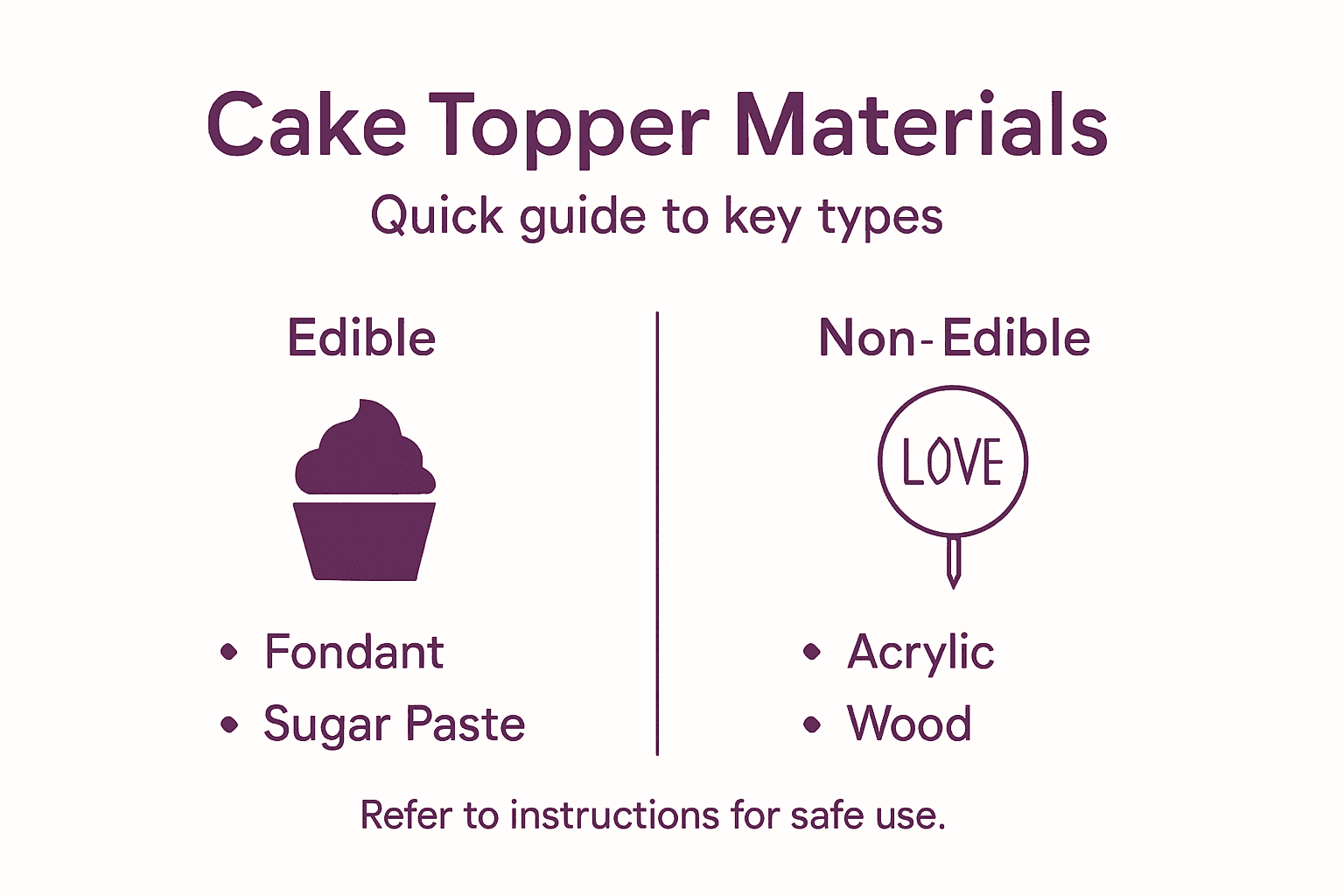
Here is a comparison of popular cake topper materials and their key pros and cons:
| Material Type | Advantages | Common Drawbacks |
|---|---|---|
| Acrylic | Durable, reusable, modern look | Can scratch if mishandled |
| Fondant | Fully edible, custom shapes | Can dry out or crack |
| Wood | Rustic charm, keepsake potential | Sensitive to moisture |
| Sugar Paste | Detailed, edible, varied designs | Fragile, sensitive to heat |
| Cardboard | Lightweight, easy to personalise | Easily damaged by humidity |
| Metal Wire | Elegant text, long-lasting | May bend under pressure |
Pro tip: Always consider the cake’s storage conditions and event duration when selecting between edible and non-edible topper materials to ensure optimal presentation and longevity.
How To Choose And Use Safely
Selecting and using cake toppers requires careful consideration of multiple factors to ensure both aesthetic appeal and practical functionality. Cake decorating techniques play a crucial role in determining the most appropriate topper for your specific cake design and event requirements.
When choosing cake toppers, bakers should evaluate several key safety and compatibility criteria:
- Size compatibility: Ensure topper dimensions match cake surface
- Weight considerations: Prevent toppling or sinking into cake layers
- Material food safety: Verify edible toppers meet dietary restrictions
- Temperature resistance: Check topper stability under different environments
- Colour transfer prevention: Select materials that won’t bleed or stain
Implementing safe cake topper practices involves several essential steps:
- Inspect topper material integrity before placement
- Clean hands and work surfaces thoroughly
- Handle delicate toppers with food-safe utensils
- Store toppers in sealed, clean containers
- Check expiration dates for edible decorations
Professional bakers recommend conducting a preliminary assessment of the cake’s structural integrity before adding any topper. This involves examining the cake’s surface smoothness, temperature, and overall stability to prevent potential decorative mishaps.
Pro tip: Always have backup placement options and practice gentle insertion techniques to prevent cake damage when positioning your chosen topper.
Costs, Care And Common Mistakes
Navigating the world of cake toppers requires understanding their pricing, maintenance, and potential pitfalls. Personalised wedding cake topper costs in the UK vary significantly based on design complexity and customisation level.
Price ranges for cake toppers typically include:
Below is a summary of cost considerations and when to invest in different cake toppers:
| Topper Type | Typical Cost Range | Best For |
|---|---|---|
| Basic Acrylic | £10–£30 | Birthdays, casual gatherings |
| Personalised Wood | £40–£80 | Weddings, themed events |
| Luxury Handmade | £100–£250 | Grand weddings, milestone events |
| Edible Custom | £20–£60 | Children’s cakes, single use |
| Keepsake Designs | £50–£150 | Memory keepsakes, anniversaries |
- Budget-friendly options: £10-£30
- Mid-range personalised toppers: £40-£80
- Bespoke luxury designs: £100-£250
- Custom handmade pieces: £60-£150
- Material-specific pricing: Varies by complexity
Common mistakes bakers and event planners often encounter include:
- Applying toppers too early before serving
- Exposing delicate toppers to moisture
- Mishandling fragile decorative elements
- Neglecting proper storage conditions
- Choosing inappropriate topper materials
Care and maintenance of cake toppers require meticulous attention to preserve their aesthetic quality. Proper handling involves keeping toppers away from direct heat, moisture, and potential damage sources. Professional bakers recommend storing toppers in breathable packaging and inserting them just before serving to maintain their pristine condition.
Pro tip: Invest in a protective storage container with soft lining to prevent damage and preserve your cake topper’s intricate details between uses.
Elevate Your Cake Designs with Perfect Toppers and Supplies
Creating a stunning cake topper that truly enhances your celebration cake requires the right materials and expert care just as outlined in the article. Many bakers struggle with finding toppers that balance durability, aesthetic appeal, and safety while fitting their event’s theme and cake design. Whether you seek reusable acrylic designs or delicate edible sugar paste, selecting quality supplies is key to avoiding common mistakes like premature application or damage from moisture.
At The Vanilla Valley, we offer a comprehensive range of cake decorating products tailored to help you achieve flawless topper presentation and create memorable centrepieces. Discover our selection of fondants, edible decorations, acrylic toppers and essential baking accessories that support both hobbyists and professionals. With trusted brands, customer loyalty rewards, and convenient delivery options, we are here to empower your creative baking journey.
Enhance your cake decorating skills with resources and supplies found at The Vanilla Valley today.
Get inspired and shop our premium cake boards, toppers, colourings and more now to bring your cake topper ideas to life before your next celebration. Visit The Vanilla Valley online store and turn your baking vision into reality.
Frequently Asked Questions
What are cake toppers used for?
Cake toppers are decorative elements placed on top of cakes to enhance visual appeal, represent themes, and convey messages related to specific events or milestones.
What types of materials are cake toppers made from?
Cake toppers can be made from a variety of materials, including edible options like fondant and sugar paste, as well as non-edible choices such as acrylic, wood, and metal.
How do I choose the right cake topper for my event?
When selecting a cake topper, consider the event’s theme, colour scheme, size compatibility with the cake, and whether you prefer an edible or non-edible option based on practical needs and aesthetic preferences.
What are common mistakes to avoid when using cake toppers?
Common mistakes include applying toppers too early, exposing them to moisture, mishandling delicate elements, neglecting proper storage, and choosing materials unsuitable for the cake’s environment.