
Edible vs Non-Edible Cake Decorations: A Baker’s Safe Choice
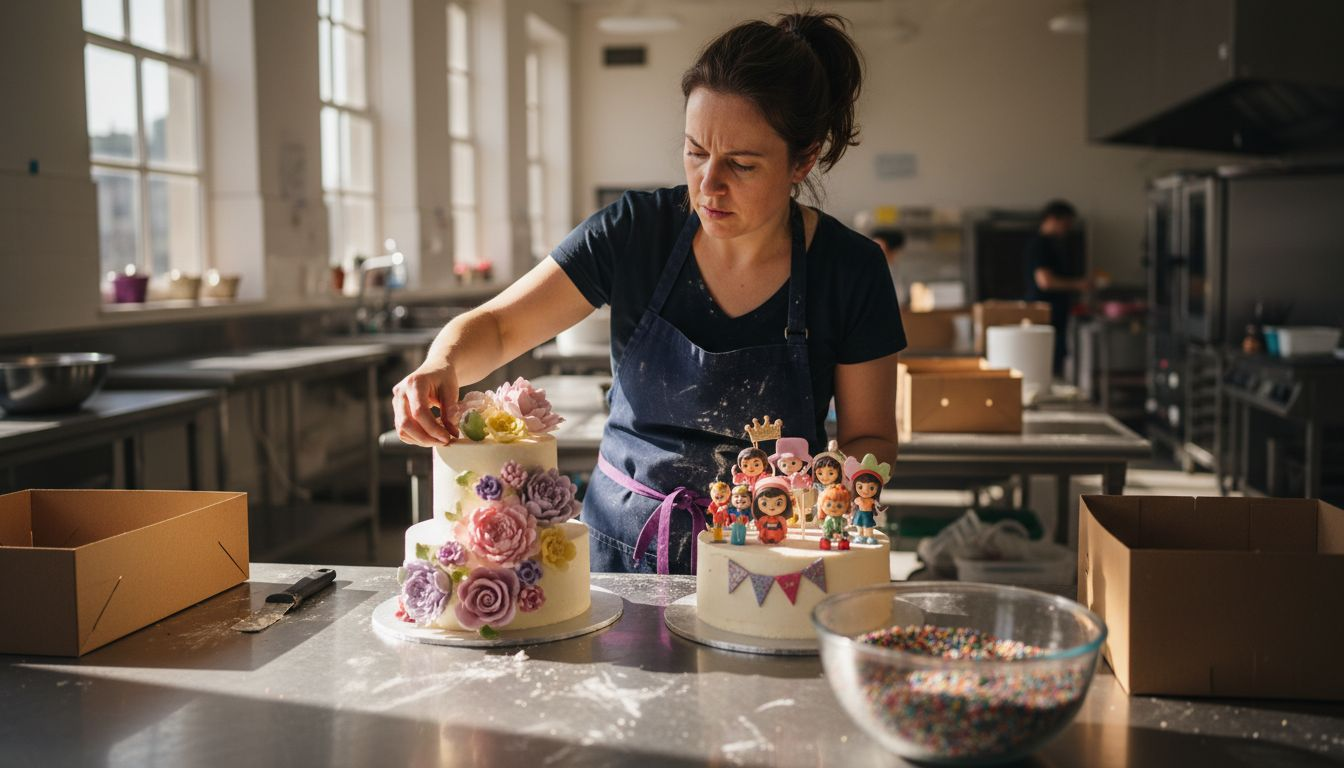
Decorating a cake should be as joyful as it is creative, but stumbling over which decorations are safe to eat can quickly sour the experience. South Wales bakers looking to impress family and friends must understand exactly what makes a decoration edible or not, since not all beautiful embellishments belong on a dessert plate. By breaking down the important differences between edible and non-edible cake decorations, you will gain the confidence to choose ingredients that are both visually stunning and safe for every celebration.
Table of Contents
- What Makes Cake Decorations Edible Or Not
- Popular Types Of Edible Cake Decorations
- Common Non-Edible Decorations In UK Baking
- How UK Law Regulates Cake Decoration Safety
- Risks And Mistakes To Avoid When Decorating
Key Takeaways
| Point | Details |
|---|---|
| Edible vs Non-Edible Ingredients | Ensure decorations are made from food-safe materials suitable for consumption to avoid health risks. |
| Safety Standards Compliance | Follow UK food safety regulations, including material certification and hygiene practices, to protect consumer health. |
| Risks in Cake Decorating | Be aware of potential cross-contamination and material safety issues to maintain food quality and safety. |
| Proactive Communication | Clearly label non-edible decorations and inform consumers to prevent accidental ingestion and ensure safety. |
What Makes Cake Decorations Edible or Not
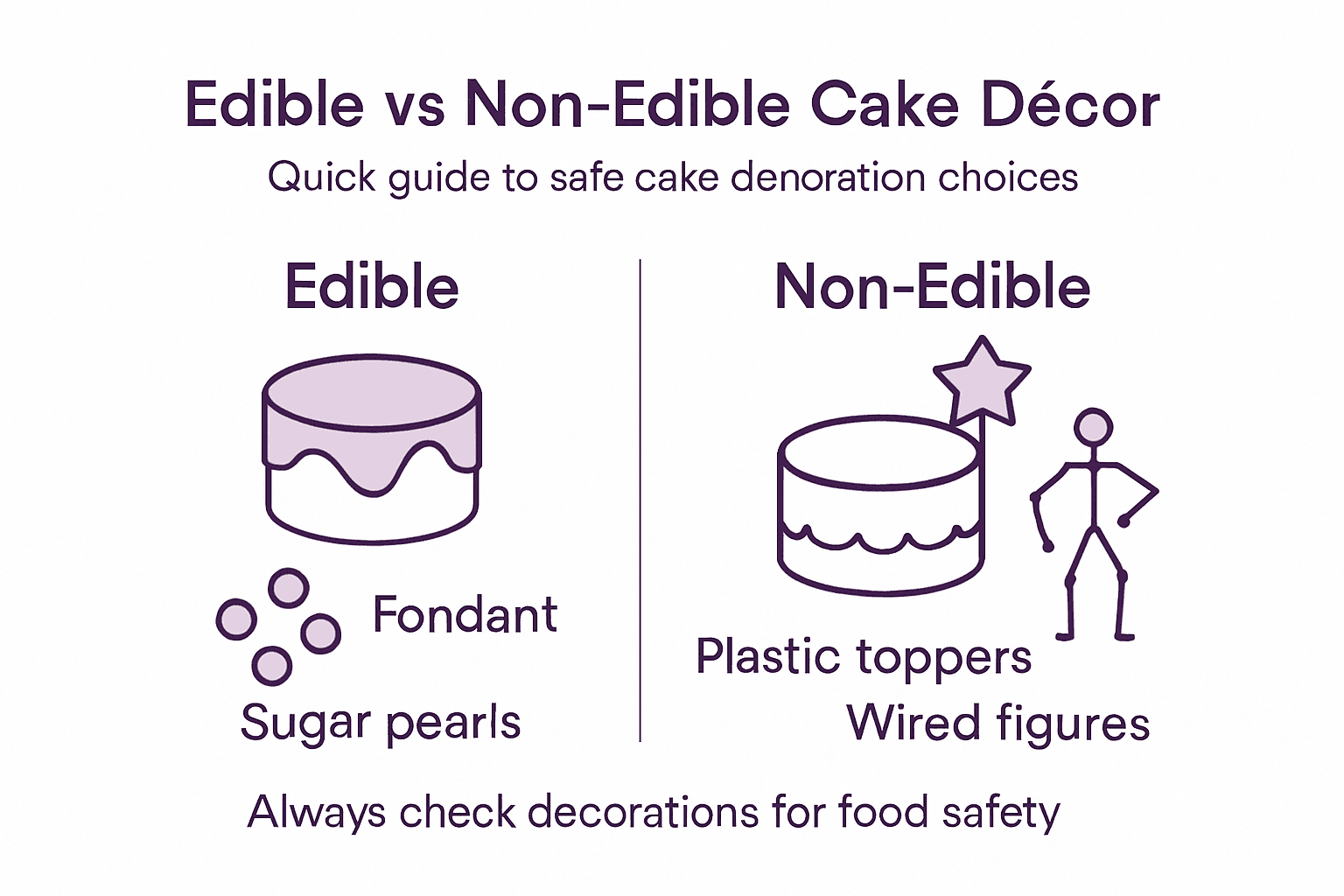
Understanding what makes cake decorations edible or non-edible is crucial for any baker looking to create safe and visually stunning treats. Cake decorations are essentially categorised by their fundamental composition and potential for human consumption, with key distinctions emerging from their ingredient profile and manufacturing process.
The primary factor determining whether a cake decoration is edible involves its ingredients and preparation method. Botanical cake decorating experts highlight that truly edible decorations must be crafted from food-safe materials intended for direct consumption. These typically include:
- Sugar-based elements like fondant, royal icing, and marzipan
- Natural ingredients such as fresh fruits, edible flowers, and chocolate
- Food-grade colourings and flavour extracts
- Specially prepared confectionery components
Non-edible decorations, by contrast, are manufactured using materials explicitly not meant for consumption. These might include:
- Plastic figurines or cake toppers
- Synthetic dyes and colouring agents not approved for food use
- Metallic or glittery decorative elements
- Inedible craft materials like paper, wire, or polymer clay
Safety considerations are paramount when selecting cake decorations. Rosalind Franklin Institute research emphasises that any decoration intended for consumption must be manufactured under strict food safety guidelines, ensuring no harmful substances compromise the cake’s edibility.
Here’s a comparison of typical edible and non-edible cake decoration materials and their key properties:
| Decoration Type | Examples | Safety Guidelines | Removal Required Before Eating |
|---|---|---|---|
| Edible | Fondant, marzipan, fruit | Must be food-safe and hygienic | No |
| Non-edible | Plastic toppers, wires | Avoid contact with cake interior | Yes |
| Semi-edible | Edible images with backing | Backing must be removed | Yes (backing only) |
Pro tip: Always check packaging labels and manufacturer instructions to confirm whether a cake decoration is genuinely edible before using it on your culinary creations.
Popular Types of Edible Cake Decorations
Edible cake decorations transform simple bakes into stunning culinary masterpieces, offering bakers a delightful range of creative possibilities. Cake decorating experts highlight multiple techniques and materials that can turn an ordinary cake into an extraordinary dessert experience.
The most popular types of edible cake decorations can be categorised into several distinct groups:
- Sugar-based decorations
- Fondant
- Royal icing
- Marzipan
- Sugar paste figurines
- Natural botanical elements
- Fresh edible flowers
- Fruit slices and arrangements
- Candied flower petals
- Herb garnishes
- Chocolate decorations
- Chocolate shavings
- Tempered chocolate shapes
- Ganache drips
- Chocolate curls and scrolls
Professional bakers often combine multiple techniques to create visually stunning and completely edible decorations. Riverside College’s cake decorating course emphasises the importance of understanding ingredient properties and preparation methods to achieve professional-looking results.
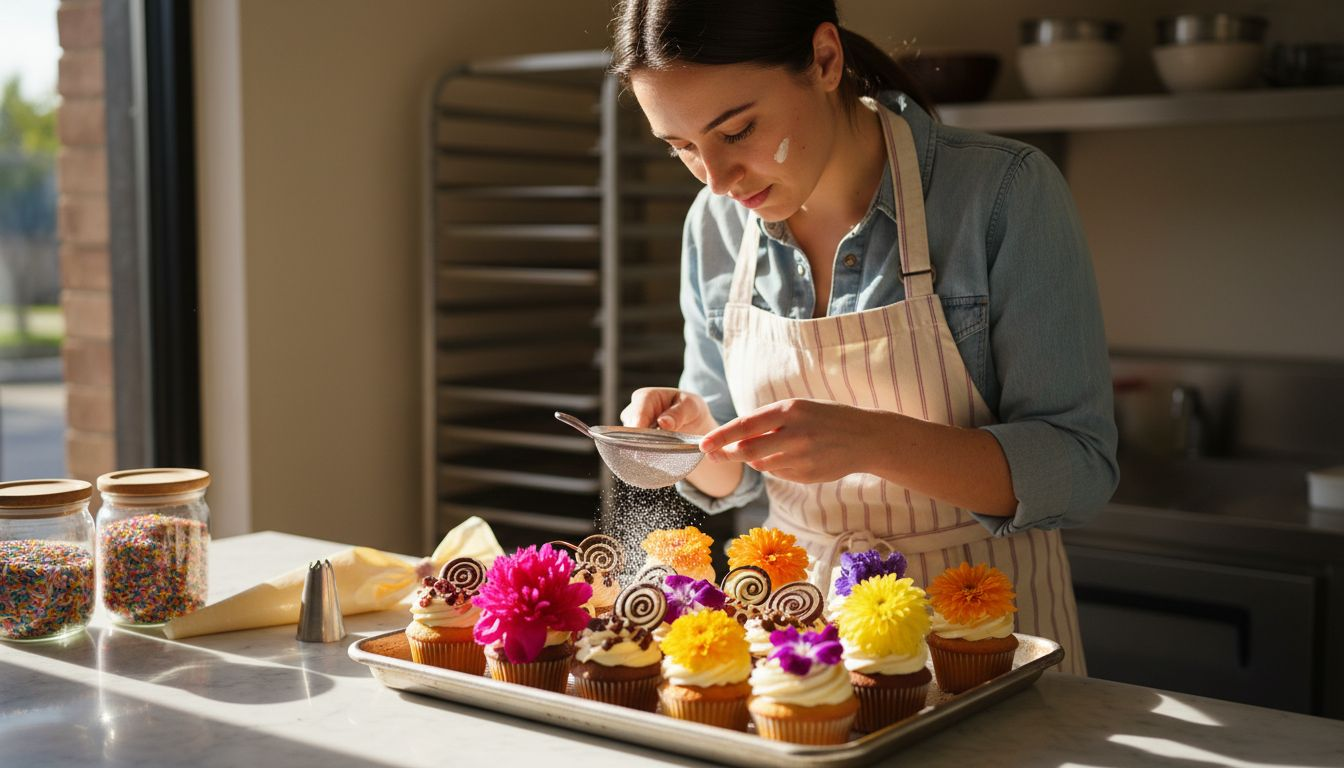
Mastering these edible decoration techniques requires practice, creativity, and an understanding of how different ingredients interact and maintain their structural integrity on a cake’s surface. Experimenting with various textures, colours, and composition can help bakers develop their unique decorative style.
Pro tip: Always ensure your edible decorations are prepared in a clean environment and stored correctly to maintain their quality and food safety standards.
Common Non-Edible Decorations in UK Baking
In the world of cake decorating, not all embellishments are meant to be eaten. UK cake maker guidelines provide critical insights into the wide array of non-edible decorations that can enhance cake design while requiring careful handling and clear communication with consumers.
Common non-edible decorations encountered in British baking include:
- Structural Elements
- Plastic cake toppers
- Decorative wires
- Support rods
- Dowel rods for tiered cakes
- Decorative Components
- Synthetic flowers
- Metallic ribbons
- Non-food grade glitters
- Plastic figurines
- Inedible foil decorations
- Speciality Materials
- Silk or fabric decorations
- Paper elements
- Printed edible images with non-edible backing
- Speciality cake stands
Shropshire Council’s fact-sheet emphasises the paramount importance of clearly distinguishing between edible and non-edible decorations to prevent accidental consumption. Professional bakers must ensure these decorative elements are strategically placed and easily removable before serving.
Understanding the nuances of non-edible decorations requires careful consideration of food safety, aesthetic appeal, and consumer protection. Each decoration must be selected with precision, keeping in mind its potential interaction with the cake and the eventual dining experience.
Pro tip: Always attach a small label or inform guests about non-edible decorative elements to prevent potential choking hazards or unintended consumption.
How UK Law Regulates Cake Decoration Safety
Cake decoration safety in the United Kingdom is governed by comprehensive legal frameworks designed to protect consumer health. Food Safety and Hygiene Regulations establish rigorous standards that every food business must follow, ensuring that both edible and non-edible cake decorations meet stringent safety requirements.
The key regulatory aspects of cake decoration safety include:
- Material Safety
- Prohibition of harmful substance transfer
- Mandatory food-grade material certification
- Strict controls on decoration composition
- Labelling Requirements
- Clear identification of allergens
- Explicit marking of non-edible decorations
- Comprehensive ingredient disclosure
- Hygiene and Production Standards
- Implementation of HACCP principles
- Regular food safety inspections
- Traceability of decoration materials
UK Government guidelines mandate that all food businesses implement Hazard Analysis and Critical Control Point (HACCP) plans. These plans ensure comprehensive risk management throughout the food preparation process, with specific attention to decorative elements that might compromise food safety.
Professional bakers must navigate these regulations carefully, understanding that legal compliance goes beyond mere aesthetic considerations. Each decoration must be meticulously evaluated for potential health risks, ensuring consumer protection remains the paramount concern.
This summary highlights essential legal requirements for cake decoration safety in the UK:
| Regulation Area | What It Covers | Key Impact for Bakers |
|---|---|---|
| Material Safety | Must use certified food-grade | Ensures consumer health |
| Allergens & Labelling | Clear allergen disclosure | Prevents allergic reactions |
| Hygiene Standards | Enforces strict kitchen practices | Minimises contamination risk |
Pro tip: Always maintain detailed documentation of your decoration materials’ origins and safety certifications to demonstrate regulatory compliance during potential inspections.
Risks and Mistakes to Avoid When Decorating
Cake decorating involves numerous potential pitfalls that can compromise both aesthetic quality and food safety. Health and Safety Executive guidance highlights critical risks bakers must navigate to ensure professional and safe cake decoration.
Common mistakes in cake decorating include:
- Cross-Contamination Risks
- Using unclean tools and surfaces
- Mixing ingredients without proper sanitisation
- Failing to separate allergen-containing decorations
- Material Safety Errors
- Using non-food-grade decorative elements
- Applying unsafe synthetic colourings
- Incorporating potentially toxic embellishments
- Hygiene and Handling Mistakes
- Inadequate hand washing
- Poor ingredient storage
- Ignoring temperature control guidelines
Local council cake maker guidelines emphasise the critical importance of understanding potential hazards associated with improper decoration techniques. Professional bakers must remain vigilant about ingredient quality, cross-contamination risks, and precise handling procedures.
Understanding these risks requires continuous learning and meticulous attention to detail. Each decoration choice carries potential implications for consumer health, making comprehensive knowledge and careful preparation essential for successful cake decorating.
Pro tip: Create a dedicated cleaning and sanitisation station in your kitchen to minimise cross-contamination risks and maintain professional food safety standards.
Choose Safe and Stunning Edible Cake Decorations with Confidence
Creating beautiful cakes means balancing safety with creativity. This article highlights the importance of distinguishing between edible and non-edible cake decorations to protect your customers and loved ones from potential health risks. Whether you worry about selecting food-safe materials, avoiding cross-contamination, or ensuring your decorations meet strict UK food safety standards, finding trusted supplies is essential for your success.
[Image:cta_image]
Explore a wide range of high-quality, food-grade cake decorating supplies at The Vanilla Valley to bring your edible designs to life safely and beautifully. From smooth fondant and vibrant food colours to decorative sprinkles and essential baking accessories, you can shop with confidence knowing each product supports hygienic and professional standards. Visit our website now to discover how our trusted, independent business has served passionate bakers since 2009 with expert advice, special offers, and next day delivery.
Start creating safe, eye-catching cakes today by visiting The Vanilla Valley online store and elevate your cake decoration skills with reliable products designed for bakers like you.
Frequently Asked Questions
What are the key differences between edible and non-edible cake decorations?
Edible cake decorations are made from food-safe materials intended for consumption, including sugar-based elements and natural ingredients, while non-edible decorations include items like plastic toppers and synthetic materials that aren’t meant to be eaten.
How can I ensure that my cake decorations are safe for consumption?
To ensure safety, select cake decorations that are labelled as food-grade, free of harmful substances, and prepared under strict hygiene standards. Always check packaging for food safety information.
What are some common examples of edible cake decorations?
Common edible cake decorations include fondant, royal icing, marzipan, fresh fruits, edible flowers, chocolate curls, and candy. These elements are not only safe to eat but also enhance the cake’s aesthetic appeal.
What mistakes should I avoid when choosing cake decorations?
Avoid using non-food-grade decorations, neglecting cleanliness and hygiene, and failing to clearly distinguish non-edible elements from edible ones on your cake. Always keep allergen information in mind and ensure that decorations are safe for all consumers.