
How to Choose a Cake Design That Actually Works Easily
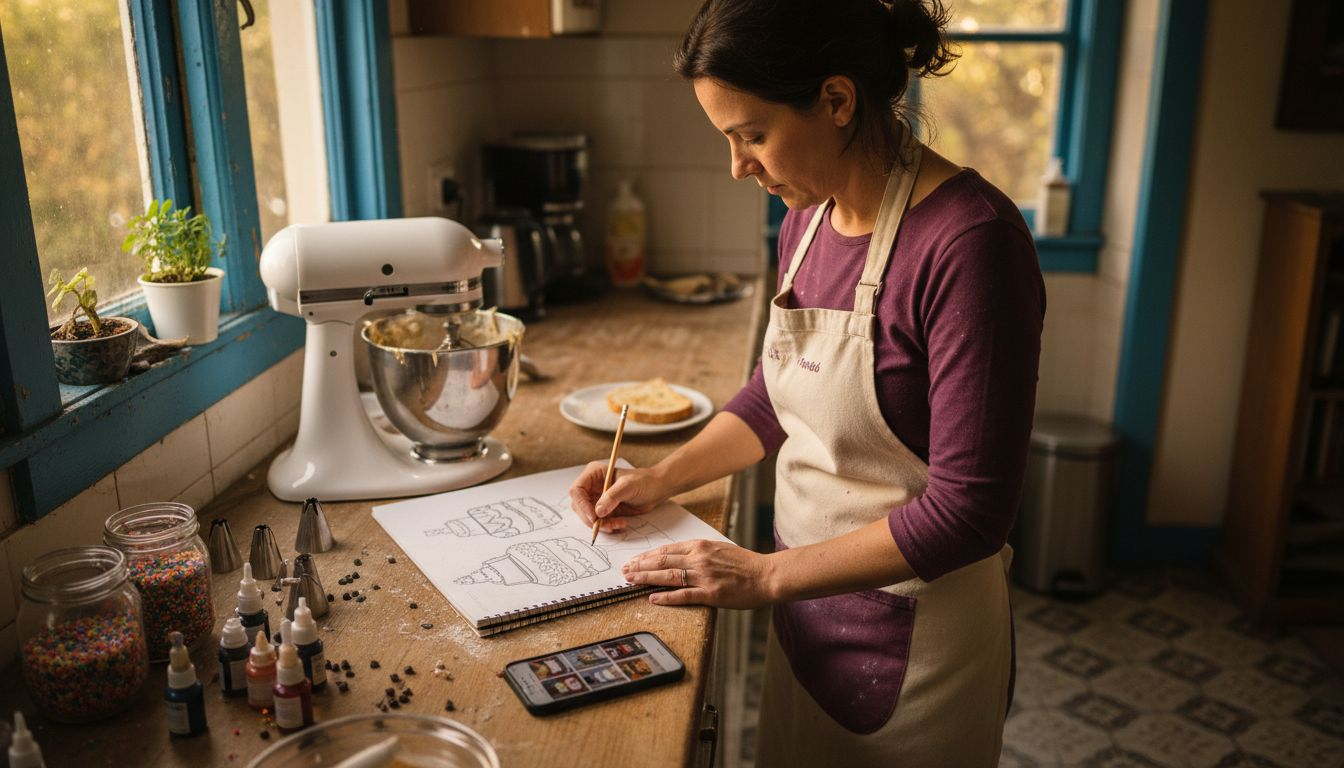
Every home baker dreams of creating a cake that impresses at family parties or adds a special touch to local gatherings across South Wales. Choosing the perfect design can feel daunting when balancing your skills and the tools available in your kitchen. By learning to honestly assess your strengths and gather inspiration that matches your abilities, you will discover ways to craft cakes that not only suit your events but make your baking journey more rewarding and enjoyable.
Table of Contents
- Stage 1: Assess Your Skill Level And Equipment
- Stage 2: Gather Inspiration And Practical Ideas
- Stage 3: Match Cake Designs To Your Event Theme
- Stage 4: Select Suitable Decorations And Finishing Touches
- Stage 5: Review And Adjust Your Final Cake Plan
Quick Summary
| Key Insight | Explanation |
|---|---|
| 1. Assess Your Skills and Tools | Evaluate your baking and decorating skills alongside your equipment to choose an appropriate cake design. |
| 2. Gather Creative Inspiration | Explore various sources like social media and baking magazines to collect design ideas that reflect your skills. |
| 3. Align Cake Design with Event Theme | Ensure your cake design matches the event’s aesthetic by considering colour palettes, motifs, and personal symbols. |
| 4. Select Meaningful Decorations | Choose decorations that complement your cake’s design while reflecting its personality and the event’s spirit. |
| 5. Review and Refine Your Cake Plan | Be flexible and adjust your initial design to enhance its feasibility and alignment with your skills and resources. |
Stage 1: Assess Your Skill Level and Equipment
Choosing the right cake design starts with an honest self-assessment of your current baking and decorating capabilities. Understanding where you stand helps you select a design that challenges but doesn’t overwhelm you.
To evaluate your skill level, consider these key aspects:
- Baking experience: How many cakes have you successfully baked?
- Decorating skills: What techniques can you confidently perform?
- Equipment availability: What tools do you currently own?
Start by reviewing your current cake decorating skills. Most home bakers fall into three broad categories: beginner, intermediate, and advanced. Beginners might have basic skills like mixing batters and using simple piping techniques, while advanced decorators can create intricate fondant designs and complex sugar work.
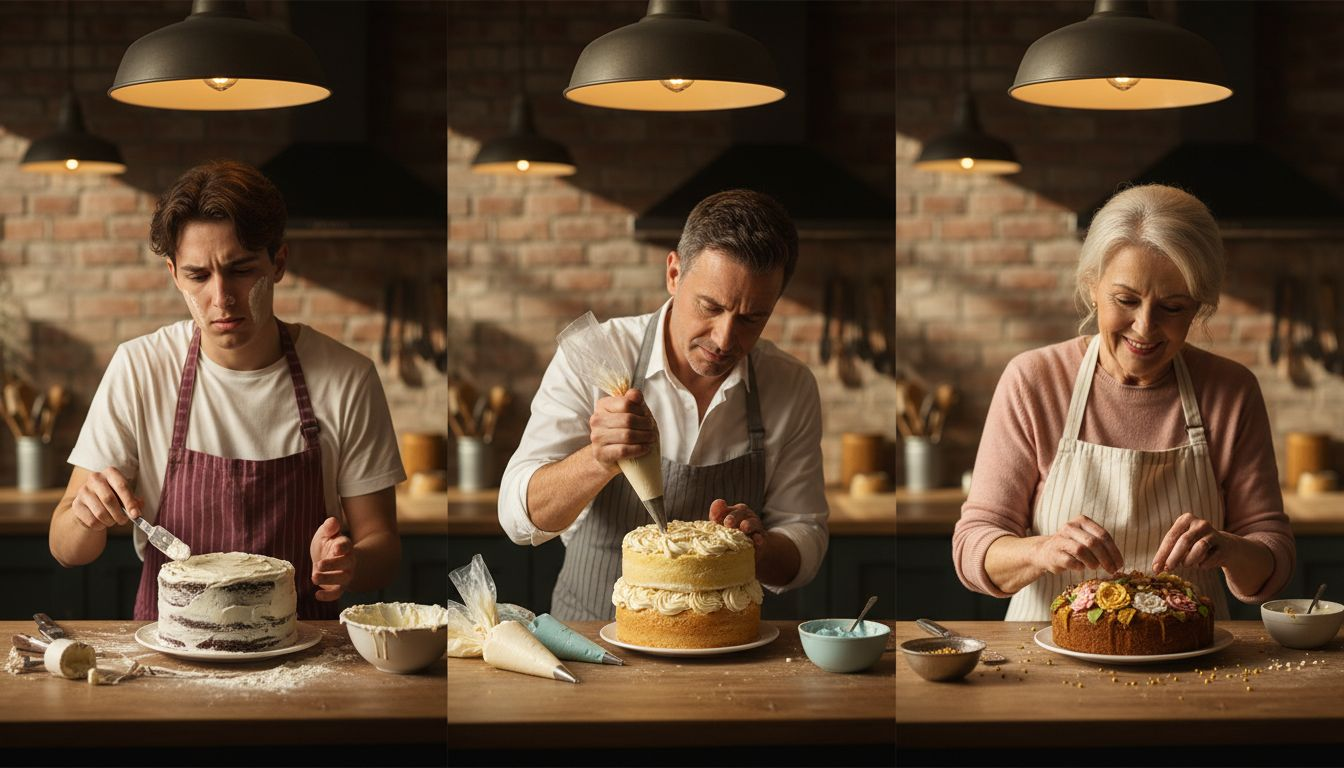
Here’s a comparison of cake decorating skill levels and suggested techniques:
| Skill Level | Typical Abilities | Suitable Techniques |
|---|---|---|
| Beginner | Basic baking and simple icing | Basic piping, single-tier cakes |
| Intermediate | Neat layering and some detail work | Drip icing, basic fondant shapes |
| Advanced | Intricate designs and stable structures | Sugar flowers, multi-tier cakes |
Your kitchen equipment plays a crucial role in design selection. Professional-grade tools aren’t always necessary, but having the right basic equipment can make a significant difference. Essential items typically include:
- Cake turntable
- Offset spatula
- Piping bags and tips
- Bench scraper
- Digital kitchen scale
Your equipment and skill level determine the complexity of cake design you can successfully execute.
Expert advice: Always choose a cake design that is one small step beyond your current skill level to encourage growth without causing frustration.
Stage 2: Gather Inspiration and Practical Ideas
Designing a beautiful cake begins with discovering inspiring visual references and collecting practical design ideas that match your skill level. Gathering inspiration is a creative journey that transforms your baking from routine to remarkable.
To effectively collect design ideas, you’ll want to explore multiple sources of creative stimulation. Explore diverse design inspiration sources by investigating various platforms that showcase innovative cake designs.
Consider these key inspiration channels:
- Social media platforms like Instagram and Pinterest
- Professional cake decorating websites
- Baking magazines and cookbooks
- Local bakery display windows
- Cake decorating television programmes
When collecting ideas, focus on designs that align with your current skill set while gently pushing your creative boundaries. Look for techniques you can realistically learn and replicate, paying close attention to:
- Colour combinations
- Texture variations
- Decorative elements
- Structural design principles
- Thematic approaches
Creative inspiration transforms basic cake decorating into an art form.
Your goal is not to copy exactly but to understand design principles that can elevate your own unique creations. Take screenshots, save images, and create a dedicated inspiration folder that you can reference during your cake design process.
Pro tip: Create a mood board featuring cake designs that inspire you, helping visualise your creative direction and track your progress.
Stage 3: Match Cake Designs to Your Event Theme
Selecting a cake design that harmonises perfectly with your event requires thoughtful consideration of the occasion’s unique character and aesthetic. Your cake should not just be delicious, but a visual storyteller that reflects the spirit of the celebration.
Wedding cake designs traditionally reflect event themes by incorporating specific colours, styles, and decorative elements that capture the essence of the celebration. This principle applies equally to birthdays, anniversaries, and seasonal gatherings.
Consider these key thematic matching strategies:
- Colour palette coordination
- Seasonal motifs and decorations
- Cultural or personal symbolism
- Venue and decor style alignment
- Architectural or artistic influences
When matching your cake design, examine these critical design elements:
- Colour scheme synchronisation
- Decorative element relevance
- Texture and finish compatibility
- Scale and proportion
- Symbolic meaningful details
A well-chosen cake design becomes an integral part of the event’s visual narrative.
Your goal is to create a seamless visual experience that feels intentional and sophisticated. Pay attention to subtle design cues from your event’s overall aesthetic, whether it’s a rustic wedding, a minimalist birthday, or an elegant corporate celebration.
Pro tip: Take photographs of your venue, invitation, and decor elements to create a visual reference board when designing your cake.
Stage 4: Select Suitable Decorations and Finishing Touches
Transforming a simple cake into an extraordinary masterpiece requires careful selection of decorations and finishing touches that elevate your design from ordinary to extraordinary. Your chosen embellishments will communicate the cake’s personality and emotional essence.
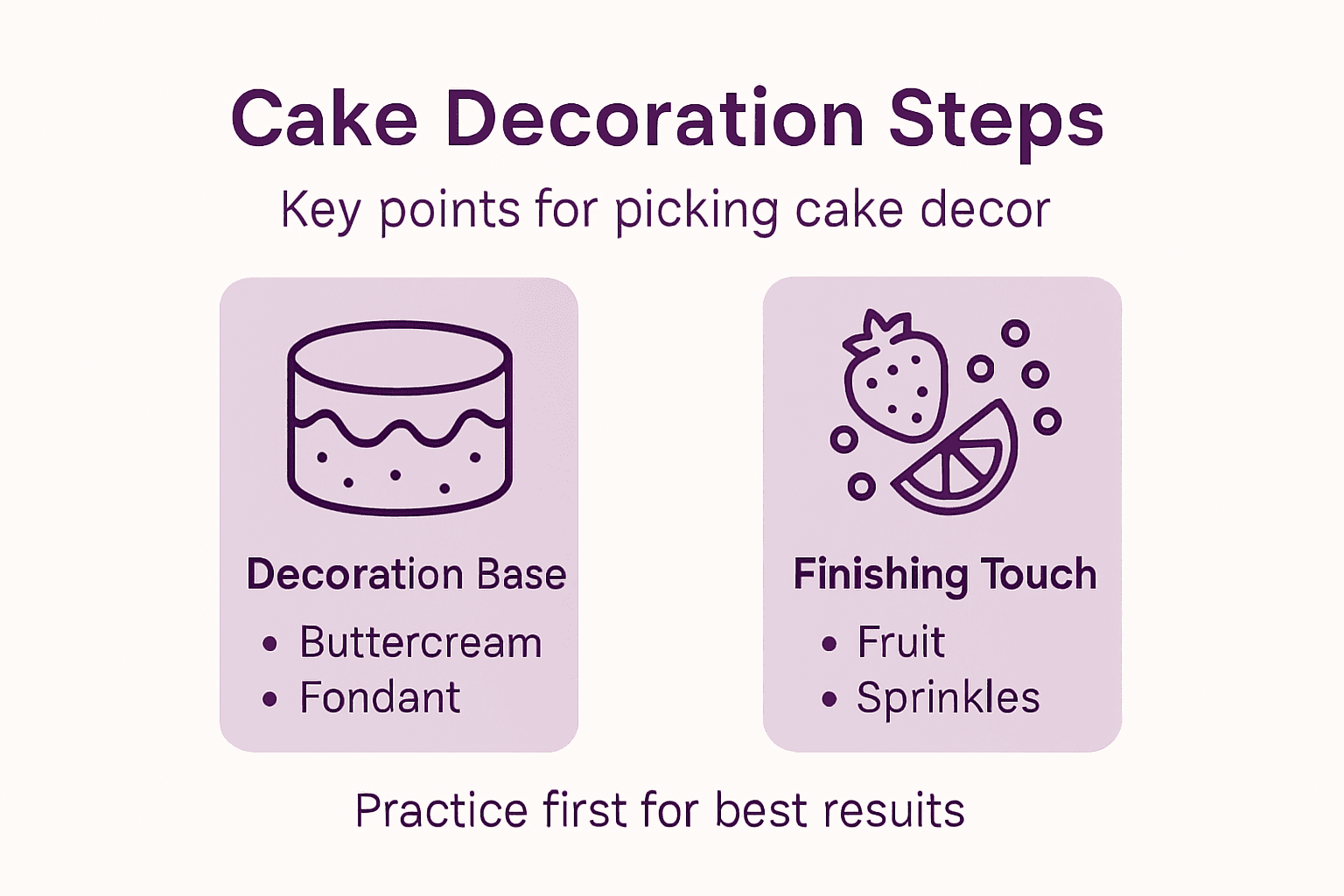
Professional cake decorators use multiple decoration techniques to create stunning visual experiences that captivate guests and honour the event’s spirit. Understanding how to select and apply these decorative elements is crucial for achieving a polished, professional result.
Consider these primary decoration categories:
- Edible decorations: Fondant shapes, sugar flowers
- Textural elements: Piped buttercream, royal icing details
- Colour accents: Food colouring, metallic dusts
- Structural embellishments: Delicate sugar work, edible pearls
- Thematic additions: Seasonal motifs, personalised toppers
When selecting your decorative approach, evaluate these critical factors:
- Colour compatibility with event theme
- Complexity matching your skill level
- Texture and visual balance
- Ingredient quality and freshness
- Time required for implementation
Exceptional cake decorations transform culinary craft into edible art.
Remember that restraint often speaks louder than excess. Choose decorations that complement rather than overwhelm your cake’s fundamental design, creating a harmonious visual narrative that delights and surprises.
Pro tip: Practice your chosen decoration technique on a dummy cake first to build confidence and refine your approach.
Stage 5: Review and Adjust Your Final Cake Plan
Successful cake design requires flexibility and a willingness to refine your initial concept. Your first draft is rarely your final masterpiece, so embrace the iterative process of reviewing and adjusting your cake plan.
Professional cake designers constantly review and adapt their designs to ensure they meet both aesthetic and practical requirements. This approach allows you to anticipate potential challenges and make strategic modifications before the final execution.
Consider these critical review elements:
- Technical feasibility: Can you realistically create the design?
- Equipment limitations: Do you have necessary tools?
- Time constraints: Is the design achievable within your timeline?
- Skill compatibility: Matches your current decorating abilities
- Budget considerations: Affordable ingredients and decorations
When reviewing your cake plan, systematically evaluate these aspects:
- Sketch accuracy and practicality
- Ingredient compatibility
- Structural integrity
- Decoration complexity
- Overall visual harmony
A thoughtful review transforms good cake designs into extraordinary creations.
Remember that minor adjustments can significantly improve your final result. Be open to simplifying complex elements or finding creative alternatives that maintain your original vision while ensuring achievable execution.
Pro tip: Create a side-by-side comparison of your original design and potential modifications to objectively assess improvements.
Discover the Perfect Tools to Bring Your Cake Design to Life
Choosing a cake design that truly works and feels achievable can be challenging when you are unsure if you have the right equipment or decorations. Whether you are a beginner aiming to try basic piping techniques or an advanced baker ready to create intricate sugar flowers, The Vanilla Valley offers exactly what you need. We understand that matching your skill level and event theme with the right supplies is the secret to turning your creative inspiration into a stunning reality.
Explore our extensive range of cake decorating supplies and baking accessories that support every step of your cake design journey. From essential cake boards and piping bags to vibrant food colours and delicate sprinkles, you will find quality tools that help you master every technique with confidence. Take advantage of our trusted service since 2009, enjoy free and next day delivery, and join our customer loyalty club for even more benefits. Start perfecting your cake designs today with The Vanilla Valley and see how the right supplies make all the difference.
Ready to transform your cakes effortlessly? Browse our full collection now and find everything you need to create show-stopping designs that work easily and beautifully. Visit The Vanilla Valley online shop and take the next step towards baking success.
Frequently Asked Questions
How can I assess my cake decorating skill level?
Start by reviewing your past baking experiences and the techniques you are comfortable with. Categorise yourself as a beginner, intermediate, or advanced baker to select a cake design that matches your skills.
What sources can I use for cake design inspiration?
Explore social media platforms, baking magazines, and professional cake decorating websites to find design ideas. Collect images and screenshots to create a dedicated inspiration folder for easy reference during your planning.
How do I choose a cake design that suits my event?
Consider the event’s theme and aesthetics when selecting a cake design. Match elements like colour palettes and decorative styles to ensure your cake complements the overall visual narrative of the celebration.
What important decorations should I consider for my cake?
Focus on edible decorations, textural elements, and colour accents that enhance the cake’s design. Choose decorations that align with your skill level and the event theme to create a harmonious look.
How can I review and adjust my final cake design plan?
Evaluate your original design against factors like technical feasibility and time constraints. Make necessary adjustments to simplify complex elements and ensure a successful execution before you start baking.