What Is Sugar Paste and Its Role in Cake Art
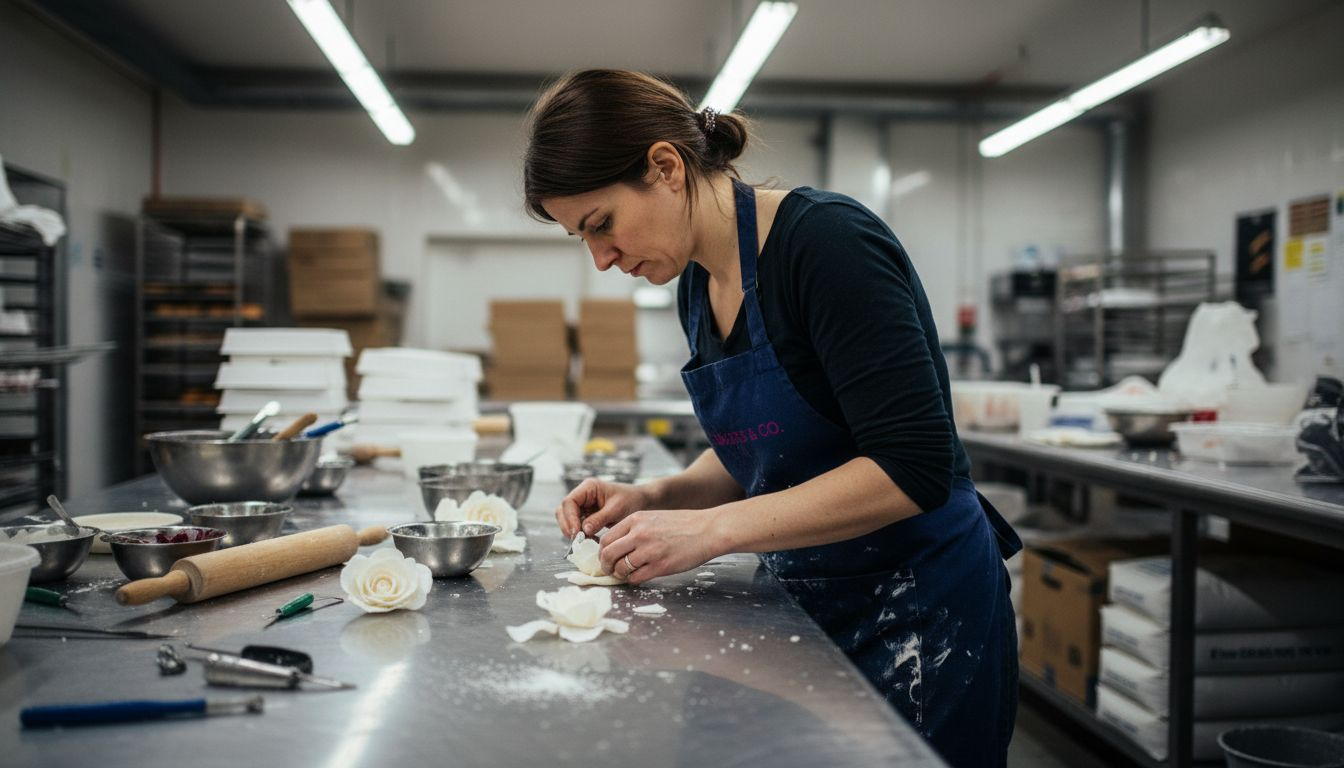
Bold colours and elegant details can make any cake stand out, but mastering sugar paste often tests the patience of even seasoned South Wales bakers. Choosing the right paste and technique is crucial for creating flawless flowers and figures that hold their shape beautifully. This guide clarifies common misconceptions, explores major paste types available in the United Kingdom, and highlights expert tips so you can achieve a truly professional finish, whether you bake at home or in a busy bakery.
Table of Contents
- Sugar Paste Defined And Common Misconceptions
- Primary Types Of Sugar Paste In The UK
- Essential Properties For Professional Results
- Cake Decorating Uses And Real-World Examples
- Handling Challenges And Common Mistakes
Key Takeaways
| Point | Details |
|---|---|
| Understanding Sugar Paste | Sugar paste is distinct from fondant, as it hardens completely, making it ideal for detailed decorations and sculptural elements. |
| Types of Sugar Paste | There are three main types in the UK: Modelling Paste, Flowerpaste, and Standard Sugarpaste, each suited for specific cake decorating tasks. |
| Essential Properties | High-quality sugar paste should exhibit elasticity, smoothness, colour stability, and appropriate setting speed for professional results. |
| Common Challenges | Proper handling of sugar paste requires attention to moisture levels, temperature control, and adequate drying times to prevent structural failures. |
Sugar Paste Defined and Common Misconceptions
Sugar paste is a versatile edible decoration medium used extensively in professional cake artistry. Often misunderstood, this specialised ingredient transforms ordinary cakes into extraordinary culinary masterpieces.
At its core, sugar paste (sometimes called sugar gum or gum paste) is a pliable sugar dough specifically designed for cake decorating. Unlike regular icing, it offers unique properties that make it invaluable for intricate designs:
- Stays malleable during initial handling
- Hardens completely after shaping
- Enables detailed sculptural decorations
- Provides a smooth, professional finish
Many amateur bakers mistakenly believe sugar paste and fondant are identical. However, they differ significantly. Fondant remains soft and flexible, while sugar paste hardens completely, making it ideal for creating delicate flowers, figurines, and three-dimensional cake embellishments.
Commercial sugar paste offers several advantages over homemade versions. Professional-grade products are:
- Consistently pure white
- More stable at room temperature
- Easier to work with
- Faster to dry and set
Professional cake decorators appreciate sugar paste for its sculptural potential. Its ability to dry quickly and maintain intricate details makes it perfect for complex cake designs that require precision and structural integrity.
Pro tip: Always knead sugar paste thoroughly before use to ensure a smooth, crack-free texture and optimal workability.
Primary Types of Sugar Paste in the UK
The United Kingdom’s cake decorating scene boasts a rich variety of sugar paste types, each designed to meet specific artistic requirements. Professional bakers and home enthusiasts alike have multiple options when selecting the ideal sugar paste for their culinary creations.
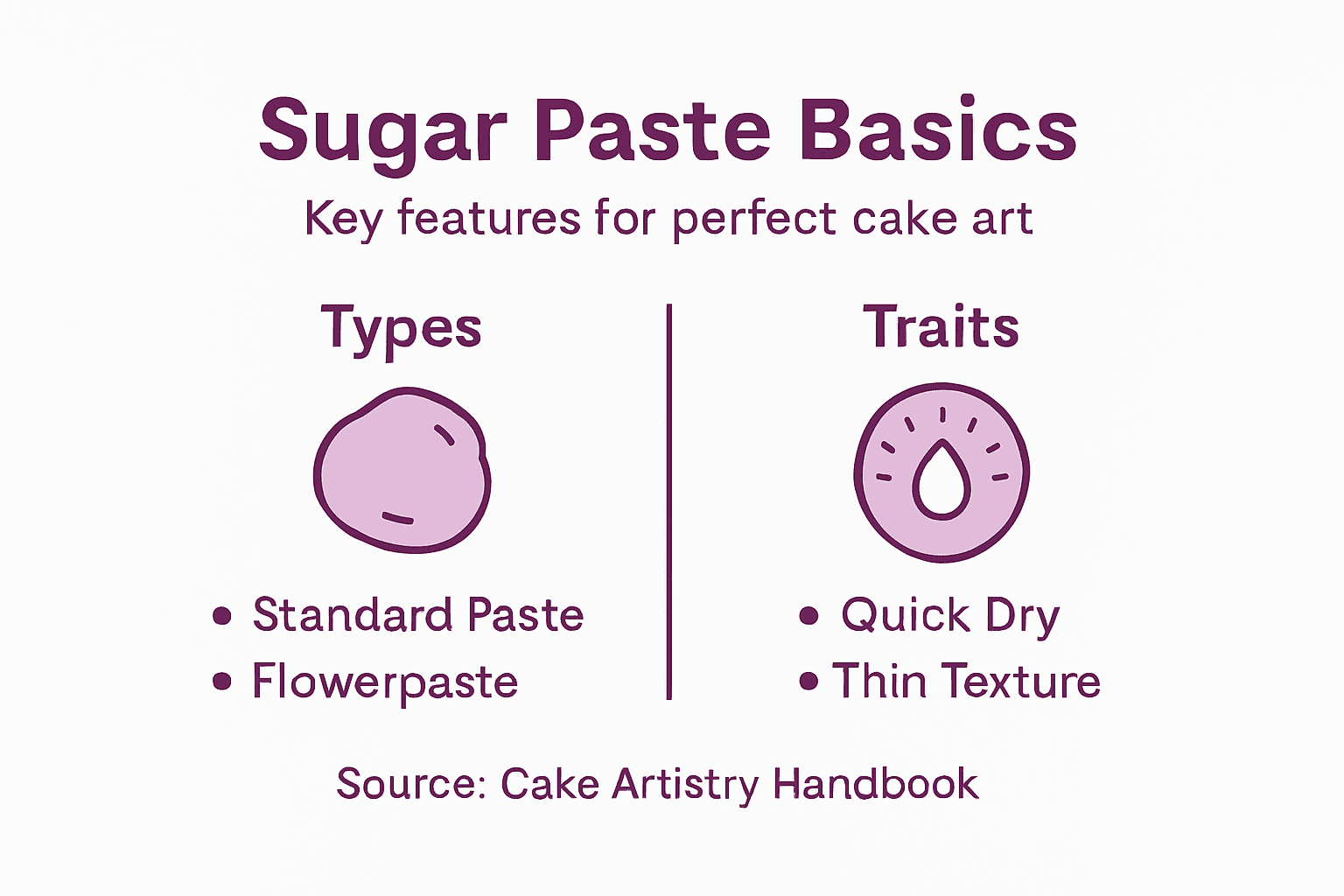
In the UK cake decorating market, three primary types of sugar paste dominate professional kitchens: modelling paste, flowerpaste, and standard sugarpaste. Understanding their unique characteristics helps bakers choose the most suitable option for their specific design needs:
- Modelling Paste: Extremely firm, ideal for intricate 3D decorations
- Flowerpaste: Thin and delicate, perfect for creating realistic sugar flowers
- Standard Sugarpaste: Versatile and smooth, used for covering cakes and basic decorations
Each type of sugar paste has distinct working properties that make it suitable for different cake decorating techniques. Modelling paste, for instance, provides exceptional structural integrity, allowing cake artists to create complex figurines and architectural cake elements that maintain their shape perfectly.
Flowerpaste is particularly prized among British cake decorators for its exceptional thinness and ability to create incredibly realistic sugar flowers. Its translucent quality mimics delicate petals, making it the go-to choice for wedding and celebration cakes that require botanical precision.
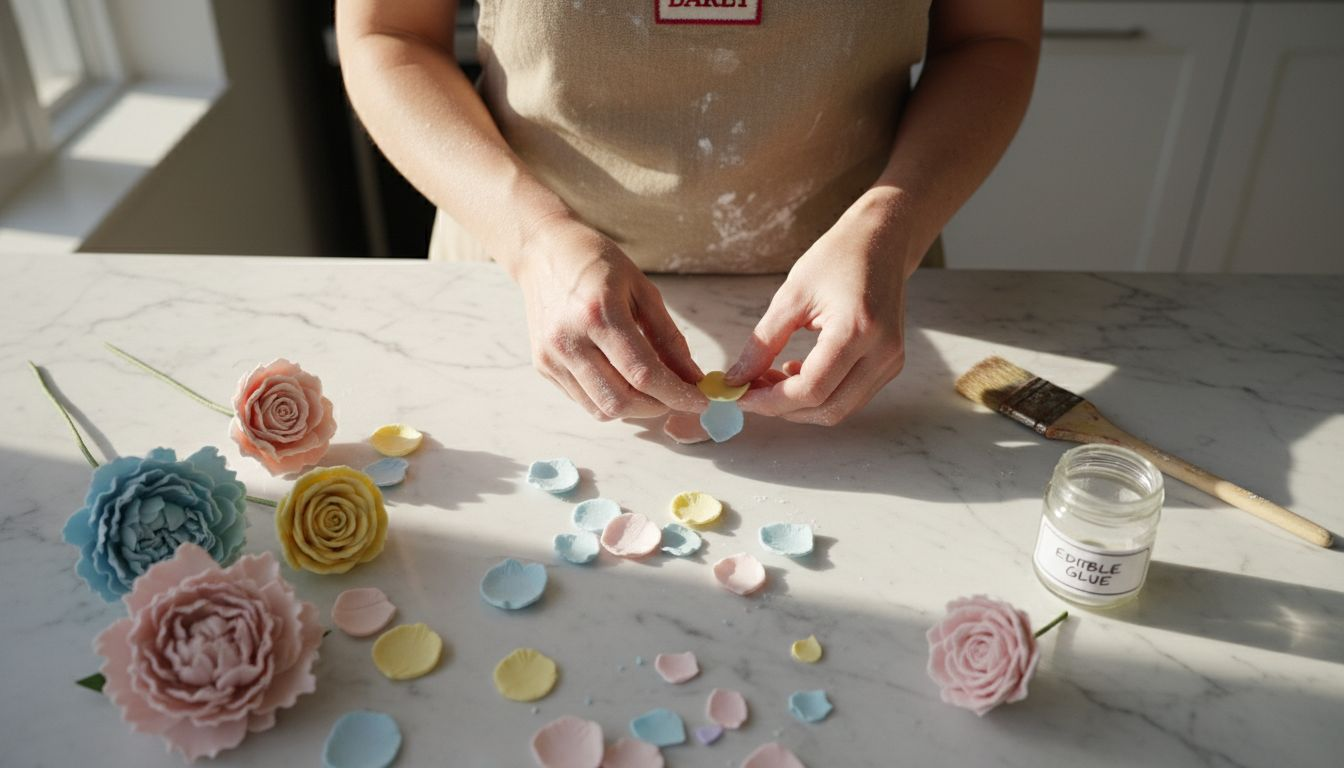
Professional bakers often blend different sugar paste types to achieve specific textures and finishes. Standard sugarpaste serves as an excellent base, while modelling and flowerpaste provide specialised detailing capabilities that elevate cake design from ordinary to extraordinary.
To clarify the distinctions among popular sugar pastes in the UK, here is a comparative table:
| Sugar Paste Type | Best For | Key Strength | Limitation |
|---|---|---|---|
| Modelling Paste | 3D figurines and structures | Firmness and detail | Less suitable for covering |
| Flowerpaste | Realistic sugar flowers | Thinness and pliancy | Not ideal for large areas |
| Standard Sugarpaste | Cake covering and simple shapes | Smooth, easy to roll | Lacks structural support |
The art of selecting the right sugar paste is as crucial as the decoration technique itself.
Pro tip: Always store different types of sugar paste in sealed containers at consistent room temperature to maintain their unique working properties and prevent premature drying.
Essential Properties for Professional Results
Mastering sugar paste requires a deep understanding of its critical professional properties. Cake decorators must navigate a complex landscape of texture, malleability, and structural integrity to achieve truly exceptional results.
Professional-grade sugar paste demands several key characteristics that distinguish superior products from amateur alternatives. When selecting sugar paste for professional baking tools, bakers should evaluate these essential properties:
- Elasticity: Ability to stretch without cracking
- Smoothness: Even texture without visible grain
- Colour Stability: Consistent pigmentation under different lighting
- Setting Speed: Appropriate drying time for intricate designs
- Temperature Resistance: Maintaining shape in variable environments
The structural properties of sugar paste directly impact its performance in professional cake decorating. High-quality sugar paste maintains its shape while allowing intricate manipulation, a crucial factor for creating delicate sugar flowers, precise figurines, and complex architectural cake designs.
Textural consistency plays a paramount role in professional sugar paste selection. Professional bakers require a medium that can be rolled extremely thin for delicate work, yet remain sturdy enough to support three-dimensional structures. The paste must strike a precise balance between flexibility and firmness.
Professional sugar paste is not just an ingredient, but a sculptor’s medium for culinary artistry.
Advanced sugar paste formulations incorporate specialised binding agents that enhance workability and structural integrity. These sophisticated compositions allow cake artists to push the boundaries of traditional cake decorating, transforming simple confections into edible masterpieces.
Pro tip: Test your sugar paste’s working properties by creating a small sample decoration, which will reveal its true performance characteristics before committing to a larger project.
Cake Decorating Uses and Real-World Examples
Sugar paste transforms ordinary cakes into extraordinary artistic expressions, serving as a versatile medium for professional and amateur cake decorators alike. Its remarkable adaptability enables creators to push the boundaries of traditional cake design, turning simple confections into edible masterpieces.
Professional cake artists frequently employ sugar paste in cake decorating techniques across diverse culinary scenarios. The applications range from elegant wedding celebrations to whimsical children’s birthday parties:
- Wedding Cakes: Creating intricate lace patterns and delicate sugar flowers
- Birthday Celebrations: Designing themed figurines and character decorations
- Corporate Events: Crafting precise corporate logos and branded elements
- Seasonal Festivities: Producing detailed seasonal and holiday-specific designs
In wedding cake design, sugar paste enables extraordinarily detailed work. Bakers can replicate complex textile patterns, create three-dimensional floral arrangements, and produce seamless colour transitions that look impossibly delicate and refined.
Children’s celebration cakes represent another realm where sugar paste truly shines. Professional decorators can construct elaborate cartoon characters, superhero figures, and imaginative landscapes that captivate young audiences. The medium’s ability to hold intricate shapes makes seemingly impossible designs achievable.
Sugar paste is not merely an ingredient, but a canvas for culinary creativity.
Commercial and professional settings also leverage sugar paste’s versatility. Bakeries create branded corporate event cakes featuring precise company logos, while high-end restaurants use sugar paste to develop visually stunning dessert presentations that blur the line between food and art.
Pro tip: Practice your sugar paste techniques on small, inexpensive foam models before attempting complex designs on actual cakes to build confidence and skill.
Handling Challenges and Common Mistakes
Working with sugar paste requires precision, patience, and a keen understanding of potential pitfalls. Even experienced cake decorators encounter challenges that can compromise the final artistic presentation.
Professional bakers frequently encounter cake decorating mistakes that can derail their creative vision. Understanding these common challenges helps prevent frustrating outcomes:
- Moisture Management: Preventing sugar paste from becoming too wet or dry
- Temperature Control: Maintaining optimal working conditions
- Structural Integrity: Ensuring decorations hold their shape
- Colour Consistency: Achieving uniform pigmentation
- Texture Maintenance: Avoiding cracks and uneven surfaces
One of the most frequent errors involves improper paste selection for specific design requirements. Different sugar paste variants have distinct properties, and using the wrong type can lead to structural failures or aesthetic disappointments. Modelling paste, for instance, provides superior strength for three-dimensional figurines, while standard sugar paste works best for smoother, flatter applications.
Colour preparation presents another significant challenge for cake artists. Achieving consistent, vibrant colours requires careful pigment mixing and understanding how different lighting conditions might alter perceived hues. Professional decorators recommend adding colour gradually and testing small batches before committing to large-scale projects.
Mastering sugar paste is about understanding its nuanced behaviour, not just technical skill.
Structural challenges often arise from insufficient drying time or improper handling. Delicate sugar paste decorations need precise environmental conditions to maintain their intricate details. Rushing the process or exposing creations to inappropriate temperatures can cause immediate deformation or gradual degradation.
The following table outlines common issues with sugar paste and their professional solutions:
| Challenge | Underlying Cause | Professional Solution |
|---|---|---|
| Cracking decorations | Over-drying or insufficient kneading | Thorough kneading, use of softeners |
| Faded colours | Excess light or poor pigment | Select quality gel colours |
| Loss of shape | Inadequate drying time | Extend drying period, support shapes |
| Sticky texture | High humidity or excess moisture | Work in controlled environment |
Pro tip: Create a dedicated workspace with controlled temperature and humidity to minimise sugar paste handling challenges and preserve your artistic designs.
Elevate Your Cake Art with Professional Sugar Paste Solutions
Understanding the unique challenges of working with sugar paste opens the door to breathtaking cake designs. Whether you struggle with maintaining structural integrity, managing texture consistency, or achieving perfect colour stability, having the right tools and ingredients can make all the difference. At The Vanilla Valley, we appreciate the delicate balance needed between elasticity and firmness to sculpt flawless decorations that captivate every eye.
Discover our extensive range of professional sugar paste, baking accessories, and expert-approved products designed to enhance every stage of your cake decorating journey. Explore essential baking tools and carefully selected cake decorating supplies crafted to support both intricate modelling and smooth cake covering. Visit The Vanilla Valley today and transform your cakes with confidence. Find out how to master your craft with trusted quality, swift delivery, and valuable tips that turn your vision into edible masterpieces.
Frequently Asked Questions
What is sugar paste and how is it used in cake decorating?
Sugar paste is a pliable sugar dough used for cake decorating, providing the ability to create intricate designs and a smooth finish. It can be shaped into detailed decorations and is ideal for covering cakes.
How does sugar paste differ from fondant?
While both sugar paste and fondant are used in cake decorating, sugar paste hardens completely, making it suitable for detailed designs, whereas fondant remains soft and flexible.
What are the primary types of sugar paste?
The main types of sugar paste are modelling paste, flowerpaste, and standard sugarpaste. Modelling paste is firm for 3D decorations, flowerpaste is thin for realistic flowers, and standard sugarpaste is versatile for covering cakes.
What are common challenges when working with sugar paste?
Common challenges include moisture management, maintaining temperature control, ensuring structural integrity, achieving colour consistency, and preventing cracks. Understanding these issues helps cake decorators achieve better results.
Recommended
- Sugarpaste, Modelling Paste & Flowerpaste – Choosing Right for Cake Artistry - The Vanilla Valley
- How Much Sugar Paste Do You Need to Cover a Cake? - The Vanilla Valley
- How to Store Sugarpaste for Freshness and Easy Use - The Vanilla Valley
- How to Colour Sugarpaste for Stunning Cake Designs - The Vanilla Valley