
Cake Board Selection Guide: Choose the Perfect Board
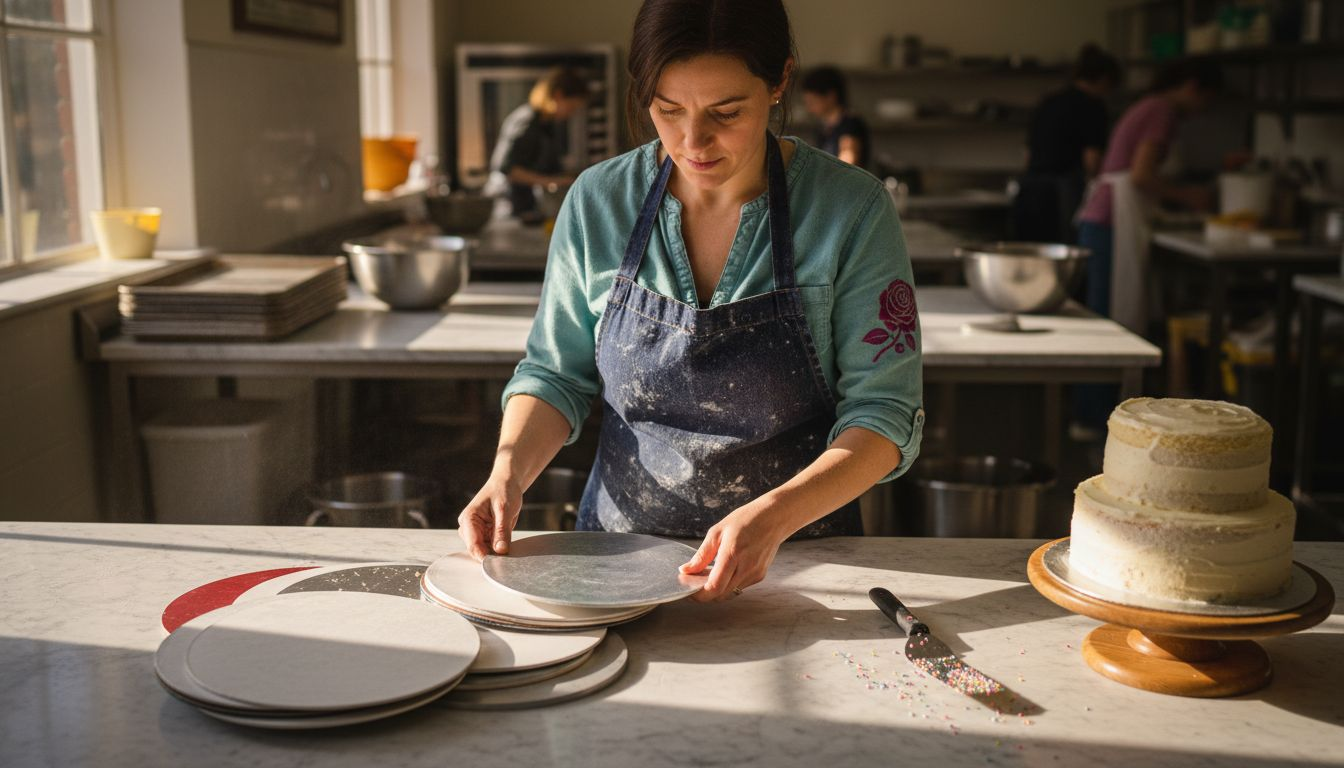
More than eight out of ten British home bakers admit they are unsure which cake board suits their creation best. The choice goes far beyond just picking a size. From a delicate Victoria sponge to an elaborate wedding centerpiece, the right support ensures both beauty and stability. If you want to avoid collapsed cakes and disappointing displays, understanding board types, shapes, and finishes is crucial. This guide clarifies every detail so your cakes impress every time.
Table of Contents
- Stage 1: Assess Your Cake’s Weight and Design Needs
- Stage 2: Compare Drums, Masonites, Cut Edge Cards and Hard Boards
- Stage 3: Select the Best Size Shape and Thickness
- Stage 4: Match Colours and Finishes to Your Cake Theme
- Stage 5: Verify Stability and Presentation for Final Display
Quick Summary
| Key Point | Explanation |
|---|---|
| 1. Assess cake weight and design needs | Evaluate your cake’s weight and complexity to select the appropriate board for optimal support and aesthetics. |
| 2. Choose the right board type | Different cake boards like drums, hard boards, and cut edge cards offer varying levels of support, depending on the cake’s structure and design. |
| 3. Match size, shape, and thickness | Ensure your board extends two inches beyond the cake diameter and select proper thickness based on the cake’s weight and design complexity. |
| 4. Select complementary colours and finishes | Choose board colours and textures that harmonise with your cake’s style and event theme for a cohesive look. |
| 5. Verify stability for final display | Perform stability tests to ensure the board supports the cake well; maintain a clean edge around the cake for a polished appearance. |
Stage 1: Assess Your Cake’s Weight and Design Needs
Successfully choosing the right cake board begins with carefully evaluating your specific cake’s unique characteristics and structural requirements. Understanding the weight distribution and design complexity will ensure you select a board that provides optimal support and presentation for your baking project.
Determining your cake’s weight involves considering several critical factors. Some cakes are relatively lightweight and can be supported by thin cardboard or lightweight cake cards, while multi-tiered or dense creations demand more substantial support. Cake Boards Explained: Types, Uses, and Buying Tips highlights the importance of matching board thickness to cake weight. For standard single-layer sponge cakes, a 3mm thick board typically suffices, but elaborate wedding cakes with multiple tiers might require 12mm masonite boards for enhanced stability.
Design considerations extend beyond mere weight measurements. Consider factors like cake height, decoration complexity, and planned transportation. Heavier cakes with intricate fondant work or sugar sculptures need rigid boards that prevent flexing or potential structural collapse. Square and round boards offer different aesthetic advantages, so your design vision should guide your selection. Square boards provide modern geometric precision, while round boards offer classic elegance and smoother edges for smooth buttercream finishes.
Recommended tip: Select a cake board at least 2 inches larger than your cake’s diameter to create a professional presentation border and provide adequate structural support.
Stage 2: Compare Drums, Masonites, Cut Edge Cards and Hard Boards
Navigating the world of cake boards requires understanding the unique characteristics and applications of different board types to ensure your cake receives optimal structural support and aesthetic presentation. Complete Guide to Cake Boards for Bakers provides essential insights into selecting the right board for your specific baking needs.
Drums represent sturdy circular boards typically constructed from thick cardboard or masonite, offering exceptional stability for multi tiered cakes. They feature raised edges which provide additional structural integrity and prevent cake layers from sliding during transportation. In contrast, cut edge cards are thinner lightweight options perfect for single layer or smaller cakes where minimal support is required. These cards often come in various colours and can be easily trimmed to match specific cake dimensions.
Hard boards differentiate themselves through superior rigidity and durability. Made from compressed materials like masonite or thick cardboard, they excel at supporting heavier cake designs with complex decorative elements. Professional bakers frequently recommend hard boards for wedding cakes or elaborate sculptural creations that demand maximum structural integrity. Masonite boards specifically offer remarkable strength while remaining relatively lightweight a critical consideration when transporting delicate cake structures.
Recommended tip: Always choose a board at least two inches wider than your cake to create a professional presentation border and provide adequate structural margin for decoration and handling.
Here is a comparison of common cake board types and their recommended uses:
| Board Type | Best For | Material | Key Advantage |
|---|---|---|---|
| Drum | Multi-tiered cakes | Thick cardboard, masonite | Excellent stability for heavy cakes |
| Cut Edge Card | Single-layer or small cakes | Lightweight card | Can be easily trimmed |
| Hard Board | Dense or decorative cakes | Compressed board, masonite | Superior rigidity and strength |
| Masonite Board | Wedding and sculptural cakes | Masonite | Combines strength and low weight |
Stage 3: Select the Best Size Shape and Thickness
Selecting the perfect cake board requires careful consideration of size shape and thickness to ensure optimal support and presentation for your baking creation. Structural integrity research from Southampton University emphasises the critical importance of choosing materials that provide appropriate structural support for your specific project.
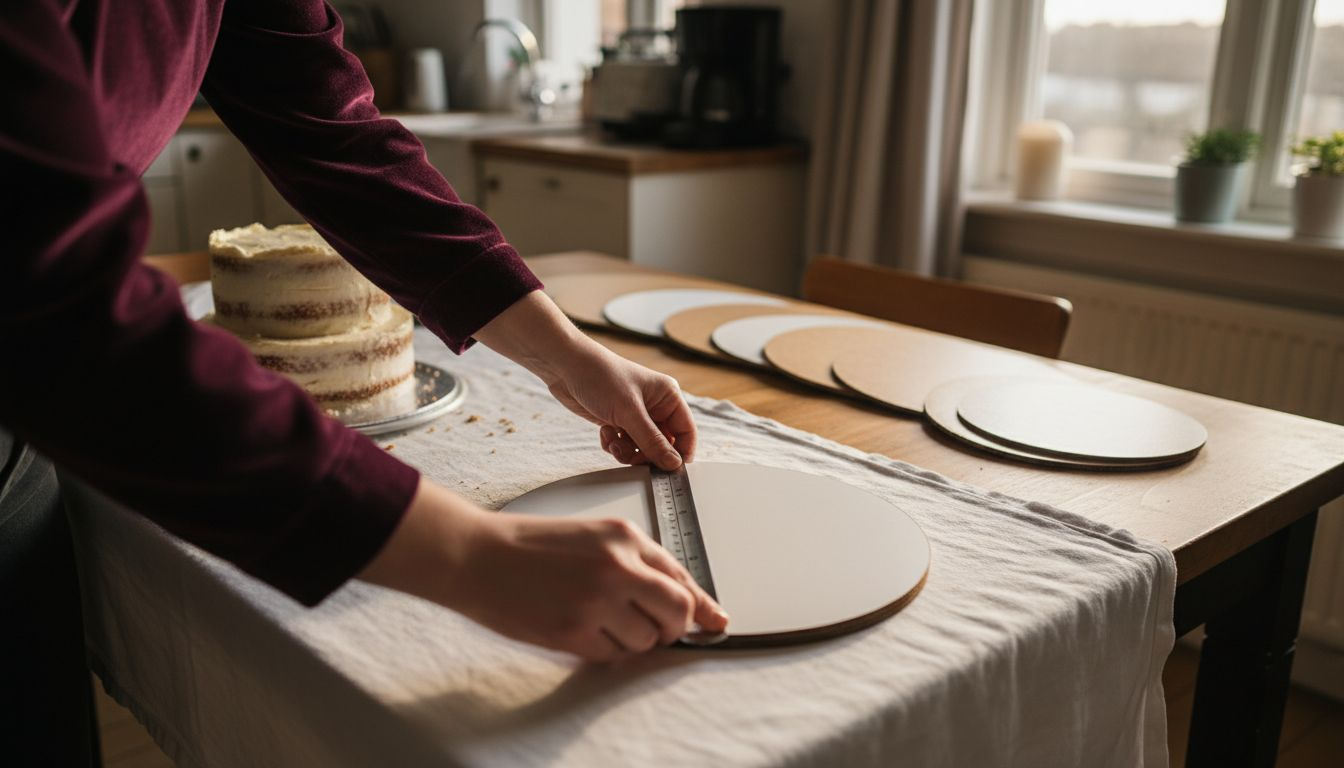
Board size should extend approximately two inches beyond your cake’s diameter creating a professional presentation border that allows space for decorative elements and handling. Round boards work wonderfully for traditional circular cakes offering smooth continuous edges perfect for buttercream finishes. Square boards provide a contemporary geometric aesthetic ideal for modern cake designs and sharp edged fondant work. Rectangular or oblong boards accommodate elongated cake shapes like sheet cakes or custom rectangular creations.
Thickness plays a pivotal role in determining board stability. Thin 3mm cards suit lightweight single layer sponge cakes while 6mm to 12mm thick boards become essential for multi tiered wedding cakes or elaborate sculptural designs. Professional bakers recommend selecting board thickness based on cake weight cake height and planned transportation needs. Heavier cakes require more substantial boards to prevent flexing or structural compromise during movement and display.
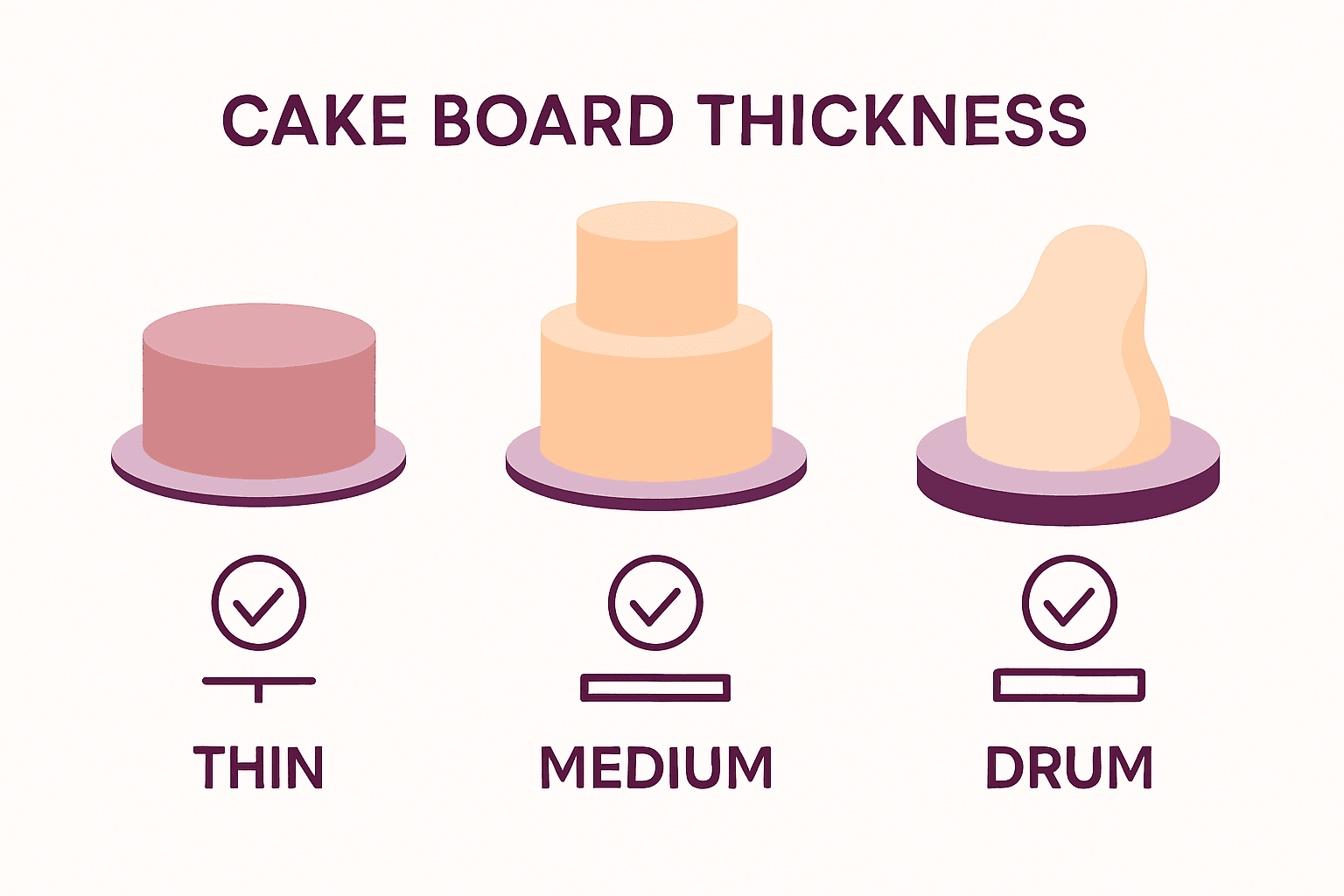
Recommended tip: Always purchase boards slightly larger and thicker than you initially estimate to provide maximum flexibility and support for your cake design.
This table summarises cake board size, shape and thickness recommendations:
| Cake Type | Board Shape | Size Overspill | Recommended Thickness |
|---|---|---|---|
| Sponge cake (single) | Round/Square | 2 inches extra | 3mm |
| Multi-tiered wedding | Square/Drum | 2+ inches extra | 12mm |
| Sheet or rectangle | Rectangular | 2 inches extra | 6-12mm |
| Sculptural/Heavy cake | Custom/Hard | 2+ inches extra | 12mm |
Stage 4: Match Colours and Finishes to Your Cake Theme
Creating a cohesive visual presentation involves carefully selecting cake board colours and finishes that complement your cake’s overall design aesthetic. Boho Wedding Cakes design inspiration demonstrates how thoughtful colour coordination can elevate a cake’s visual impact.
Consider the event theme and cake style when selecting board colours. Metallic silver or gold boards work brilliantly for elegant wedding cakes while pastel colours suit baby showers and birthday celebrations. White boards provide a classic neutral backdrop that allows intricate cake decorations to take centre stage. Textured boards with subtle shimmer or pearl finishes can add sophisticated depth without competing with your cake’s design.
For themed events choose board colours that harmonise with your cake’s palette. Soft blush pink boards complement romantic wedding designs while deep forest green works wonderfully for woodland themed celebrations. Professional bakers recommend selecting board finishes that either subtly match or intentionally contrast with your cake decorations creating visual interest and professional presentation. Covering boards with matching fondant ribbons or edible decorations can further integrate the board into your overall cake design.
Recommended tip: Always purchase boards slightly lighter in shade than your cake’s primary colour to prevent colour bleeding and maintain a crisp professional appearance.
Stage 5: Verify Stability and Presentation for Final Display
Structural integrity research from Southampton University underscores the critical importance of thoroughly checking your cake board’s performance before final presentation. Ensuring stability and visual appeal requires methodical evaluation of your cake’s structural integrity and overall aesthetic presentation.
Begin by performing a gentle stability test. Place your cake on the board and carefully tilt it at various angles to confirm the board supports the cake’s weight without flexing or bending. Pay close attention to how the board manages weight distribution particularly for multi tiered or sculptural cake designs. Check that edges remain firm and the cake sits centrally without any potential for shifting or sliding during transportation or display.
Visual presentation involves more than structural soundness. Examine the board’s edges for clean lines and ensure no icing or decoration bleeds onto the board’s surface. The board should create a seamless frame that enhances rather than distracts from your cake’s design. Professional bakers recommend leaving a small border around the cake approximately half an inch wide creating a polished professional appearance that draws attention to your cake’s intricate decorative elements.
Recommended tip: Always conduct a final stability check in the environment where the cake will be displayed to account for potential temperature variations or surface inconsistencies that might impact your cake’s structural integrity.
Ensure Your Cake’s Stability and Style with Expert Cake Boards from The Vanilla Valley
Choosing the right cake board can be challenging when balancing factors like weight, size, shape and design finish as highlighted in the “Cake Board Selection Guide: Choose the Perfect Board” article. Many bakers face frustration ensuring sufficient support for multi-tiered cakes while also maintaining an elegant presentation that complements their creation. Whether you need sturdy masonite boards for heavy wedding cakes or stylish cut edge cards for smaller designs, understanding these critical details helps avoid last-minute instability or an underwhelming display.
Take the guesswork out of cake board selection by exploring our extensive range of premium cake boards and decorating supplies at The Vanilla Valley.
Experience the confidence of professionally supported cakes designed to impress every guest. Visit our online store today to source the perfect cake board tailored to your baking needs. With our trusted reputation since 2009, fast delivery options, and expert advice, you can create stunning cakes that stand firm and look flawless from the first cut to the final slice. Learn more about cake board types and find inspiration in our comprehensive Cake Boards Explained guide and additional decorating resources included in our cakespiration articles.
Frequently Asked Questions
What factors should I consider when selecting a cake board?
Choosing the right cake board involves assessing your cake’s weight, design complexity, and transportation needs. Start by measuring your cake’s diameter and selecting a board at least 2 inches larger for stability and presentation.
How thick should my cake board be for different cake types?
The thickness of your cake board should match the weight and complexity of your cake. For standard single-layer sponge cakes, a 3mm thick board is sufficient, while multi-tiered or heavy cakes typically require boards ranging from 6mm to 12mm.
What types of cake boards are available and their best uses?
Common cake boards include drums for multi-tiered cakes, cut edge cards for smaller cakes, hard boards for dense designs, and masonite boards for sculptural cakes. Assess your cake’s needs and select a board type that provides adequate support based on its design and weight.
How do I ensure my cake board creates a professional presentation?
To achieve a professional look, select a cake board that is at least 2 inches larger than your cake and choose a colour that complements your cake’s design. Additionally, ensure the edges are clean and free from icing spills to enhance your cake’s visual appeal.
What tests can I perform to verify the stability of my cake board?
Perform a gentle stability test by placing your cake on the board and tilting it at various angles to check for flexing or bending. Ensure the board supports the weight evenly, allowing for a secure display without shifting during transportation.
How can I match the cake board colours and finishes to my cake theme?
Select cake board colours that harmonise with your event’s theme and cake design, such as metallic for weddings or pastels for birthdays. Aim for boards that either subtly blend with your cake or create a striking contrast to enhance visual interest.
Recommended
- Complete Guide to Cake Boards for Bakers - The Vanilla Valley
- Complete Guide to Cake Boards for Bakers: Types & Tips - The Vanilla Valley
- Cake Boards Explained: Types, Uses, and Buying Tips - The Vanilla Valley
- How to cover a cake board - The Vanilla Valley
- How to Choose and Cherish a Personalized Recipe Cutting Board Gift – heartful.gifts