Choose the Right Cake Board for Every Cake Easily
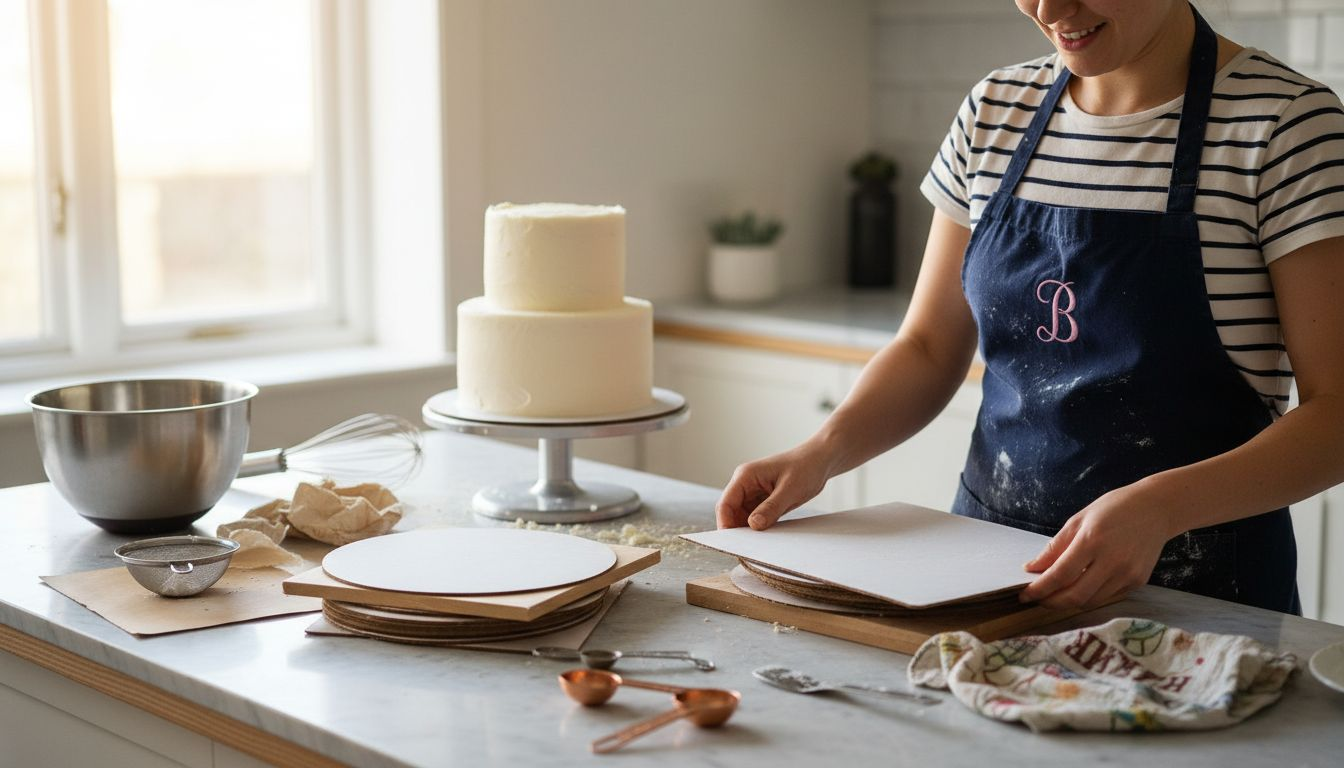
Choosing the perfect cake board can leave even confident bakers in South Wales second guessing their decisions. Getting the support and presentation right means your stunning creation looks just as good at the party as it did in your kitchen. With guidance on size, weight, thickness, colour, and decoration, you can find the best board for personalised celebration cakes and deliver a finish that is both reliable and visually polished.
Table of Contents
- Step 1: Assess Your Cake’s Size and Weight Requirements
- Step 2: Select the Ideal Board Thickness and Material
- Step 3: Match Board Shape and Colour to Your Cake Design
- Step 4: Prepare and Decorate Your Cake Board Professionally
- Step 5: Verify Stability and Presentation Before Serving
Quick Summary
| Key Point | Explanation |
|---|---|
| 1. Measure Cake Dimensions Carefully | Ensure the cake board is 2-4 inches larger than the cake for stability and presentation. This helps avoid structural issues during transport. |
| 2. Choose Board Thickness Based on Weight | Lighter cakes need thinner boards, while heavier or multi-tiered cakes require sturdier boards to prevent sagging and ensure stability. |
| 3. Match Board Shape and Colour to Cake | Select a cake board shape that complements your cake design, and choose colour finishes that enhance the overall aesthetic and visual appeal. |
| 4. Decorate the Board Elegantly | Use techniques like fondant wrapping and ribbons to elevate your cake board’s presentation, ensuring it remains functional while enhancing the overall look. |
| 5. Test Stability Before Serving | Check the cake board’s steadiness on a flat surface to ensure it can support the entire cake without flexing, confirming a professional appearance. |
Step 1: Assess Your Cake’s Size and Weight Requirements
Choosing the right cake board starts with understanding the specific dimensions and weight of your cake. This crucial first step ensures that your cake remains stable, beautifully presented, and professionally supported during transportation and display.
Begin by measuring your cake’s exact width and height after decoration. Professional bakers recommend selecting a cake board that is 2 to 4 inches larger than your finished cake to provide adequate support and create an attractive presentation border. For round cakes, measure the widest point of your cake and choose a board approximately 2 inches larger on all sides. Cake Board Selection Guide: Perfect Choice offers detailed insights into matching board sizes with cake dimensions.
Weight considerations are equally important. Lighter sponge cakes require thin 3mm cards, while elaborate multi-tiered cakes with dense fondant or multiple layers demand sturdy 12mm drum boards. Consider the number of cake tiers, frosting weight, and decorative elements when assessing the board thickness needed. A general rule is that heavier cakes need thicker, more robust boards to prevent sagging or structural collapse during transport or display.
Here is a quick guide to matching cake board types with cake styles and their requirements:
| Cake Style | Recommended Board Type | Typical Thickness | Key Advantages |
|---|---|---|---|
| Light sponge cakes | Cardboard | 3-4mm | Lightweight, economical |
| Dense fruit cakes | Drum board | 12mm | Sturdy, handles heavy weight |
| Multi-tiered designs | Hardboard/Drum board | 10-12mm | Excellent structural support |
| Decorated cupcakes | Mini hardboard | 3mm | Individual presentation |
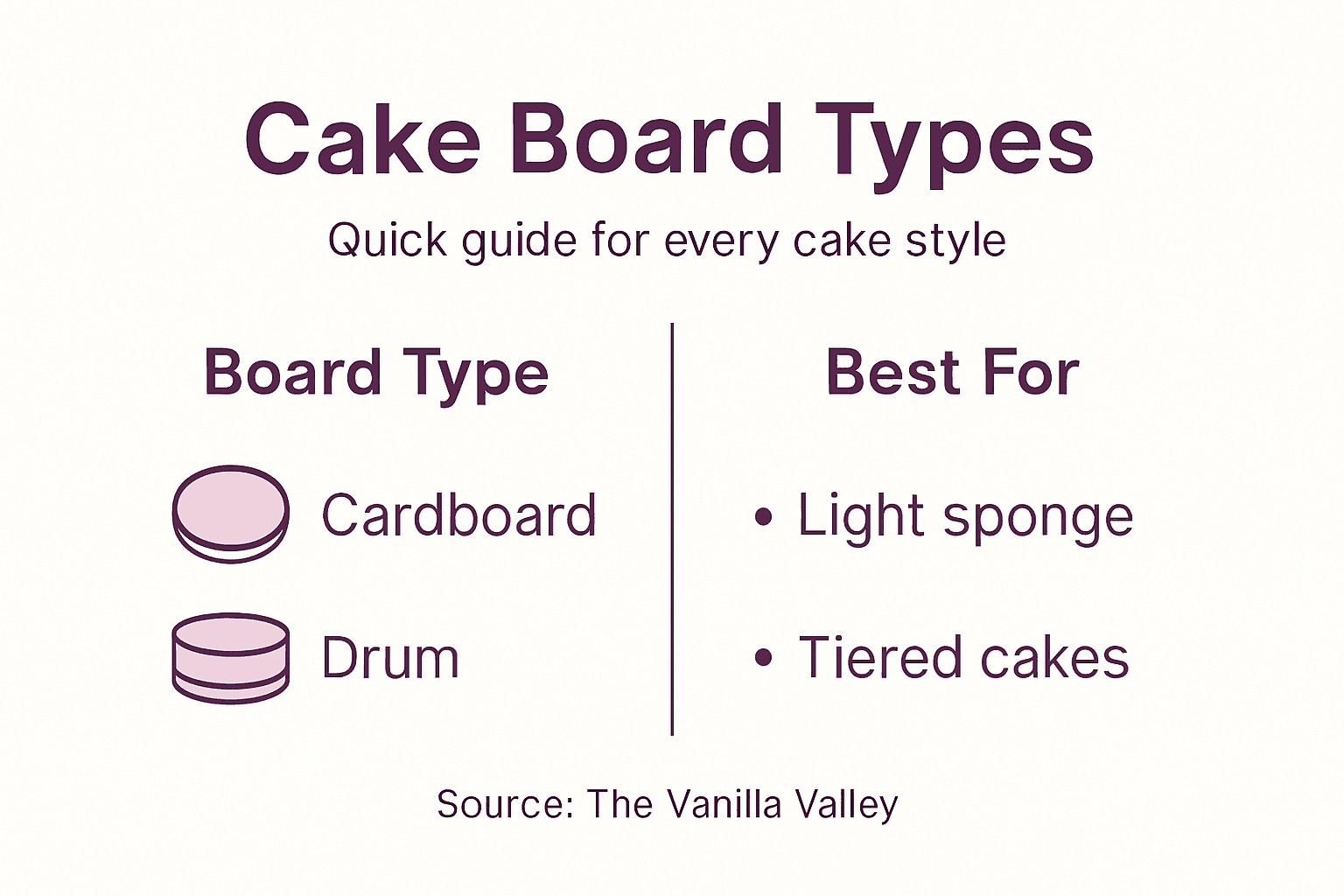
Top Tip: Always purchase a cake board slightly larger and sturdier than you initially think you might need to provide maximum stability and professional presentation.
Step 2: Select the Ideal Board Thickness and Material
Selecting the right cake board material and thickness is critical for ensuring your cake remains structurally sound and visually appealing. Understanding how different materials and thicknesses support various cake types will help you make an informed decision that protects your baking masterpiece.
Board thickness directly correlates with cake weight and complexity. Cake board material selection reveals that lightweight sponge cakes work perfectly with 3-4mm hardboards, while elaborate multi-tiered or dense fruit cakes require robust 12mm drum boards. For individual cake tiers, choose boards matching the cake’s diameter and capable of bearing its specific weight during decoration and assembly. Professional bakers recommend considering factors like fondant weight, number of tiers, and decorative elements when determining board thickness.
Materials range from sturdy cardboard and hardboard to more specialised foil-backed options. Cardboard works well for lighter cakes, while foil-backed boards provide additional rigidity and a polished finish for more complex designs. Consider the board’s appearance as well as its structural integrity choosing materials that complement your cake’s aesthetic and provide reliable support.
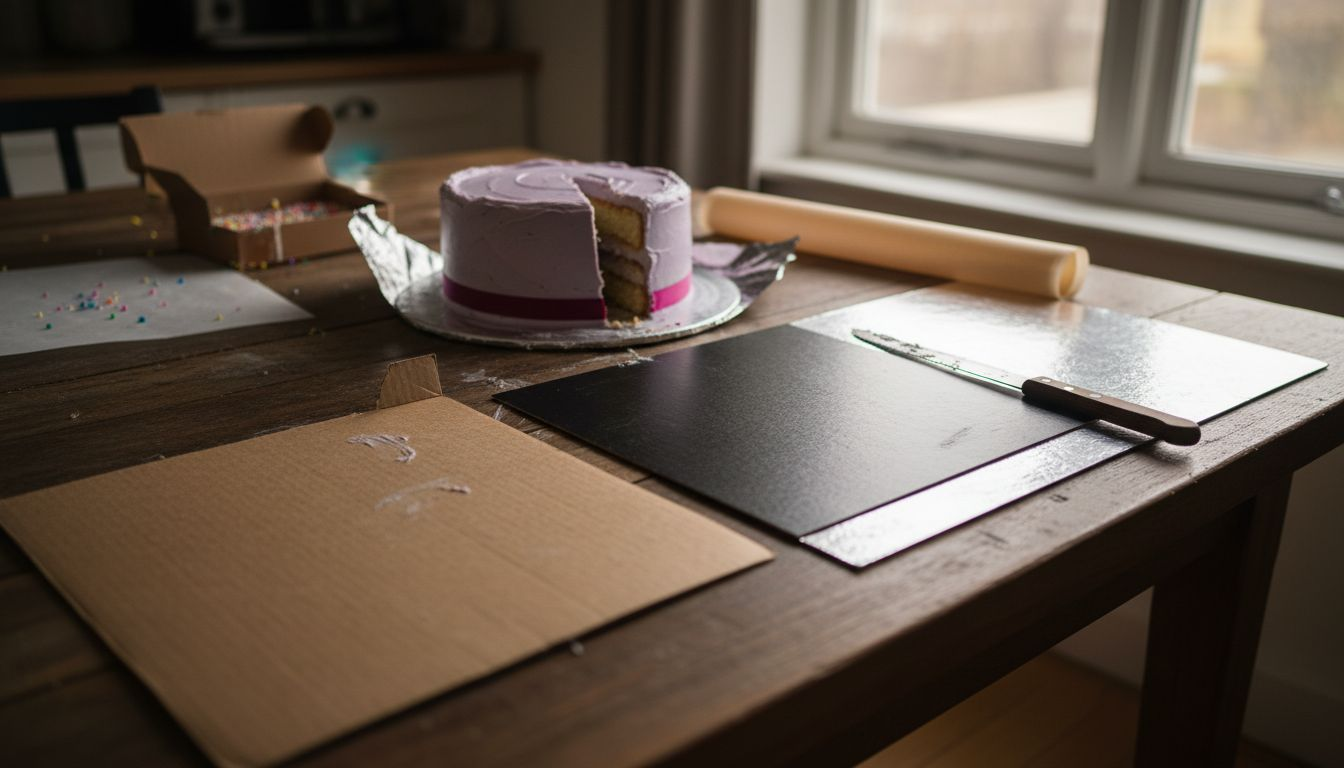
Top Tip: Always test your cake board’s stability by gently pressing the centre to ensure it can support the entire cake weight without bending or flexing.
Step 3: Match Board Shape and Colour to Your Cake Design
Choosing the perfect cake board is about more than just structural support it is an opportunity to elevate your cake’s visual presentation and create a stunning final display. The right board can transform your cake from simply delicious to professionally polished.
Cake board styling techniques demonstrate how board colour and shape contribute significantly to your cake’s overall aesthetic. Professional bakers recommend matching the board shape directly to your cake’s design round cakes look best on round boards, square cakes on square boards, and rectangular designs on rectangular platforms. For formal events, silver and gold finishes offer elegant sophistication, while coloured or ribbon wrapped boards can inject personality and complement specific celebration themes.
Consider the board as an extension of your cake’s design language. A white cake might pair beautifully with a metallic silver board, creating a clean and contemporary look. Conversely, a rustic birthday cake could be enhanced by a kraft paper textured board or a board wrapped in burlap ribbon. Your board should never compete with the cake but rather provide a complementary backdrop that showcases your decorative work.
Top Tip: Purchase a few neutral coloured board options in advance so you can experiment with different presentation styles and have backups for unexpected design challenges.
Step 4: Prepare and Decorate Your Cake Board Professionally
Preparing your cake board is a crucial step that elevates your entire cake presentation from amateur to professional. A well decorated board transforms your cake from a simple dessert into a true culinary masterpiece.
Cake board decoration techniques involve multiple approaches to creating a stunning base for your cake. Begin by selecting a clean board and deciding whether you want to wrap it completely or create a partial decorative border. Wrapping techniques include using fondant, covering with specialty papers, applying coloured foils, or using ribbons to create elegant borders. Professional bakers recommend matching your board’s decoration to your cake’s overall theme while ensuring the base remains sturdy and functional.
Consider different finishing techniques that complement your cake design. For elegant weddings, smooth white fondant or metallic foil can create a seamless backdrop. Birthday cakes might feature playful ribbons or themed papers that match the celebration. Textured options like lace overlays or subtle printed designs can add sophistication without overwhelming your cake’s primary decoration. Always ensure your covering method allows the board to remain stable and supportive for your cake’s weight.
The following table summarises cake board decoration techniques and their potential impact on final presentation:
| Technique | Visual Effect | Suitability | Complexity Level |
|---|---|---|---|
| Fondant wrapping | Smooth finish | Formal events | Moderate |
| Metallic foil cover | Shiny, elegant | Celebration cakes | Easy |
| Themed paper edging | Playful, colourful | Kids’ birthdays | Easy |
| Ribbon borders | Customised border | Weddings/parties | Moderate |
Top Tip: Practice your board covering technique on a spare board first to perfect your application method and avoid wrinkles or air bubbles.
Step 5: Verify Stability and Presentation Before Serving
The final stage of cake presentation is a critical moment where your artistic effort and technical skill culminate in a professional display. Your cake board is the foundation that will make or break this impressive reveal.
Cake board stability checks require careful and methodical evaluation before serving. Place your cake on a completely flat surface and gently test the board’s steadiness by lightly pressing the edges and centre. The board should remain completely rigid without any flexing or wobbling. Inspect the board’s perimeter to ensure it is perfectly centred beneath the cake with no uneven overhang or visible gaps between the cake and board surface.
Professional presentation involves more than structural integrity. Examine the board’s decorative elements for cleanliness and precision. Look for any fraying ribbon edges, slight wrinkles in fondant covering, or areas where the decorative material might have lifted. Your goal is a seamless transition between cake and board that looks intentional and polished. If you notice any imperfections, take a moment to smooth or adjust the board covering to create a flawless presentation.
Top Tip: Keep a small palette knife or smoothing tool nearby to make last minute adjustments to your board’s decoration just before serving.
Elevate Your Cake Presentation with the Perfect Board Choice
Choosing the right cake board goes beyond simply picking a size or shape. This article highlights how selecting the ideal board thickness, material, and decoration can transform your creation from fragile to flawless. If you ever worry about sagging boards or a presentation that fails to impress, understanding these key concepts can ease your stress and ensure your cakes look as professional as you imagine.
At The Vanilla Valley, we understand the challenges bakers face when finding sturdy yet stylish cake boards tailored to every cake style. Whether you need lightweight hardboards for sponges or robust 12mm drum boards for multi-tiered masterpieces, our extensive selection has you covered. Complement your cake board with matching decorative ribbons or foil wraps for that final polished touch. Discover reliable options and expert advice by exploring our comprehensive collection at The Vanilla Valley.
Ready to bring your cake designs to the next level with the perfect foundation? Visit The Vanilla Valley online store today and browse premium cake boards, decorating accessories, and baking essentials. Take advantage of free and next day delivery to get started immediately and impress your clients or loved ones with stunning, stable cakes every time.
Frequently Asked Questions
How do I choose the right size cake board for my cake?
To choose the right size cake board, measure your cake’s width and height once decorated, and select a board that is 2 to 4 inches larger than your cake. For a round cake, ensure the board is approximately 2 inches larger on each side to support and present it beautifully.
What thickness of cake board should I use for a heavy cake?
For heavy cakes, like multi-tiered or dense fruit cakes, you should use a sturdy 12mm drum board. Ensure that the chosen thickness can support the total weight of the cake without sagging during transport or display.
What materials are best for cake boards depending on my cake type?
Lightweight sponge cakes are best suited to 3-4mm hardboards, while heavier designs require thicker options like 10-12mm drum boards. Assess your cake’s weight and complexity to determine the appropriate material for maximum stability.
How can I decorate my cake board for a professional finish?
You can decorate your cake board by wrapping it in fondant, using specialty papers, or applying ribbons for borders. Make sure the decoration complements your cake’s design and maintains the board’s stability to support the weight of your cake.
How can I ensure my cake board is stable before serving?
To verify stability, place your cake on a flat surface and gently press down on the centre and edges of the board. It should remain rigid without any flexing or wobbling; adjust any decorative elements for a clean and polished presentation.
Is it necessary to match the cake board’s shape to my cake design?
Yes, matching the cake board’s shape to your cake design is important for a cohesive look. For instance, round cakes look best on round boards, while square and rectangular cakes should be placed on corresponding-shaped boards to enhance the overall aesthetic.