
Edible Paints: Transforming Cake Decoration
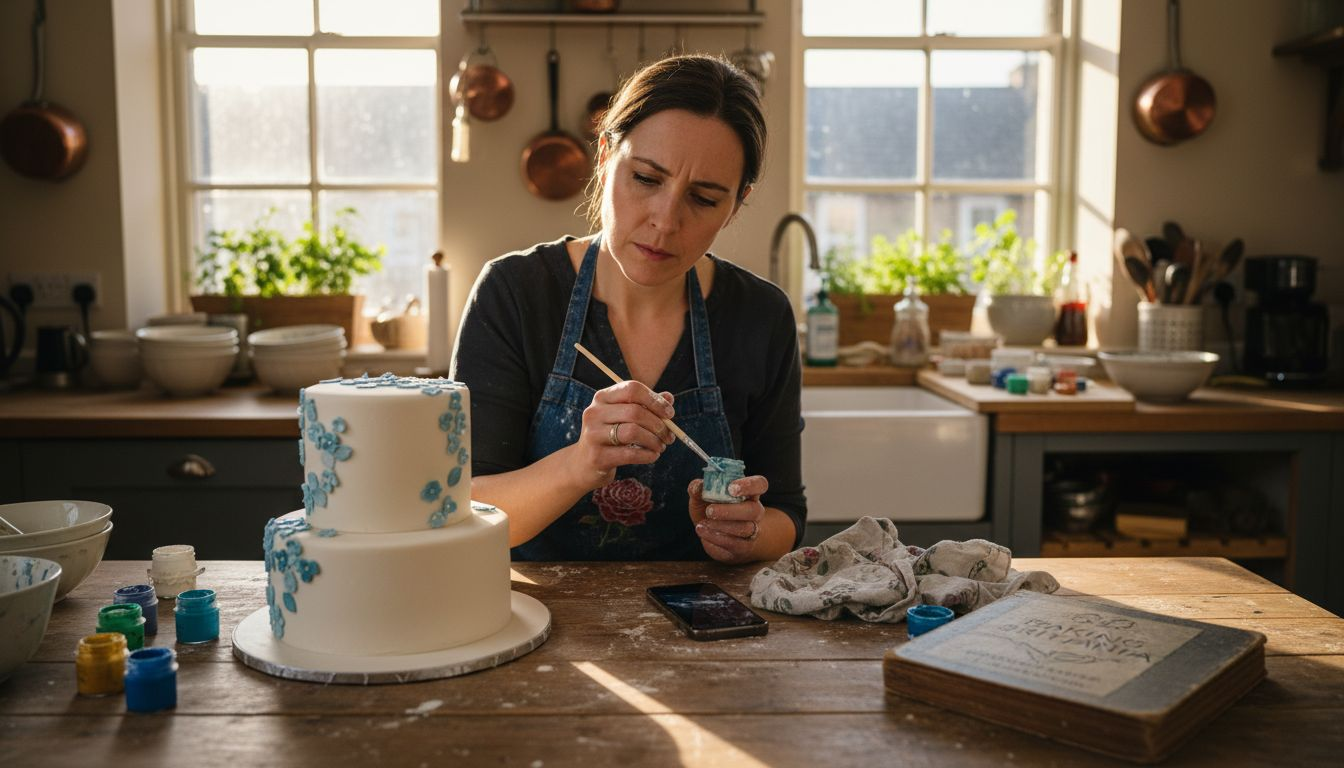
Decorating cakes with brush and palette instead of piping bags is quickly becoming the signature of creative bakers across the United Kingdom. For those wanting to impress customers or bring new life to their designs, edible paints offer a striking medium that goes far beyond simple colouring. Safe for consumption and designed for stunning visual impact, these specialised coatings allow you to add detail, depth, and professional flair with ease, whether you are running a bakery or crafting cakes at home.
Table of Contents
- Defining Edible Paints For Baking
- Types And Finishes Of Edible Paints
- How Edible Paints Are Applied
- Visual And Taste Effects On Cakes
- Safety, Suitability, And Common Mistakes
Key Takeaways
| Point | Details |
|---|---|
| Edible Paints Enhance Decoration | Edible paints provide vivid and detailed designs for cake decoration using food-safe, artistic coatings. |
| Variety of Finishes Available | Different finishes, such as metallic and matte, allow decorators to create unique visual effects tailored to their cake style. |
| Application Techniques Matter | Precise application methods like brushwork and airbrushing enable professional-looking results essential for intricate designs. |
| Safety is Crucial | Compliance with food safety regulations and proper storage are key to ensuring the safe use of edible paints. |
Defining Edible Paints for Baking
Edible paints represent a revolutionary approach to cake and cookie decoration, offering professional and amateur bakers an artistic medium to transform ordinary baked goods into extraordinary culinary masterpieces. These specialised food-grade coatings are designed to enhance visual appeal while maintaining complete food safety standards.
At their core, edible paints are thin layers of consumable coating made from natural, food-grade ingredients applied directly onto cake surfaces. They differ from traditional food colourings by providing more precise application and superior colour intensity, allowing decorators to create intricate designs and detailed artistic expressions.
Key characteristics of edible paints include:
- Completely safe for consumption
- Available in multiple finishes (matt, metallic, glittery)
- Suitable for various cake decorating mediums
- Provide vibrant and consistent colour application
- Allow for fine detailed painting techniques
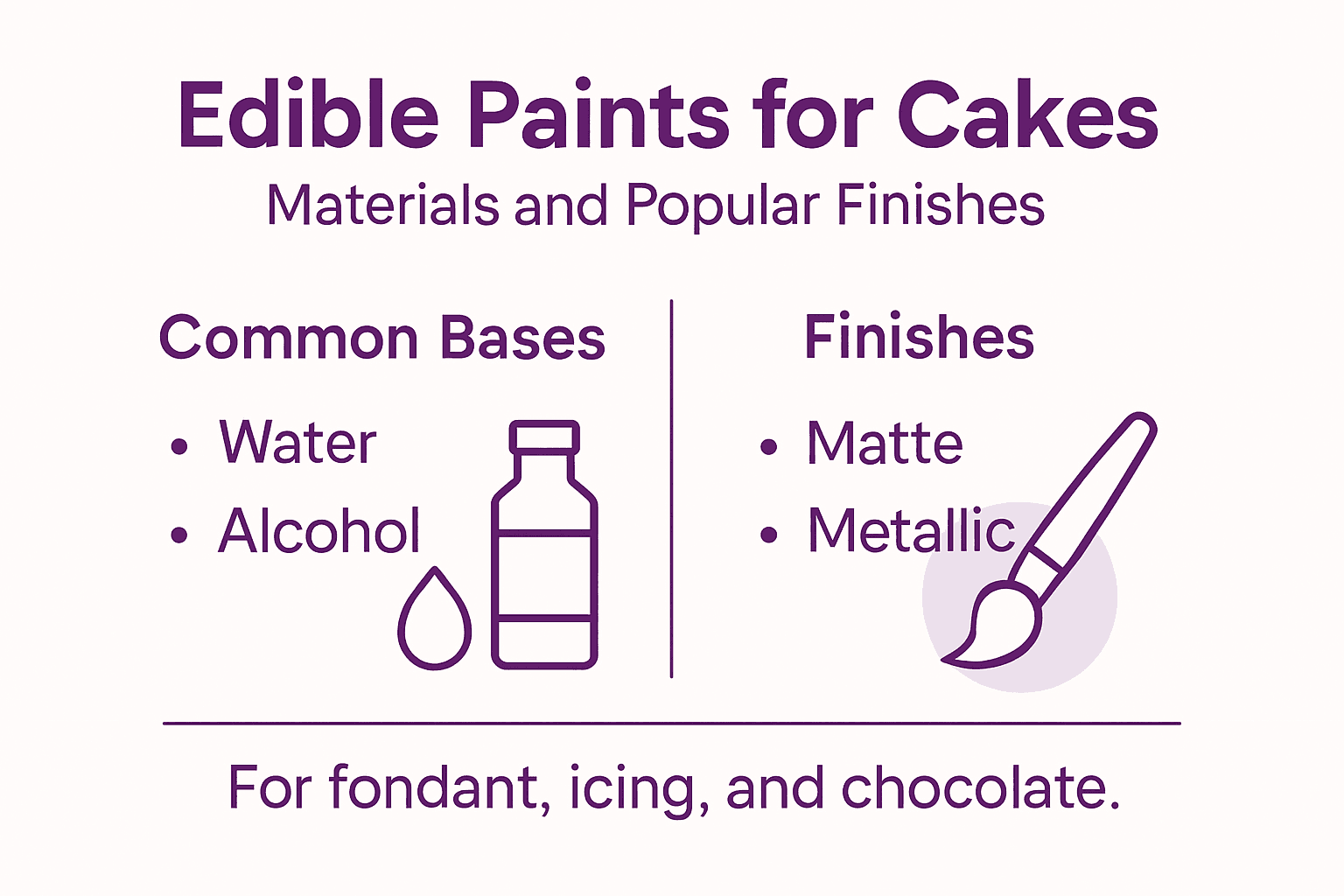
Most edible paints are water or alcohol-based solutions specifically formulated to adhere to sugarpaste, royal icing, and modelling pastes. Their unique composition enables decorators to achieve professional-looking results with relatively simple techniques, bridging the gap between amateur enthusiasm and professional skill levels.
Pro tip: Always test your edible paint on a small fondant sample first to understand its colour intensity and application technique before decorating your entire cake.
Types and Finishes of Edible Paints
Edible paints offer an extraordinary range of diverse coating compositions, enabling cake decorators to achieve stunning visual effects across multiple finishes. These specialised food-grade coatings transform simple baked goods into artistic masterpieces by providing unique textural and aesthetic options.
The primary types of edible paint finishes include:
- Metallic: Provides a shimmering, reflective surface with luxurious depth
- Matte: Offers a smooth, non-reflective finish for subtle elegance
- Pearlescent: Creates a soft, luminescent appearance with gentle shimmer
- Glitter: Adds sparkle and dramatic visual texture to cake designs
- Lustre: Delivers a gentle sheen with minimal reflectivity
These finishes are typically formulated using various base materials like polysaccharides, proteins, and lipids, each contributing unique properties to the final paint. Water-based and alcohol-based solutions allow for different application techniques, enabling decorators to achieve precise and intricate designs with professional-quality results.
The choice of finish depends on the specific design vision, cake style, and decorative technique. Professional bakers often combine multiple finishes to create depth, dimension, and visual interest in their cake decorations.

Here is a comparison of edible paint finishes and their typical decorative uses:
| Finish Type | Visual Effect | Ideal For |
|---|---|---|
| Metallic | Reflective shine | Modern cakes, luxury accents |
| Matte | Subtle elegance | Classic wedding cakes, minimal designs |
| Pearlescent | Soft shimmer | Floral motifs, pastel themes |
| Glitter | Dramatic sparkle | Children’s cakes, festive decorations |
| Lustre | Gentle sheen | Vintage styles, understated elegance |
Pro tip: Experiment with different paint finishes on practice fondant pieces to understand how each type interacts with light and texture before applying to your final cake design.
How Edible Paints Are Applied
Applying edible paints requires precision, skill, and carefully selected tools to achieve professional-grade cake decorations. Professional bakers and cake artists utilise a range of specialised painting techniques for cake decoration to transform simple cake surfaces into intricate artistic masterpieces.
The primary application methods for edible paints include:
- Brushwork: Using fine artist brushes for detailed designs
- Airbrush technique: Creating smooth, gradient colour effects
- Sponging: Generating textured, mottled colour applications
- Stencilling: Producing precise, repeatable patterns
- Droplet application: Adding controlled, pinpoint colour accents
Each application technique demands specific preparation. Decorators must ensure the cake surface is smooth, dry, and free from oils or residues that might prevent paint adhesion. Fondant and sugarpaste provide ideal canvases, with their firm yet malleable surfaces allowing intricate painting techniques.
Professional decorators typically follow a systematic approach to paint application:
- Prepare the cake surface by smoothing and chilling
- Select appropriate edible paint and tools
- Test paint consistency and colour on a practice surface
- Apply paint using controlled, deliberate strokes
- Allow layers to dry between applications
Pro tip: Always keep a clean, damp cloth nearby when working with edible paints to quickly correct any minor mistakes or uneven application.
Visual and Taste Effects on Cakes
Edible paints offer cake decorators an extraordinary palette of visual possibilities while maintaining the fundamental integrity of the cake’s flavour profile. Understanding how edible paints impact taste reveals their ingenious design as a purely aesthetic enhancement.
The primary visual and sensory characteristics of edible paints include:
- Colour Intensity: Vibrant, saturated hues that transform cake surfaces
- Texture Variation: Smooth, metallic, glittery, or matte finishes
- Light Interaction: Reflective and dimensional qualities that add depth
- Precision: Ability to create intricate, detailed designs
- Consistency: Uniform application without compromising cake structure
Professional bakers appreciate that these specialised paints are intentionally formulated to be virtually tasteless. Their primary function is visual transformation, ensuring that the underlying cake’s original flavour remains unaltered. The paint acts as a delicate artistic medium, similar to a watercolour on canvas, adding visual complexity without sensory interference.
Colour selection becomes crucial in this delicate balance. Decorators must consider how different paint tones complement the cake’s inherent flavour profile, creating a harmonious visual and gustatory experience.
Pro tip: Always perform a small test application on a practice piece to understand how the edible paint’s colour and finish will interact with your specific cake design.
Safety, Suitability, and Common Mistakes
Edible paint safety is paramount in cake decoration, requiring meticulous attention to food safety regulations and ingredient standards. Professional bakers must navigate a complex landscape of compliance, quality, and potential risks when selecting and applying these specialised decorating materials.
Common mistakes that compromise edible paint safety include:
- Using non-food-grade painting supplies
- Storing paints incorrectly
- Failing to check ingredient certifications
- Neglecting surface preparation techniques
- Ignoring potential allergen warnings
- Applying paints beyond recommended shelf life
Key safety considerations for edible paints encompass several critical areas. Ingredient purity represents the foundational concern, with decorators required to verify that all components meet stringent food-grade standards. Manufacturers must demonstrate compliance through transparent labelling, clear ingredient lists, and certifications from recognised food safety authorities.
Professional decorators should always conduct thorough research, verify product credentials, and maintain rigorous hygiene protocols when working with edible paints. Understanding potential allergenic ingredients, proper storage conditions, and correct application techniques becomes essential in preventing potential health risks.
The table below summarises common mistakes with edible paints and how to avoid them:
| Mistake | Consequence | Recommended Solution |
|---|---|---|
| Using non-food-grade supplies | Potential health risk | Use only certified food-grade products |
| Incorrect paint storage | Spoilage, loss of quality | Store in cool, dry conditions |
| Ignoring allergen warnings | Allergenic reactions | Check full ingredient list before use |
| Applying to unprepared surfaces | Poor adhesion, uneven finish | Ensure a clean, dry cake base |
| Using expired paints | Altered taste, health risk | Check and respect paint shelf life |
Pro tip: Always purchase edible paints from reputable suppliers and store them in cool, dry conditions away from direct sunlight to maintain their safety and effectiveness.
Elevate Your Cake Decorating with Premium Edible Paints and Supplies
Mastering the art of edible paints means overcoming challenges like achieving vibrant colour intensity, perfect application, and safe materials. The article highlights key concerns including surface preparation, paint finish choices, and food safety adherence — all essential for stunning, professional results. Whether you seek to create metallic shines or matte subtleties these goals require high-quality ingredients and tools that empower both amateur and professional bakers.
Discover how The Vanilla Valley can transform your cake decoration experience by offering a curated selection of food-grade edible paints, brushes, and fondants that guarantee precise application and vibrant finishes. Our trusted history since 2009 ensures you receive products meeting strict safety standards alongside helpful tips and support.

Ready to bring your edible painting skills to life? Explore our range of cake decorating essentials today and enjoy free and next day delivery. Visit The Vanilla Valley online store to find everything from specialist edible paints to brushes and food colours. Elevate your creations with confidence and make every cake a true masterpiece now.
Frequently Asked Questions
What are edible paints made from?
Edible paints are composed of natural, food-grade ingredients, often including water or alcohol-based solutions, polysaccharides, proteins, and lipids. These components ensure safety and effectiveness for cake decoration.
How do I apply edible paints on my cake?
Edible paints can be applied using various techniques such as brushwork, airbrushing, sponging, stencilling, or droplet application. It’s important to prepare the cake surface properly to ensure the best adhesion and finish.
Can edible paints alter the flavour of my cake?
No, edible paints are designed to be virtually tasteless, allowing the original flavour of the cake to remain intact while enhancing its visual appeal. Their primary function is for decoration rather than flavour enhancement.
What types of finishes are available for edible paints?
Edible paints come in several finishes, including metallic, matte, pearlescent, glitter, and lustre. Each finish offers a different visual effect, allowing decorators to choose based on their design aspirations.