Food hygiene requirements for UK home bakers: 2026 guide
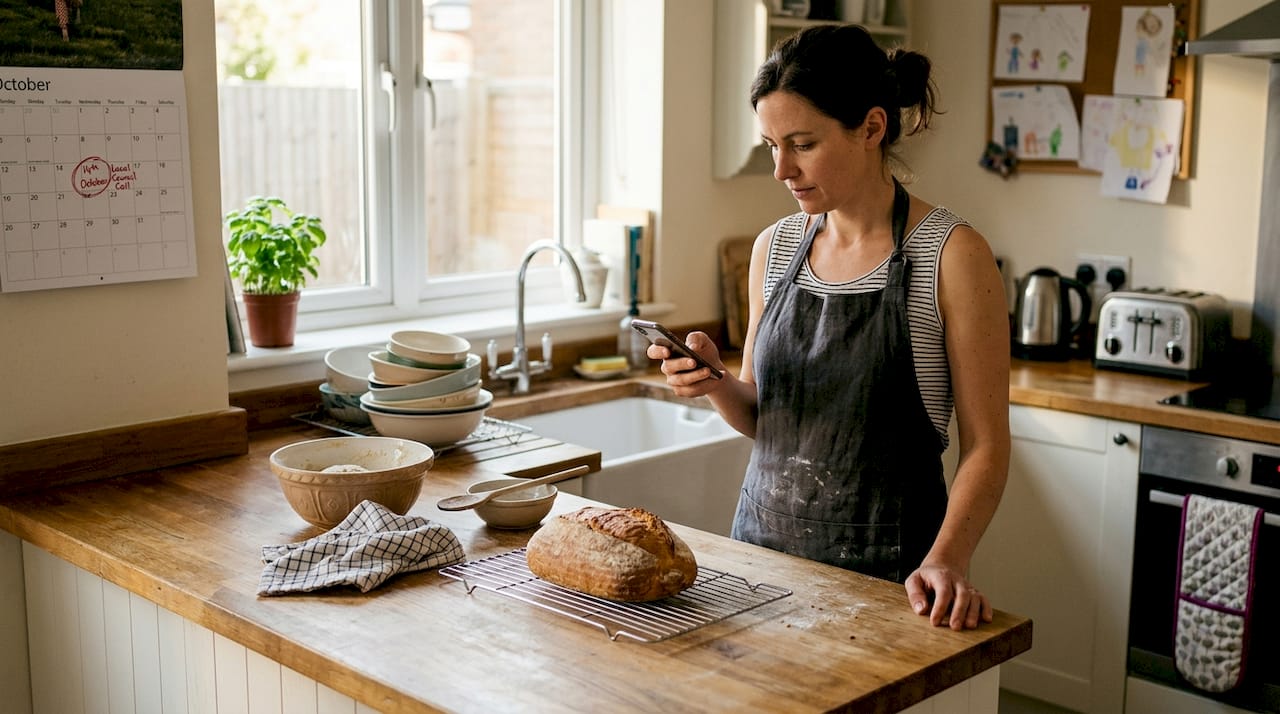
Lots of home bakers assume that selling a few cakes to neighbours or popping up at a local fair sits in a legal grey area. It does not. UK food law is clear: the moment you sell food, even occasionally, you are running a food business. That means real rules, real paperwork, and real consequences if you ignore them. The good news? Once you understand what is actually required, it is far more manageable than it sounds. This guide walks you through every key requirement, from registering with your council to labelling allergens correctly, so you can bake and sell with total confidence.
Table of Contents
- Understanding legal obligations for home bakers
- Essential food safety management: The SFBB system
- Food hygiene training and supervision: What’s required?
- Meeting kitchen and premises hygiene standards
- Allergen labelling and preparing for inspection
- Why food hygiene compliance is easier (and harder) than new home bakers expect
- Support and supplies for compliant home baking
- Frequently asked questions
Key Takeaways
| Point | Details |
|---|---|
| Register before selling | You must register as a food business with your council 28 days before any home baking sale. |
| Use SFBB for compliance | Keeping proper Safer Food Better Business records is key to meeting hygiene laws. |
| Hygiene training recommended | Obtaining a Level 2 Food Hygiene Certificate increases your safety and credibility. |
| Kitchen must meet standards | You need suitable sinks, surfaces, storage, and cleaning regimes for legal home baking. |
| Prepare for allergen labelling | Clear allergen information and robust documentation are required for all home-baked goods sold. |
Understanding legal obligations for home bakers
Let’s start with the most common myth. Many bakers believe that selling a small number of cakes at a school fair or through a Facebook post is too informal to attract legal scrutiny. That is simply not true.
Under UK law, any home baker selling food is considered a food business and must register with their local council at least 28 days before starting to trade. It does not matter whether you sell one cake or one hundred. The act of selling food triggers the obligation.
It is worth noting that pure hobbyists not selling food are not regulated as food businesses. So if you bake purely for family and friends with no money changing hands, you are fine. The line is drawn at the point of sale.
Activities that require registration include:
- Selling cakes at local markets, fairs, or car boot sales
- Taking paid orders online or via social media
- Supplying cafés, delis, or other businesses with your baked goods
- Running a cake subscription or regular delivery service
What happens if you skip registration? Your local council can issue improvement notices, and in serious cases, fines or prosecution are possible. It is not worth the risk, especially when registration is free and straightforward.
If you are thinking about how to sell cakes at local markets, registration is always your very first step before anything else.
“Running a food business from home is exciting, but getting the basics right from day one protects both your customers and your reputation.”
Pro Tip: Register with your local council before your very first sale, even if you only plan to sell occasionally. Registration is free, and there is no minimum turnover threshold that exempts you.
For a broader overview of what starting a cake business from home actually involves beyond hygiene, it is worth reading up on the full picture.
Essential food safety management: The SFBB system
Once you are registered, you need a documented food safety management system. The standard tool for home bakers in the UK is the Safer Food Better Business (SFBB) pack.
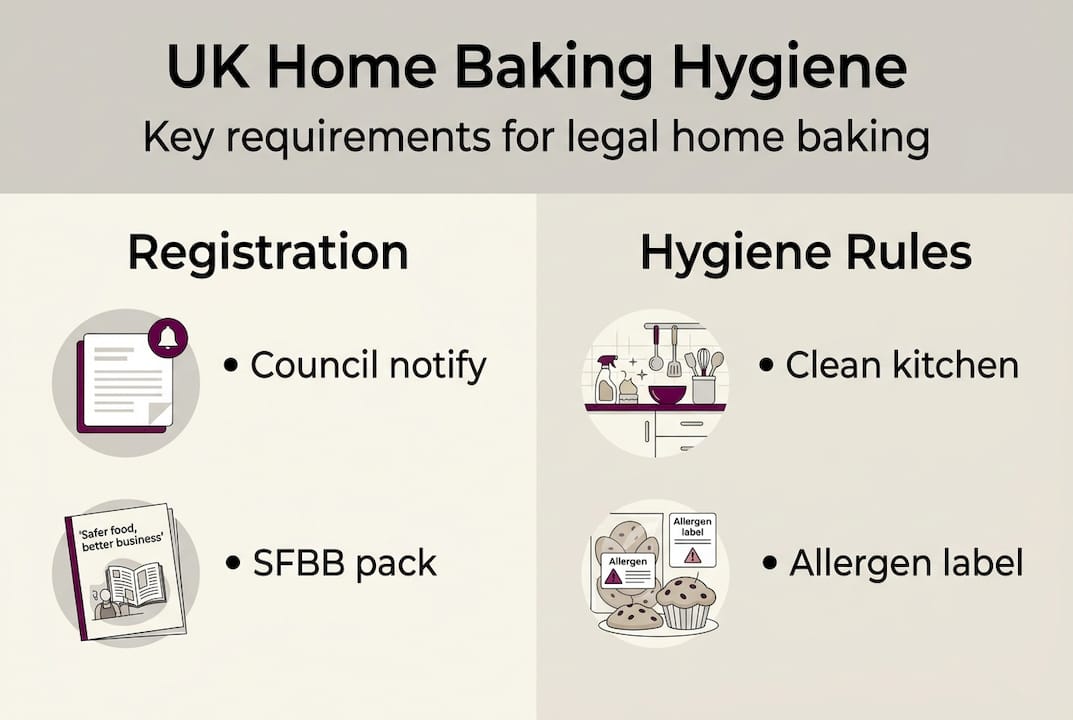
All food businesses must implement a documented food safety management system, and the SFBB pack from the Food Standards Agency is the benchmark for small and home-based operations. It covers daily records for cleaning, temperatures, allergens, and suppliers.
The Safer Food Better Business pack sounds daunting, but it is genuinely practical. Think of it as a daily diary for your kitchen that proves you are doing things safely and consistently.
Here is a quick overview of the core documentation you need to maintain:
| Record type | What to log | Frequency |
|---|---|---|
| Cleaning schedule | Surfaces, equipment, fridge | Daily |
| Temperature log | Fridge and freezer readings | Daily |
| Allergen information | Ingredients and substitutions | Per batch |
| Supplier details | Where ingredients come from | Per order |
| Pest control | Checks and any findings | Weekly |
Setting up your SFBB system properly from the start saves enormous stress later. Here is how to do it:
- Download the free SFBB pack from the Food Standards Agency website.
- Read the ‘Safe Methods’ section relevant to your baking activity.
- Complete the ‘Diary’ pages every single day you bake for sale.
- Store completed records for at least one year.
- Review and update your system whenever your ingredients or processes change.
The most common gap we see is bakers who set up the pack beautifully but then forget to fill in the daily diary. Missing entries are one of the fastest ways to lose points during an inspection. Staying on top of professional bakery tools and organised baking goods storage makes daily record-keeping much easier because your workspace is already orderly.
Pro Tip: Keep your SFBB diary in the same spot as your bulk baking essentials so completing it becomes part of your natural baking routine rather than an afterthought.
Food hygiene training and supervision: What’s required?
Training is one area where many home bakers feel uncertain. Do you actually need a certificate? The honest answer is: not always legally, but almost always practically.
Food handlers, including home bakers, must be trained and supervised in food hygiene. The Level 2 Food Hygiene Certificate is highly recommended, though not always legally mandated for every individual.
Here is what the Level 2 certificate covers:
- Personal hygiene and hand-washing technique
- Safe food storage temperatures and cross-contamination risks
- Cleaning and disinfection procedures
- Understanding the main food safety hazards
- Basic allergen awareness
The certificate is widely available online, typically costs between £10 and £25, and can be completed in a few hours. Many local councils and environmental health officers will ask to see it during an inspection, even if it is not a strict legal requirement.
If you have family members or friends who help you bake for sale, they need to understand food hygiene too. Supervision is your responsibility as the registered business owner.
For more on selling homemade food in the UK, including the nuances around helpers and assistants, it is worth checking the latest guidance.
Pro Tip: Look for free or low-cost Level 2 courses through your local council’s environmental health team. Some councils offer them at no charge to newly registered food businesses. It is also worth thinking about bulk-buy baking supplies and cake packaging ideas at the same time, since both affect how safely you present your products.
Meeting kitchen and premises hygiene standards
Your home kitchen was designed for family cooking. Turning it into a compliant food business space requires some adjustments, but they are mostly practical rather than expensive.
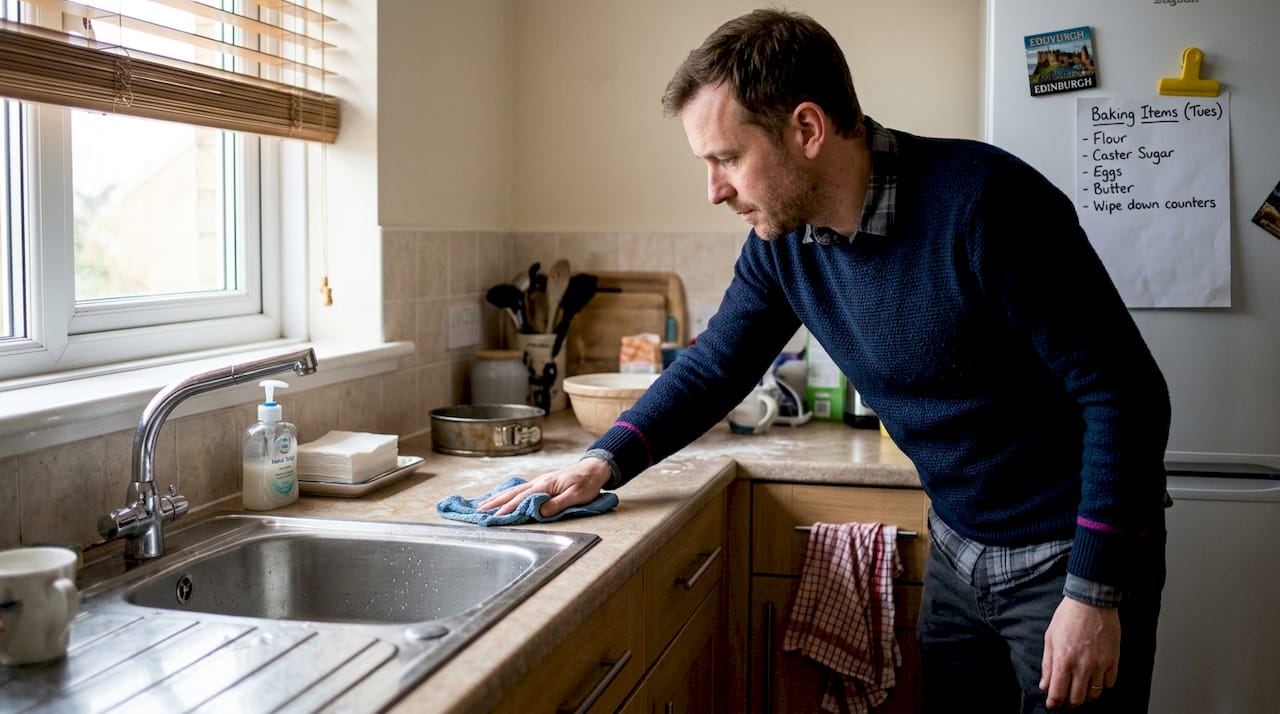
Premises must have adequate facilities, including handwashing sinks with hot and cold water, soap, disposable towels, easy-to-clean surfaces, proper storage to prevent cross-contamination, pest control, ventilation, and waste disposal.
Here is a comparison of a typical home kitchen versus what is expected for food business use:
| Feature | Typical home kitchen | Food business requirement |
|---|---|---|
| Handwashing | Shared with food prep sink | Separate dedicated sink preferred |
| Surfaces | Varied materials | Smooth, non-porous, easy to clean |
| Storage | Mixed personal and food items | Food stored separately, off the floor |
| Waste | Single bin | Separate bins for food waste |
| Pest control | Reactive | Regular proactive checks logged |
For most home bakers, the biggest practical steps are:
- Designate a separate handwashing area if possible, even a small basin in a utility room.
- Remove personal items (pet food, medicines, toiletries) from the kitchen during baking sessions.
- Replace worn chopping boards and cracked utensils with smooth, cleanable alternatives.
- Store all baking ingredients in sealed containers, off the floor and away from cleaning products.
- Log a weekly pest check in your SFBB diary, even if you find nothing.
Good organisation is genuinely half the battle. Tips on organising your baking supplies at home make it far easier to keep your workspace inspection-ready every day. It is also worth reading up on reusing cake boards hygiene and how to organise baking tools efficiently.
For detailed premises guidance, the advice for home caterers from South Cambridgeshire District Council is one of the most practical resources available.
Allergen labelling and preparing for inspection
Allergen rules are one of the most important areas to get right. Getting them wrong does not just risk a poor hygiene rating; it can cause serious harm to customers.
Allergen information for 14 major allergens must be provided clearly. Full labelling is required for pre-packed foods, while verbal or written notice is needed for non-pre-packed goods, and information must be given at the point of order or delivery for distance sales.
The 14 major allergens include celery, cereals containing gluten, crustaceans, eggs, fish, lupin, milk, molluscs, mustard, nuts, peanuts, sesame, soya, and sulphur dioxide. You need to know which of these appear in every product you sell.
For inspections, local councils conduct visits under the Food Hygiene Rating Scheme (FHRS), scoring businesses from 0 to 5 based on hygiene practices, structural condition, and management systems. A score of 5 is the highest achievable rating, and it is absolutely within reach for a well-prepared home baker.
Common mistakes that cost points include:
- Incomplete or missing SFBB diary entries
- No written allergen information available for customers
- Worn or cracked equipment that cannot be properly cleaned
- Personal items stored alongside food ingredients
- No evidence of food hygiene training
Low-risk home bakers may not be inspected immediately after registration, but you should prepare as if an inspector could arrive any day. Thinking about eco-friendly baking practices also aligns well with the kind of thoughtful, organised approach that inspectors respond to positively.
Why food hygiene compliance is easier (and harder) than new home bakers expect
Here is something we have noticed time and again. New home bakers tend to swing between two extremes. Either they assume their common sense is enough and skip the paperwork, or they read one government document and feel completely overwhelmed. Neither reaction serves them well.
The truth is that the actual baking part of compliance is straightforward. Keep things clean, store food properly, know your ingredients. Most good bakers already do this instinctively. The part that trips people up is the documentation. Missing a daily diary entry or forgetting to write down a new supplier feels trivial in the moment but becomes a real problem under inspection.
Small oversights around labelling are another underestimated risk. A customer with a severe allergy relies entirely on the information you provide. That responsibility is real, and it deserves genuine attention rather than a rushed handwritten note.
The mindset shift that makes everything easier? Treat compliance as part of your craft, not a separate chore. Bakers who are genuinely proud of their work tend to be naturally thorough. Channelling that same pride into your records and organising baking supplies tips makes the whole process feel far less like bureaucracy and far more like professionalism.
Support and supplies for compliant home baking
Getting your food hygiene right is so much easier when your workspace and supplies are already working in your favour. Quality equipment that is easy to clean, well-organised storage, and reliable packaging all contribute to a kitchen that stays inspection-ready without extra effort.
At The Vanilla Valley, we have been supporting home bakers and small pastry businesses since 2009. Whether you are looking for cake decorating supplies to elevate your finished products or need guidance on the right baking tools for a compliant setup, we have got you covered. Browse our full range online, and if you are ever near North Cardiff, pop into the shop for a chat. We love talking baking.
Frequently asked questions
Do I need to register as a food business if I occasionally sell cakes from home in the UK?
Yes, any home baker selling food is considered a food business and must register with their local council at least 28 days before starting to trade, regardless of how often they sell.
What is the SFBB pack and is it required for home bakers?
The SFBB pack is the benchmark for small and home food businesses in the UK, providing a practical framework for daily record-keeping, cleaning schedules, allergen logs, and supplier information to meet legal food safety requirements.
Do I need a Level 2 Food Hygiene Certificate to bake for sale at home?
Level 2 Food Hygiene Certificate is highly recommended but not always legally mandated; however, local authorities often expect to see evidence of food safety training during inspections.
What allergen information must I give when selling home-baked goods?
You must provide clear details on the 14 major allergens, with full labelling on pre-packed goods, written or verbal information for non-pre-packed items, and allergen details provided at the point of order for distance sales.
What do inspectors check during a home bakery food hygiene visit?
Inspectors assess kitchen cleanliness, structural condition, management systems, SFBB documentation, allergen controls, and training evidence under the Food Hygiene Rating Scheme, with scores ranging from 0 to 5.