Reusing Cake Boards: Hygiene and When to Avoid
Finding reliable cake boards can trip up even the most enthusiastic bakers in South Wales, especially when every pound matters. Every cake demands more than a pretty base—it relies on food-safe materials and proper hygiene to look beautiful and keep customers safe. From choosing the right board for support to knowing when and how to reuse it, smart decisions mean tastier results and peace of mind for both your kitchen and your clientele.
Table of Contents
- Cake Boards Explained And Common Misconceptions
- Types Of Cake Boards And Their Properties
- Cleaning Cake Boards For Safe Reuse
- Food Safety Requirements And Uk Laws
- When Cake Boards Must Be Replaced
- Alternatives And Cost-Effective Solutions
Key Takeaways
| Point | Details |
|---|---|
| Importance of Cake Boards | Cake boards provide essential structural support, enhance presentation, and ensure safe transportation of cakes. |
| Correct Board Selection | Choosing the right type of cake board is critical based on cake size, weight, and intended presentation to avoid mishaps. |
| Hygiene Practices | Proper cleaning and maintenance of cake boards are vital to prevent food contamination and adhere to food safety regulations. |
| Regular Inspection and Replacement | Frequent checks for damage or wear on cake boards are necessary to mitigate potential health risks and ensure top-quality presentation. |
Cake boards explained and common misconceptions
Cake boards are essential yet often misunderstood tools in baking that provide critical structural support for cakes and desserts. Cake board specifications involve complex considerations beyond simple surface support, including material composition, thickness, and food safety standards.
Understanding cake boards requires recognising their primary functions:
- Providing stable base for cake transportation
- Supporting cake weight during decoration
- Creating a professional presentation surface
- Protecting cake integrity during handling
Many amateur bakers mistakenly assume all cake boards are identical and interchangeable. However, professional baking demands precise board selection based on cake type, weight, and intended presentation method. Cake board material plays a crucial role in determining its suitability for specific baking projects.
Professional bakers typically categorise cake boards into several key types:
- Disposable cardboard boards
- Reusable plastic boards
- Premium wooden boards
- Decorative display boards
Each board type offers unique advantages and potential limitations, requiring careful selection to match specific baking requirements.
Pro tip: Always inspect cake boards for structural integrity and cleanliness before reuse, ensuring no residual moisture or potential contamination compromise your baking project.
Types of cake boards and their properties
Cake boards come in diverse materials and designs, each offering unique characteristics tailored to specific baking needs. Cake board selection guide reveals the importance of understanding these variations to ensure optimal cake presentation and support.
The primary types of cake boards include:
- Cardboard boards: Lightweight and disposable
- Plastic boards: Durable and reusable
- Wooden boards: Elegant and professional
- Aluminium boards: Sleek and heat-resistant
- Decorative boards: Specialised for presentation
Each board type has distinctive properties that influence its performance in different baking scenarios. Cardboard boards are economical and perfect for one-time use, ideal for bakeries offering takeaway cakes or for home bakers who prefer minimal cleanup.
Here’s a concise comparison of the main cake board types, highlighting suitability and ideal usage:
| Board Type | Typical Applications | Durability | Presentation Quality |
|---|---|---|---|
| Cardboard | One-off parties, takeaways | Single-use | Basic, minimalistic |
| Plastic | Repeated home/professional use | Washable, reusable | Neutral, functional |
| Wooden | Weddings, high-end events | Long-lasting | Elegant, premium feel |
| Aluminium | Speciality or temperature-sensitive cakes | Easily sanitised | Sleek, modern |
| Decorative Display | Birthdays, show cakes | Varies by base | Eye-catching, themed |
Professional bakers often prefer more robust options:
- Plastic boards for multiple cake decorating sessions
- Wooden boards for high-end wedding and celebration cakes
- Aluminium boards for precise temperature-sensitive designs
- Specialty boards with non-slip surfaces
Board thickness and weight capacity are critical considerations that directly impact cake stability and transportation safety.
The right cake board can make the difference between a professional presentation and a potential dessert disaster.
Pro tip: Invest in a variety of cake boards suited to different cake sizes and styles to ensure you’re always prepared for any baking challenge.
Cleaning cake boards for safe reuse
Maintaining hygiene when reusing cake boards is crucial for preventing potential food contamination. Sustainable board cleaning methods require careful attention to detail and systematic sanitisation processes that protect both the board and the food preparation environment.
The cleaning process varies depending on the board’s material:
- Plastic boards: Dishwasher safe and easy to sanitise
- Wooden boards: Require careful hand washing
- Cardboard boards: Typically single-use only
- Aluminium boards: Can be thoroughly cleaned with food-safe disinfectants
Cleaning steps for reusable cake boards typically involve multiple stages. Professional bakers recommend a thorough approach that eliminates potential bacterial growth and ensures food safety.
A comprehensive cleaning method includes:
- Scrape off any remaining cake or frosting residue
- Wash with hot, soapy water
- Rinse thoroughly with clean water
- Sanitise using food-safe disinfectant
- Air dry completely before storage
Not all cake boards are created equal - some materials are more suitable for repeated use than others.
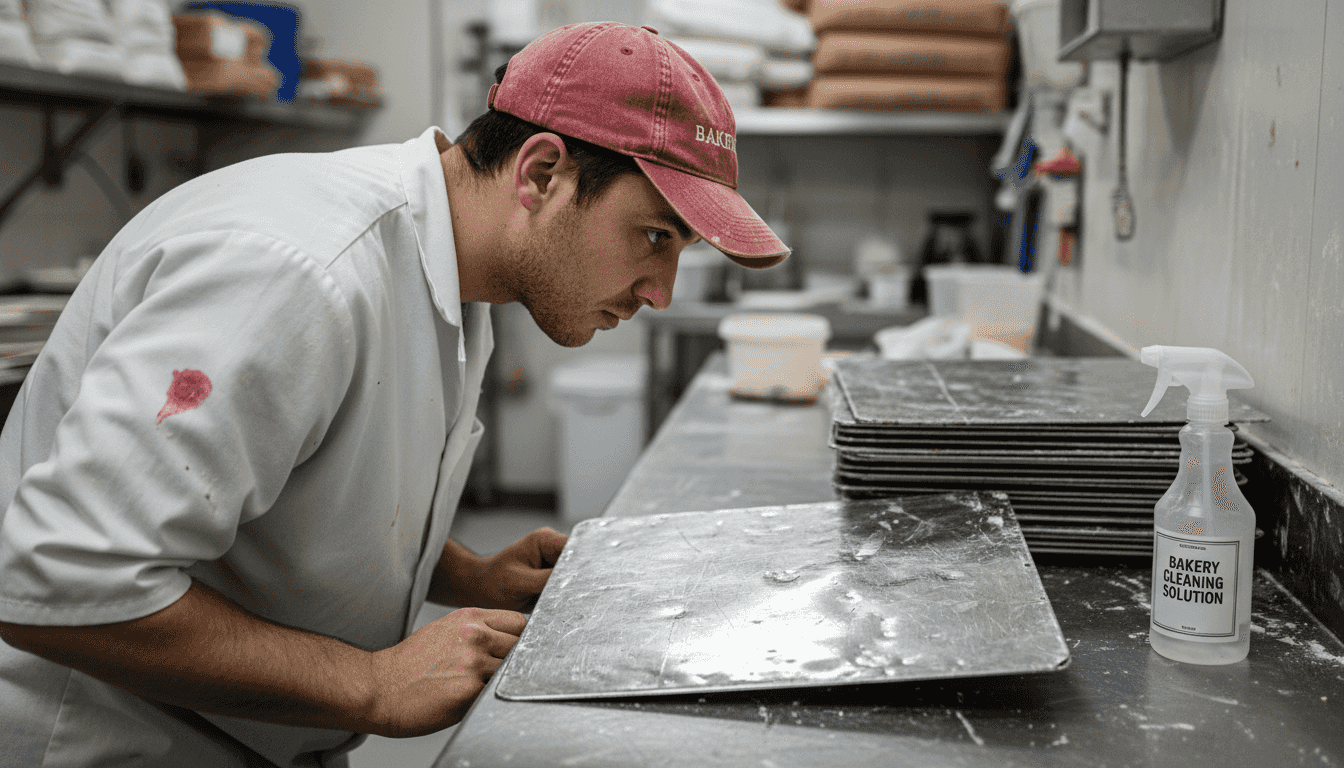
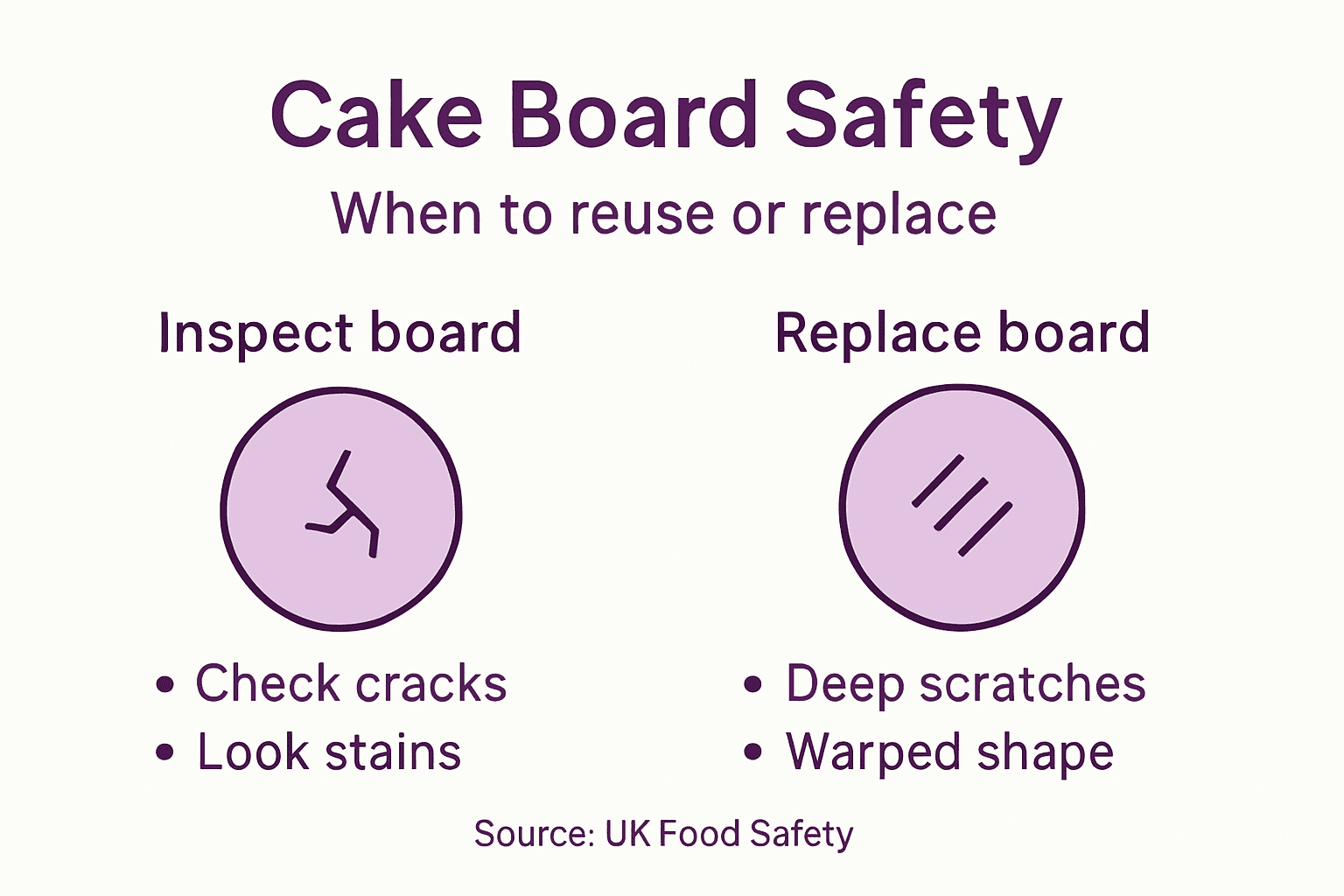
Inspecting boards for damage is equally important. Boards with cracks, deep scratches, or signs of wear should be discarded to prevent potential food safety risks.
Pro tip: Invest in colour-coded cake boards to prevent cross-contamination and make tracking board usage easier.
Food safety requirements and UK laws
Understanding food safety regulations is crucial for anyone handling cake boards and food preparation surfaces. Food safety guidelines outline strict requirements that bakeries and home caterers must follow to ensure public health and prevent potential contamination.
Key legal requirements for food-contact surfaces include:
- Maintaining clean and sanitised equipment
- Using food-safe materials
- Registering with local food authorities
- Implementing proper cleaning protocols
- Documenting hygiene practices
UK food safety regulations mandate comprehensive standards for food preparation environments. These regulations apply equally to professional bakeries and home-based cake makers, ensuring consistent safety protocols across different scales of food production.
The Food Standards Agency specifies several critical compliance areas:
- Regular equipment inspection
- Use of approved sanitising agents
- Maintaining equipment in good repair
- Implementing temperature control measures
- Keeping detailed cleaning records
Every cake board is a potential vector for bacterial transmission if not properly maintained and sanitised.
Professional bakers must be particularly vigilant about wooden utensils and surfaces, which are more challenging to disinfect and can harbour harmful bacteria more readily than other materials.
Pro tip: Always keep a dedicated log of equipment cleaning and maintenance to demonstrate compliance with food safety regulations.
When cake boards must be replaced
Identifying when cake boards need replacement is crucial for maintaining food safety and professional baking standards. Cake board selection guide emphasises the importance of regular equipment inspection and proactive replacement.
Critical indicators that signal a cake board must be replaced include:
- Visible deep scratches or cracks
- Discolouration or staining
- Warping or structural deformation
- Evidence of bacterial growth
- Material breakdown or deterioration
Material-specific replacement considerations vary significantly between different board types. Cardboard boards are typically single-use, while plastic and aluminium boards require more nuanced assessment of their condition.
Professional bakers should evaluate cake boards based on these key criteria:
- Surface integrity and smoothness
- Ability to withstand cleaning processes
- Absence of bacterial contamination
- Structural stability under cake weight
- Compliance with food safety regulations
A compromised cake board is not just an aesthetic issue - it’s a potential health risk.
Frequent inspection and timely replacement prevent potential contamination and ensure the highest standards of food presentation and safety.
The following table provides a quick guide for recognising when cake boards must be replaced:
| Replacement Trigger | Typical Signs Observed | Food Safety Risk |
|---|---|---|
| Structural Damage | Cracks, deep scratches | May harbour bacteria |
| Surface Discolouration | Staining, faded colours | Indicates contamination |
| Board Warping | Bent or misshapen base | Instability, spills |
| Deterioration/Bacterial Growth | Mould, visible residue | Unhygienic, unsafe |
| Repeated Cleaning Impact | Material softening | Reduced barrier to bacteria |
Pro tip: Implement a regular rotation system for cake boards, marking replacement dates to track their lifecycle and maintain optimal hygiene.
Alternatives and cost-effective solutions
Bakers facing budget constraints or limited resources can explore numerous practical alternatives for cake boards. Household cake board alternatives offer creative solutions that maintain food safety and presentation standards.
Potential cost-effective alternatives include:
- Clean wooden cutting boards
- Large ceramic plates
- Sturdy baking sheets
- Disposable aluminium trays
- Reinforced cardboard wrapped in food-safe foil
Improvised cake board materials require careful consideration to ensure they meet basic food safety and structural requirements. Home bakers should prioritise surfaces that are:
- Flat and stable
- Clean and sanitised
- Large enough to support cake weight
- Smooth with no rough edges
- Heat-resistant if needed
Ceramic tiles, wooden platters, and glass serving plates can serve as elegant and affordable substitutes for traditional cake boards. Each alternative offers unique advantages depending on the specific cake design and event requirements.
Creativity in baking doesn’t mean compromising on food safety or presentation quality.
Professional bakers recommend thoroughly cleaning and sanitising any improvised surface before cake placement, regardless of the material chosen.
Pro tip: Keep a selection of multipurpose kitchen surfaces that can double as cake boards to save money and reduce single-use equipment.
Ensure Safe and Stunning Cake Presentations with the Right Boards
Reusing cake boards can save money but maintaining hygiene and knowing when to replace them is essential to avoid contamination and presentation pitfalls. The challenges of inspecting structural integrity and sanitising different materials like plastic or wood require trusted solutions that meet food safety standards. Whether you are a home baker or a professional, selecting the perfect cake board tailored to your specific baking needs prevents costly accidents and guarantees your creations look their best.
Explore our extensive collection of premium cake boards and decorating accessories at The Vanilla Valley. Benefit from expert advice, quality products, and customer favourites designed to support every baking challenge. Act now to upgrade your baking toolkit with durable, food-safe boards and accessories that protect your hard work and delight every customer or guest. Visit The Vanilla Valley today to find your perfect baking companion.
Frequently Asked Questions
How can I safely reuse cake boards?
To safely reuse cake boards, ensure you thoroughly clean them by scraping off any residue, washing with hot, soapy water, rinsing, and sanitising with a food-safe disinfectant.
When should I avoid reusing a cake board?
Avoid reusing cake boards that show signs of deep scratches, cracks, warping, discolouration, or bacterial growth, as these can compromise food safety and the integrity of your cakes.
What are the best materials for reusable cake boards?
Plastic and aluminium boards are generally the best materials for reuse due to their durability and ease of sanitisation, while wooden boards require careful maintenance to prevent bacterial growth.
Can I improvise a cake board with household items?
Yes, you can improvise a cake board using clean wooden cutting boards, large ceramic plates, or sturdy baking sheets, but ensure they are flat, stable, and sanitised before use.
Recommended
- Cake Boards Explained: Types, Uses, and Buying Tips - The Vanilla Valley
- Complete Guide to Cake Boards for Bakers: Types & Tips - The Vanilla Valley
- Complete Guide to Cake Boards for Bakers - The Vanilla Valley
- 7 Mistakes to Avoid with Cake Boards and Boxes for Bakers - The Vanilla Valley
- De ultieme snackbar snacks lijst: 7 favorieten voor elk evenement