
How to store fondant for lasting freshness and usability

Storing fondant properly is one of the most critical skills for bakers who want their decorations to stay fresh, pliable, and ready to use. Without the right approach, fondant quickly dries out, cracks, or develops unwanted texture changes that ruin your hard work. This guide walks you through proven techniques to preserve fondant’s quality, covering everything from wrapping methods to ideal storage conditions that keep your fondant perfect for weeks or even months.
Table of Contents
- Understanding The Challenges Of Storing Fondant
- Preparing Fondant For Storage
- Optimal Storage Conditions For Fondant
- Long-Term Storage And Troubleshooting Common Problems
- Shop Quality Cake Decorating Supplies At The Vanilla Valley
Key takeaways
| Point | Details |
|---|---|
| Temperature matters | Store fondant at room temperature (20–22°C) to maintain texture and prevent condensation damage. |
| Wrap tightly with shortening | Apply a thin layer of shortening before wrapping in plastic to lock in moisture and prevent cracking. |
| Avoid refrigeration | Cold storage causes condensation that softens or damages fondant, compromising its workability. |
| Freeze for long-term storage | Multi-layer wrapping with plastic and foil prevents freezer burn and extends shelf life significantly. |
| Monitor for spoilage | Changes in texture, colour, or odour signal fondant has degraded and should be discarded. |
Understanding the challenges of storing fondant
Fondant is remarkably sensitive to environmental conditions, making proper storage essential for maintaining its quality. Air exposure causes degradation that leads to drying, cracking, and hardening, turning once-pliable fondant into unusable material. Temperature fluctuations create similar problems, with extreme heat softening fondant into sticky messes whilst cold temperatures make it brittle and prone to breaking.
Humidity presents another significant challenge for fondant preservation. Too much moisture in the air causes fondant to become tacky and difficult to work with, whilst excessively dry conditions accelerate water loss from the fondant itself. Light exposure adds yet another concern, as ultraviolet rays gradually fade colours and can cause discolouration that ruins carefully tinted decorations.
Refrigeration might seem like a logical storage solution, but it actually creates more problems than it solves. Cold temperatures cause condensation to form on fondant surfaces when you remove them from storage, creating water droplets that damage the smooth finish and alter the texture. This moisture buildup can make fondant sticky, soft, or even cause it to dissolve partially, destroying hours of decorating work.
“Different fondant types have varying shelf lives, with homemade versions typically lasting only days to weeks whilst commercial fondants can remain usable for months when stored correctly.”
Homemade fondant poses unique storage challenges compared to commercial varieties. Store-bought fondant contains stabilisers and preservatives that extend shelf life, whilst homemade versions lack these additives and deteriorate faster. Understanding proper storage extends baking goods freshness across all your cake decorating supplies, not just fondant.
Common storage mistakes include:
- Leaving fondant exposed to air for extended periods
- Storing near heat sources like ovens or sunny windowsills
- Using containers that allow light penetration
- Wrapping too loosely, permitting air circulation
- Mixing different coloured fondants in the same container without barriers
Preparing fondant for storage
Proper preparation before storage dramatically extends fondant’s usable life and maintains its working properties. Start by kneading your fondant thoroughly to ensure even moisture distribution throughout the material. Applying shortening before wrapping creates a moisture barrier that prevents drying and cracking, giving you fondant that stays fresh and ready to use.
Work a small amount of white vegetable shortening into the fondant’s surface using clean hands. This thin coating seals moisture inside whilst preventing the fondant from sticking to its wrapping material. Knead gently but thoroughly, ensuring the shortening distributes evenly without overworking the fondant, which can introduce air bubbles.
Follow these preparation steps for optimal results:
- Knead fondant until smooth and pliable at room temperature
- Apply a thin layer of vegetable shortening to all surfaces
- Flatten fondant into a disc shape for efficient storage
- Wrap tightly in plastic wrap, pressing out air pockets
- Place wrapped fondant in an airtight container or sealable bag
- Label with the date and colour for easy identification
Container selection plays a crucial role in successful fondant storage. Choose opaque or dark containers that block light exposure, preventing colour fading and degradation. Airtight containers provide the best protection, creating a sealed environment that maintains consistent moisture levels and blocks external contaminants.
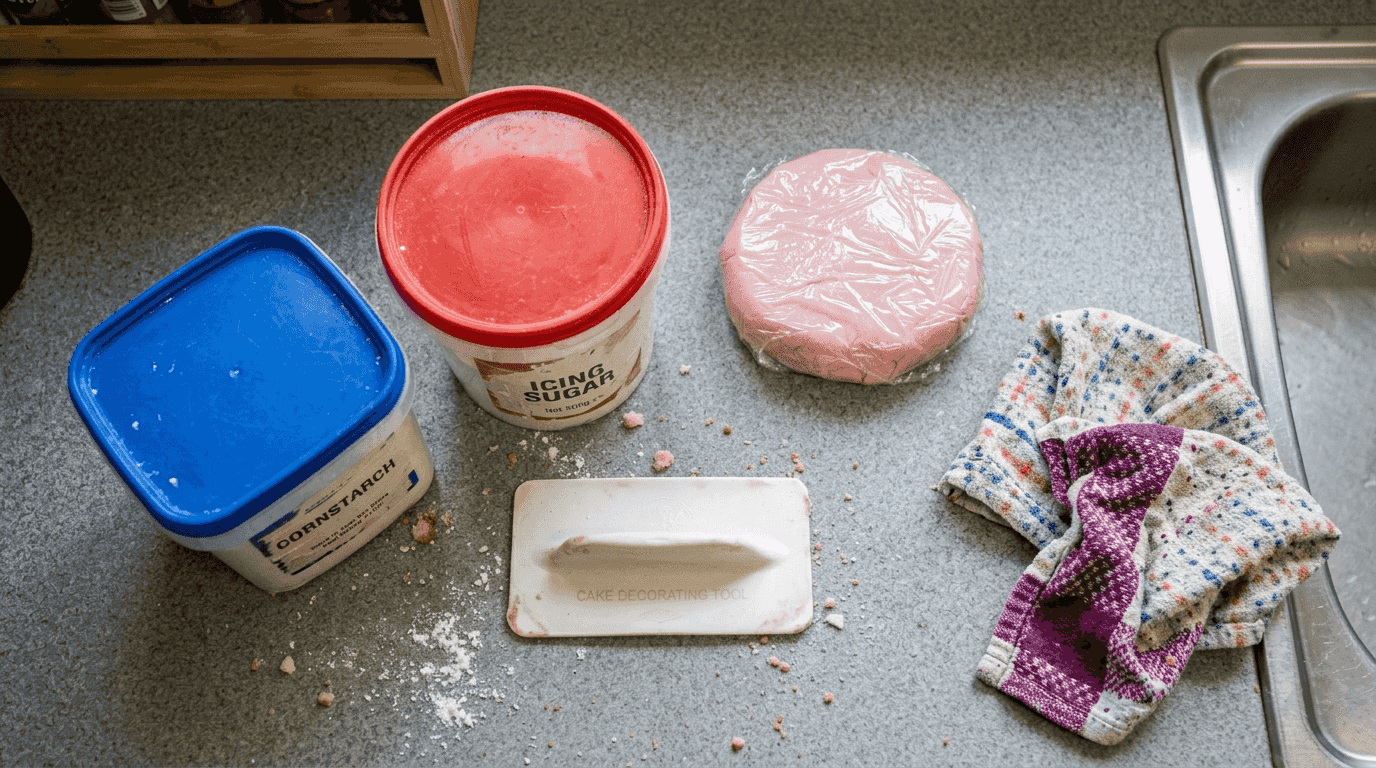
Pro Tip: Flatten fondant into disc shapes before wrapping rather than leaving it in balls. This shape uses storage space more efficiently, eliminates air pockets that cause drying, and makes it easier to rewrap tightly after each use.
Avoid wrapping fondant too tightly, as excessive compression can create permanent imprints or flatten textured surfaces you’ve worked hard to create. The goal is snug contact that excludes air without deforming the fondant itself. Multiple layers of plastic wrap provide better protection than a single thick layer, as each barrier adds moisture retention. Understanding how to store sugarpaste helps with all types of rolled icing products.
Optimal storage conditions for fondant
Creating the right environment for fondant storage ensures your decorating materials stay fresh and workable for extended periods. Room temperature storage at 20–22°C maintains pliability and prevents the texture changes that occur with temperature extremes. This moderate temperature range keeps fondant soft enough to work with whilst preventing the stickiness that develops in warmer conditions.
Humidity control is equally important for successful fondant preservation. Optimal storage maintains humidity below 50%, preventing both drying and excess moisture absorption that compromises workability. High humidity causes fondant to become tacky and difficult to handle, whilst extremely dry conditions accelerate moisture loss and lead to cracking.
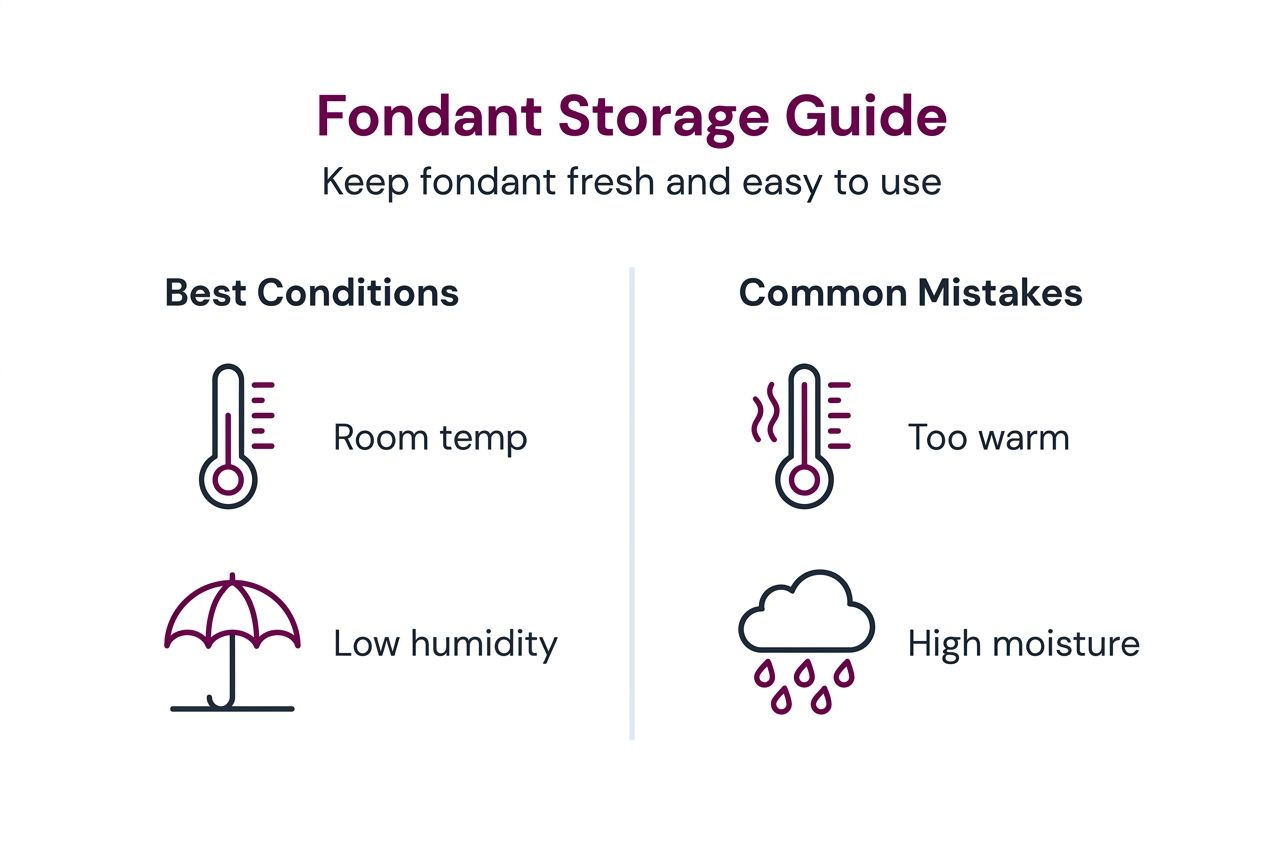
| Storage factor | Ideal range | Problems if too high | Problems if too low |
|---|---|---|---|
| Temperature | 20–22°C | Softening, stickiness | Hardening, brittleness |
| Humidity | 40–50% | Tackiness, sweating | Drying, cracking |
| Light exposure | Minimal | Colour fading | N/A |
| Air circulation | None | Drying, crusting | N/A |
Location selection within your home significantly impacts fondant longevity. Dark, cool cupboards away from appliances provide ideal storage conditions, protecting fondant from both light and temperature fluctuations. Avoid storing near ovens, dishwashers, or other heat sources that create temperature variations throughout the day. Basements or pantries often offer consistent conditions, though you must ensure these spaces remain dry to prevent humidity damage.
Climate control becomes necessary in extreme environments. In particularly humid regions, dehumidifiers or air conditioning help maintain optimal moisture levels that prevent fondant from becoming sticky or developing mould. Conversely, very dry climates may require humidifiers to stop fondant from drying out too quickly, though sealed containers usually provide adequate protection.
Pro Tip: Place a small piece of paper towel or cloth between your wrapped fondant and its container lid. This absorbs any condensation that forms, preventing moisture from dripping back onto the fondant surface and causing damage.
Refrigeration should be avoided whenever possible for fondant storage. Cold temperatures cause condensation when fondant returns to room temperature, creating surface moisture that softens the material and ruins smooth finishes. If you absolutely must refrigerate fondant-covered items, allow extended time for gradual temperature adjustment before unwrapping. Learning about using fondant with ganache and buttercream helps coordinate storage needs for complete cake projects.
Ideal storage locations include:
- Cool pantries away from cooking areas
- Dark cupboards with consistent temperatures
- Dedicated cake decorating storage spaces
- Climate-controlled craft rooms
- Basement storage areas with proper ventilation
Long-term storage and troubleshooting common problems
Freezing extends fondant’s usable life far beyond room temperature storage, making it practical to buy in bulk or prepare decorations weeks in advance. Multi-layer wrapping prevents freezer burn by creating multiple barriers against moisture loss and temperature damage. Wrap fondant first in plastic wrap, then aluminium foil, and finally place in a freezer bag for maximum protection.
Freeze fondant in portions sized for typical projects rather than storing large blocks that require repeated thawing and refreezing. Each freeze-thaw cycle degrades quality slightly, so dividing fondant into working portions preserves more material in pristine condition. Label each package clearly with the colour and date frozen, as frozen fondant looks remarkably similar across different shades.
| Fondant type | Room temperature | Refrigerated | Frozen |
|---|---|---|---|
| Store-bought | 6–24 months | Not recommended | Up to 12 months |
| Homemade | Few days to 2 months | Not recommended | Up to 6 months |
| Marshmallow fondant | 1–2 weeks | Not recommended | Up to 3 months |
| Modelling fondant | 3–6 months | Not recommended | Up to 12 months |
Thawing requires patience to prevent condensation damage. Move frozen fondant to refrigerator storage for several hours before bringing it to room temperature gradually. Never microwave frozen fondant or place it in warm areas for quick thawing, as rapid temperature changes cause moisture problems and texture degradation. Keep fondant wrapped during the entire thawing process to contain any condensation that forms.
Texture, colour, and odour changes indicate spoilage that makes fondant unsafe or unworkable. Fresh fondant feels smooth and pliable with a subtle sweet smell, whilst spoiled fondant develops off odours, visible mould, or extreme hardness. Discoloration beyond normal age-related darkening suggests bacterial growth or chemical breakdown that renders fondant unusable.
Watch for these spoilage indicators:
- Mould growth appearing as fuzzy spots
- Sour or unpleasant odours replacing sweet smell
- Extreme hardness that resists kneading
- Slimy or excessively sticky texture
- Dramatic colour changes or dark spots
Recondition slightly dried fondant by kneading in small amounts of shortening or glycerine to restore moisture and pliability. Warm the fondant slightly by kneading in your hands, as body heat softens dried material without requiring external heating. Work gradually, adding moisture in tiny increments to avoid oversoftening, which creates different problems. If fondant remains crumbly after several attempts at reconditioning, it has deteriorated beyond recovery.
Pro Tip: Test stored fondant before committing it to important projects. Knead a small piece thoroughly and check for proper texture, colour retention, and workability. This quality check prevents wasted effort decorating with degraded material.
Common storage mistakes to avoid include:
- Refrigerating fondant unnecessarily
- Wrapping too tightly and creating permanent imprints
- Storing different colours together without separation
- Reusing storage containers without cleaning thoroughly
- Ignoring expiration dates on commercial fondant
Understanding fondant’s role in baking helps you appreciate why proper storage matters so much for achieving professional results. Quality fondant that maintains its properties through careful storage makes the difference between decorations that impress and projects that disappoint.
Shop quality cake decorating supplies at the Vanilla Valley
Now that you understand how to store fondant properly, having access to quality supplies makes all the difference in your decorating success. The Vanilla Valley has served bakers since 2009, offering everything from premium fondant to essential cake decorating supplies that support your creative projects.

Whether you’re working on elaborate celebration cakes or simple decorations, having reliable supplies means your storage efforts pay off with consistently excellent results. Browse our extensive range of fondant colours, tools, and accessories designed for both amateur and professional bakers. Our guides on storing sugarpaste for freshness and using fondant effectively complement your storage knowledge with practical decorating techniques. Visit our Cardiff storefront or shop online to discover products that elevate your cake decorating skills whilst enjoying trusted service backed by thousands of satisfied customers.
FAQ
How long does fondant last once stored?
Shelf life varies significantly by type and storage method. Store-bought fondant lasts 6–24 months when wrapped properly and stored at room temperature, whilst homemade versions typically remain usable for only a few days to 2 months. Proper wrapping techniques and consistent cool conditions extend freshness substantially, making storage method more important than fondant type for longevity.
Can I refrigerate fondant-covered cakes?
Refrigeration causes condensation that softens or damages fondant surfaces, making room temperature storage strongly preferred. If refrigeration becomes absolutely necessary due to perishable fillings, allow cakes to reach room temperature gradually before removing protective wrapping. Understanding how fondant works with buttercream and ganache helps coordinate storage for complete decorated cakes.
What is the best way to refresh dried fondant?
Warm fondant slightly through gentle kneading and work in shortening to restore moisture and pliability. Knead small amounts of vegetable shortening or glycerine into the fondant gradually, allowing body heat from your hands to warm and soften the material naturally. Avoid overheating through microwaves or external heat sources, which damage fondant structure beyond repair. Store properly after refreshing to maintain restored quality.
Should I store different coloured fondants separately?
Always store different colours separately to prevent colour transfer and maintain pure shades. Even when wrapped individually, storing different colours in the same container can lead to dye migration over time, particularly with vibrant or dark colours. Use separate airtight containers or create barriers between colours using additional plastic wrap layers.
Can I store fondant decorations already shaped?
Pre-made fondant decorations store successfully when completely dry and protected from crushing. Allow shaped pieces to air-dry thoroughly for 24–48 hours before storage, creating a firm outer crust that resists damage. Layer decorations between sheets of waxed paper in rigid containers, preventing contact that might stick or transfer colours. Room temperature storage in dark locations preserves colours and prevents brittleness. Following techniques from guides on fixing buttercream problems applies similar troubleshooting approaches to fondant decoration issues.