
How to use edible gold leaf on cakes for stunning results
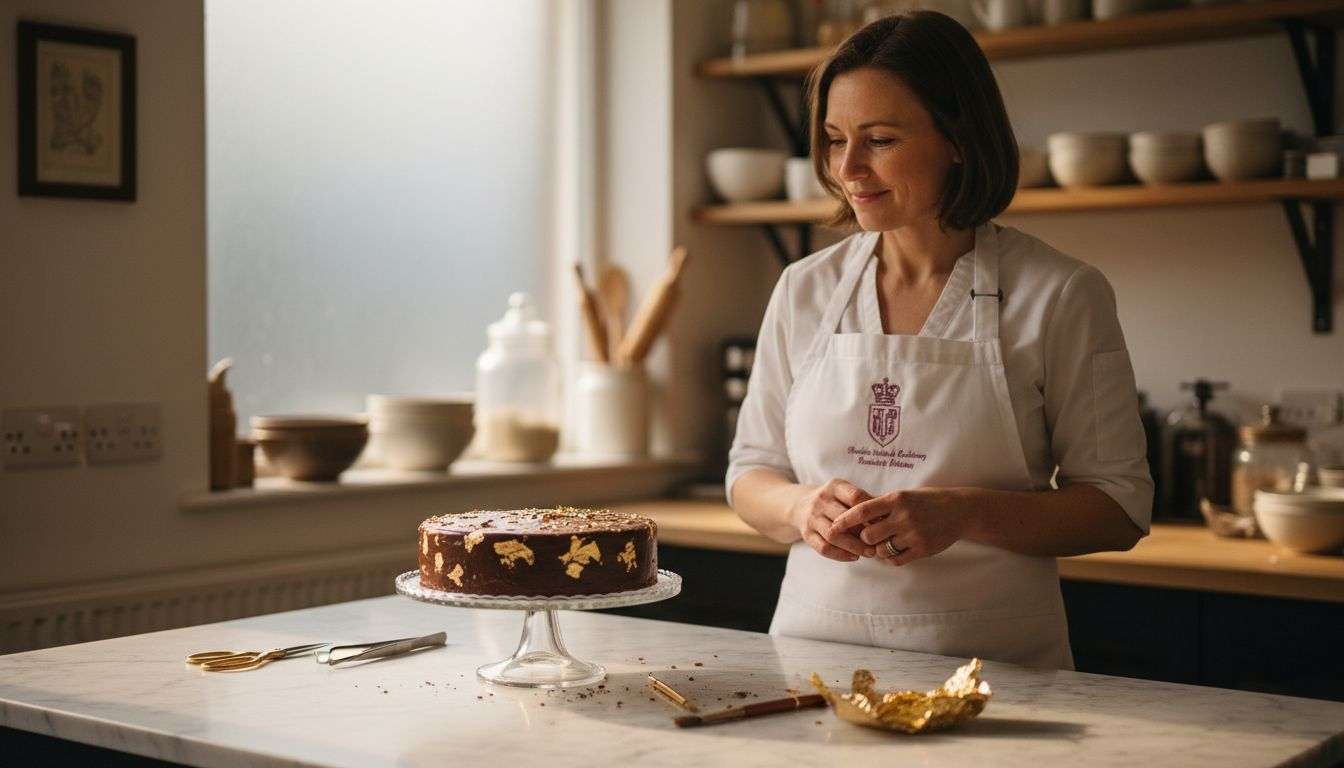
Edible gold leaf transforms ordinary cakes into show-stopping centrepieces, yet its extreme fragility often leaves bakers frustrated with torn sheets and wasted materials. Mastering this delicate decoration requires specific tools, careful technique, and understanding of proper adhesion methods. This guide equips you with practical steps to apply gold leaf confidently and achieve professional results every time.
Table of Contents
- Prerequisites: What You Need Before Starting
- Tools And Materials Required For Application
- Step-By-Step Application Method
- Common Mistakes And Troubleshooting
- Safety And Food-Grade Considerations
- Alternative Approaches With Tradeoffs
- Expected Results And Maintenance
- Discover Expert Cake Decorating Supplies At The Vanilla Valley
- Frequently Asked Questions
Key takeaways
| Point | Details |
|---|---|
| Essential tools reduce wastage | Squirrel hair brushes and tweezers prevent tearing and contamination during application |
| Misting improves adhesion | Light water or edible glue spray increases success rates significantly |
| UK compliance is mandatory | Only E175-certified gold leaf between 22-24 carat is safe for food use |
| Layering enhances visual impact | Allow 10-minute drying intervals between layers for depth and shine |
| Proper storage extends usability | Keep gold leaf in dry, low-humidity conditions for up to 12 months |
Prerequisites: what you need before starting
Edible gold leaf sheets measure just 0.0001 millimetres thick, making them extraordinarily fragile and prone to tearing with the slightest mishandling. Before attempting application, you must assemble specialised tools and create an ideal working environment to prevent frustration and wastage.
Your essential toolkit includes 100% squirrel hair brushes for gentle pressing and fine tweezers to lift sheets without direct finger contact. Storage conditions directly impact gold leaf quality; keep sheets in airtight containers within dry, clean spaces where humidity stays below 60%. Under these conditions, gold leaf remains usable for up to 12 months.
Safety compliance cannot be negotiated. Edible gold leaf must comply with UK E175 food-grade standards to be safe for consumption. Always verify supplier credentials and check packaging for proper certification before purchasing.
Prepare your workspace by eliminating static and maintaining moderate room temperature. Clean surfaces thoroughly to prevent contamination, and avoid working near open windows or air vents that create air currents. Keep the following items ready:
- Squirrel hair brush set in various sizes
- Fine-tipped tweezers with smooth edges
- Small spray bottle for water or edible glue mist
- Airtight storage container for unused sheets
- Clean, lint-free cloth for surface preparation
Tools and materials required for application
Selecting the right tools transforms gold leaf application from nightmare to straightforward process. Each tool serves a specific purpose in protecting the delicate sheets whilst achieving precise placement on your cake surface.
Squirrel hair brushes remain the gold standard for pressing gold leaf because their ultra-soft bristles distribute pressure evenly without tearing. Using 100% squirrel hair brushes and tweezers significantly reduces gold leaf damage during application. Tweezers with smooth, rounded tips allow you to lift and position sheets without introducing finger oils that compromise shine and adhesion.
A light mist of water or edible glue creates the tacky surface necessary for gold leaf to adhere properly. Your cake surface matters too; fondant provides the most reliable base, whilst slightly moist buttercream also works well when prepared correctly.
| Tool | Purpose | Application tip |
|---|---|---|
| Squirrel hair brush | Gentle pressing and smoothing | Use dabbing motion, never sweeping |
| Fine tweezers | Lifting and positioning sheets | Grasp only the corner edges |
| Water spray bottle | Creating tacky adhesion surface | Mist from 20cm distance for even coverage |
| Edible glue | Alternative adhesion method | Apply sparingly to avoid visible wet patches |
| Soft cloth | Surface preparation and cleaning | Ensure completely lint-free before use |
Step-by-step application method
Following a systematic approach ensures consistent results and minimises wastage. Each step builds upon the previous one, creating the foundation for professional-looking gold leaf decoration.
Step 1: Prepare your cake surface by lightly misting with water or edible glue from approximately 20 centimetres away. The surface should feel slightly tacky but not wet. A light mist of water or edible glue increases adhesion success from 60% to around 90%.
Step 2: Using tweezers, carefully lift the gold leaf sheet by grasping one corner. Work slowly and avoid any pulling or stretching motions that stress the delicate material.
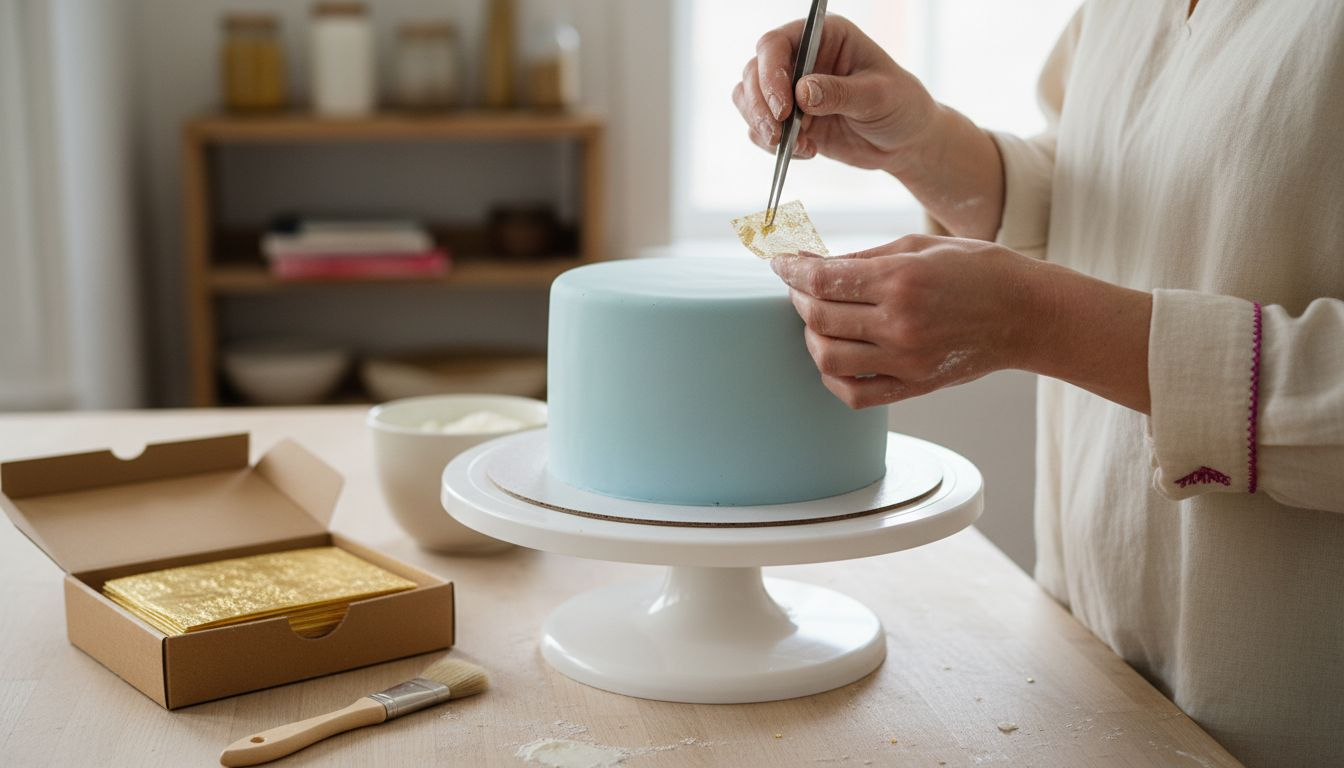
Step 3: Position the sheet over your desired area and lower it gently onto the tacky surface. Allow the sheet to settle naturally rather than forcing it into place.
Step 4: Take your squirrel hair brush and press the gold leaf onto the cake using gentle dabbing motions. Work from the centre outward to eliminate air pockets and ensure complete adhesion.
Step 5: For layered effects, allow each application to dry for at least 10 minutes before adding subsequent layers. This prevents sheets from sticking together or creating uneven textures.
Pro tip: Keep a second brush nearby for emergency repairs. If a sheet tears during application, use the dry brush to gently reposition fragments and blend edges seamlessly.
Common mistakes and troubleshooting
Even experienced decorators encounter challenges with gold leaf. Understanding typical pitfalls helps you avoid them and recover gracefully when problems arise.
Overhandling remains the primary cause of wastage. Overhandling edible gold leaf can cause up to 40% wastage due to tearing among beginners. Plan your design beforehand and commit to each placement decisively.
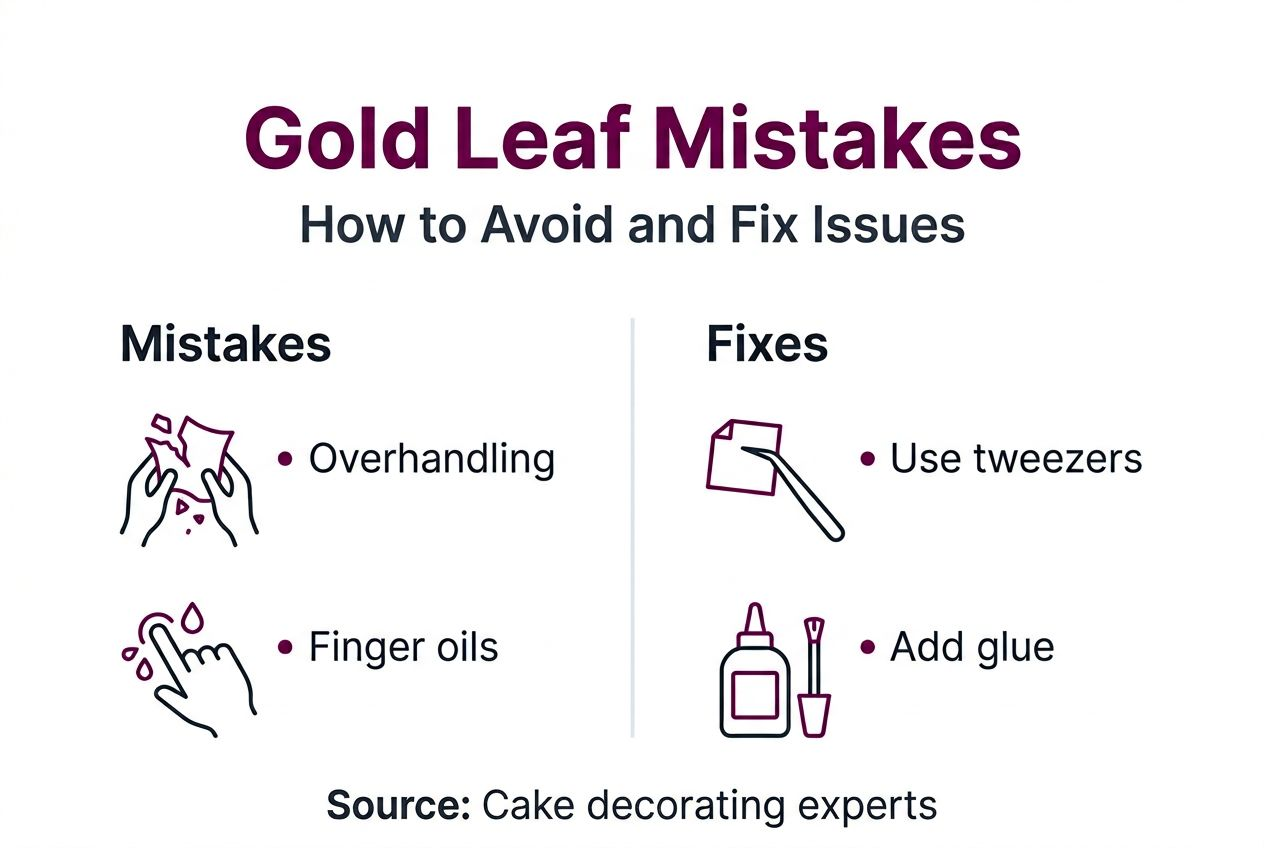
Finger oils create invisible barriers that prevent adhesion and dull the metallic shine. Always use tweezers for handling, never touching sheets directly with bare hands. If contamination occurs, that section of gold leaf becomes unusable.
Applying gold leaf to completely dry surfaces guarantees poor adhesion and eventual flaking. The tacky layer from your water or glue mist provides the necessary grip. Check surface moisture by lightly touching with a clean fingertip before application.
Improper storage accelerates deterioration. Gold leaf stored in humid conditions or exposed to temperature fluctuations becomes brittle and tears impossibly easily. Replace compromised sheets rather than struggling with unusable material.
When facing imperfections:
- Small tears: Press fragments together using gentle dabbing motions with your brush
- Air bubbles: Pierce with a clean pin and smooth with brush
- Poor adhesion patches: Add tiny amounts of edible glue with a fine brush tip
- Wrinkled areas: Embrace them as textured details rather than flaws
Pro tip: Keep a small container of edible gold dust nearby. Brush it over problem areas to disguise repairs and create an intentionally varied finish.
Safety and food-grade considerations
Using decorations that meet food safety standards protects both you and your clients whilst ensuring legal compliance. Gold leaf certification in the UK follows strict regulations that cannot be overlooked.
Only edible gold leaf labelled E175 and with 22-24 carat purity is safe and compliant for food use in the UK. This certification indicates the gold contains no harmful additives or base metals that could cause adverse health reactions.
Source your gold leaf exclusively from reputable suppliers who provide documentation of their certification. Verify packaging displays the E175 designation clearly and includes expiry dates. Reject any product lacking proper labelling regardless of price savings.
Maintain hygiene throughout the application process. Wash hands thoroughly before starting, and avoid touching your face or other surfaces during decoration. Store gold leaf away from strong-smelling foods that might transfer odours through packaging.
“When selecting edible gold leaf, certification matters more than price. Non-compliant products may contain impurities or use gold plating over base metals that are unsafe for consumption.”
Check these safety markers before use:
- E175 designation clearly printed on packaging
- Carat purity stated as 22-24ct minimum
- Expiry date visible and current
- Sealed packaging with no tears or moisture
- Supplier contact information included
Alternative approaches with tradeoffs
Whilst edible gold leaf delivers unmatched elegance, other metallic decoration options suit different needs and skill levels. Understanding the alternatives helps you choose the right approach for each project.
Gold dust sprays offer significantly easier application through simple aerosol delivery. You achieve coverage in seconds rather than minutes, making them ideal for rushed deadlines or intricate patterns. However, the finish lacks the dimensional depth and mirror-like reflectivity of genuine gold leaf.
Cost differences influence project decisions. Gold dust typically costs 40-60% less than gold leaf sheets, making it budget-friendly for practice sessions or large-scale decorating. The trade-off comes in visual impact; clients often perceive gold leaf as more luxurious and worth premium pricing.
Precision capabilities vary dramatically. Gold leaf allows targeted placement on specific design elements, whilst sprays create broader coverage that may require masking. Using gold dust for cake decoration works brilliantly for airbrushed effects and gradient blending.
| Feature | Edible gold leaf | Gold dust spray |
|---|---|---|
| Application difficulty | High (requires practice) | Low (beginner-friendly) |
| Visual impact | Maximum shine and depth | Moderate metallic sheen |
| Precision control | Excellent for details | Better for broad coverage |
| Cost per project | Higher investment | Budget-conscious option |
| Durability | 48+ hours indoors | Similar longevity |
| Best use cases | Premium cakes, focal points | Practice, large areas, gradients |
Expected results and maintenance
Setting realistic expectations prevents disappointment and helps you plan timing for special occasions. Properly applied gold leaf delivers reliable results when environmental factors remain controlled.
Correct application produces a stable, visually rich finish that catches light beautifully from multiple angles. The gold maintains its lustrous appearance without tarnishing or oxidising under normal conditions. Layering techniques create depth that makes decorations appear three-dimensional and sophisticated.
Environmental control proves critical for longevity. Avoid humid spaces where moisture causes gold leaf to lift or develop water spots. Properly applied edible gold leaf can last 48+ hours without flaking or tarnishing under typical indoor UK conditions.
When layering for enhanced visual impact, observe the 10-minute drying interval between applications religiously. Rushing this step causes sheets to stick together and creates muddied rather than dimensional effects. Three to four thin layers generally produce more stunning results than attempting single thick coverage.
Maximise decoration lifespan with these practices:
- Store decorated cakes in cool, dry rooms between 16-20°C
- Avoid refrigeration which introduces condensation upon removal
- Keep cakes away from direct sunlight or heat sources
- Transport in enclosed boxes to prevent air movement
- Apply gold leaf no more than 48 hours before serving for optimal appearance
Discover expert cake decorating supplies at The Vanilla Valley
Transform your cake decorating ambitions into reality with premium supplies designed for both learning and professional work. The Vanilla Valley stocks certified edible gold leaf, precision application tools, and everything needed to master this elegant technique.
Our cake decorating supplies and sugarcraft shop provides E175-compliant gold leaf in various sheet sizes alongside squirrel hair brushes and specialty tweezers. Whether you’re attempting your first gold leaf application or refining professional cake decorating techniques, our selection supports every skill level. Access expert guidance on extending edible decoration durability through our educational resources, and join a community of bakers committed to exceptional results. Shop with confidence knowing every product meets UK food safety standards.
Frequently asked questions
How fragile is edible gold leaf and how can I handle it safely?
Edible gold leaf measures just 0.0001 millimetres thick, making it extraordinarily delicate and prone to tearing with minimal pressure. Always use fine-tipped tweezers and squirrel hair brushes rather than fingers, as direct contact introduces oils that compromise adhesion and shine. Work in a static-free environment away from air currents to prevent accidental tearing.
Can I apply edible gold leaf on buttercream or only fondant?
Both fondant and slightly tacky buttercream surfaces accept gold leaf successfully when prepared correctly. Mist buttercream lightly with water or edible glue to create the necessary tackiness for adhesion. Completely dry or crusted buttercream prevents proper bonding, so timing your application whilst the surface remains workable ensures best results.
How long does edible gold leaf decoration last once applied?
Edible gold leaf typically lasts 48+ hours indoors without flaking or tarnishing when applied properly. Avoid humid environments which accelerate lifting and water spotting. Store decorated cakes in cool, dry rooms between 16-20°C and avoid refrigeration to prevent condensation damage upon removal.
Is all gold leaf safe to eat and meet UK food standards?
Only gold leaf specifically labelled E175 with 22-24 carat purity is safe and legal for food use in the UK. Always verify packaging displays proper certification and purchase exclusively from reputable suppliers who provide documentation. Non-food grade gold leaf may contain harmful base metals or additives that pose health risks, so never compromise on proper certification regardless of cost savings.