
Baking beads explained: achieve perfect pastry every time
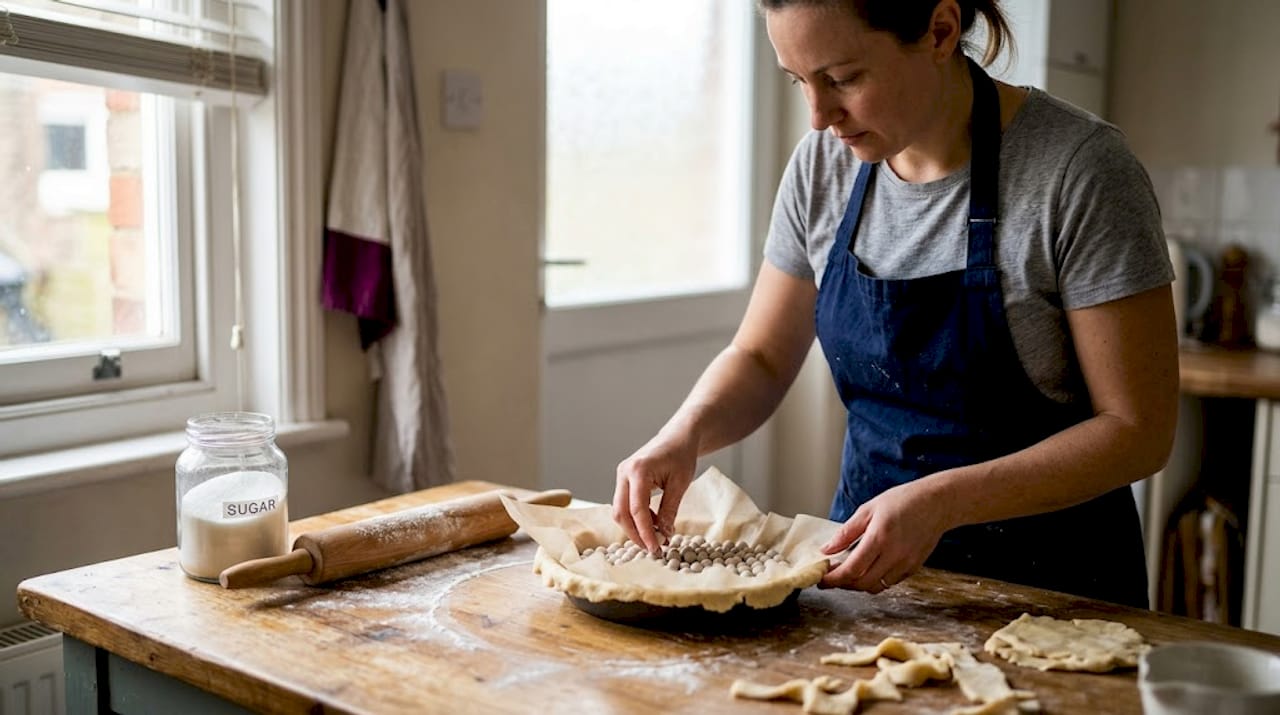
TL;DR:
- Baking beads keep pastry crusts flat and prevent puffing shrinking or slumping during blind baking.
- Proper use involves chilling, docking, lining with parchment, adding enough beads, and cooling before filling.
- Alternatives like dried beans rice and sugar work in a pinch but are less reliable than purpose-made ceramic beads.
If you’ve ever pulled a pie from the oven only to find a puffed, shrunken, or lopsided crust staring back at you, you’re not alone. It’s one of the most common frustrations in home baking, and the fix is simpler than most people think. Baking beads, sometimes called pie weights or baking beans, are small but mighty tools that solve these pastry headaches before they start. In this guide, we’ll walk you through exactly what they are, how to use them properly, which alternatives actually work, and how to choose and care for a set that’ll last you years.
Table of Contents
- What are baking beads and why are they used?
- How to use baking beads: step-by-step guide
- Alternatives to baking beads: pros, cons, and best picks
- Choosing and maintaining baking beads: what to look for
- Why baking beads transform home baking (and what most guides miss)
- Explore quality baking essentials for your next pastry
- Frequently asked questions
Key Takeaways
| Point | Details |
|---|---|
| Essential for blind baking | Baking beads prevent pastry crusts from shrinking or bubbling and ensure an even, crisp base. |
| Choose the right quantity | Cover the crust fully with 1.2–2.5 pounds of beads for best results. |
| Safe substitutes available | Dried beans, rice, or sugar can work in a pinch but have limitations compared to ceramic beads. |
| Proper care extends lifespan | Cool, clean, and store beads carefully to reuse them safely for many bakes. |
What are baking beads and why are they used?
Baking beads are small, heat-safe balls used during a technique called blind baking. Blind baking simply means pre-baking a pastry crust before adding the filling. It’s essential for any tart or pie where the filling is either uncooked, very moist, or needs less oven time than the pastry itself.
As the Best Pie Weights guide explains, baking beads are ceramic balls used for blind baking to hold crusts flat. Without them, pastry has a habit of doing exactly what you don’t want: it puffs up in the middle, bubbles along the base, and the sides slump inward. Not ideal when you’re trying to fill it neatly.
They work by applying gentle, even weight across the entire surface of the unbaked crust. This keeps the pastry pressed firmly against the tin while the gluten relaxes and the fat sets. The result is a flat, even shell that’s ready to hold whatever delicious filling you have planned.
According to the same Best Pie Weights resource, beads prevent crust puffing, bubbling, and shrinking during pre-baking. These are the three big problems that plague home bakers who skip this step or use too little weight.
Before purpose-made baking beads existed, bakers used whatever was to hand. Dried beans and uncooked rice were the traditional go-to options, and many bakers still swear by them today. Coins were even used in some old recipes. The principle is the same: weight keeps the pastry flat.
Here’s a quick summary of what baking beads prevent:
- Puffing: Air trapped beneath the pastry causes unsightly bubbles
- Shrinking: Without weight, the sides pull away from the tin as the fat melts
- Slumping: The walls of the crust collapse inward, leaving no room for filling
- Uneven baking: Hot spots cause some areas to cook faster than others
One of the most common baking mistakes people make is skipping blind baking altogether, assuming it’s an unnecessary extra step. It really isn’t.
Pro Tip: Always make sure you’re preheating your oven fully before blind baking. A properly hot oven at around 190°C to 200°C sets the pastry quickly, reducing the chance of shrinkage.
How to use baking beads: step-by-step guide
Using baking beads correctly makes a real difference. It’s not complicated, but there are a few key steps that separate a perfect crust from a disappointing one.
Follow this method for consistently great results:
- Make and chill your pastry. After lining your tin, refrigerate the unbaked crust for at least 30 minutes. Cold fat holds its shape far better in the oven.
- Dock the base. Use a fork to prick the base of the pastry all over. This allows steam to escape and reduces bubbling.
- Line with baking parchment. Cut a piece of parchment large enough to cover the base and sides. Scrunch it up first so it moulds to the shape of the tin more easily.
- Add the beads. Pour in your baking beads and spread them evenly. Make sure they cover the base fully and push up against the sides to support them.
- Bake blind. Place in a preheated oven at around 190°C for 15 to 20 minutes, until the edges are just starting to turn golden.
- Remove the beads carefully. Lift the parchment and beads out together. The pastry will look pale and slightly underdone at this stage. That’s fine.
- Return to the oven. Bake for a further 5 to 10 minutes until the base is golden and dry to the touch.
- Cool before filling. Always allow the crust to cool before adding your filling, especially for cold-set desserts.
As noted in Best Pie Weights, you’ll typically need 1.2 to 2.5 pounds of beads for a 9 to 11 inch pie shell. That’s roughly 0.5 to 1kg. Using too few is one of the most common errors. If the beads don’t reach the sides, the walls will still slump.
The same source confirms that chilling and docking the crust before adding beads is essential to minimise shrinkage. Don’t skip either step.
Pro Tip: After removing the beads, check the base for any soft or damp patches. If you spot any, give it a few extra minutes in the oven before filling. A soggy bottom is never the goal.
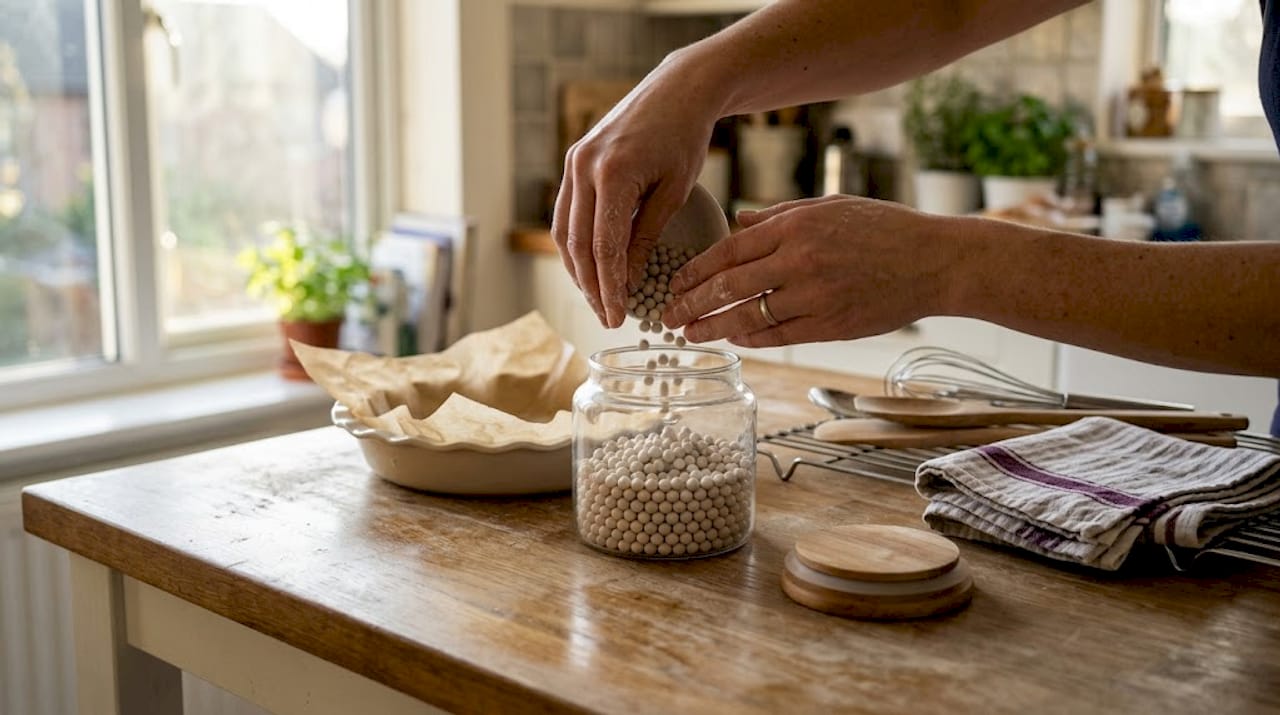
Once you’re done, allow the beads to cool completely before handling. Store them in a dry container. Proper habits here, as covered in our tips on avoiding baking failures, make a real difference to your long-term results.
Alternatives to baking beads: pros, cons, and best picks
Don’t have baking beads to hand? You’ve got options. As Best Pie Weights confirms, substitutes include dried beans, rice, and granulated sugar, each with its own pros and cons.
Here’s a quick comparison to help you decide:
| Substitute | Reusable? | Mess factor | Best for | Avoid when |
|---|---|---|---|---|
| Dried beans | Yes, many times | Low | Traditional blind baking | Crumb or biscuit crusts |
| Uncooked rice | Yes, several times | Medium | Quick, budget-friendly baking | Wet or very hot recipes |
| Granulated sugar | Yes, many times | Low | Dense, even coverage | Crumb-based crusts |
| Purpose-made beads | Yes, indefinitely | Very low | All pastry types | N/A |
Dried beans are the classic substitute. They’re cheap, widely available, and can be reused many times as weights. The downside? They’re not edible afterwards, so label them clearly once they’ve been used for baking.
Uncooked rice works in a similar way but tends to shift around more, which can leave gaps at the sides. It’s a decent emergency option but not the most reliable.
Granulated sugar is the surprise favourite among many professional bakers. It’s favoured by experts for density and reusability, though you should avoid it when working with crumb-based crusts where the sugar could melt into the base.
A few things to keep in mind when using any substitute:
- Never eat beans or rice after they’ve been used as weights. The heat changes their texture and they won’t cook properly.
- Store your used substitute in a clearly labelled jar so it doesn’t accidentally end up in a recipe.
- Substitutes work best in a pinch but won’t give the same consistent results as purpose-made beads.
If you’re regularly baking pastry, investing in proper beads really does pay off. And if you’re exploring crumb-based cake techniques, it’s worth knowing that weights aren’t needed for those at all.
Pro Tip: If using sugar as a substitute, save it afterwards for caramel or toffee making. It picks up a lovely light toasty flavour from the oven.
Choosing and maintaining baking beads: what to look for
Not all baking beads are created equal. Knowing what to look for helps you get the best results and avoid wasting money on tools that don’t perform.
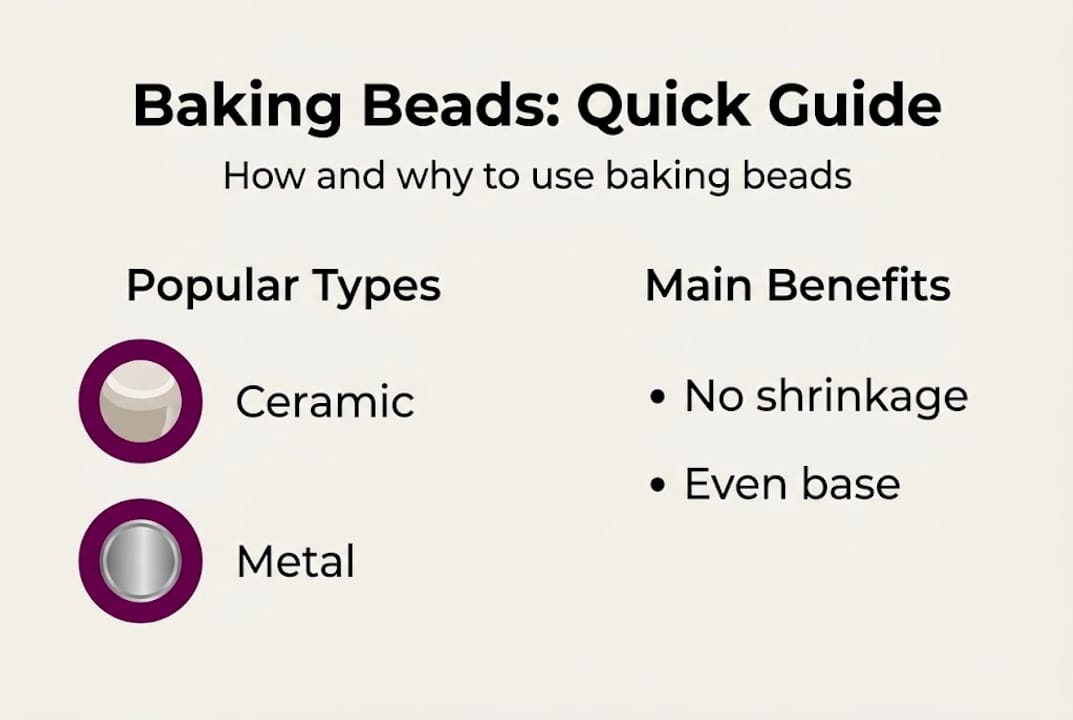
Here’s how the most common types compare:
| Type | Heat distribution | Reusability | Coverage | Notes |
|---|---|---|---|---|
| Ceramic beads | Excellent | Very high | Good | Most popular choice |
| Metal chains | Good | High | Variable | Can leave marks on crust |
| Loose metal beads | Good | High | Good | Heavier, can be harder to store |
| Perfect Pie Pouch | Good | High | Best | Easy to handle, great coverage |
As Best Pie Weights confirms, ceramic beads are preferred for even heat distribution and reusability. They warm up steadily and transfer heat gently to the pastry, which helps it cook evenly without over-browning in patches.
Expert testing also shows that ceramic outperforms metal chains, with pouches like the Perfect Pie Pouch offering the best overall coverage. Metal chains can be tricky to position and sometimes leave small indentations in the pastry surface.
“The best pie weights are the ones you’ll actually use consistently. Ease of handling matters just as much as performance.”
When buying, aim for enough beads to generously fill your largest tin. You can always use fewer in smaller tins, but running short is frustrating mid-bake.
For cleaning, simply wash ceramic beads in warm soapy water after each use, rinse well, and allow to dry completely before storing. Never store them damp as this can cause them to crack over time.
Some useful storage habits:
- Keep beads in a dry, lidded container or a small fabric pouch
- Store away from moisture and strong odours
- Check for chips or cracks before each use and discard any damaged beads
For more on keeping your baking kit in top shape, our guides on baking goods storage and storing baking tools are well worth a read.
Why baking beads transform home baking (and what most guides miss)
Here’s something we genuinely believe at The Vanilla Valley: the biggest barrier to better pastry isn’t the recipe. It’s the tools and the technique.
Most guides focus on ingredients or timings, but overlook the confidence that comes from a reliable method. When your crust comes out flat and golden every single time, you stop dreading pastry. You start enjoying it.
The optimal weight of beads is crucial: too little, and the crust slumps; too much, and it dimples. That balance matters far more than most home bakers realise. It’s not just about having something in the tin. It’s about having enough of the right thing, distributed correctly.
We’ve seen bakers try every shortcut imaginable, from a handful of coins to a single layer of rice, and wonder why their crusts still misbehave. The answer is almost always weight and coverage.
Investing in a good set of ceramic beads and learning to use them properly solves problems that no amount of recipe-tweaking will fix. If you’ve been struggling with preventing cake cracks and pastry problems alike, the solution is often simpler than you’d expect.
Explore quality baking essentials for your next pastry
Ready to put all of this into practice? Having the right tools really does make the whole experience more enjoyable, and more successful.

At The Vanilla Valley, we’ve been helping bakers of all levels find the supplies they need since 2009. Whether you’re just starting out with blind baking or you’re a seasoned pastry enthusiast looking to upgrade your kit, our range of baking supplies and sugarcraft tools has something for everyone. Pop over to the shop and see what catches your eye. We offer free delivery options and next day dispatch, so you’ll be baking with confidence in no time.
Frequently asked questions
Can you reuse baking beads for multiple bakes?
Yes, ceramic baking beads are designed to be reused many times. Simply cool weights completely before storing them in a dry container after each use.
Are baking beads necessary for all pastry crusts?
No, they’re essential for traditional blind-baked pastry but not required for every bake. As confirmed by Best Pie Weights, beads are not needed for crumb or biscuit-based crusts.
Is it safe to use dried beans or rice as baking bead alternatives?
Yes, both are safe to use in the oven. Just remember that beans and rice are reusable as weights but are no longer edible afterwards, so keep them separate from your cooking supplies.
How much baking beads do you need for a standard pie?
For a standard 9 to 11 inch pie shell, you’ll need roughly 1.2 to 2.5 pounds of beads, which is around 0.5 to 1kg, to achieve full and even coverage.