7 Creative Ways to Use Ganache as a Filling, Frosting, and Glaze
Achieving perfectly smooth chocolate ganache might feel out of reach for many home bakers in South Wales. Whether your ganache ends up too runny, too thick, or simply lacks that glossy finish, small mistakes can derail your cake decorating plans. The good news is that understanding ratios, temperature, and technique makes all the difference. This guide brings you practical solutions that work in real kitchens, helping you master ganache for fillings, glazes, and stunning finishes. Get ready to discover actionable tips that will transform the look and taste of your cakes, making every slice a professional-quality treat.
Table of Contents
- Understanding Ganache: Basics And Ratios
- Making Ganache For Smooth Cake Fillings
- Creating Whipped Ganache Frosting For Layers
- Using Ganache As A Glossy Glaze For Cakes
- How To Flavour Ganache For Unique Results
- Troubleshooting Ganache: Common Mistakes
- Decorating With Ganache: Modern Cake Ideas
Quick Summary
| Takeaway | Explanation |
|---|---|
| 1. Master the chocolate-to-cream ratio | Use a 2:1 ratio for filling and frosting; adjust as needed for desired consistency. |
| 2. Control temperature for smooth ganache | Warm cream and chocolate together to avoid graininess and ensure proper emulsification. |
| 3. Allow ganache to cool patiently | Let ganache reach a spreadable consistency at room temperature; rushing can ruin texture. |
| 4. Experiment with flavours thoughtfully | Add complementary flavours in moderation to enhance ganache without overpowering the chocolate. |
| 5. Learn to troubleshoot common mistakes | Understand errors related to temperature and ratios to prevent and fix ganache issues effectively. |
1. Understanding Ganache: Basics and Ratios
Ganache might sound complicated, but it’s really just chocolate and cream working together in perfect harmony. Once you understand the basic ratio, you’ll realise this silky-smooth mixture is one of the easiest and most versatile tools in your baking arsenal.
At its heart, ganache is a ratio problem. The beauty of ratios is that they work at any scale—whether you’re making enough for a small cake or a celebration gathering for thirty people, the same proportions apply. The magic happens when you balance chocolate to cream correctly, and this balance determines whether your ganache becomes a thick filling, a spreadable frosting, or a glossy glaze that cascades beautifully over the sides of a cake.
The most common ratio you’ll encounter is 2:1 (chocolate to cream), which gives you a consistency perfect for filling and crumb-coating. For a practical example, this might look like 160 grams of dark chocolate mixed with 310 millilitres of full-fat double cream. When you warm the cream (never boiling it, just until steaming) and pour it over melted chocolate, the heat softens the chocolate whilst the cream creates an emulsion that’s smooth and spreadable once cooled slightly.
Here’s what happens at different ratios:
- 3:1 ratio (thicker) – Great for piping, layering between cakes, or creating decorative touches. This ganache sets firmer and holds its shape beautifully.
- 2:1 ratio (medium) – Your workhorse ratio for filling and frosting. This is where you’ll spend most of your time, especially for general cake decorating.
- 1:1 ratio (thinner) – Perfect for pouring as a glaze or dripping dramatically over the top of your bakes. It flows more easily and creates that luxurious, glossy coating.
Getting the ratio right is everything. Too much chocolate and your ganache becomes thick and grainy; too much cream and you have a runny mixture that won’t hold its shape.
Why does temperature matter so much? When you make ganache with the correct chocolate-to-cream proportions, temperature controls how quickly the mixture sets and how smooth it becomes. Warm ganache flows easily. Cool ganache becomes firmer and spreadable. Cold ganache sets hard enough to cut into layers or use as a filling that won’t squeeze out when you stack cake tiers. Your South Wales kitchen temperature also plays a role—warmer afternoons might slow your setting time, whilst cooler evenings speed it up.
Many amateur bakers in your area worry about lumpy or split ganache, but this almost always traces back to ratio or temperature gone wrong. If you’re mixing chocolate and cream with precise measurements and controlling your heat carefully, you’re already ninety percent of the way to success. Adding a touch of coconut oil (about a tablespoon per 160 grams of chocolate) helps create an even glossier finish and improves flow slightly, though it’s entirely optional depending on your personal preference.
The consistency you create today determines what you can do tomorrow. A thick ganache you pipe today becomes the structural filling that keeps your cake stable. The same basic mixture, thinned with extra cream, becomes the elegant glaze your friends will photograph and share.
Pro tip: Weigh your ingredients rather than measuring by volume—a kitchen scale removes the guesswork and ensures your ratios stay consistent every single time you make ganache.
2. Making Ganache for Smooth Cake Fillings
A smooth, luscious ganache filling transforms a basic cake into something truly special. The difference between a filling that looks professional and one that looks lumpy or separated comes down to technique, temperature, and patience.
Making ganache for fillings requires slightly different thinking than making it for glazes. Your filling needs to be thick enough to hold layers together without squishing out when you stack your tiers, yet soft enough to spread smoothly without tearing your sponge. This is where your technique during the making process becomes crucial.
The foundation is simple. You’ll need good quality chocolate (dark, milk, or white depending on your preference), full-fat double cream, and a gentle touch with heat. Here’s what separates a beautiful filling from a disappointing one:
- Gentle heat on the cream – Warm your cream until it’s steaming and small bubbles form around the edges, but never let it reach a rolling boil. Boiling cream can cause your ganache to split or become grainy.
- Proper chocolate melting – Chop your chocolate finely so it melts evenly. You can melt it gently in a bowl over warm water or use short bursts in the microwave, stirring frequently. Overheated chocolate becomes thick and unworkable.
- Combining with care – Pour your warm cream over the chopped chocolate and let it sit for about thirty seconds before stirring. This pause allows the heat to soften the chocolate, making the mixing smoother and reducing the risk of lumps.
- Patience whilst cooling – Don’t rush this stage. Let your ganache cool at room temperature, stirring occasionally, until it reaches a spreadable consistency. This usually takes twenty to thirty minutes depending on your kitchen temperature.
The secret to smooth filling ganache is never rushing the cooling stage. A ganache that’s too warm spreads too thin and won’t support your cake; one that’s too cold becomes stiff and difficult to work with.
When you’re making perfect ganache for cake filling, consistency is your goal. You want a texture similar to fudgy frosting—thick enough to hold a peak when you lift your knife, but yielding enough to spread without dragging on your cake layers. Your South Wales kitchen humidity and current temperature will affect how quickly your ganache sets, so always test with a small spoon before committing to filling your entire cake.
Many home bakers worry about their filling becoming too soft in summer warmth or too hard in winter cold. This is perfectly normal and completely manageable. If your ganache becomes too warm, simply refrigerate it for ten minutes before continuing. If it’s set too firmly, warm your palette knife under hot water, dry it quickly, and use the warmth to help spread it smoothly. You’re working with chocolate and cream—both are forgiving materials when you treat them with respect.
The thickness of your filling layer matters too. A filling that’s too thick becomes heavy and dense; one that’s too thin won’t provide structural support. Aim for approximately half an inch (about one centimetre) of ganache between each cake layer. This gives you enough to taste the chocolate whilst keeping your cake proportions balanced.
Some bakers add a touch of coconut oil or even butter to their filling ganache to make it slightly less stiff when set. This is entirely optional but can help if your kitchen tends to stay particularly cool. Test this on a small batch first to make sure you like the result before making your full filling.
Tip for success: Chill your filled cake for at least two hours before decorating—this allows your ganache filling to set firm enough to support frosting and decoration on top without shifting or sliding.
3. Creating Whipped Ganache Frosting for Layers
Whipped ganache frosting is where chocolate magic happens. This lighter, airier version of ganache transforms a dense filling into a cloud-like frosting that’s perfect for layering between cake tiers, piping decorative swirls, or creating texture and volume on your cake.
The transformation from standard ganache to whipped ganache is surprisingly simple, yet it opens up entirely new creative possibilities. By introducing air into cooled ganache, you’re essentially creating a mousse-like consistency that’s less heavy than solid ganache but far more stable than whipped cream alone. This makes it ideal for Southern Welsh home bakers who want to create impressive, professional-looking cakes without complex techniques.
Here’s how the process works. You start with your cooled ganache at room temperature—the same ganache you’d use as a filling, only you catch it at a slightly different stage of cooling. Instead of letting it set completely firm, you whip it with an electric mixer when it reaches a soft, pudding-like consistency. As you beat it, air incorporates into the mixture, causing it to become lighter and fluffier. The result is whipped ganache with an increased volume that’s perfect for creating layers with height and visual appeal.
The key steps involve careful timing and observation:
- Cool ganache to the right stage – It should be cool enough that it holds soft peaks when you lift the beaters, but not so cold that it becomes grainy or hard. Test this by touching a small amount with your finger; it should feel like cool fudge.
- Use an electric mixer – Hand mixing works but takes considerable effort. An electric mixer (hand-held or stand mixer) makes this job effortless and creates more consistent results.
- Watch for stiff peaks – Beat until your whipped ganache reaches stiff peaks, similar to whipped cream. This usually takes three to five minutes depending on your mixer speed and ganache temperature.
- Avoid overbeating – Stop once you’ve reached stiff peaks. Overbeating can cause the ganache to split or become grainy, especially if your kitchen is particularly warm.
Whipped ganache frosting gives you the structural support of standard ganache with the light, airy texture that makes cakes feel indulgent rather than heavy.
When you’re ready to use your whipped ganache for layering, you’ll notice it behaves differently than dense filling ganache. It’s spreadable, pipeable, and forgiving. You can create textured effects by dragging a palette knife through it, pipe rosettes or other decorative patterns, or simply spread it smoothly for a contemporary look. Many bakers find that understanding different ganache types and their properties helps them choose the perfect frosting for their specific cake design.
Temperature control becomes even more important with whipped ganache. Your kitchen warmth will affect how quickly it softens. If your whipped ganache starts to lose its shape during decorating, simply refrigerate it for ten to fifteen minutes to firm it up again. This is far less finicky than whipped cream, which would collapse completely under the same conditions.
Whipped ganache also handles layering beautifully. Between cake tiers, it provides enough structure to support the weight above whilst remaining soft enough to create a pleasant eating experience. A single layer of approximately three-quarters of an inch (roughly two centimetres) of whipped ganache between tiers is often ideal for balance.
One advantage many bakers overlook is that whipped ganache is forgiving about timing. Unlike meringue-based buttercreams that can separate or weep, whipped ganache remains stable for several hours at room temperature. If you’re decorating a cake for a celebration, you can prepare your whipped ganache several hours in advance without worry.
Insider tip: For darker, richer whipping results, use dark chocolate ganache; for lighter, more delicate layers, whip milk or white chocolate ganache, which whips to volume more quickly and creates a softer, more elegant appearance.
4. Using Ganache as a Glossy Glaze for Cakes
A glossy ganache glaze transforms an ordinary cake into something that looks professionally made. This flowing, shiny coating creates that luxurious appearance that catches light beautifully and makes your cake look far more impressive than the effort required to make it.
The key difference between ganache used as a glaze versus a filling or frosting is consistency and pouring temperature. For glazing, you want a thinner, more pourable ganache that flows smoothly over your cake and sets to a beautiful sheen rather than a thick, matte finish. This is where ratios become your best friend again.
A glaze ganache typically uses a higher cream-to-chocolate ratio than filling ganache. Whilst a filling might be 2:1 chocolate to cream, a glaze works beautifully at 1:1 or even slightly more cream. This creates a thinner mixture that flows like liquid chocolate rather than fudgy paste. You could use approximately 100 grams of chocolate with 100 millilitres of warm cream for a perfect pourable glaze, though you can adjust slightly based on your preferences and how warm your kitchen is.
Here’s what happens during the glazing process:
- Prepare your cake properly – Your cake should be placed on a cooling rack over a baking tray to catch any drips. The cake itself should be at room temperature, not cold from the fridge.
- Warm your ganache to the right temperature – Your glaze ganache should be around 32 to 35 degrees Celsius, warm enough to pour smoothly but not so hot that it drips off before setting. It should flow like warm honey.
- Pour with confidence – Start from the centre of your cake and pour in a steady stream, allowing gravity to pull the glaze down the sides. Don’t worry about perfection; ganache glaze is forgiving and creates beautiful organic patterns as it flows.
- Allow setting time – Leave your glazed cake undisturbed for fifteen to twenty minutes whilst the ganache begins to set. It will look dull at first, then develop that gorgeous glossy shine as it cools completely.
A glossy ganache glaze isn’t just decorative—it also seals moisture into your cake, helping it stay fresh longer whilst creating visual drama.
The beauty of ganache glaze lies in its versatility. You can pour it over layer cakes, bundt cakes, or individual cupcakes. You can drip it deliberately down the sides for a trendy look, or pour it carefully for a smooth, professional finish. Many South Welsh home bakers find that understanding how to glaze cakes with precision gives them confidence to attempt designs they previously thought were beyond their skill level.
Temperature control is your main challenge with ganache glaze. If your ganache becomes too cool, it will set before you finish pouring and create lumpy patches on your cake. Simply warm it gently over warm water for a minute or two and try again. If it’s too warm, it will run off the cake entirely. The solution is patience—let it cool to that perfect middle temperature by testing on a small hidden area first.
One practical advantage of ganache glaze is that it sets relatively quickly compared to other glazes. Within thirty minutes, your cake will be stable enough to transport or decorate further. This makes it perfect for bakers working to timelines or preparing cakes for events.
You can also tint your ganache glaze for special occasions. White chocolate ganache glaze accepts food colouring beautifully, allowing you to create pastel or bold hues. Milk and dark chocolate glazes are naturally rich without colouring, but if you want something specific like a burgundy or emerald tone, white chocolate provides the perfect canvas.
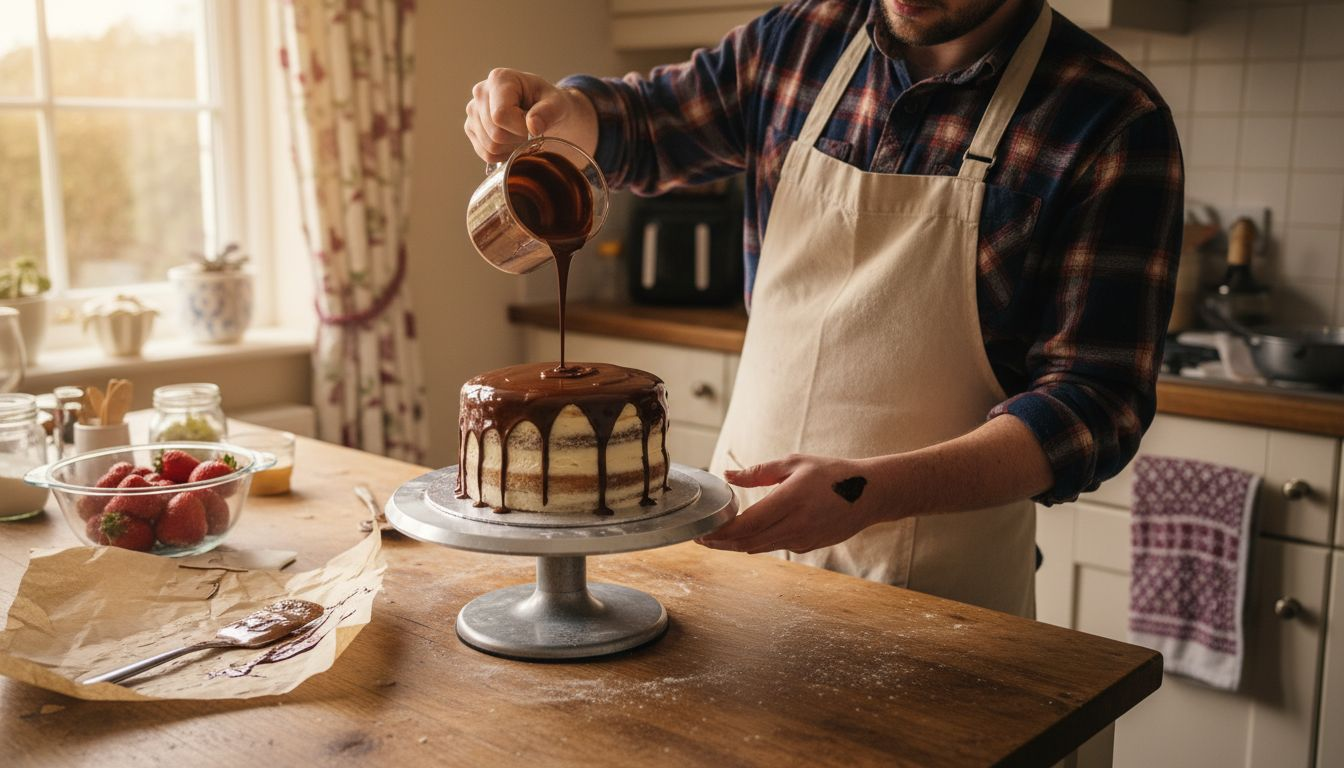
Drips have become incredibly popular in contemporary cake design, and ganache glaze creates the most beautiful, natural-looking drips. If you want drips rather than complete coverage, simply pour your warm ganache around the top edge of your cake and let gravity do the work. Each drip will be slightly different, creating an artisanal, professional appearance.
Baker’s tip: Place your finished ganache-glazed cake in the fridge for just five minutes after it sets to create a slightly firmer exterior that holds its glossy appearance beautifully when serving and photographing.
5. How to Flavour Ganache for Unique Results
Plain chocolate ganache is lovely, but flavoured ganache is where you truly impress friends and family. Adding complementary flavours transforms ganache from a simple chocolate component into a memorable experience that makes your bakes stand out from the crowd.
The beauty of ganache is that it’s incredibly forgiving when it comes to flavouring. Unlike delicate sponges where adding too much liquid can ruin the crumb structure, ganache can accommodate both subtle and bold flavour additions without affecting its texture. This makes it perfect for experimentation, allowing you to create signature flavours that reflect your personality as a baker.
There are several approaches to flavouring ganache, each with different strengths:
- Flavoured additions – Add flavouring ingredients directly to your ganache mixture, such as vanilla extract, coffee, liqueurs, or spice infusions. These blend seamlessly and create depth of flavour.
- Infused cream – Gently warm your cream with flavouring elements before mixing with chocolate. Lavender, cinnamon sticks, or tea can infuse their essence into the cream for sophisticated results.
- Flavoured chocolate – Choose chocolate that already contains flavouring notes. This is the simplest approach and guarantees consistency across batches.
- Oil-based flavourings – Use food-grade oils like peppermint, lemon, or raspberry oil. These are concentrated, so a small amount goes a long way.
When adding flavourings, the general rule is start small and taste as you go. A quarter teaspoon of extract in a batch of ganache is often perfect, whilst a half teaspoon might be overpowering. Liquid flavourings should represent no more than 5 to 10 percent of your total ganache volume to avoid affecting the texture or consistency. When using approved food flavourings for safe ganache creation, you’re ensuring your creations are both delicious and compliant with UK food safety standards.
Here are some flavour combinations that work beautifully in South Wales kitchens:
- Coffee and dark chocolate – One teaspoon of espresso powder or strong cooled coffee adds richness without making the ganache taste like coffee.
- Vanilla and milk chocolate – Two teaspoons of vanilla extract creates a classic flavour that appeals to almost everyone.
- Orange and dark chocolate – Half a teaspoon of orange extract or a tablespoon of finely grated orange zest brings brightness and sophistication.
- Raspberry and white chocolate – One tablespoon of raspberry purée creates a fruity, elegant filling perfect for celebration cakes.
- Mint and dark chocolate – Half a teaspoon of peppermint extract creates that beloved chocolate-mint combination.
- Salted caramel and milk chocolate – One tablespoon of salted caramel sauce swirled through warm ganache creates luxury in every bite.
The secret to flavoured ganache is balance. The chocolate flavour should remain the star, with your added flavouring playing a supporting role that enhances rather than masks the chocolate.
Timing matters when adding flavourings. For liquid flavourings like extracts or oils, add them after your ganache has cooled slightly to around 40 degrees Celsius. This prevents the volatile flavour compounds from evaporating in the heat. For cream infusions, add them whilst the cream is still warm but not boiling, allowing time for flavour extraction before mixing with chocolate.
Seasonal flavourings are an opportunity to refresh your ganache repertoire throughout the year. Winter calls for cinnamon, nutmeg, or ginger. Spring welcomes floral notes like lavender or rosewater. Summer brings citrus brightness, whilst autumn invites spiced warmth. Your ganache becomes a reflection of the season.
One consideration when flavouring ganache is how the flavour will interact with other cake components. A raspberry ganache pairs beautifully with vanilla sponge but might clash with a strong lemon cake. Think about your overall flavour profile and choose ganache flavouring that complements rather than competes with your other elements.
Different ganache applications benefit from different flavour intensities. A filling ganache can handle bolder flavours since it’s a supporting player, whilst a glaze ganache that’s the hero of your presentation might benefit from more subtle flavouring that lets chocolate remain the focus.
Flavoured ganache also opens creative possibilities for decoration. A dark chocolate and chilli ganache creates intrigue. A white chocolate and cardamom ganache feels luxurious. These unique flavours become talking points at celebrations and create memorable impressions that generic chocolate simply cannot match.
Flavouring tip: When using fresh ingredients like citrus zest or herbs, add them to your warm cream and let them infuse for five to ten minutes before straining and mixing with chocolate, creating a more nuanced flavour than simply stirring them in.
6. Troubleshooting Ganache: Common Mistakes
Even experienced bakers encounter ganache problems occasionally. The good news is that most issues have straightforward solutions, and understanding what went wrong helps you succeed next time. Ganache failures rarely mean wasted ingredients—they usually mean you’ve learned something valuable.
The most common ganache mistakes stem from three main causes: temperature control, ratio imbalance, and technique errors. Each produces distinctly different problems, and once you understand what causes them, prevention becomes simple.
Temperature-Related Issues
Overheating your chocolate is perhaps the single most common mistake. Chocolate contains cocoa butter, which separates if exposed to temperatures above 50 degrees Celsius. When this happens, your silky ganache becomes grainy and thick, almost like sand mixed with chocolate. The fix is prevention—melt chocolate gently over warm water or in short microwave bursts, stirring frequently. If you’ve already overheated it, your ganache is usually beyond saving, though some bakers attempt to rescue it by whisking in a tablespoon of coconut oil.
Using cold cream is another temperature mistake that catches people off guard. If your double cream comes straight from the fridge and you pour it over chocolate, the mixture may not combine properly. Your cream should be warm (around 40 to 50 degrees Celsius) but not boiling. Boiling cream causes different problems—it can cause your ganache to split, creating an oily separation that no amount of stirring fixes.
Ratio Problems
When your ganache is too thick to spread or too thin to hold its shape, you’ve got a ratio problem. Too much chocolate creates a stiff, almost fudgy mixture. Too much cream produces something runny that won’t support cake layers. The fix depends on which direction you’ve gone wrong.
If your ganache is too thick, gently warm it and stir in small amounts of additional cream until you reach the right consistency. Work slowly—you can always add more cream, but removing it is impossible. If your ganache is too thin, you’ve got fewer options. Refrigerate it to see if it sets to a usable consistency. If it remains too soft after chilling, it’s likely destined for use as a glaze rather than a filling, and that’s perfectly acceptable.
Separation and Graininess
When ganache separates, you’ll see an oily puddle forming with grainy chocolate solids. This typically happens when the mixture gets too warm or when ingredients are combined at vastly different temperatures. Prevent this by ensuring both chocolate and cream are within a similar temperature range when combining them.
If separation occurs, try rescuing your ganache by whisking in a tablespoon of cooled cream at a time. Whisk vigorously to reincorporate the mixture. If whisking doesn’t work, you might need to start over, but at least you’ll understand what caused the problem.
Lumpy or Gritty Texture
Lumps in ganache usually come from undissolved chocolate that wasn’t melted properly before mixing with cream. Pour your warm cream over finely chopped chocolate and allow it to sit for thirty seconds before stirring. This gives the heat time to soften the chocolate properly. If you rush this step and stir immediately, you create lumps.
Grittiness suggests either overheated chocolate or poor quality chocolate with a low cocoa butter content. Quality matters here. Using chocolate specifically chosen for ganache preparation ensures you start with ingredients designed for emulsification and smooth texture.
Here are the most common mistakes summarised with their solutions:
- Grainy texture – Usually overheated chocolate. Prevent by melting gently. If it happens, it’s difficult to rescue.
- Separation or oily appearance – Temperature mismatch or overheating. Whisk in cooled cream gradually to attempt rescue.
- Too thick consistency – Too much chocolate in your ratio. Warm gently and add cream by the tablespoon until you reach desired thickness.
- Too thin consistency – Too much cream in your ratio. Refrigerate to see if it sets properly. If not, use it as a glaze instead.
- Lumps in the mixture – Chocolate not fully melted before combining with cream. Strain through a fine sieve if you need to use it, or start fresh.
- Dull appearance instead of glossy – Often a temperature issue with glazing ganache. Warm it slightly before pouring.
Most ganache problems are fixable or preventable through careful attention to temperature, ratios, and technique. If something goes wrong, resist the urge to panic—ganache is forgiving if you approach rescue calmly.
One helpful perspective is recognising that ganache failures teach you more than successes. When something goes wrong, you’ve just conducted a valuable experiment about what not to do. Keep notes about what happened and what you’ll do differently next time. Within a few batches, you’ll develop an intuition about ganache that no amount of perfect attempts could teach you.
Remember that some ganache “failures” are just ganaches suited to different purposes. A ganache that’s too thin for filling becomes a perfect glaze. One that’s too stiff for frosting works beautifully as a filling. Flexibility in how you use your creation often transforms a perceived problem into a creative solution.
If you find yourself regularly encountering specific ganache problems, consider whether your kitchen environment might be contributing. Very warm kitchens cause ganache to stay soft longer. Cool kitchens make it set quickly. Humid environments affect how smoothly ganache sets. Understanding your kitchen’s unique conditions helps you anticipate and prevent issues.
Recovery tip: Keep a notebook documenting your ganache attempts, noting the chocolate type, cream brand, kitchen temperature, and results, so you can identify patterns and adjust your approach accordingly.
7. Decorating with Ganache: Modern Cake Ideas
Ganache is no longer just a filling hidden between cake layers. Modern cake design celebrates ganache as a star ingredient, using it creatively to achieve stunning visual effects that transform ordinary cakes into Instagram-worthy masterpieces. Your South Wales home kitchen can produce cakes that rival professional bakeries when you understand these contemporary ganache techniques.
Contemporary cake decorating embraces both minimalism and drama, and ganache works perfectly for both aesthetic directions. A single layer of glossy ganache can look impossibly elegant and sophisticated. Multiple ganache applications create texture, depth, and visual interest. The versatility means you’re never limited to one approach—you can adapt your ganache decoration to match your mood, the occasion, or your creative vision.
Here are modern ganache decorating techniques that work beautifully:
- Drip effects – Pour thin ganache around the top edge of your cake, allowing gravity to create natural-looking drips down the sides. This creates that trendy, artistic appearance that looks intentional yet organic.
- Textured swirls – Use a palette knife or offset spatula to create peaks, valleys, and waves in ganache frosting. This rustic texture feels contemporary and forgiving because perfection isn’t the goal.
- Ombré layers – Use different chocolate types (dark, milk, and white) to create ganache in varying shades. Layer them between cake tiers for a sophisticated gradient effect.
- Ganache marbling – Swirl contrasting ganache colours together before setting to create marble-like patterns. White chocolate ganache marbled with dark chocolate is particularly striking.
- Geometric patterns – Use ganache as your base and create clean lines, triangles, or abstract shapes with contrasting ganache on top. This modern, artistic approach appeals to contemporary tastes.
- Ganache piping – Whipped ganache pipes beautifully, allowing you to create rosettes, shells, or other piped decorations in the same way you would with buttercream.
The beauty of modern ganache decoration is that it celebrates imperfection. Unlike formal, geometric cake decorating where every element must align perfectly, contemporary design embraces asymmetry, organic shapes, and textured finishes. Your ganache doesn’t need to be perfectly smooth—slight irregularities actually add character and visual interest.
When decorating cakes for celebrations, consider seasonal ganache applications. Winter cakes benefit from dark chocolate ganache with gold leaf accents or a dusting of edible shimmer. Spring welcomes delicate white chocolate ganache with fresh berries nestled into the frosting. Summer celebrations call for bright, flavoured ganache like raspberry or passion fruit, whilst autumn invites spiced chocolate ganache with warm copper tones.
Creating dramatic drip effects with ganache has become a signature look in contemporary cake design. The technique is simpler than it appears—it requires only properly thinned ganache at the right temperature and a steady hand. The casual elegance of drips appeals to bakers who want impressive results without rigid technique.
Ganache also works brilliantly for creating contrast on your cake. A dark chocolate ganache coating with white chocolate ganache piping creates visual drama. Milk chocolate ganache base with dark chocolate drips offers sophistication. The contrast draws the eye and creates a cake that feels intentionally designed rather than randomly decorated.
One modern trend involves using ganache as a canvas for minimalist decoration. A smooth ganache base with just three fresh flowers, a scattering of edible gold leaf, or a single geometric shape can create stunning impact. Less is more in contemporary design, and ganache’s glossy finish means you don’t need heavy decoration to create visual interest.
Modern ganache decoration celebrates the ingredient itself. The glossy shine, the rich colour, and the smooth (or intentionally textured) finish are the decoration—you’re not covering up ganache with ornaments, you’re showcasing it.
Think about negative space when decorating with ganache. A cake that’s not entirely covered in frosting, with sections of exposed sponge or cake board visible, feels contemporary and intentional. Ganache placed strategically—perhaps only on the top, or dripping down one side—creates movement and visual flow that all-over coverage cannot achieve.
Ganache colour opens creative possibilities. Whilst traditional chocolate ganache offers deep browns and blacks, you can create pastel, jewel-tone, or even vibrant ganache using white chocolate as your base and adding food colouring. Nude tones, soft pinks, rich teals, and warm terracottas all become possible, allowing your ganache decoration to coordinate with your event’s colour scheme.
Layering different ganache consistencies creates texture. A thick ganache base with a thinner glaze on top, or whipped ganache piping over a smooth base, creates dimension. These textural contrasts make your cake visually complex and interesting whilst remaining achievable for home bakers.
Consider how light interacts with your ganache decoration. Glossy ganache reflects light, creating highlights and making your cake look polished. Ganache with a more matte finish (which develops as it sets completely) feels understated and sophisticated. Some bakers intentionally choose based on how they want light to play across their creation.
Design tip: Take photographs of your ganache-decorated cake in different lighting—bright daylight, soft window light, and artificial light—to see how your design translates in various conditions before presenting it at an event.
Below is a comprehensive table summarising the main topics, steps, and techniques for making and using chocolate ganache as discussed in the article.
| Aspect | Details | Application |
|---|---|---|
| Ganache Basics | Made by combining chocolate and heated cream in specific ratios, e.g., 2:1 for filling and crumb-coating. | Utilised in baking as versatile spread or frosting. |
| Ratios | Higher chocolate ratio creates firmer ganache; higher cream ratio yields a softer, more pourable consistency. | Enables creation of various textures for fillings, frostings, or glazes. |
| Temperature Considerations | Proper temperature of cream and control during mixing are essential to avoid splitting or lumpiness. | Ensures smooth texture and desirable outcome. |
| Flavouring | Add extracts, infuse cream, or use flavoured chocolate to customise ganache. | Enhances the flavour profile of desserts. |
| Whipped Ganache | Incorporate air into cooled ganache by whipping, achieving a lighter consistency. | Suitable for decorative, layer-enhancing, and adaptable cake designs. |
| Glaze Application | Pour warmed ganache over a cake, allowing natural dripping for aesthetic appeal. | Creates a glossy, professional-looking finish. |
| Troubleshooting | Address issues such as separation or incorrect texture by adjusting chocolate or cream proportions or reheating carefully. | Enables recovery of ganache consistency for optimal use. |
Thank you for reviewing the table. It outlines the article’s highlights related to ganache preparation and uses effectively and concisely.
Elevate Your Ganache Creations with The Vanilla Valley
Mastering ganache as a filling, frosting, or glaze is a rewarding challenge that calls for precision in ratios, temperature, and flavouring. Whether you struggle with achieving the perfect glossy glaze or need the right tools for smooth layered frosting, your baking goals deserve the best support. From understanding proper technique to creating stunning modern cake designs, having quality cake decorating supplies can make all the difference.
Discover a wide selection of professional-grade baking essentials at The Vanilla Valley, trusted since 2009 by both passionate home bakers and small-scale professionals. Find everything you need to transform your ganache—from precise kitchen scales and top-quality food colours for flavour enhancement to cake boards and decorating accessories that bring your designs to life. Begin your journey to flawless ganache and exquisite cakes now by exploring our cake decorating supplies and educate yourself further with expert tips in our cakespiration articles. Take advantage of our special offers and enjoy free or next day delivery when you order today.
Frequently Asked Questions
How do I use ganache as a filling for my cakes?
To use ganache as a filling, prepare it with a chocolate-to-cream ratio of 2:1 for a thick consistency. Once cooled to a spreadable texture, apply approximately half an inch of the ganache between each cake layer to provide stability and a rich flavour.
What is the best way to whip ganache for frosting?
To whip ganache for frosting, start with cooled ganache at a pudding-like consistency and use an electric mixer. Beat it until you reach stiff peaks, which typically takes about three to five minutes, ensuring a light and airy texture that is perfect for spreading and piping.
Can I use ganache as a glaze for my cupcakes?
Yes, ganache can be used as a glaze for cupcakes by adjusting the chocolate-to-cream ratio to 1:1 for a thinner consistency. Warm the ganache to around 32 to 35 degrees Celsius before pouring it over your cupcakes for a glossy finish.
How do I flavour ganache for unique cake fillings?
To flavour ganache, start by adding small amounts of flavour extracts or infused cream while preparing it. For example, incorporate a quarter teaspoon of vanilla extract or a tablespoon of raspberry purée to enhance the chocolate without overwhelming it.
What should I do if my ganache is too thick for frosting?
If your ganache is too thick, gently warm it and stir in small amounts of cream until it reaches the desired consistency. Proceed slowly, adding cream by the tablespoon, until the mixture is spreadable and suitable for frosting your cake.
How can I troubleshoot a grainy ganache?
A grainy ganache is usually the result of overheated chocolate. To remedy this, whisk in a tablespoon of cooled cream at a time to try to smooth it out, or if it remains unrecoverable, consider using it for a different application, such as a glaze.
Recommended
- Make Perfect Ganache Every Time for Stunning Cakes - The Vanilla Valley
- What Is Ganache? Complete Cake Decorating Guide - The Vanilla Valley
- Ganaching a cake - The Vanilla Valley
- Types of Ganache: Choosing the Right Chocolate - The Vanilla Valley
- 7 Essential Vegan Baking Tips for Clean Organic Treats – naturessoulshop
- ? The Power of Cacao: Nature’s Mood-Boosting Superfood for Mind, Body, – Granavitalis