
What is gumpaste? A decorator’s complete guide
TL;DR:
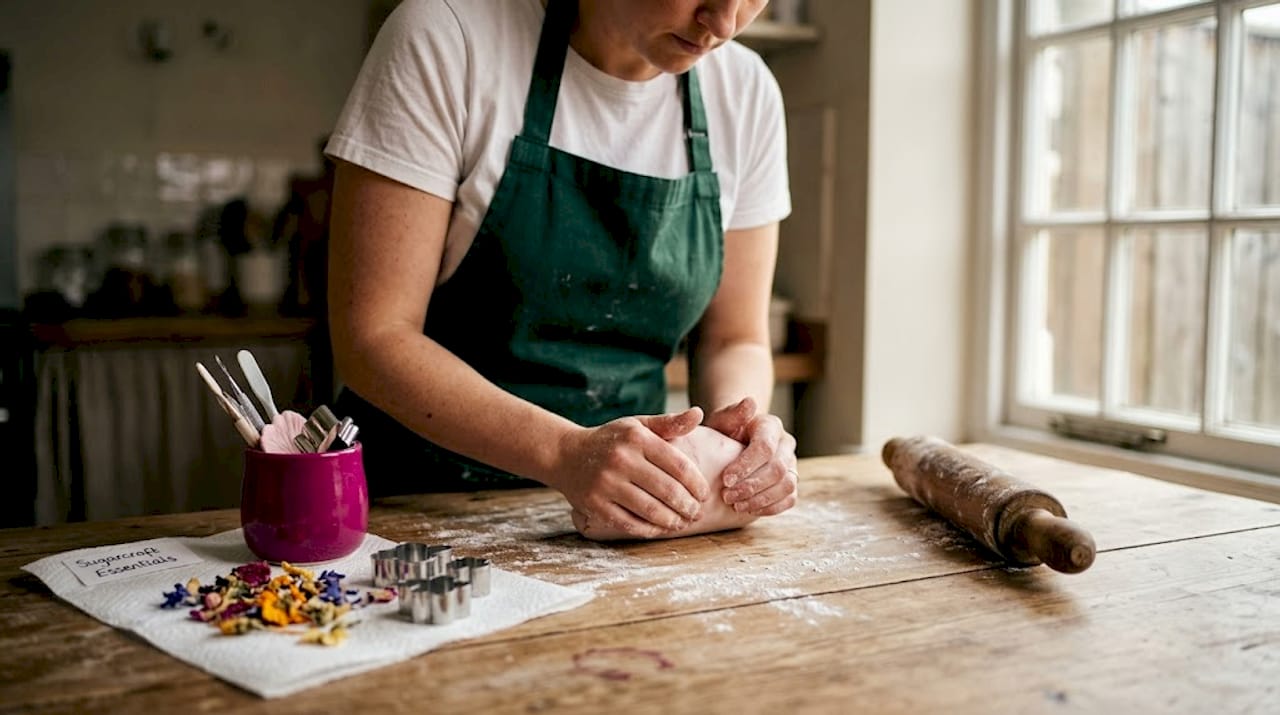
- Gumpaste is a fast-drying, non-edible sugar-based medium used for creating detailed, durable cake decorations like flowers and figurines. It sets hard, making it ideal for thin petals and wired structures, unlike fondant, which remains soft and pliable. Working with gumpaste requires quick precision and proper preparation to prevent it from drying out prematurely.
If you’ve ever stood in a cake decorating shop wondering what the difference is between gumpaste, fondant, and sugar paste, you’re in very good company. These three mediums look almost identical in the packet, yet they behave completely differently once you start working with them. Understanding what is a gumpaste, and how it sits apart from its sugar-based cousins, is one of those things that genuinely changes the quality of your decorating. This guide covers everything: the gumpaste definition, what it’s made from, how it compares to fondant, and how to use it with confidence.
Table of Contents
- Key takeaways
- What is gumpaste, exactly?
- What is gumpaste used for?
- Gumpaste vs fondant: which do you need?
- Practical tips for working with gumpaste
- Gumpaste decoration ideas to inspire you
- My honest take on gumpaste
- Get everything you need at The Vanilla Valley
- FAQ
Key takeaways
| Point | Details |
|---|---|
| Gumpaste dries rock-hard | Unlike fondant, gumpaste sets completely solid, making it perfect for delicate decorations. |
| Not for eating | Gumpaste is non-toxic but unpleasant to consume due to its chalk-like texture when dry. |
| Best for flowers and fine details | Its ability to roll ultra-thin makes it the go-to choice for realistic sugar flowers. |
| DIY gumpaste is possible | Adding Tylose or CMC powder to fondant creates a quick homemade version. |
| Work quickly and in small batches | Gumpaste begins drying the moment it’s exposed to air, so speed and storage matter. |
What is gumpaste, exactly?
Gumpaste is a sugar-based modelling medium used in cake decorating to create decorations that need to be very thin, very detailed, or very durable. The core ingredients are icing sugar and a hardening agent, most commonly gum tragacanth or Tylose (also called CMC powder). These agents give gumpaste its unique elasticity while also causing it to dry incredibly fast and set rock-hard.
The texture when fresh is smooth and slightly stretchy, almost like a very firm, non-sticky dough. You can roll it to paper-thin sheets without it tearing, which makes it totally unlike fondant in practice. Once it dries, the result is rigid and brittle. Pick up a dried gumpaste petal and it feels more like ceramic than food.
You’ll sometimes hear gumpaste called flower paste or petal paste, particularly in the UK. These are simply regional names for the same thing. The “flower paste” name gives you a strong hint about its most popular use.
Gumpaste vs fondant vs sugar paste at a glance
| Feature | Gumpaste | Fondant | Sugar paste |
|---|---|---|---|
| Drying time | Very fast, sets hard | Slow, stays soft | Moderate |
| Texture when dry | Rock-hard and brittle | Soft and pliable | Firm but not brittle |
| Rolls ultra-thin | Yes | No | Partially |
| Best use | Flowers, fine details | Covering cakes | Figurines, toppers |
| Edible and pleasant? | Non-toxic but unpleasant | Yes | Yes |
| Contains hardening agent | Yes (CMC/gum tragacanth) | No | Sometimes |
Fondant dries slowly and stays pliable, which is exactly what you want for a smooth cake covering. Gumpaste does the opposite. Sugar paste sits somewhere between the two and is better suited to simple figurines and toppers where you need a little structure but also some flexibility to work with.
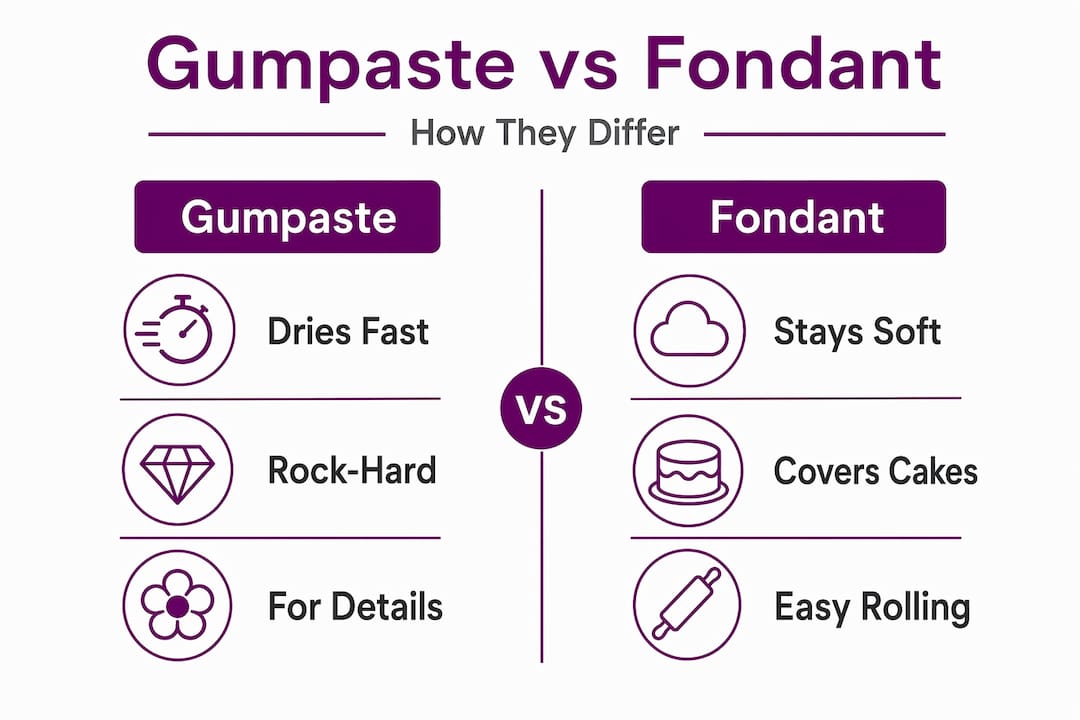
Pro Tip: If you’re new to gumpaste and come from a fondant background, expect it to feel slightly different in your hands. It’s stretchier when fresh and dries much faster than fondant. Give yourself a practice session before tackling a big project.
What is gumpaste used for?
The reason gumpaste has become a staple in professional cake decorating studios is simple: it lets you create things that no other sugar medium can. Gumpaste rolls ultra-thin and dries hard, which opens up a level of realism that fondant and sugar paste simply cannot match.
Here are the most popular uses:
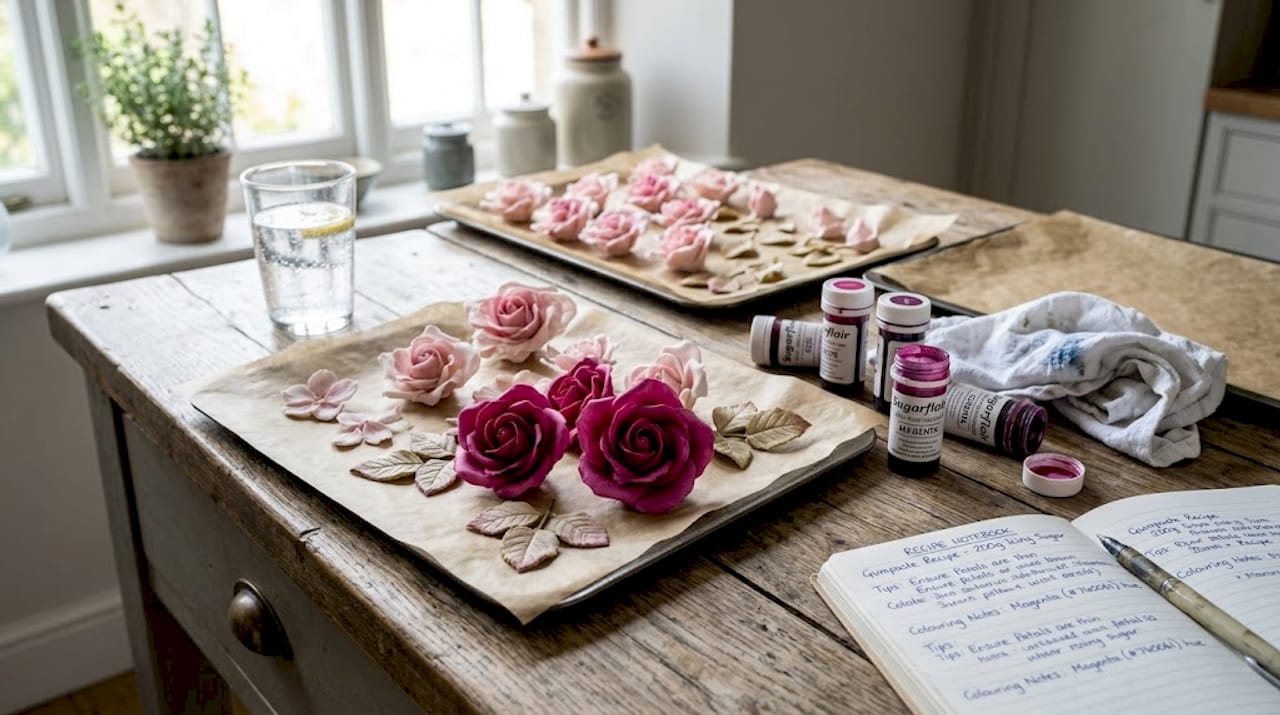
- Sugar flowers. Roses, peonies, sweet peas, ranunculus, and lilies are all achievable with gumpaste. The thin petals hold their shape beautifully once dry and can be assembled into incredibly realistic arrangements. If you want to see stunning sugar flowers in action, there’s a wealth of inspiration to explore.
- Wired decorations. Gumpaste is the only sugar medium that can be wrapped reliably around florist wire. This lets you create freestanding sprays and bouquets that sit above the cake surface rather than lying flat on it.
- Delicate leaves and foliage. Thin leaves with veining detail are achievable in gumpaste using a silicone veiner. The paste picks up the texture crisply, and the dried result is very convincing.
- Butterfly wings and dragonflies. These can be made in gumpaste, dried flat or at an angle, then fixed to the cake.
- Figurines with fine features. Faces, hands, and tiny accessories benefit from the structure gumpaste provides, especially for features that would collapse in softer paste.
- Lettering and plaques. Gumpaste can be cut into neat shapes with fine detail, and once dry, it is durable enough to handle and transport without breaking easily.
Gumpaste has a longer shelf life than fondant because it dries hard and becomes less perishable. This means you can make your sugar flowers weeks in advance, which is enormously helpful when planning for a wedding cake or large celebration cake.
One thing worth saying plainly: gumpaste dries rock-hard and brittle, and most decorators remove gumpaste pieces before eating the cake. It is non-toxic, so if someone does accidentally eat a petal, there’s no risk. It just won’t taste pleasant.
Gumpaste vs fondant: which do you need?
This is the question we get asked more than any other at The Vanilla Valley. The honest answer is that they serve completely different purposes, and choosing between them is not really about preference. It’s about what you’re making.
Fondant is for covering cakes. It rolls smoothly, drapes over tiers without cracking, and stays soft enough for guests to eat. Gumpaste would crack and crumble if you tried to use it as a cake covering because of how fast it dries.
Gumpaste is for decorations. The moment you want to create something thin, detailed, and structurally sound, gumpaste wins.
| Medium | Drying speed | Flexibility | Taste | Cover a cake? | Best for |
|---|---|---|---|---|---|
| Fondant | Slow | Very flexible | Pleasant | Yes | Cake covering, simple shapes |
| Gumpaste | Very fast | Rigid when dry | Unpleasant | No | Flowers, wired work, fine detail |
| Modelling paste | Medium | Moderate | Good | No | Figurines, toppers, 3D shapes |
Modelling paste, worth a mention here, is often made by blending fondant and gumpaste together. It gives you more working time than pure gumpaste but more structure than pure fondant. It’s the middle ground for toppers and figurines.
Can you make gumpaste from fondant?
Yes, and many decorators do exactly this. Adding 1 to 2 teaspoons of Tylose or CMC powder per pound of fondant creates a quick DIY gumpaste. It’s especially useful for vegan bakers, since many commercial gumpaste recipes contain egg white. The result is slightly less stable than professional gumpaste, but perfectly workable for most projects.
For everything you need to know about using CMC in your baking, The Vanilla Valley’s Tylo powder guide is a brilliant place to start.
Pro Tip: When making DIY gumpaste from fondant and Tylose, knead the powder in gradually and then rest the paste in a sealed bag for 30 minutes. This gives the CMC time to activate properly and you’ll get a much smoother result.
Practical tips for working with gumpaste
Getting your preparation right
Gumpaste begins to dry immediately when exposed to air. This is its greatest strength and its biggest challenge. Here’s how to work with it rather than against it:
- Work in small batches. Only take out the amount of paste you need for the next few minutes. Keep the rest sealed tightly in a plastic bag or wrapped in cling film.
- Use a light smear of white fat on your hands. This prevents sticking without adding moisture, which can change the drying properties of the paste.
- Roll on a non-stick board. A smooth, lightly greased non-stick board is your best friend. Avoid using too much icing sugar to dust your surface, as this dries the paste out even faster.
- Cut away any crusty edges. Do not knead crusty bits back in to your paste. Simply cut them away and discard. Kneading crust back in creates lumpy, uneven texture that will show in your finished petals.
- Use petal and leaf cutters with veiners. Gumpaste is designed to work with specialist tools. A silicone veiner picks up detail that you cannot achieve by hand, and the structured cutters give you clean, professional edges.
- Dry petals in shape. Place freshly cut petals in apple trays, spoon rests, or flower formers to dry in a cupped, realistic shape rather than flat.
Making gumpaste at home
If you want to make gumpaste from scratch, a heavy-duty stand mixer is necessary. The dough becomes extremely stiff once the Tylose or CMC is incorporated, and a hand mixer will struggle and potentially burn out. This is one area where the right equipment genuinely makes a difference to your results.
Pro Tip: Made too much gumpaste? Wrap it well, place it in a sealed container, and store it in a cool, dark cupboard rather than the fridge. Fridges introduce moisture, which can make the paste sticky. Most commercial gumpaste will keep for several months this way.
Gumpaste decoration ideas to inspire you
Once you understand the medium, the creative possibilities are genuinely exciting. Here’s a taste of what you can make:
- Full sugar flower arrangements: Roses with individually wired petals, open peonies, ranunculus, and dahlias are all achievable once you have the right cutters and a little practice.
- Realistic leaves and foliage: From ivy to eucalyptus to individual rose leaves with veining, gumpaste foliage adds real depth to floral arrangements.
- Butterfly and dragonfly wings: Dried flat on acetate and then painted with edible lustre dusts. Paired with colour dusting techniques, these can look extraordinary.
- Wired floral sprays for wedding cakes: A classic use that never goes out of fashion. Learning to make sugar flowers for wedding cakes is one of the most rewarding skills in cake decorating.
- Delicate cake toppers: Fairy-tale figures, animals, and abstract shapes with fine detail all work beautifully in gumpaste.
Experimenting with colour is part of the joy here. Gumpaste takes gel food colouring well when kneaded in before use, and can also be painted with edible paints or dusted once dry for incredible depth and realism.
My honest take on gumpaste
Working with gumpaste for the first time can feel a little intimidating, and I want to be straight with you about that. The fast drying time catches everyone out at the beginning. I’ve seen so many first attempts where the paste has dried at the edges before the decorator has even finished rolling it out.
The advice I wish someone had given me early on: slow down before you start, not during. Get everything prepared before you open the packet. Have your board ready, your cutters laid out, your former positioned. The actual shaping needs to be quick, but the preparation can be methodical.
The other thing beginners underestimate is how much the tools matter. A well-designed silicone veiner will give you results that look professional almost immediately. Without the right tools, gumpaste just becomes a frustrating battle. Invest in a few quality cutters and veiners before your first serious project, and you’ll be amazed at what you can produce.
Gumpaste rewards patience and practice more than almost any other decorating medium. Your first rose might not look like the photos. Your fifth one will be much better. Your twentieth will genuinely surprise you. That progression is one of the things that makes it so satisfying to work with.
— steven
Get everything you need at The Vanilla Valley
Ready to get started with gumpaste? The Vanilla Valley has everything you need to bring your ideas to life.
From quality gumpaste and Tylose powder to specialist cutters, veiners, and storage solutions, we’ve been supplying bakers and cake decorators across the UK since 2009. Whether you’re making your very first sugar rose or planning an elaborate wedding cake flower spray, our cake decorating supplies shop has you covered. Pop into our North Cardiff store or order online with fast delivery options. We love seeing what our community creates, and we’re always here to help you find exactly what you need.
FAQ
What is gumpaste made of?
Gumpaste is made from icing sugar combined with a hardening agent, most commonly gum tragacanth or Tylose (CMC) powder. Some recipes also include egg white or glucose syrup to improve pliability.
Is gumpaste the same as fondant?
No. Fondant dries slowly and stays pliable, making it ideal for covering cakes. Gumpaste dries very fast and sets completely hard, making it the right choice for flowers, wired decorations, and fine details.
Can you eat gumpaste decorations?
Gumpaste is non-toxic, but most decorators remove it before serving the cake. Once dry, it has a rock-hard, chalk-like texture that is unpleasant to chew, so it’s really intended as decoration rather than food.
How do you stop gumpaste drying out too quickly?
Work in small batches and keep the rest of your paste tightly wrapped in cling film or a sealed bag. If any crusty edges form, cut them away rather than kneading them back in, as this preserves the smooth texture of the remaining paste.
Can I make gumpaste from fondant?
Yes. Adding 1 to 2 teaspoons of Tylose or CMC powder per pound of fondant creates a DIY gumpaste that works well for most projects. It’s a great option for vegan decorators and those who don’t have professional gumpaste to hand.