
How long do cakes last? Essential storage guide for freshness
TL;DR:
- Proper cake storage hinges on understanding ingredients, temperature, and wrapping techniques to prevent dryness and spoilage. Different cake types require specific methods, from room temperature for simple sponges to refrigeration for cream cheese frostings and freezing for long-term preservation. Consistent, correct techniques are more effective than gadgets in extending a cake’s freshness and taste.
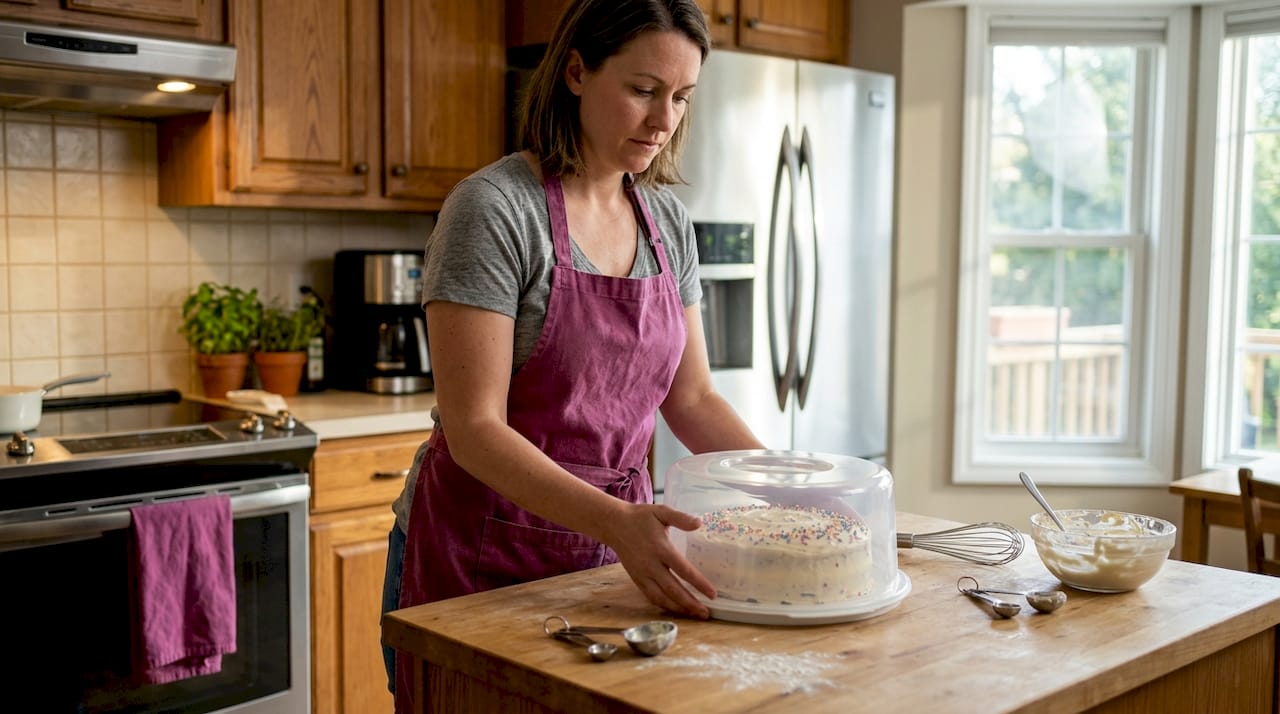
You spend hours creating the perfect cake. The layers are even, the frosting is smooth, and the decorations are just right. Then, a day or two later, you slice into it and find dry crumbs or a suspicious smell. It’s a genuinely gutting moment, and one that happens to bakers of every level. The good news is that it’s almost always avoidable. How you store a cake matters just as much as how you bake it, and with the right techniques, you can keep your creations tasting amazing for days or even months.
Table of Contents
- Key factors affecting cake shelf life
- Step-by-step guide to storing cakes
- Special cases: fondant, buttercream, and fruit cakes
- Troubleshooting and common storage mistakes
- The real secret to extending cake life: why technique matters more than gadgets
- Shop everything you need for perfect cake storage
- Frequently asked questions
Key Takeaways
| Point | Details |
|---|---|
| Shelf life depends on filling | Cakes with perishable fillings last just 2-5 days, while simple sponge cakes can last up to a week at room temperature. |
| Store in airtight conditions | Using an airtight container and proper wrapping prevents cakes from drying out and extends freshness. |
| Freezing preserves cakes longer | Freezing solid cakes extends their shelf life to 2-3 months—just remember to wrap thoroughly and thaw gently. |
| Know special case exceptions | Fruit cakes with alcohol can last weeks unrefrigerated, but cakes with fresh fruit need immediate chilling. |
Key factors affecting cake shelf life
Every cake ages differently, and understanding why helps you make smarter storage decisions from the moment it comes out of the oven. It’s not just about popping it in the fridge and hoping for the best.
The biggest variable is what’s in or on the cake. A simple sponge with no filling can sit happily at room temperature for a couple of days. Add a layer of fresh whipped cream or custard, and the rules change completely. Cakes with perishable frostings like cream cheese, whipped cream, or custard must be refrigerated immediately and will last around 2 to 5 days in the fridge. That’s a significant difference, and ignoring it is one of the most common storage mistakes bakers make.
Temperature, moisture, and air exposure are the other big three. Warm kitchens speed up bacterial growth and dry out sponge faster. Moisture without proper wrapping creates condensation, which makes surfaces soggy. Air exposure stales cake quickly, turning a soft crumb into something that resembles a biscuit. Good storing cakes for freshness practice addresses all three at once.
Here’s a quick reference to help you plan storage based on cake type:
| Cake type | Recommended storage | Expected shelf life |
|---|---|---|
| Plain sponge (unfrosted) | Room temperature, airtight container | 3 to 4 days |
| Buttercream-frosted cake | Room temperature (cool room) | 2 to 3 days |
| Cream cheese frosted cake | Refrigerated, airtight | 2 to 5 days |
| Fresh fruit topped cake | Refrigerated | 1 to 2 days |
| Fondant-covered cake | Cool, dry place, loosely covered | 3 to 5 days |
| Traditional fruit cake | Room temperature, wrapped | Several weeks |
| Frozen cake (plain or buttercream) | Freezer, double-wrapped | 2 to 3 months |
A few other factors that quietly influence cake storage shelf life include:
- Sugar content: Higher sugar recipes tend to retain moisture better, extending freshness slightly.
- Fat content: Cakes rich in butter or oil stay softer longer than leaner sponges.
- Added syrups: Brushing layers with simple syrup before assembly creates a moisture barrier that genuinely makes a difference.
- Humidity levels: In very humid kitchens, even well-wrapped cakes can develop surface stickiness or mould faster.
Step-by-step guide to storing cakes
Having outlined the main factors, it’s time for a step-by-step approach to keeping any cake at its best. There are three main methods: room temperature, fridge, and freezer. Each suits different cakes and timescales.
Storing at room temperature
- Allow the cake to cool completely before covering. Trapping steam causes soggy layers and early mould.
- If the cake is frosted, allow the frosting to set for at least 30 minutes before covering.
- Place the cake in an airtight cake box or tin. If you don’t have one, place a large bowl inverted over the cake on a plate.
- Keep it away from direct sunlight, the cooker, or any heat source.
- Consume within 2 to 3 days for best texture and flavour.
Storing in the fridge
Proper refrigeration means using an airtight container, placing parchment between layers and frosting if stacking, and wrapping to prevent drying. Crucially, always allow the cake to come back to room temperature before serving, otherwise the crumb feels dense and the flavour is muted.
- Let the cake cool fully. Never refrigerate a warm cake.
- If frosted, chill uncovered for 20 minutes to firm up the frosting first.
- Wrap loosely in baking parchment, then cover with cling film or place inside a cake box.
- Store in the fridge away from strong-smelling foods, as cakes absorb odours easily.
- Remove 30 to 60 minutes before serving to let it come back to room temperature.
Freezing for longer storage
Freezing extends cake life to 2 to 3 months when done correctly. Cool the cake completely, double-wrap in plastic film and foil or seal in a freezer bag, and thaw at room temperature while still wrapped to prevent condensation soaking the sponge.
- Cool the cake entirely, ideally overnight.
- Wrap individual layers or the whole cake tightly in two layers of cling film.
- Add a layer of foil over the top, or place inside a sealed freezer bag.
- Label with the date and cake type.
- To thaw, move from the freezer to the counter while still wrapped. Allow 2 to 4 hours for slices or overnight for whole cakes.
Here’s how the three methods compare:
| Method | Duration | Key pointers | Best suited for |
|---|---|---|---|
| Room temperature | Up to 3 days | Airtight, cool, dry spot | Buttercream, plain sponge |
| Refrigerator | 2 to 5 days | Wrapped, parchment-lined, re-warm before serving | Dairy fillings, cream cheese |
| Freezer | Up to 3 months | Double-wrapped, thaw whilst wrapped | Plain sponges, buttercream layers |
Safety note: Any cake containing dairy-based frostings, custard, or fresh cream must not be left at room temperature for extended periods. If in doubt, refrigerate promptly.
Pro Tip: When refrigerating a frosted cake, loosely tent the top with foil or use an inverted bowl placed gently over it. This protects the frosting without pressing down and smudging all your hard work.
For advice on packaging cakes for storage, particularly if you’re gifting or transporting them, it’s worth checking how to line and seal cake boxes properly.
Special cases: fondant, buttercream, and fruit cakes
Beyond basic methods, some cakes require extra attention to get storage just right. The type of covering or filling you use fundamentally changes the rules.
Fondant-covered cakes
Fondant behaves differently to other frostings in storage. Refrigerating a fondant cake can cause condensation to form on the surface as it warms back up, leaving the fondant sticky, streaky, or even spotted. The better approach is to keep fondant cakes in a cool, dry room, loosely covered, and away from humidity.
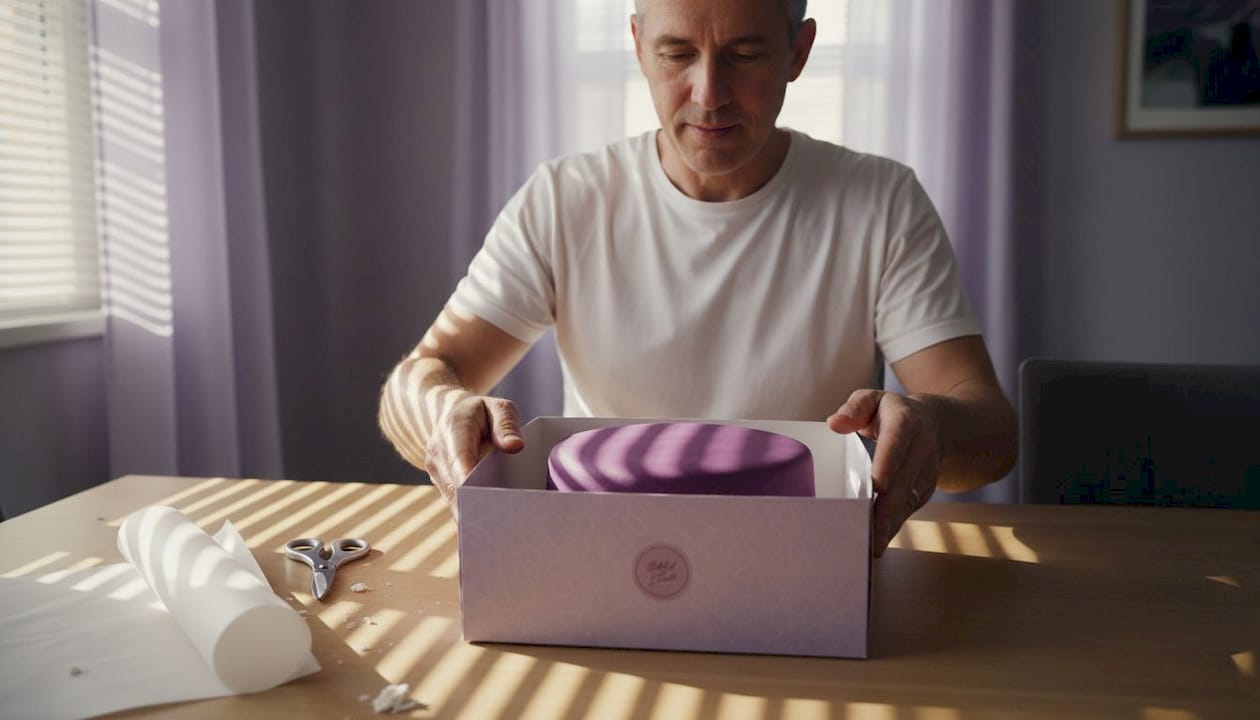
If you must refrigerate a fondant cake because of perishable fillings inside, do so, but keep it inside a cake box inside the fridge. Then allow plenty of time for it to come up to room temperature without disturbing the surface. Check out our fondant storage tips for a deeper look at keeping your fondant in perfect condition.
Buttercream-frosted cakes
Pure buttercream made with butter and icing sugar is shelf-stable for up to two days at room temperature in a cool kitchen. It firms up significantly in the fridge, so if you do refrigerate it, always serve it at room temperature. Our buttercream storage guide covers this in more detail, including Swiss meringue and Italian meringue variations which behave differently.
Traditional fruit cakes versus fresh fruit cakes
This is where things get really interesting. Traditional fruit cakes can last weeks at room temperature thanks to the natural preserving effect of alcohol, dried fruits, and high sugar content. A well-made Christmas cake, properly wrapped in marzipan, can mature over months. That’s almost the opposite of every other cake type.
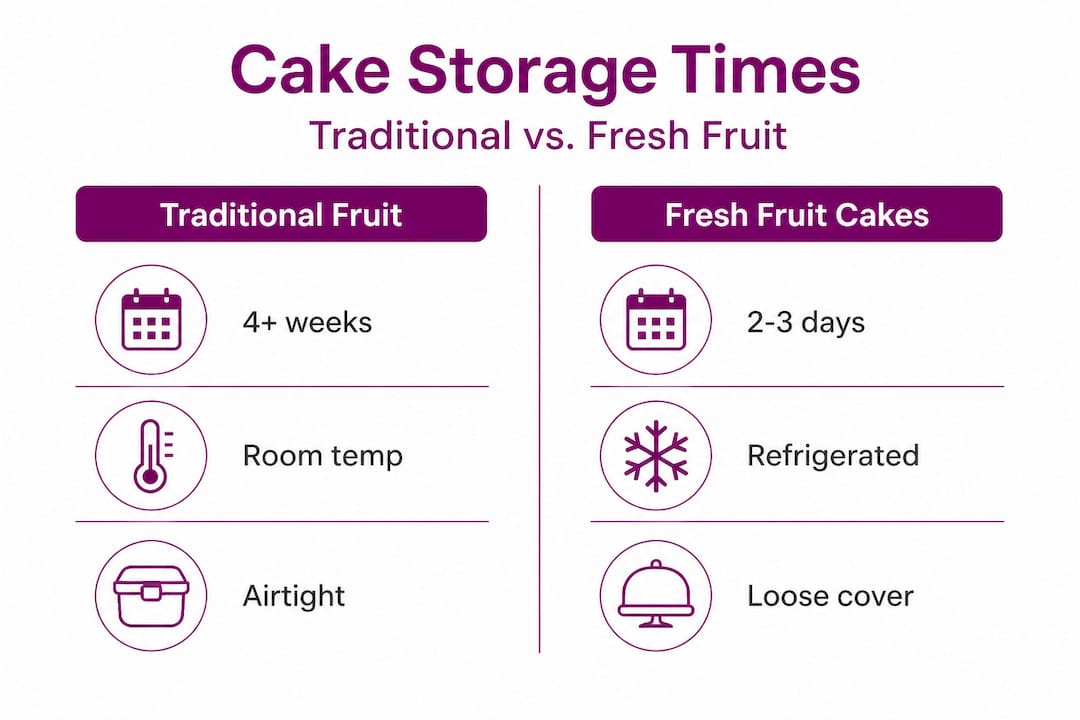
Fresh fruit cakes, by contrast, need to go straight into the fridge. Fresh berries, sliced mango, or any moist fruit on top of a cake will deteriorate within hours at room temperature and can introduce moisture that encourages mould throughout the whole cake.
A word on cream cheese frosting
There’s a genuine debate in baking circles around cream cheese frosting. Official food safety guidance recommends a strict two-hour room temperature limit, while many experienced pro bakers leave cream cheese frosted cakes out for up to 24 hours based on their own experience and kitchen conditions. Our honest advice? Follow the safety guidelines, especially if you’re serving to children, elderly guests, or those who are immunocompromised. It’s simply not worth the risk.
Key storage reminders for special cases:
- Fondant: Cool, dry room, loosely covered, avoid the fridge if possible.
- Buttercream: Room temperature up to two days, serve at room temperature even if refrigerated.
- Cream cheese or dairy frosting: Refrigerate immediately, always.
- Traditional fruit cake: Cool, dry cupboard, well wrapped, up to several weeks.
- Fresh fruit topped cake: Fridge only, consume within one to two days.
Pro Tip: If you’re making a fondant cake in advance for an event, store it undecorated in the fridge, then apply the fondant covering and decorations the day before. This keeps the filling safe without risking the fondant finish.
Troubleshooting and common storage mistakes
Even the best techniques can fall victim to small errors. Here’s how to spot and fix or avoid them.
The most common mistake is wrapping a cake while it’s still warm. The steam created inside the wrapping has nowhere to go, which leads to soggy spots and significantly speeds up mould growth. Always cool completely first. It feels like a time-saver to wrap early, but it genuinely isn’t.
The second most common issue is putting a cake straight into the fridge uncovered. Without protection, the cold air pulls moisture directly out of the crumb, leaving you with a dry, dense sponge within 24 hours. Always wrap or box first.
Signs that a cake is no longer safe to eat:
- Visible mould: Even a small spot of mould on the surface means the whole cake should go. Mould spreads through the interior before it’s visible on the outside.
- Off or sour smell: If it smells even slightly wrong, trust your nose. This is especially true for cream cheese or fresh cream cakes.
- Slimy or very wet texture: This points to bacterial growth, particularly in cream or custard layers.
- Unusual colour change: Greyish sponge or discolouration in the frosting is a warning sign.
What if the cake is just a bit dry rather than actually spoiled? There’s a genuinely useful fix. Brush individual slices with a little simple syrup or even a thin layer of jam before serving. It revives the moisture in the crumb beautifully and most people won’t know the difference.
For a full breakdown of what to avoid, our guide on avoiding cake storage mistakes is worth a read, particularly if you’re storing cakes for events or selling to customers.
Pro Tip: If a refrigerated cake slice feels a little dry or dense, place it on a microwave-safe plate and warm it for 8 to 10 seconds only. This gently softens the crumb and brings back some of that just-baked texture without overheating the frosting.
The real secret to extending cake life: why technique matters more than gadgets
Here’s something we genuinely believe after years of working with bakers: the best storage results come from consistent technique, not expensive equipment. We see bakers investing in specialist cake fridges or vacuum-seal gadgets when the real gains come from getting the fundamentals right every single time.
Take the cream cheese frosting debate as a good example. The difference between official guidance and what experienced pro bakers actually do in practice highlights something important. Pro bakers aren’t being reckless; they’ve built up an understanding of their specific ingredients, kitchen temperatures, and timescales. But that knowledge took years to develop. Until you have that depth of experience, the guidelines exist to protect you and the people eating your cakes.
The same principle applies to temperature more broadly. Room temperature storage genuinely produces better flavour and texture for most cakes. Cold air suppresses the fat molecules in buttercream and sponge, making everything taste a little flat. Refrigerating out of habit rather than necessity is one of the sneaky ways bakers accidentally make their own cakes taste worse.
Our advice is always to ask: does this cake actually need to be in the fridge? If it has a fresh dairy filling or it’s a warm day above 20 degrees Celsius, yes. If it’s a simple buttercream sponge and the kitchen is cool, room temperature is the better call. Check out our practical cake freshness tips for a full guide on making that judgement call with confidence.
The tools matter far less than the habit. Wrapping carefully, cooling fully, and serving at the right temperature will outperform any fancy gadget every time.
Shop everything you need for perfect cake storage
Ready to put these storage methods into practice? Having the right kit genuinely makes a difference, especially when you’re storing decorated cakes or preparing in advance for an event or client order.

At The Vanilla Valley, we stock a wide range of storage containers and cake supplies to help you keep your cakes in perfect condition from the moment they leave the oven to the moment they’re served. From sturdy cake boxes and boards to baking parchment, airtight tins, and all the decorating essentials you need, we’ve been supplying bakers across the UK since 2009. Whether you’re a passionate hobbyist or running a small cake business, you’ll find everything you need in one place, with free delivery options and next day dispatch available.
Frequently asked questions
Can you freeze any type of cake?
Most cakes freeze well for 2 to 3 months when double-wrapped and properly sealed, though cakes with delicate whipped cream or meringue toppings may separate or collapse after thawing and are best frozen without those elements.
How can I tell if a cake is no longer safe to eat?
Discard any cake showing visible mould, an off or sour smell, or a slimy texture, even if it’s within the expected storage window, as these are clear signs of spoilage.
How long can buttercream cakes stay at room temperature?
Buttercream cakes are generally safe at room temperature for up to two days, provided the room is cool and the cake is kept in an airtight container away from direct heat or sunlight.
Does fondant help cakes last longer?
Fondant does help seal moisture into the sponge, acting almost like a protective layer, but the cake still needs to be kept in a cool, dry spot inside an airtight container to stay fresh.
What’s the best way to wrap cakes for storage?
Use baking parchment between layers and between frosting and wrapping, then cover tightly with cling film or foil and store in an airtight container to lock in moisture and protect texture.
Recommended
- How to store cakes for lasting freshness and flavour - The Vanilla Valley
- How to store fondant for lasting freshness and usability - The Vanilla Valley
- Baking Goods Storage: Maximising Freshness & Shelf Life - The Vanilla Valley
- Make Edible Decorations Last Longer for Stunning Cakes - The Vanilla Valley
- How to keep cocktails fresh: shelf life and storage tips – Cocktails by Nina