
How long does buttercream last? Keep it fresh with proven tips
TL;DR:
- The shelf life of buttercream varies by type, with American lasting the longest at room temperature.
- Proper storage in airtight containers and refrigeration can extend buttercream’s freshness up to a week.
- Adding perishable ingredients like fruit or dairy significantly shortens buttercream’s safe consumption window.
Buttercream is one of those things that looks simple but rewards the bakers who really understand it. Many of us assume it’ll last as long as the cake itself, but that’s not always the case. The type of buttercream you make, the ingredients you use, and how you store it all play a huge role in how long it stays fresh, safe, and ready to pipe. Whether you’re planning a celebration cake for the weekend or batch-making for a busy baking schedule, getting your storage right is everything. This guide covers exactly what you need to know.
Table of Contents
- Understanding the types of buttercream and their shelf life
- The science of buttercream spoilage: What really shortens its lifespan?
- How to store buttercream for maximum freshness and food safety
- Buttercream on cakes and cupcakes: How long will your baked goods stay fresh?
- Our take: Why freshness and flexibility matter most with buttercream
- Find everything you need for buttercream success at The Vanilla Valley
- Frequently asked questions
Key Takeaways
| Point | Details |
|---|---|
| Buttercream shelf life varies | Type and ingredients determine if buttercream lasts from a few days to over a week. |
| Storage is critical | Airtight containers and refrigeration extend freshness and reduce spoilage. |
| Room temperature limits | Most buttercreams survive 1-2 days at room temperature in a cool kitchen. |
| Check for spoilage signs | Separation, odour, or mould indicate buttercream should not be used. |
| Freezing is an option | Buttercream can be frozen for months if needed, then rewhipped before using. |
Understanding the types of buttercream and their shelf life
Not all buttercream is created equal. The style you choose has a direct impact on how long it lasts, and knowing the difference can save you from a last-minute disaster. Different buttercreams contain varying ratios of fat, sugar, and egg, which directly impacts shelf life and how they respond to storage conditions.
Here’s a quick comparison to help you plan:
| Buttercream type | Main ingredients | Room temp shelf life | Fridge shelf life | Sensitivity |
|---|---|---|---|---|
| American | Butter, icing sugar | 2 to 3 days | Up to 7 days | Low |
| Swiss meringue | Egg whites, sugar, butter | 1 to 2 days | 5 days | Medium |
| Italian meringue | Egg whites, sugar syrup, butter | 1 to 2 days | 5 days | Medium |
| French | Egg yolks, sugar syrup, butter | 1 day | 3 to 4 days | High |
| German | Custard, butter | 1 day | 3 to 4 days | High |
American buttercream is by far the most popular choice for British home bakers, and it’s easy to see why. The high sugar content acts as a natural preservative, giving it a longer stable life at room temperature. It’s forgiving, simple to make, and holds up well in a typical kitchen environment.
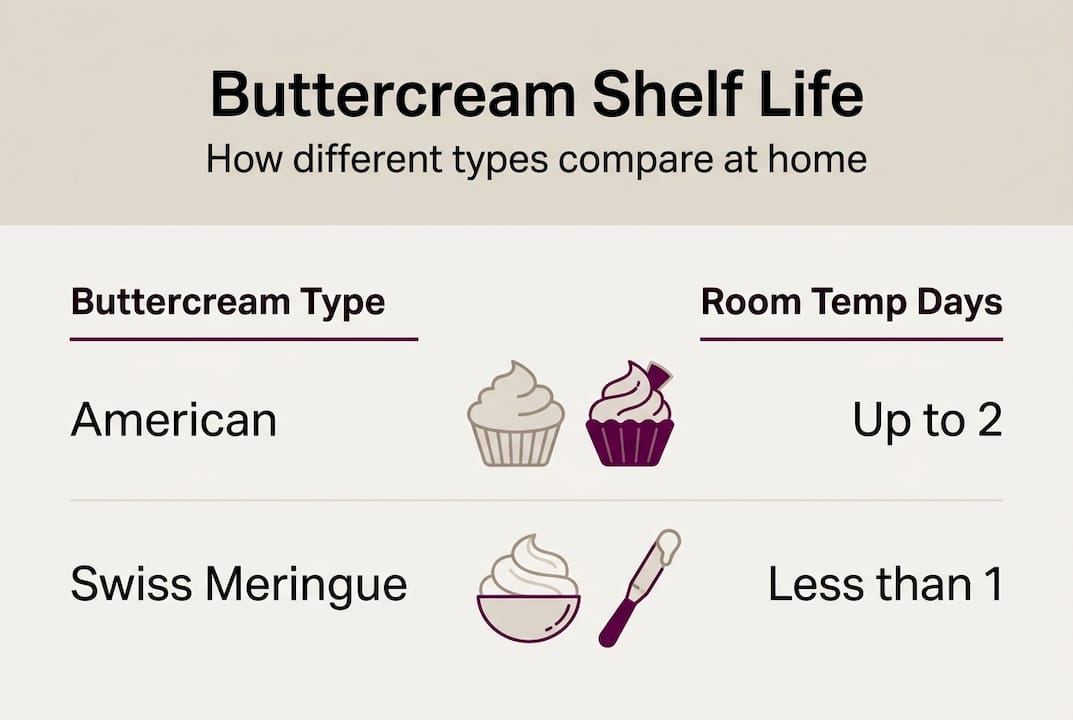
Meringue-based styles like Swiss and Italian are a different story. They’re made with cooked egg whites and far less sugar, which makes them silkier and more refined in flavour. But that also means they’re more sensitive to warmth and humidity. They really do need to go in the fridge if you’re not using them within a few hours.
For a deeper look at which style suits your project, our buttercream style guide breaks it all down beautifully.
- American buttercream: Best for beginners, longest shelf life, holds colour well
- Swiss meringue: Smooth and less sweet, but needs careful storage
- Italian meringue: Stable when made correctly, but time-sensitive once prepared
- French buttercream: Rich and indulgent, but the most perishable of the lot
- German buttercream: Custard-based, lovely flavour, but refrigerate promptly
Pro Tip: If you’re decorating a cake a day or two in advance, American buttercream is your most reliable option. Save the meringue-based styles for same-day finishing or very short windows.
The science of buttercream spoilage: What really shortens its lifespan?
Knowing the type of buttercream is only the beginning. Understanding what makes it spoil quickly is just as important, especially if you’re baking for others.
The biggest culprits are warmth, humidity, and exposure to air. Buttercream left uncovered in a warm kitchen will start to dry out, crust over, or even begin to separate. In summer, this can happen faster than you’d expect. Buttercream stored at room temperature should be consumed within 2 to 3 days to avoid spoilage, and that window shrinks considerably in warmer conditions.
Raw or lightly cooked eggs are another factor. French and classic Swiss meringue buttercreams contain egg that hasn’t been fully cooked, which makes them less stable at room temperature. Bacteria thrive in warm, protein-rich environments, so these styles need to be refrigerated promptly.
Adding perishable ingredients is where many bakers get caught out. Dairy or fresh fruit additions significantly reduce shelf life, often bringing it down to just 1 to 2 days even in the fridge. If you’ve stirred cream cheese, fresh lemon curd, or strawberry puree into your buttercream, treat it like a fresh dairy product.
“The moment you add anything fresh or dairy-based to your buttercream, the clock starts ticking much faster. Always label your containers with the date and ingredients so you know exactly what you’re working with.”
Here’s a quick reference for spoilage risk by ingredient:
| Ingredient added | Impact on shelf life |
|---|---|
| Fresh fruit puree | Reduces to 1 to 2 days |
| Cream cheese | Reduces to 1 to 2 days |
| Lemon curd | Reduces to 2 to 3 days |
| Flavour extracts | Minimal impact |
| Gel food colouring | No impact |
Signs your buttercream has gone off include a sour or rancid smell, visible separation where the fat pools away from the sugar, a grainy or slimy texture, or any sign of mould. If you spot any of these, don’t taste-test it. Just discard it.
For common texture and quality issues that don’t involve spoilage, our guide to fixing buttercream problems is a brilliant resource to bookmark.
How to store buttercream for maximum freshness and food safety
With spoilage factors in mind, proper storage becomes your main defence for longevity and safe consumption. The good news is that storing buttercream well isn’t complicated. It just takes a little planning.
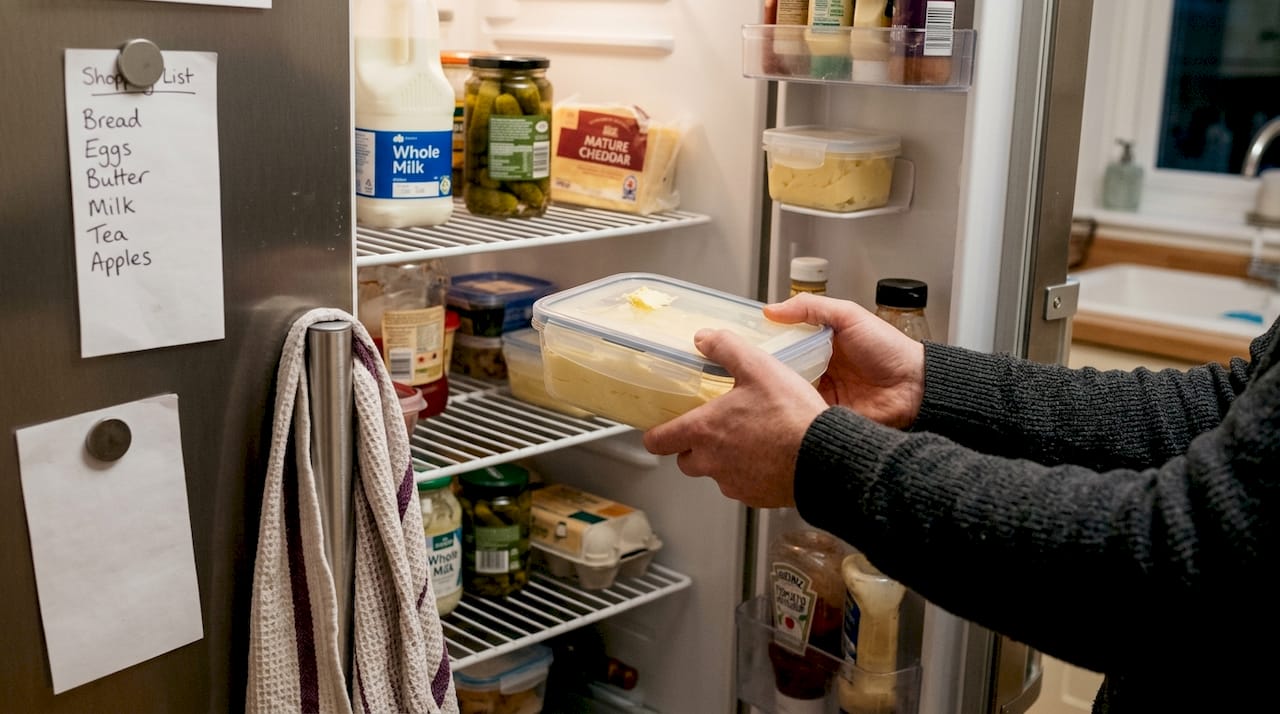
Airtight storage can extend fridge life to up to 7 days and freezer life to 2 to 3 months for most classic buttercreams. That’s a genuinely useful window if you’re working ahead for events.
Here’s how to do it properly:
- Cool it down first. Never seal warm buttercream in a container. Let it reach room temperature to avoid condensation forming inside the lid.
- Choose the right container. Plastic containers with tight-fitting lids are ideal. Avoid glass in the freezer as it can crack. A well-sealed plastic tub or a zip-lock freezer bag works brilliantly.
- Press out the air. If using a bag, squeeze out as much air as possible before sealing. For tubs, press a layer of cling film directly onto the surface of the buttercream before putting the lid on.
- Label everything. Write the type of buttercream, the date made, and any added ingredients. This is especially important if you’re batch-making different flavours.
- Freeze in portions. If you’re freezing, divide into usable amounts rather than one large block. This means you only thaw what you need.
- Thaw gently. Move frozen buttercream to the fridge the night before you need it, then bring it to room temperature before rewhipping.
“Rewhipping is the secret to bringing cold buttercream back to life. A few minutes in the stand mixer and it’ll look and feel as good as the day you made it.”
Pro Tip: Always use clean utensils when scooping buttercream from a container. Double-dipping a dirty spatula introduces bacteria and can shorten the shelf life significantly.
For similar advice on preserving your cake coverings, our fondant storage advice is well worth a read too.
Buttercream on cakes and cupcakes: How long will your baked goods stay fresh?
Once you’ve prepared and stored buttercream properly, the next challenge is working out how long your completed bakes will still taste and look their best.
Cakes with buttercream can be left at room temperature for 1 to 2 days if there are no perishable fillings, or 5 to 7 days in the fridge, depending on style and environment. That’s a useful baseline, but there are several factors that shift this window.
- Room temperature: Fine for 1 to 2 days in a cool kitchen. Keep the cake covered with a cake dome or loosely tented with foil to prevent the buttercream from drying out.
- Fridge: Up to 5 to 7 days for a plain buttercream cake. Always bring the cake back to room temperature before serving so the buttercream softens and the sponge isn’t dry.
- Freezer: Buttercream-covered cakes freeze well for up to 3 months. Freeze uncovered first until the buttercream is firm, then wrap tightly in cling film and foil.
- Summer heat: In warmer months, room temperature storage is risky. Buttercream can melt, slide, and spoil faster. The fridge is always the safer bet from May through September.
- Fruit fillings: Fresh fruit layers inside a cake reduce the safe window to 2 to 3 days in the fridge.
Decorative elements matter too. Sugar flowers, sprinkles, and fondant details are generally fine, but anything fresh or cream-based will shorten the safe window. Always think about the most perishable ingredient in your cake when calculating how long it’ll last.
Pro Tip: If you’re making a cake for a Saturday celebration, bake on Thursday, fill and crumb-coat on Friday, and finish decorating on Saturday morning. This approach keeps everything fresh and gives you time to fix anything that needs attention.
For advice on keeping your colours vibrant through storage, our guide to buttercream colouring advice is incredibly helpful. And if you want to perfect your finish before the cake goes in the fridge, our tips on perfect buttercream texture will set you up beautifully.
Our take: Why freshness and flexibility matter most with buttercream
Here’s our honest insight, gained from working with hundreds of bakers and thousands of cakes over the years. Most guides focus purely on the numbers: how many days, what temperature, which container. And those facts absolutely matter. But what we’ve seen time and again is that the bakers who get the best results are the ones who plan their storage around their project, not the other way around.
Experienced decorators always factor in shelf life when they’re planning a detailed cake. They choose their buttercream style based on when the cake will be eaten, not just how it tastes. They batch-make and freeze with intention. They give themselves room to fix, adjust, and decorate without rushing.
Storage isn’t just about safety. It’s about creative freedom. When you know your buttercream is fresh and ready, you can focus on the fun part. Our guide to creative buttercream techniques is a great next step once your storage game is sorted.
Find everything you need for buttercream success at The Vanilla Valley
If you’re looking to put these tips into practice, we’d love to help you get there. At The Vanilla Valley, we stock a brilliant range of tools and accessories for every stage of your baking journey, from mixing and storing to decorating and presenting.

Whether you need airtight storage containers, food-safe wrapping, gel colours that won’t affect your buttercream’s shelf life, or decorating tools to make the most of a freshly made batch, we’ve got you covered. And if your buttercream isn’t behaving as expected, our guide to troubleshooting grainy buttercream is a brilliant place to start. Pop into our North Cardiff store or browse online. We’re always happy to help.
Frequently asked questions
Can you leave buttercream out overnight?
Most buttercreams can be left out overnight if the kitchen is cool and no perishable ingredients are added. American buttercream is generally safe at room temperature for 1 to 2 days unless it’s especially warm, but always err on the side of caution in summer.
How can you tell if buttercream has gone off?
Visible spoilage and unpleasant odours mean your buttercream is no longer safe to use. Look out for a sour smell, separation of fats, or any sign of mould or unusual discolouration.
Does colouring or flavouring affect how long buttercream lasts?
Most gel colours and standard flavour extracts have no meaningful impact on shelf life. However, dairy and fresh fruit additions reduce buttercream’s safe storage time to 1 to 2 days, so keep that in mind when experimenting with flavours.
Can you freeze leftover buttercream and use it later?
Absolutely. Most classic buttercream stores well in the freezer for 2 to 3 months in a tightly-sealed container. Thaw overnight in the fridge and rewhip before use for the best results.
Is it safe to eat buttercream made with raw eggs?
Meringue-style buttercreams made with pasteurised eggs are safe to eat, but unpasteurised raw eggs carry a risk and should be avoided when baking for young children, pregnant women, or anyone with a compromised immune system.
Recommended
- How to Colour Buttercream Without Ruining the Texture Easily - The Vanilla Valley
- How to store fondant for lasting freshness and usability - The Vanilla Valley
- How to colour buttercream without changing texture in 2026 - The Vanilla Valley
- How to Store Sugarpaste for Freshness and Easy Use - The Vanilla Valley