
Why Is My Buttercream Grainy? 70% of Bakers Get It Wrong
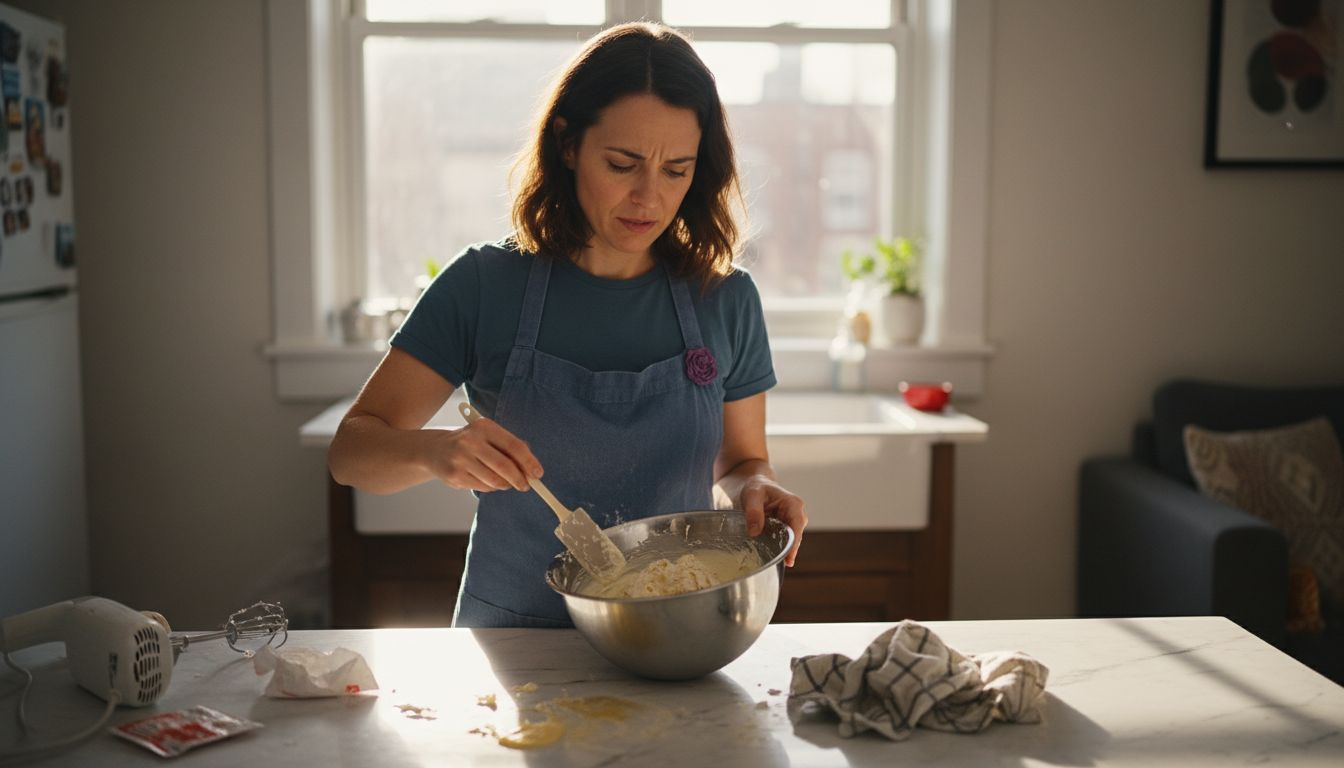
Most bakers assume too much sugar causes grainy buttercream, but research shows butter temperature and mixing technique are the true culprits in 70% of cases. Understanding the science behind sugar crystallisation, emulsion stability, and proper mixing transforms your frosting from gritty to gloriously smooth. This guide reveals the exact causes of grainy buttercream and provides practical solutions to achieve professional results every time.
Table of Contents
- Understanding Buttercream Texture
- Why Sugar Crystallisation Causes Graininess
- Effect of Butter Temperature on Texture
- Mixing Techniques to Avoid Graininess
- Role of Ingredient Ratios and Moisture
- Common Misconceptions About Grainy Buttercream
- Practical Troubleshooting for Grainy Buttercream
- Conclusion: Mastering Smooth Buttercream Texture
- Discover More Cake Decorating Tips and Supplies
Key Takeaways
| Point | Details |
|---|---|
| Sugar crystallisation | Fine particle size and moisture prevent graininess; icing sugar dissolves faster than granulated. |
| Butter temperature | Maintaining 17-20°C ensures optimal emulsion and smooth texture without separation. |
| Mixing technique | Beat for 3-5 minutes to fully dissolve sugar and incorporate air properly. |
| Moisture balance | Adding small amounts of liquid keeps sugar crystals dissolved and prevents recrystallisation. |
| Common myths | Over-mixing and sugar quantity are often wrongly blamed for texture problems. |
Understanding Buttercream Texture
Buttercream is an emulsion where fat molecules from butter surround and suspend sugar particles in a stable mixture. When properly made, this creates a smooth, creamy frosting that spreads easily and melts pleasantly on the tongue. Graininess ruins both the visual appeal and mouthfeel, making cakes feel unfinished despite hours of work.
Several factors determine whether your buttercream achieves silky perfection or disappointing grittiness. These include the size of sugar particles, the temperature and consistency of butter fat, moisture content from added liquids, and your mixing method. Each element interacts with the others, so controlling all variables gives you consistent results.
Key factors affecting texture:
- Sugar particle size and dissolution rate in the butter mixture
- Butter temperature and its ability to form a stable emulsion
- Moisture content from milk, cream, or other liquid additions
- Mixing duration, speed, and technique during preparation
Why Sugar Crystallisation Causes Graininess
Sugar dissolves into buttercream based on particle size and available moisture. Icing sugar, with its fine powdered texture, dissolves quickly and completely into butter. Caster sugar takes longer, while granulated sugar often leaves detectable crystals that create that unwanted sandy texture.
Recrystallisation happens when dissolved sugar reforms into crystals, typically because insufficient moisture keeps particles in solution. Moisture content helps prevent sugar recrystallisation in buttercream, improving smoothness by keeping crystals dissolved rather than allowing them to clump together. Adding liquids like milk or cream provides this essential moisture barrier.
| Sugar Type | Particle Size | Dissolution Rate | Texture Effect |
|---|---|---|---|
| Icing (powdered) | Ultra-fine | Very fast | Smoothest finish |
| Caster | Fine | Moderate | Generally smooth |
| Granulated | Coarse | Slow | Often grainy |
Pro tip: Sift icing sugar before adding to butter to break up any lumps and ensure even distribution throughout the mixture, preventing pockets of undissolved sugar.
Different sugar types influence buttercream texture dramatically. The finer the particles, the more surface area available for butter to coat and dissolve. This creates that luxurious, melt-in-your-mouth consistency professional bakers achieve consistently.
Effect of Butter Temperature on Texture
Butter temperature determines its plasticity and capacity to form a stable emulsion with sugar particles. Butter between 17-20°C is critical for achieving smooth buttercream texture because this range allows optimal creaming without separation. Too cold, and butter resists incorporating air and sugar; too warm, and the emulsion breaks down into an oily mess.
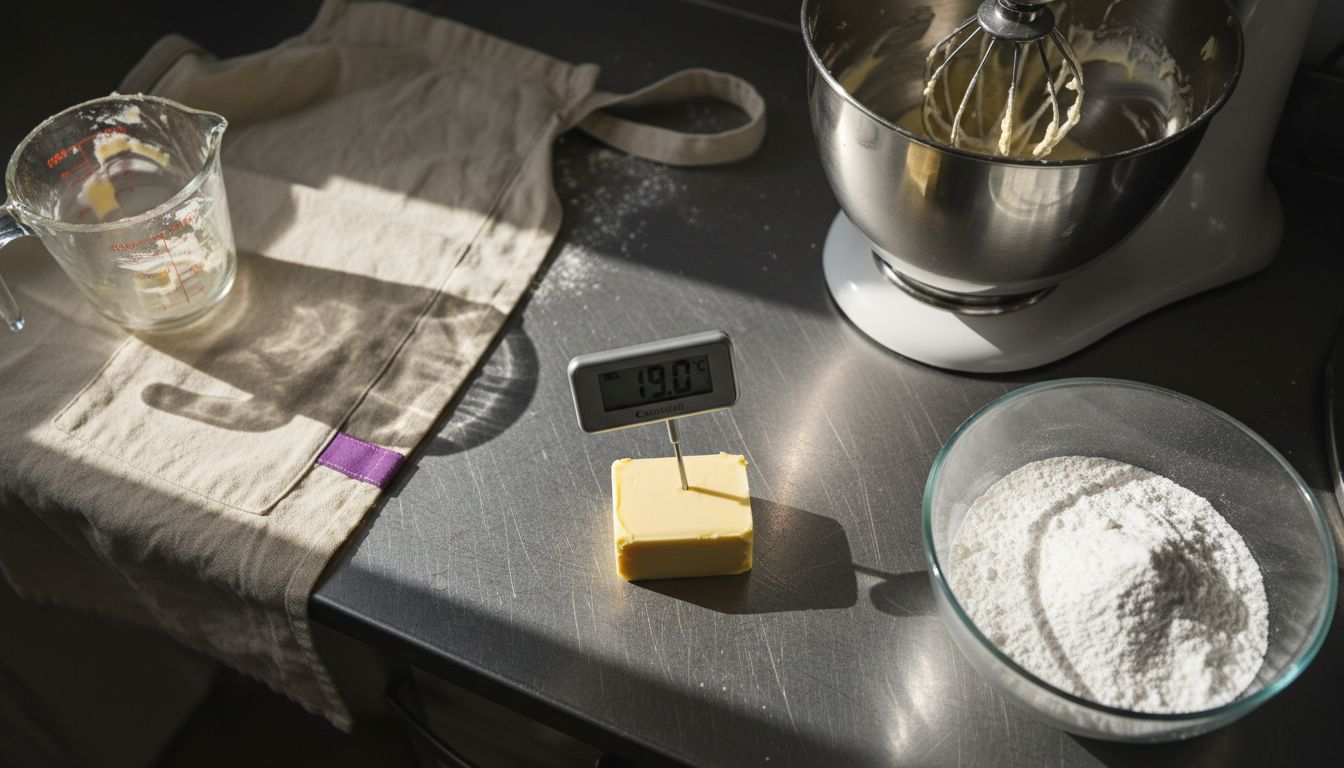
When butter sits below 15°C, it remains too firm to whip properly. The mixer works harder but achieves less, leaving sugar particles insufficiently coated and suspended. You end up with a dense, grainy mixture that feels more like wet sand than frosting.
| Temperature Range | Texture Result | Fix Required |
|---|---|---|
| Below 15°C | Hard, grainy | Warm gradually to room temperature |
| 17-20°C | Smooth, creamy | Perfect range, proceed |
| 21-24°C | Soft, acceptable | Use immediately or chill briefly |
| Above 24°C | Oily, separated | Refrigerate and re-emulsify |
Checking butter temperature:
- Press gently; it should yield without being mushy or greasy
- Look for slight finger indentation when pressed
- Use an instant-read thermometer for precision
- Leave butter at room temperature 30-45 minutes before mixing
Understanding butter temperature effects helps you troubleshoot problems before they start. If your kitchen runs cold, place butter near (not on) a warm oven. In hot weather, work quickly and consider chilling your mixing bowl.
Pro tip: Cut butter into small cubes to reach ideal temperature faster and more evenly than leaving it in a large block.
Mixing Techniques to Avoid Graininess
Mixing governs how thoroughly sugar dissolves and how much air incorporates into your buttercream. Optimal beating times of 3-5 minutes allow proper sugar dissolution and air incorporation for smooth buttercream. Rushing this step leaves undissolved crystals; overdoing it destabilizes the emulsion.
Underbeating fails to give sugar particles enough time to dissolve fully into the butter. You see white specks and feel grit on your tongue. Overbeating introduces too much air, warming the mixture and potentially causing separation where butter fat and liquid split apart.
Proper mixing steps:
- Beat butter alone for 2 minutes on medium speed until pale and fluffy
- Add half the icing sugar, mix on low for 30 seconds
- Increase to medium speed and beat for 2 minutes
- Add remaining sugar and any liquid, beat 2-3 minutes more
- Scrape bowl sides frequently to ensure even mixing
Pro tip: Watch for the moment when buttercream turns from slightly grainy to completely smooth and increases in volume. This visual cue tells you sugar has dissolved properly.
Mastering mixing techniques for smooth buttercream requires attention to both time and speed settings. Medium speed works best; high speed generates too much heat and incorporates excessive air bubbles.
Role of Ingredient Ratios and Moisture
The balance between sugar, butter, and added liquids determines both sweetness and texture. Standard ratios call for roughly 2:1 sugar to butter by weight, but texture depends heavily on moisture content. Adding a small amount of liquid helps dissolve sugar completely and prevents graininess by maintaining crystals in solution.
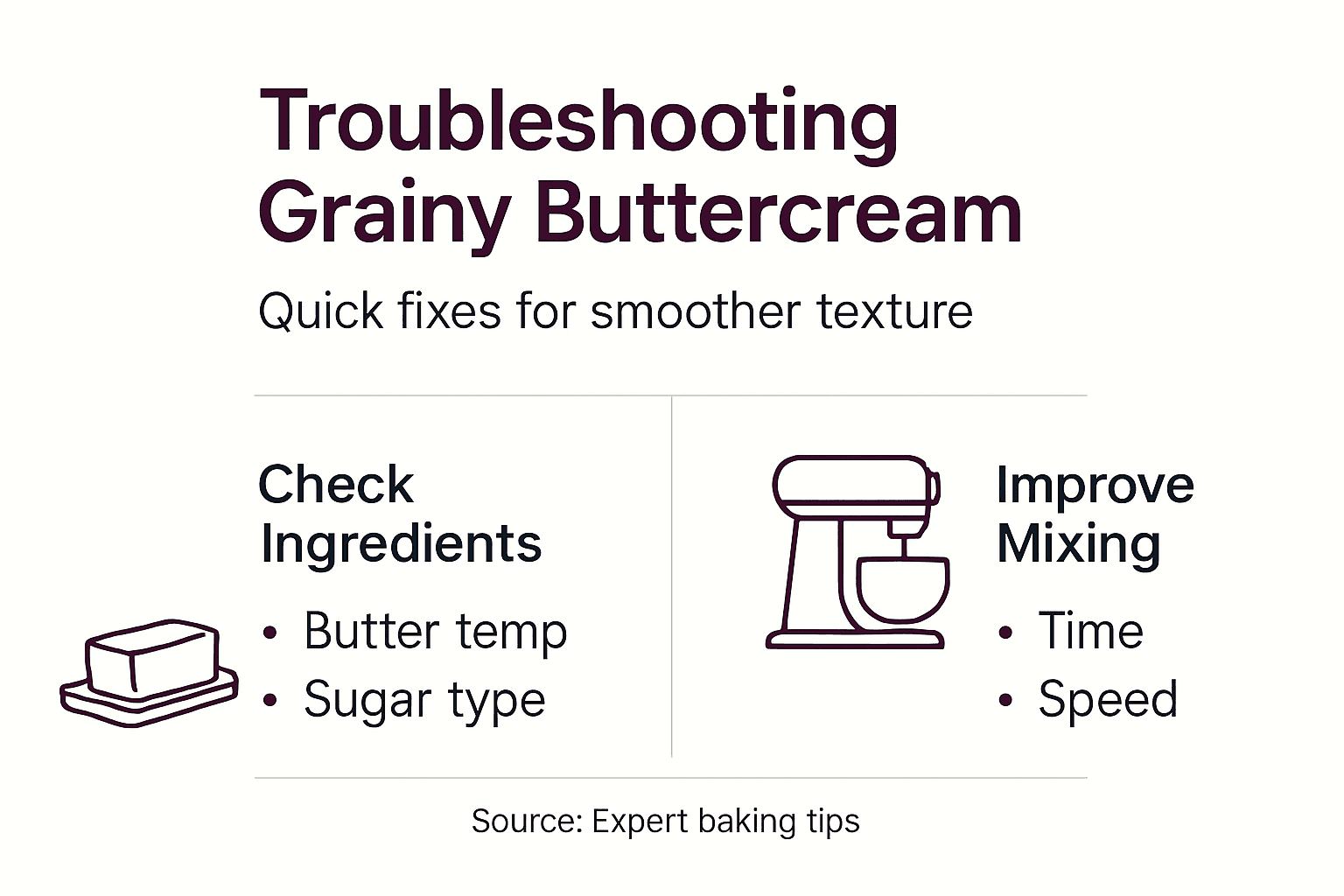
Milk, cream, or flavoured extracts provide essential moisture that keeps sugar from recrystallising. Even a tablespoon or two makes the difference between grainy and silky. Without sufficient moisture, sugar particles remain partially undissolved no matter how long you beat the mixture.
Ingredient ratio guidelines:
- Use 450g icing sugar per 225g butter as your baseline
- Add 2-4 tablespoons liquid (milk or cream) for optimal moisture
- Adjust liquid gradually; too much causes separation
- Brown sugar adds moisture naturally but changes flavour and colour
- Measure ingredients by weight for consistency
Precise ingredient ratios and moisture control separates amateur attempts from professional results. When you understand how each component interacts, you can adjust recipes confidently for climate, altitude, or personal preference.
Common Misconceptions About Grainy Buttercream
Many bakers pursue incorrect solutions because they misunderstand what causes graininess. The belief that too much sugar always creates grit ignores the reality that butter temperature and mixing technique matter far more. You can use substantial sugar quantities and still achieve perfect smoothness with proper technique.
Another myth suggests over-mixing fixes all texture problems. In truth, excessive beating after proper emulsion forms can break down the structure, causing separation rather than improving smoothness. The emulsion becomes unstable, releasing moisture and creating an oily, grainy disaster.
Debunking common myths:
- Myth: Graininess always means too much sugar. Reality: Temperature and mixing technique are usually responsible.
- Myth: Keep beating until smooth, no matter how long. Reality: Overbeating causes separation and worsens texture.
- Myth: All sugar types work identically. Reality: Finer icing sugar dissolves better and prevents grit.
- Myth: Cold butter is safer to prevent melting. Reality: Cold butter cannot emulsify properly with sugar.
Recognising common misconceptions helps you focus energy on effective solutions rather than counterproductive adjustments. When you know what actually causes problems, you stop wasting time on fixes that make things worse.
Practical Troubleshooting for Grainy Buttercream
Even experienced bakers occasionally face grainy buttercream that needs rescuing. Warming buttercream gently to about 27°C and rewhipping helps dissolve sugar crystals and restore smoothness. This technique works because gentle heat increases sugar solubility without breaking the emulsion.
Rescue steps for grainy buttercream:
- Check current temperature; if below 17°C, warm gently
- Place bowl over warm (not hot) water for 10-15 seconds
- Remove from heat and beat on medium speed for 2 minutes
- If still grainy, add 1 tablespoon cream and beat 1 minute more
- Repeat warming and beating cycle if needed
Quick troubleshooting tips:
- Do warm gradually using ambient heat or brief warm water exposure
- Do rewhip at medium speed after warming
- Do add small liquid amounts if sugar remains undissolved
- Don’t use direct heat sources like microwaves that melt butter unevenly
- Don’t beat at high speed, which introduces too much air
- Don’t add more sugar hoping to absorb excess moisture
Applying techniques for smooth buttercream through careful temperature control and measured adjustments saves batches you might otherwise discard. Sometimes fixing grainy buttercream requires patience more than new ingredients.
Experiment with these buttercream texture recovery tips to build confidence in rescuing troubled batches. Every baker faces texture challenges; knowing how to correct them quickly separates hobbyists from skilled decorators.
Conclusion: Mastering Smooth Buttercream Texture
Grainy buttercream stems from four primary causes: incomplete sugar dissolution through crystallisation, incorrect butter temperature outside the 17-20°C range, improper mixing technique with inadequate time or speed, and insufficient moisture to keep sugar crystals suspended. Controlling butter temperature and choosing fine icing sugar deliver the most dramatic improvements in texture.
Proper mixing time of 3-5 minutes at medium speed ensures sugar dissolves completely while incorporating enough air for lightness without destabilising the emulsion. Making gradual adjustments rather than drastic changes prevents overcorrection that creates new problems.
Apply these insights systematically, starting with room temperature butter and sifted icing sugar. Monitor texture throughout mixing and trust the process rather than rushing. With practice, consistently smooth buttercream becomes your reliable standard rather than an occasional happy accident.
Discover More Cake Decorating Tips and Supplies
Perfecting buttercream texture opens doors to advanced cake decorating techniques that transform simple bakes into showstopping creations.

Whether you’re just starting your decorating journey or refining professional skills, our beginner cake decorating tips guide you through essential techniques for stunning results. Explore quality tools, sugarcraft supplies, and decorating essentials at The Vanilla Valley to bring your creative visions to life with confidence and precision.
FAQ
Why Does My Buttercream Taste Grainy Even After Mixing?
Residual graininess indicates sugar hasn’t fully dissolved despite extended mixing time. Switch to icing sugar rather than caster or granulated for faster, more complete dissolution. Adding one to two tablespoons of cream or milk during mixing provides moisture that helps dissolve remaining sugar crystals.
Can I Fix Grainy Buttercream by Adding More Butter?
Adding butter doesn’t fix graininess and risks creating an overly soft mixture with incorrect ratios that may separate. Instead, gently warm your existing buttercream to about 27°C and rewhip at medium speed for two to three minutes. This dissolves sugar crystals without compromising your carefully balanced recipe.
What Sugar Should I Use for the Smoothest Buttercream?
Icing sugar (powdered sugar) produces the smoothest results due to ultra-fine particles that dissolve rapidly and completely into butter. Caster sugar works adequately as a second choice, though it requires slightly longer mixing. Granulated sugar creates noticeable graininess because large crystals resist full dissolution regardless of mixing time.
How Long Should I Beat Buttercream to Avoid Graininess?
Beat buttercream for three to five minutes total at medium speed after adding all ingredients for optimal texture and proper sugar dissolution. Less time leaves sugar undissolved and grainy; significantly more time risks breaking the emulsion, causing separation and ironically creating new graininess. Watch for increased volume and smooth appearance as your signal to stop.
Recommended
- 7 Easy Ways to Fix Common Buttercream Problems at Home - The Vanilla Valley
- How to Colour Buttercream Without Ruining the Texture Easily - The Vanilla Valley
- Buttercream Breakdown: Choosing the Right Style - The Vanilla Valley
- Perfect Textured Buttercream: Elevate Your Cake Designs - The Vanilla Valley