
How to store cakes properly: buttercream, fondant and more
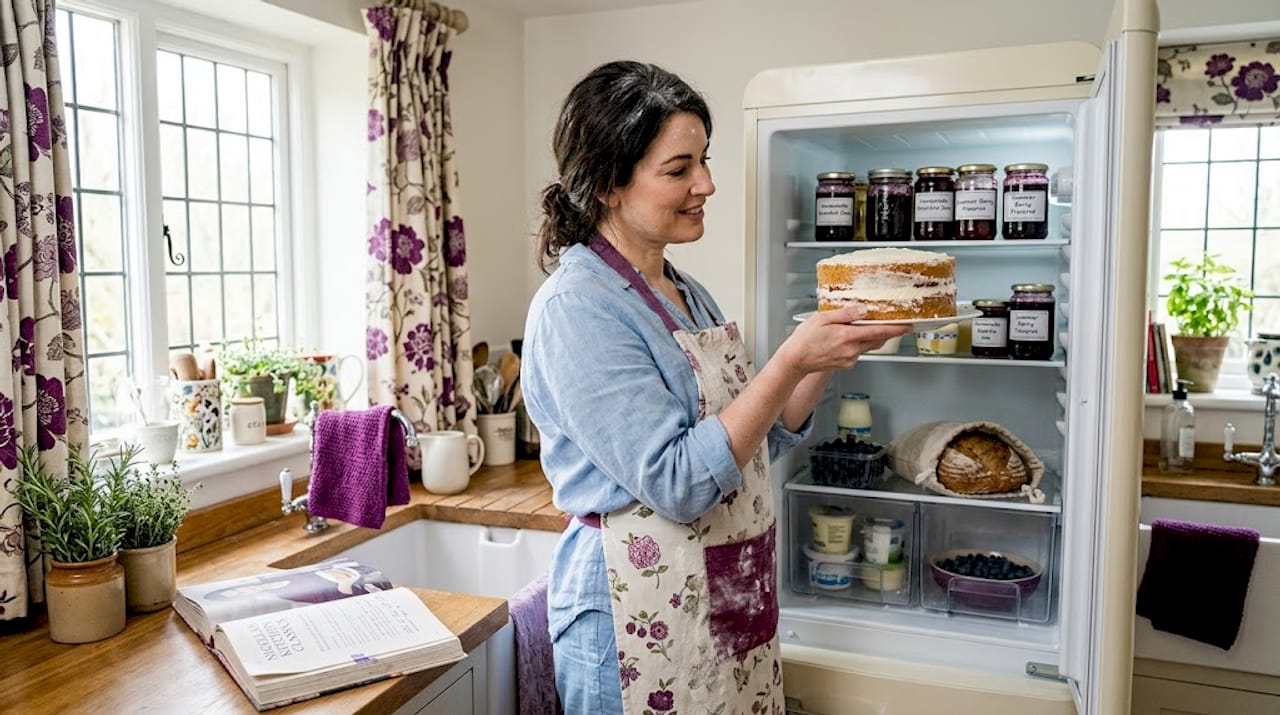
TL;DR:
- Proper storage of cakes depends on their frosting and filling, with specific techniques for buttercream and fondant. Buttercream cakes stay fresh at room temperature for 2-3 days, while fondant cakes require careful packaging to prevent moisture damage; both can be frozen for up to 6 months. Using airtight containers, gradual temperature adjustments, and appropriate wrapping ensures the cake remains beautiful, flavorful, and safe to enjoy.
You spent hours baking, levelling, and decorating a beautiful cake. The last thing you want is to slice into it the next day and find it dry, sweating, or tasting faintly of last night’s leftovers. Knowing how to store cakes properly, whether they are covered in buttercream, fondant, or something else entirely, is just as much a skill as the decorating itself. This guide covers proper cake storage methods for every scenario: room temperature, fridge, and freezer, with specific advice for buttercream and fondant cakes so your work stays fresh and gorgeous.
Table of Contents
- Key takeaways
- Cake storage requirements by type
- Storing buttercream cakes step by step
- Storing fondant cakes without ruining the finish
- Troubleshooting common storage problems
- Storage tools and materials worth using
- My honest take on cake storage
- Get everything you need from The Vanilla Valley
- FAQ
Key takeaways
| Point | Details |
|---|---|
| Buttercream at room temperature | Most buttercream cakes stay fresh for 2 to 3 days in a cool, dry spot without refrigeration. |
| Fondant dislikes the fridge | Fondant is moisture-sensitive; always use the box-and-wrap method and warm gradually before serving. |
| Perishable fillings change the rules | Cakes with cream cheese, custard, or fresh fruit must go straight into the fridge for safety. |
| Freezing is a genuine option | Both buttercream and fondant cakes freeze well with correct wrapping, lasting up to 6 months. |
| Airtight is everything | Whatever storage method you choose, keeping air and odours out protects both flavour and texture. |
Cake storage requirements by type
Not all cakes store the same way. A simple Victoria sponge with vanilla buttercream behaves very differently in the fridge compared to a tiered fondant wedding cake or a fruit-filled celebration cake. Understanding why is the real foundation of good cake preservation.
The biggest variable is your frosting or covering. Buttercream, particularly American buttercream made with butter and icing sugar, forms a protective crust that actually seals in moisture at room temperature. Fondant works similarly as a barrier but reacts badly to humidity and cold. Both will absorb odours from a fridge if left uncovered, which is why airtight containers and careful placement matter so much.
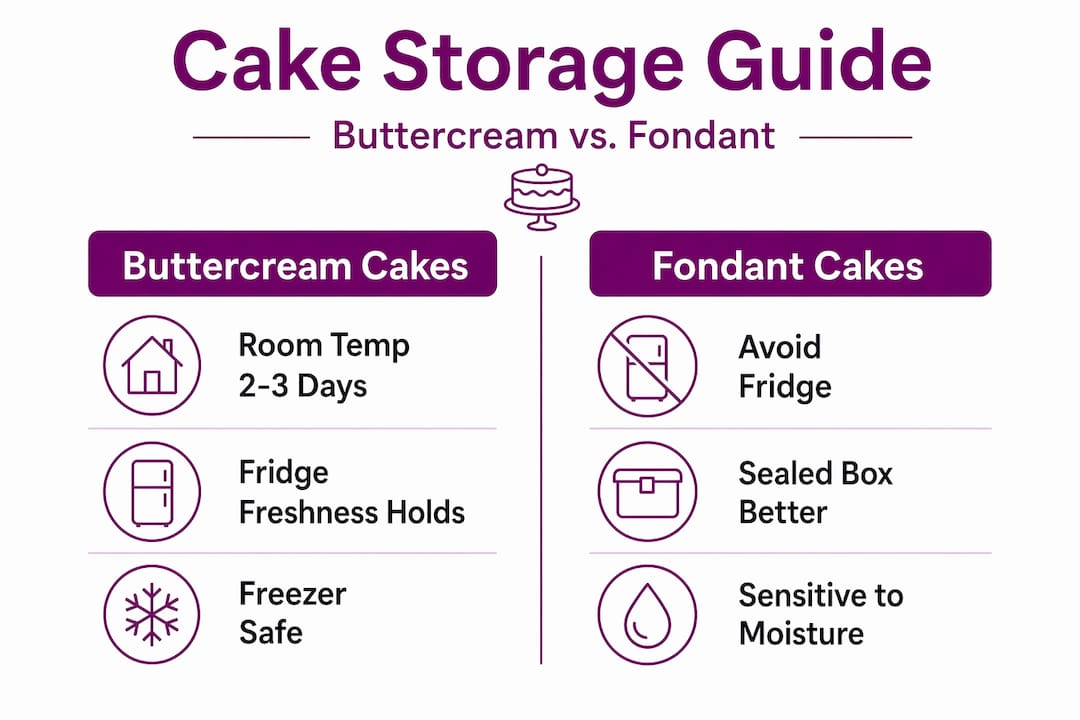
The filling inside the cake matters just as much as the outside. Cakes with perishable ingredients like fresh fruit, custard, or cream cheese frosting must be refrigerated within two hours of assembly and consumed within 3 to 5 days. There is no shortcut around food safety here. If the filling is perishable, into the fridge it goes, regardless of what the exterior looks like.
Here is a quick reference for common cake types and their storage windows:
| Cake type | Room temperature | Refrigerator | Freezer |
|---|---|---|---|
| Buttercream (no perishable filling) | 2 to 3 days | 3 to 5 days | Up to 6 months |
| Fondant-covered (no perishable filling) | 3 to 5 days | Up to 1 week (with care) | Up to 3 months |
| Cream cheese or custard filling | Not recommended | 3 to 5 days | Up to 3 months |
| Fresh fruit filling | Not recommended | 2 to 3 days | Not recommended |
| Plain sponge (unfrosted) | 2 to 3 days | Up to 1 week | Up to 3 months |
Pro Tip: Butter-based cakes taste and feel best at room temperature. If you refrigerate, always allow the cake to come back to room temp before serving for the best flavour and texture.
Storing buttercream cakes step by step
Buttercream is wonderfully forgiving compared to fondant, but it still needs thoughtful handling. Here is the process that keeps storing buttercream cakes straightforward and reliable.
- Let the cake cool completely. Never store a warm cake. Trapped heat creates condensation inside any container, which turns your beautiful buttercream soft and wet.
- Choose your container wisely. A cake dome, a purpose-built cake box, or a proper airtight container all work well. The goal is to keep air away from the surface without the lid pressing against your decoration. For tall cakes, a deep cake box is your best friend.
- Room temperature storage. If your kitchen is cool (under 20°C) and dry, a buttercream-frosted cake without perishable fillings is perfectly safe at room temperature for 2 to 3 days. Place it away from direct sunlight and heat sources.
- Refrigerating buttercream cakes. Pop the cake into an airtight box or wrap it carefully before placing it in the fridge. Wrap in parchment, then a layer of cling film, to stop the sponge drying out and block fridge odours. Refrigerated buttercream cakes keep well for 3 to 5 days.
- Freezing buttercream cakes. Freeze the cake unwrapped for one hour until the frosting firms up. Then wrap tightly in two layers of cling film and a layer of foil before placing in a freezer bag or box. This prevents the cling film from disturbing your piping or spread. Buttercream cakes can be frozen for up to 6 months.
- Thawing properly. Move the cake from the freezer to the fridge overnight, then allow it to come to room temperature for two to four hours before serving. Remove the wrapping while still cold to prevent condensation settling on the surface.
Pro Tip: Refrigerated buttercream can turn stiff and grainy. If you have leftover frosting stored separately in the fridge, bring it to room temperature and re-whip with a stand or hand mixer for a few minutes to restore its light, creamy texture.
For a deeper look at how long your buttercream will stay at its best, the guide on buttercream freshness tips from The Vanilla Valley is well worth a read.
Storing fondant cakes without ruining the finish
Fondant is the trickiest cake covering to store, and the most dramatic when it goes wrong. Fondant is highly sensitive to moisture and sudden temperature changes, which causes sweating, stickiness, and colour discolouration. But with the right method, it is entirely manageable.
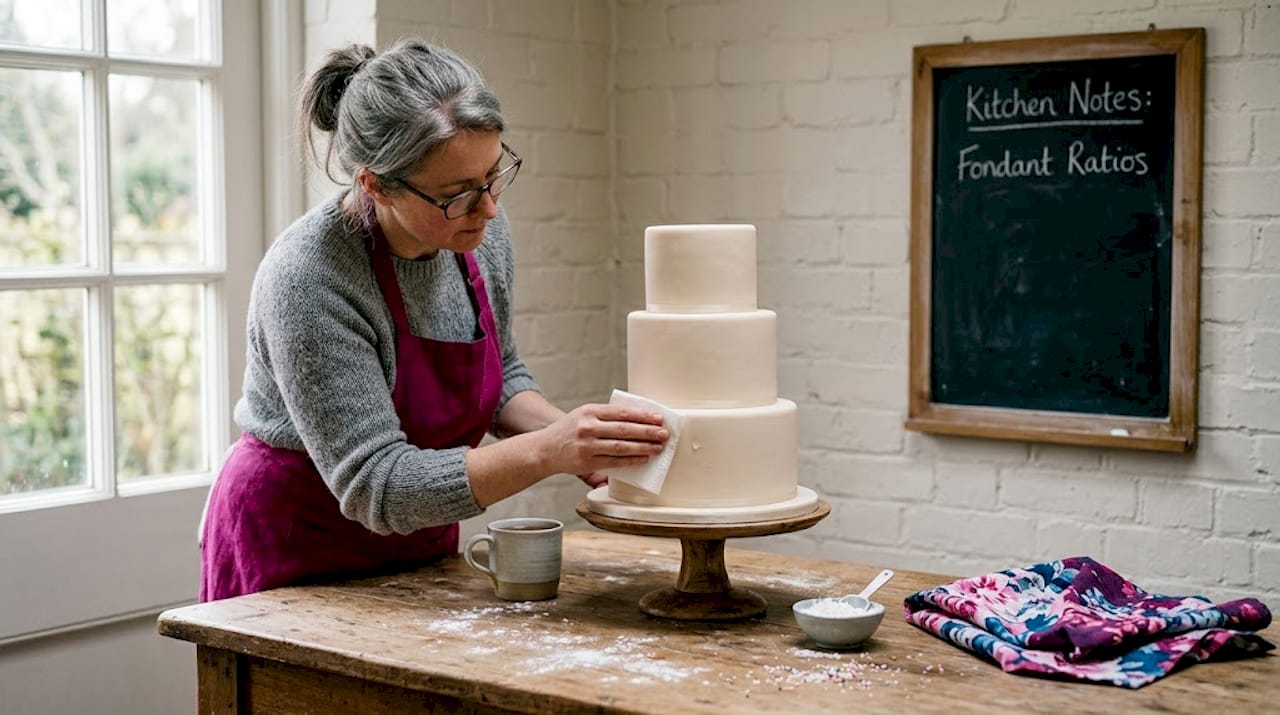
Short-term storage (1 to 3 days): Keep fondant cakes at room temperature wherever possible. A cool, air-conditioned room or a shaded spot in a dry kitchen is ideal. Place the cake in a cardboard cake box, which absorbs any excess moisture far better than plastic containers. Avoid sealed plastic boxes for fondant. They trap humidity against the surface.
If you must refrigerate a fondant cake, follow this sequence carefully:
- Place the cake in a sturdy cardboard cake box and close the lid.
- Wrap the entire box in two layers of cling film. This creates a barrier so moisture condenses on the film rather than on your fondant.
- Position the box away from strong-smelling foods. Fridges absorb odours readily, and porous sponge cakes pick them up easily even through fondant.
- When ready to serve, remove the wrapped box from the fridge and leave it completely intact, wrapping and all, at room temperature for at least two to four hours before opening.
- Once unwrapped, any surface condensation should evaporate on its own within 15 to 30 minutes. Do not touch or blot the fondant while wet; it will smear.
Freezing fondant cakes is possible and more practical than many bakers realise. Wrap the cake in a layer of cling film, then foil, then place it in a box. Thaw the cake in the fridge overnight, then allow it to come to room temperature slowly while still wrapped. The gradual process prevents the rapid moisture transfer that causes sweating.
Here are the key risks to watch out for:
- Humidity above 60% will cause fondant to sweat even at room temperature
- Direct contact with plastic wrap can leave marks on smooth fondant panels
- Placing the box near the fridge fan or back wall causes temperature fluctuations
- Strong-smelling foods like onions or cheese sit too close and contaminate flavour
For more detail on keeping fondant in top condition before it even goes on the cake, the fondant storage guide at The Vanilla Valley covers it thoroughly.
Troubleshooting common storage problems
Even with the best intentions, things sometimes go sideways. Here is how to handle the most common issues.
Condensation on fondant. This usually happens when a cold cake meets warm air too quickly. The fix is patience. Leave the cake wrapped and let it warm gradually. Once unwrapped, a small fan blowing gently across the surface speeds up evaporation without damaging the finish. Never use a hair dryer or direct heat.
Dry, crumbly sponge. This typically means the cake was left uncovered or refrigerated without proper wrapping. Inadequate wrapping is one of the most common mistakes in cake storage. If the sponge has dried out slightly, a light brush of simple syrup (equal parts sugar and hot water, cooled) on exposed cut surfaces before reassembling can bring life back to it.
Buttercream that has hardened in the fridge. Do not panic. Leave the cake at room temperature for an hour. The buttercream will soften as the butter warms. Leftover frosting stored separately will need a re-whip to return to its original consistency.
Pro Tip: Always allow a refrigerated cake at least one to two hours at room temperature before serving. Cold cake loses much of its flavour. The fat in buttercream and sponge carries flavour best when warm, and cold numbs those taste notes considerably.
Food safety always takes priority. If you are unsure whether a cake with a perishable filling has been out of the fridge for too long, the two-hour rule applies. Anything beyond two hours at room temperature in a warm environment (above 20°C) should be discarded to avoid risk.
Storage tools and materials worth using
Having the right kit genuinely makes a difference. Here is a comparison of the most common storage options:
| Storage material | Best for | Pros | Cons |
|---|---|---|---|
| Cardboard cake box | Fondant and buttercream cakes | Absorbs humidity, allows airflow | Not fully airtight |
| Airtight plastic container | Buttercream and plain sponge | Seals well, protects from odours | Can trap moisture against fondant |
| Cake dome | Decorated cakes on boards | Great presentation, easy access | Not suitable for tall cakes |
| Cling film (double layer) | Freezing any frosted cake | Tight seal, flexible | Can mark soft fondant if applied directly |
| Foil layer over cling film | Freezing | Extra protection, odour barrier | Opaque, so you cannot see the cake |
Beyond containers, a few extra touches help with keeping cakes fresh for longer:
- A small food-safe silica gel sachet inside a cake box absorbs excess humidity
- Parchment paper lining the base of a box prevents sticking and moisture pooling
- Placing the cake box on a shelf away from the fridge’s back wall or fan reduces temperature swings
- In humid climates or kitchens, a small dehumidifier near your storage area makes a noticeable difference during summer months
The right cake box for the job is worth investing in. It is one of those tools that pays for itself every time you open it to a cake that still looks exactly as it did when you closed the lid.
My honest take on cake storage
I have seen so many bakers panic about refrigerating their fondant cakes, convinced the fridge will ruin everything. And I have seen equally as many bakers leave cream cheese-filled sponges sitting out all day because they were nervous about condensation. Both extremes cause problems.
What I have found works best is this: trust the method over the instinct. Temperature management, done gradually, solves almost every storage problem I have encountered. The fridge odour issue is real and genuinely underestimated. I once had a beautifully iced celebration cake pick up a faint garlic smell because it was stored uncovered near the salad drawer. Wrapping properly, every single time, is not optional.
The biggest shift in my own approach came when I stopped rushing the temperature adjustment. Bringing a cold fondant cake out, leaving it wrapped for three hours, then gently unwrapping it changed everything. No sweating, no panic, no emergency blotting with kitchen roll.
My advice is simple: know your filling, match your storage method to it, and never skip the wrapping step. Your decorations will thank you.
— steven
Get everything you need from The Vanilla Valley

At The Vanilla Valley, we know that beautiful cakes deserve the right tools to stay that way. Whether you are searching for sturdy cake boxes to protect your fondant-covered showstopper or looking to stock up on quality decorating supplies, our cake decorating shop has everything you need in one place. We have been supporting bakers and decorators since 2009, and that experience is built into every product we stock. Pop over to explore our full range of cake boxes, boards, and decorating essentials, and keep your creations looking as amazing on day three as they did on day one.
FAQ
How long does buttercream cake last at room temperature?
A buttercream-frosted cake without perishable fillings lasts 2 to 3 days at room temperature in a cool, dry spot, ideally under 20°C, stored in an airtight container or cake dome.
Can you refrigerate a fondant cake?
Yes, but it requires care. Place the cake in a cardboard box, wrap the whole box in cling film, and allow it to return to room temperature slowly while still wrapped before serving to prevent condensation.
How do you freeze a cake with buttercream or fondant?
Freeze the cake unwrapped for one hour until the surface firms up, then wrap tightly in two layers of cling film and a layer of foil. Buttercream cakes can be frozen for up to 6 months; fondant cakes for up to 3 months.
Why does my fondant sweat after coming out of the fridge?
Sweating happens when cold fondant meets warm, humid air too quickly. The solution is gradual warming: leave the wrapped cake at room temperature for several hours before unwrapping, and allow any condensation to evaporate naturally.
Do cakes with cream cheese or fruit fillings need refrigerating?
Yes, absolutely. Cakes with perishable fillings like cream cheese frosting or fresh fruit must be refrigerated within two hours of assembly and consumed within 3 to 5 days for food safety reasons.
Recommended
- How to store cakes for lasting freshness and flavour - The Vanilla Valley
- How to store fondant for lasting freshness and usability - The Vanilla Valley
- How long do cakes last? Essential storage guide for freshness - The Vanilla Valley
- How long does buttercream last? Keep it fresh with proven tips - The Vanilla Valley