
Can you freeze cakes? A complete guide for bakers
TL;DR:
- Freezing cake layers can preserve moisture and improve their workability when done correctly. Proper preparation involves cooling, chilling, double-wrapping, and storing in airtight containers to prevent damage and freezer burn. Thaw cakes gradually in the fridge before bringing them to room temperature to maintain quality and texture.
If you’ve ever stood at the kitchen counter wondering whether popping that freshly baked sponge in the freezer is a brilliant idea or a recipe for disaster, you’re not alone. This can you freeze cakes a complete guide answers that question properly. The honest truth? Freezing is not just acceptable; it can actually make your cakes better. Many bakers are surprised to discover that correctly frozen layers are often moister and easier to work with than freshly baked ones. We’re going to walk you through everything, from how to freeze cake without ruining it to thawing frozen cakes like a professional.
Table of Contents
- Why freezing cakes can be beneficial
- Preparing and wrapping cakes for freezing
- Freezing different types of cakes and frostings
- Best methods for thawing frozen cakes
- Expert tips and common mistakes to avoid when freezing cakes
- Rethinking conventional wisdom on freezing cakes
- Find all your cake decorating and freezing supplies in one place
- Frequently asked questions
Key Takeaways
| Point | Details |
|---|---|
| Freeze unfrosted layers | Freezing cakes before frosting yields better texture and fresher flavour after thawing. |
| Cool completely before wrapping | Cooling cake layers fully prevents steam condensation and sogginess in the freezer. |
| Double wrap for protection | Using cling film and foil protects cakes from freezer burn and moisture loss. |
| Thaw wrapped in fridge | Slow thawing in the refrigerator keeps cakes moist and avoids frosting damage. |
| Know freezing times | Best quality lasts 2-3 months for buttercream cakes; unfrosted layers up to 3-5 months. |
Why freezing cakes can be beneficial
Here’s the science bit, and it’s genuinely fascinating. Baked goods go stale through a process called starch retrogradation. Simply put, the starch molecules in your cake gradually recrystallise after baking, pushing out moisture and making the crumb dry and tight. Refrigeration actually speeds this up, which is why a fridge-stored cake can feel drier than one left at room temperature. Freezing, on the other hand, stops the process in its tracks.
As baking expert resources confirm, the freezer halts starch retrogradation in unfrosted cake layers, keeping them moist for one to three months when double-wrapped. That’s a genuinely exciting piece of knowledge for any baker juggling orders or planning ahead.
“Freezing is not the enemy of a good cake. Done correctly, it’s one of the best tools you have for maintaining quality and managing your time.”
Unfrosted layers benefit the most. Once you add buttercream or fondant, the equation changes slightly, but for bare sponge, the freezer is your friend. For broader cake freshness insights, it’s worth understanding how different storage environments affect texture over time. You can also explore our own advice on storing cakes for freshness for a fuller picture of your options.
The key takeaway here is simple. Wrap well, freeze promptly, and you’re already ahead of most bakers.
Preparing and wrapping cakes for freezing
Getting the preparation right is where most people go wrong. It feels fiddly at first, but once you’ve done it a couple of times, it becomes second nature. The payoff in quality is absolutely worth the extra ten minutes.
Here’s how to freeze cake layers properly, step by step:
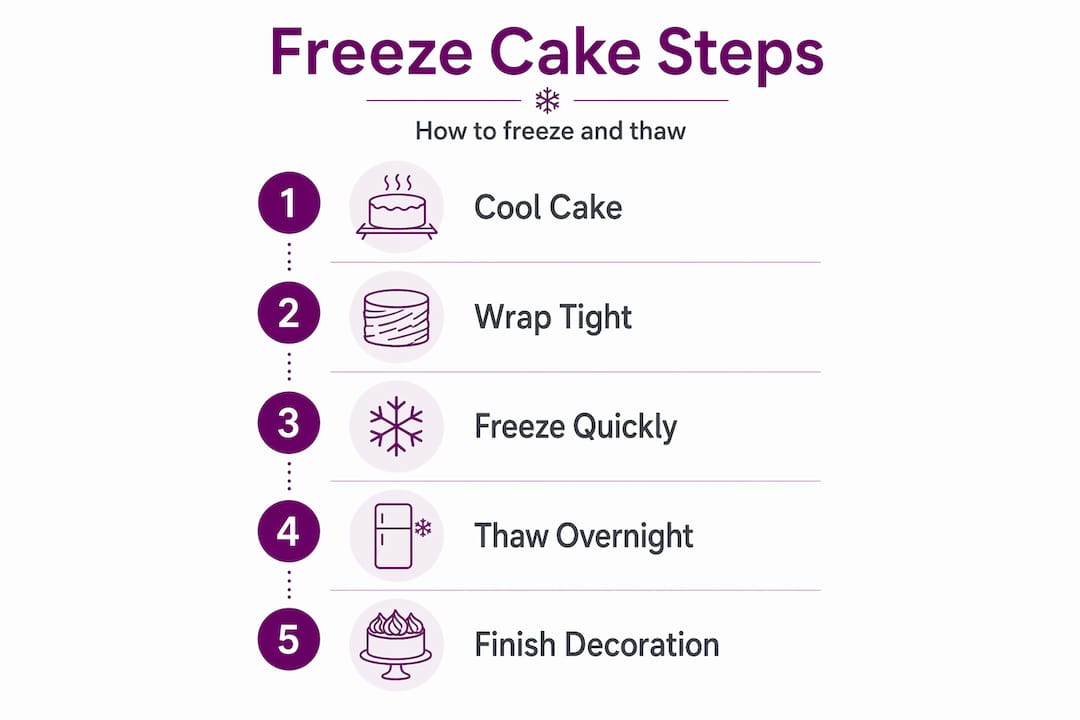
- Cool completely on a wire rack. Give your cake at least two to three hours at room temperature. Rushing this leads to steam condensation under the wrap, which creates sogginess.
- Chill in the fridge for 30 to 60 minutes. This firms up the edges and makes the layers much easier to handle without breaking or crumbling.
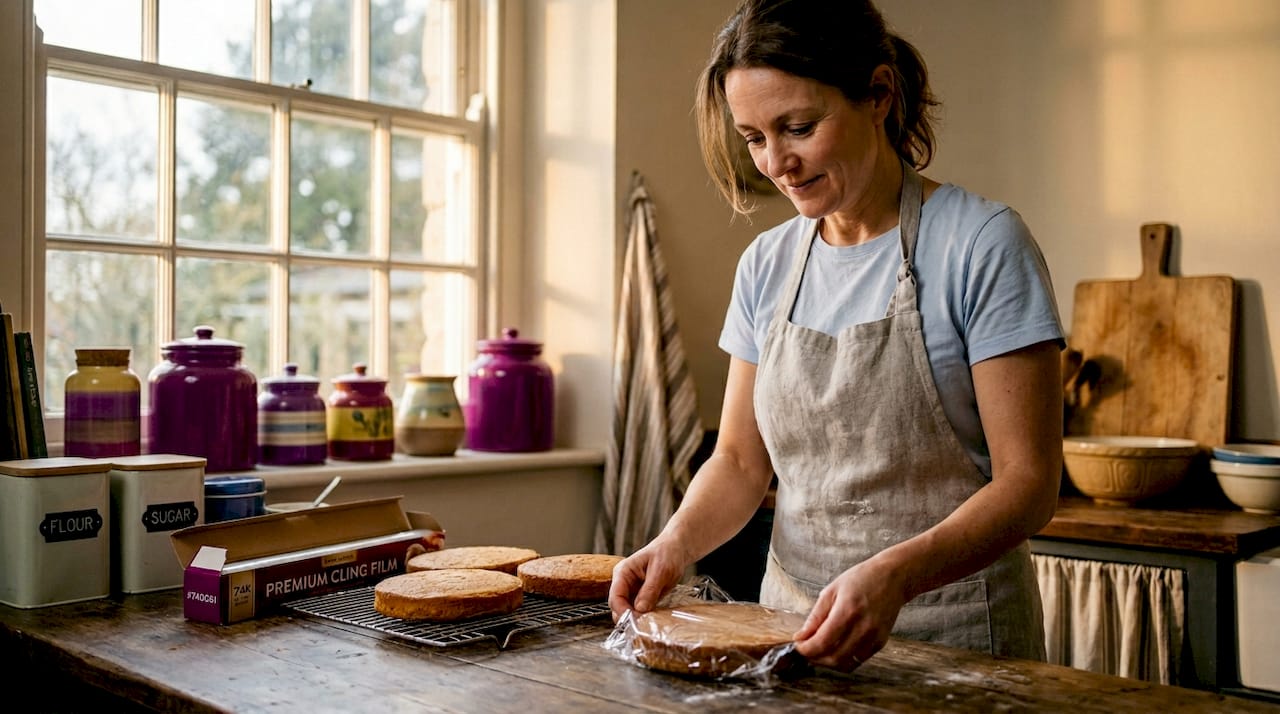
- Wrap tightly in cling film. Smooth it right against the surface of the cake with no air pockets. Do this twice for a proper double layer.
- Add a layer of aluminium foil. This is your second line of defence against freezer burn and unwanted odours.
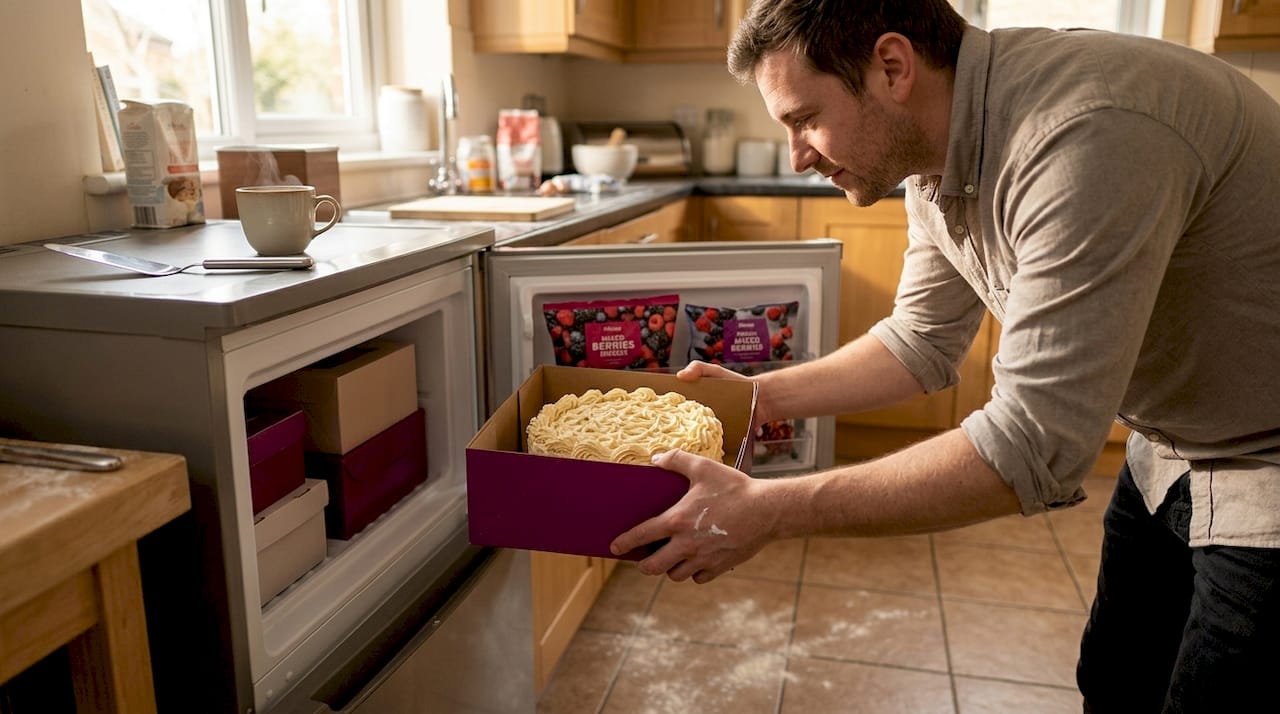
- Place in a freezer-safe container. For extra protection, especially for decorated cakes, a rigid box is ideal.
- Label with type and date. A simple piece of masking tape with the cake flavour and a use-by date saves you a lot of head-scratching in three months’ time.
Mo Maruf’s 2025 guide on KitchPrep confirms this approach, emphasising that cooling fully before wrapping and chilling unfrosted layers produces the best results. It’s reassuring to know the method is backed by solid experience. Sally McKenney’s freezing tutorial is another brilliant resource that walks you through the process visually.
Pro Tip: Never wrap a warm cake. Even slightly warm layers trap steam inside the wrap, leading to a wet, sticky surface that’s a nightmare to frost later.
A note on decorated cakes: if your cake already has soft frosting on it, avoid pressing cling film directly against the surface. Chill it uncovered in the freezer for 30 minutes first to firm up the frosting, then wrap. You’ll find more on this in our guide to cake wrapping techniques and our tips for professional cake wrapping.
Freezing different types of cakes and frostings
Not all cakes behave the same way in the freezer, and understanding those differences is central to can you freeze different cakes questions. Here’s a breakdown.
| Cake or frosting type | Freezing suitability | Recommended duration |
|---|---|---|
| Unfrosted sponge layers | Excellent | Up to 3 to 5 months |
| Buttercream-frosted cake | Very good | 2 to 3 months |
| Fondant-covered cake | Good with care | 1 to 2 months |
| Cream cheese frosting | Poor; freeze bare layers | Not recommended |
| Whipped cream topping | Poor; add fresh after thaw | Not recommended |
| Fruit-heavy or filled cakes | Freeze bare only | Up to 3 months |
| Cheesecake | Good | Up to 2 months |
The general rule is: the simpler the cake, the better it freezes. Buttercream-frosted cakes maintain quality for two to three months when chilled, wrapped tightly, and boxed, while fondant-covered cakes last one to two months before texture starts to suffer.
Here’s what to bear in mind for specific types:
- Buttercream cakes: Chill in the fridge until the frosting is firm, then wrap carefully and box. The cold firms it up so the wrap doesn’t damage the surface.
- Fondant cakes: Fondant and moisture are not friends. Condensation during thawing can make fondant sticky and blotchy. Keep thawing slow and keep the cake wrapped. Read more about the differences in our buttercream vs fondant guide.
- Cream cheese and whipped cream: These frostings break down in the freezer. Freeze your layers bare and add fresh frosting after thawing. No exceptions.
- Fruit fillings: Freeze the sponge layers only. Fresh or macerated fruit fillings release too much liquid on thawing and make the whole cake wet. Assemble with fresh filling after the thaw. Our guide on ganache, buttercream, and fondant covers freezing considerations for each in more detail.
Best methods for thawing frozen cakes
Thawing is arguably as important as freezing. Get it wrong here and you’ll undo all your careful preparation.
Here are the key rules for thawing frozen cakes correctly:
- Move from freezer to fridge while still wrapped. This is the golden rule. The slow temperature change prevents condensation from forming on the cake surface.
- Allow at least eight hours, ideally overnight. Sally McKenney is clear on this: thawing wrapped cakes in the fridge for at least eight hours before decorating prevents that dreaded soggy surface.
- Keep the wrapping on throughout the fridge thaw. This is where many bakers go wrong. Unwrapping too early lets moisture from the air settle on the cold cake surface, creating a sticky, wet mess.
- Bring to room temperature before unwrapping. Once out of the fridge, leave the cake wrapped on the counter for 30 to 60 minutes. Then unwrap and decorate.
- Avoid room temperature thawing for fully decorated cakes. The faster temperature change risks sweating and frosting damage.
Pro Tip: If you’re thawing individual slices, a short spell in the fridge wrapped is fine, followed by 20 to 30 minutes at room temperature. Microwave thawing works in a pinch but use low power and keep it brief, 10 to 15 seconds at a time, checking between bursts.
For more detail on how storage and thawing affect shelf life, our guide on how long cakes last is well worth a read, alongside our broader cake freshness and thawing advice.
Expert tips and common mistakes to avoid when freezing cakes
Let’s bring all the freezing cakes tips together with a quick-fire list of do’s and don’ts that separate the pros from the panicked.
- Do cool your cake completely before any wrapping. Ice crystals form around any remaining warmth and turn into soggy patches on thawing.
- Do double-wrap with cling film then foil. As Mo Maruf advises, cooling fully and double-wrapping is the number one defence against freezer burn and frosting sogginess.
- Do box decorated cakes in a rigid container so no shelf or bag squashes the decorations overnight.
- Don’t freeze cakes with whipped cream or fresh fruit toppings. These must be added fresh after thawing.
- Don’t leave cakes in a frost-free freezer for longer than three months without extra protection. Modern frost-free freezers cycle humidity, which can dry out even well-wrapped cakes over time.
- Do trim any dried edges with a sharp serrated knife after thawing. A light brush of simple syrup or a thin layer of buttercream can restore any dryness quickly.
Pro Tip: If you find a thawed cake slightly dry, warm a tablespoon of simple syrup and brush it gently over the layers before frosting. It’s a professional trick that makes a real difference. Our guide on preventing buttercream from melting also covers finishing techniques that complement this step beautifully.
Rethinking conventional wisdom on freezing cakes
Here’s something we find ourselves saying a lot at The Vanilla Valley, and it always surprises people: freezing unfrosted layers before you frost them is not just acceptable. It’s actually better.
Most bakers think of freezing as damage control, something you do with leftover cake or a batch you can’t use in time. But the smartest decorators we know freeze deliberately. Frozen layers have a firmer crumb. That means far less crumb contamination when you apply your first coat of buttercream. If you’ve ever wrestled with a fresh sponge that drags crumbs into your frosting, you’ll immediately understand why this changes everything.
There’s more. Frosting a cake while it’s still slightly frozen gives you crisper, cleaner edges and sharper lines that are genuinely difficult to achieve on a room-temperature cake. You then allow the whole assembled cake to thaw slowly in the fridge. The result? Cleaner finish, less fuss, more consistent results every time.
Another thing rarely discussed is that slightly underbaked sponge layers, the kind that feel a touch dense in the middle, often recover beautifully after freezing and slow thawing. The redistribution of moisture during the freeze and thaw cycle evens things out in a way that fresh baking simply cannot replicate.
Long-term freezing does have limits, though. Frost-free freezers, which are now the norm in most kitchens, actively remove humidity from the environment. Anything beyond three months needs triple wrapping and airtight boxing to guard against gradual moisture loss. Our tips on professional cake assembly carry this philosophy throughout.
Think of the freezer not as a last resort, but as a deliberate part of your workflow. Used that way, it genuinely raises the standard of your finished cakes.
Find all your cake decorating and freezing supplies in one place
Knowing how to freeze and thaw cakes is one thing. Having the right supplies to do it well is another.

At The Vanilla Valley, we’ve been supporting bakers and decorators across the UK since 2009, and we know exactly what you need to make your freezing and decorating workflow smoother. From cake boxes that protect your layered creations in the freezer, to the boards, tools, and decorating supplies that bring your thawed layers to life, it’s all here. We offer free delivery options, next day delivery when you need it urgently, and a friendly team ready to help you choose the right products. Plan ahead, freeze with confidence, and finish your cakes beautifully.
Frequently asked questions
Can you freeze a fully decorated cake?
Yes, but it works best with sturdy frostings like buttercream or ganache that are chilled and properly boxed. Buttercream-frosted cakes maintain quality for two to three months, while fondant-covered cakes last one to two months, and fragile frostings like whipped cream do not freeze well at all.
How long can you freeze unfrosted cake layers?
Unfrosted cake layers freeze for up to three months for the best taste and texture, stretching to four or five months if necessary with proper double-wrapping and airtight storage.
What is the best way to thaw frozen cakes?
Transfer wrapped frozen cakes to the refrigerator for at least eight hours, ideally overnight, then bring to room temperature before unwrapping to prevent condensation from settling on the cake surface.
Can I freeze cakes with fresh fruit or cream toppings?
Cakes with fresh fruit or dairy toppings should be refrigerated immediately rather than frozen as decorated; freeze bare layers instead and add fresh toppings after thawing for the best results.
How do you prevent freezer burn on frozen cakes?
Cool cakes completely before wrapping, use a double layer of plastic wrap and foil, and store in airtight containers or rigid boxes to block air and moisture throughout the freeze.
Recommended
- How to store cakes for lasting freshness and flavour - The Vanilla Valley
- How long do cakes last? Essential storage guide for freshness - The Vanilla Valley
- Stop cakes sticking to the tin: expert tips for bakers - The Vanilla Valley
- How to Transport Cake Safely: Step-by-Step Guide for Bakers - The Vanilla Valley