
Prevent buttercream melting: tips for warm weather success
TL;DR:
- Buttercream softens in heat due to fat melting, humidity, and egg-white structure breakdown, especially in warm weather. Using high sugar ratios, stabilisers like meringue powder, shortening, and proper storage techniques can improve heat resistance. Flexibility and experience help bakers adapt to unpredictable summer conditions for flawless decorating results.
There is nothing quite like spending hours on a beautifully decorated cake, only to watch it slowly slide into itself at a summer garden party. We have all been there. The buttercream starts to glisten, the swirls lose their sharp edges, and suddenly your showstopper looks more like a warm pudding. The good news? This is absolutely a solvable problem. Whether you are a weekend baker or running a small cake business, the right ingredients, methods, and a bit of know-how will keep your buttercream looking flawless even on the hottest British summer day.
Table of Contents
- Why does buttercream melt? The science behind the problem
- Essential tools and ingredients for summer-proof buttercream
- Step-by-step: making buttercream that holds in the heat
- Cooling, storing, and applying buttercream in warm conditions
- Quick troubleshooting: common issues and how to fix them fast
- The real secret: adaptability and practice in summer baking
- Find quality supplies for stable summer cakes
- Frequently asked questions
Key Takeaways
| Point | Details |
|---|---|
| Choose the right buttercream | Opt for American buttercream and extra stabilisers for reliable summer results. |
| Use heat-resistant ingredients | Add meringue powder and shortening to increase melting resistance during hot weather. |
| Chill and store cakes properly | Keep cakes and buttercream cool before, during, and after assembly to maintain structure. |
| Troubleshoot on the go | Know quick fixes like refrigeration and extra sugar to rescue overheated buttercream fast. |
Why does buttercream melt? The science behind the problem
Before we can fix a problem, it helps to understand what is actually happening. Buttercream is essentially a fat-and-sugar emulsion. The primary fats, butter and sometimes vegetable shortening, are solid at room temperature but begin to soften noticeably above 20°C. Push the temperature higher and those fats lose their structure entirely, taking your beautifully piped roses with them.
Not all buttercreams are created equal, though. Swiss, Italian, and French meringue buttercreams all contain cooked egg whites or egg yolk bases, which make them silky and light. They taste incredible. But in heat, they are particularly vulnerable because the egg-white foam structure breaks down quickly. American buttercream, by contrast, is relatively stable at room temperature for several hours compared with many other styles, largely because of its high sugar content and its tendency to form a light crust on the surface. That crust acts as a protective skin.
Humidity is another villain in this story. Moisture in the air softens the sugar crystals in your buttercream, effectively undoing that protective crust. On a humid August afternoon, even a well-made buttercream can turn tacky and soft surprisingly fast. Storage matters too: a cake left in a conservatory or near a window in direct sunlight will deteriorate far faster than one kept in a cool, shaded spot.
Here is a quick summary of the key factors that make buttercream vulnerable in warm weather:
- Fat content and type: Butter melts at a lower temperature than vegetable shortening, so all-butter recipes are more heat sensitive
- Sugar ratio: Higher sugar content improves structural stability and promotes crusting
- Humidity levels: Airborne moisture softens the sugar and weakens the icing
- Egg white bases: Meringue-style buttercreams lose their airy structure faster in heat
- Sun exposure: Direct sunlight dramatically accelerates softening
You can read a helpful buttercream style breakdown if you want to compare the main types and work out which suits your project best. And if your buttercream is already misbehaving before the weather even gets involved, our buttercream troubleshooting guide is always a good starting point.
“Understanding why buttercream softens is half the battle. Once you know the enemy, you can plan accordingly.”
Essential tools and ingredients for summer-proof buttercream
Now that you know why buttercream softens in heat, the next step is selecting the right equipment and components for a more melt-resistant result. Getting this right before you even begin mixing makes everything else much easier.
Ingredients that make the real difference:
| Ingredient | Why it helps in summer |
|---|---|
| Quality unsalted butter | Provides a clean fat base with a consistent melt point |
| Vegetable shortening | Higher melting point than butter; improves stability |
| Icing sugar (sifted) | High sugar ratio promotes crusting and structural support |
| Meringue powder | Adds dried egg-white proteins and starch that absorb excess moisture |
| Cornflour | Works with meringue powder to reduce moisture absorption |
Meringue powder is perhaps the most underrated stabiliser in a summer baker’s toolkit. Meringue powder stabilises buttercream because dried egg-white proteins and starch (such as cornstarch or cornflour) absorb excess moisture in the icing, keeping the structure firm even as ambient humidity climbs. Just one to two tablespoons per standard batch can make a noticeable difference to how your buttercream holds up.
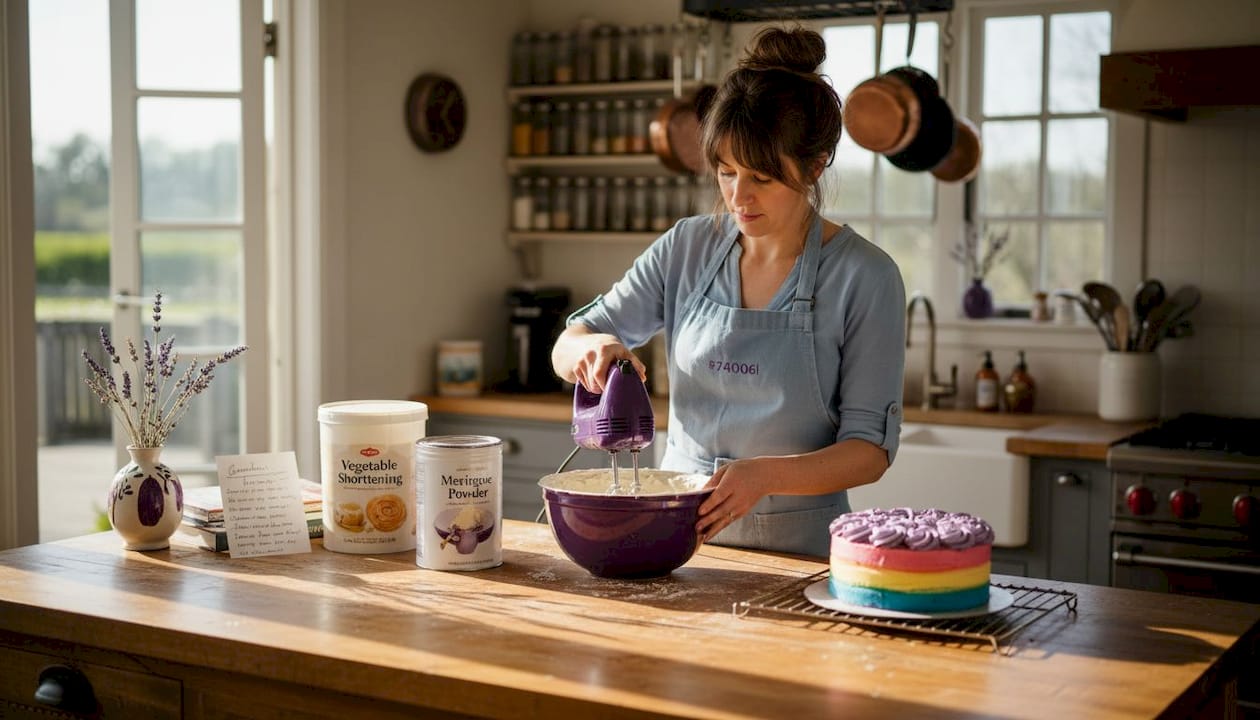
On the equipment side, a reliable stand mixer is invaluable because it incorporates air consistently and ensures your fats and sugars emulsify properly. Metal bowls retain cold better than plastic, which is handy when you are working in a warm kitchen. A few ice packs or a marble pastry board that you have pre-chilled can also help keep your workspace cool during assembly.
Colourings can sometimes affect consistency too. Gel colours are far less likely to alter the texture of your buttercream than liquid versions, and knowing how to colour buttercream without affecting the texture is something well worth reading up on before a big summer project.
Pro Tip: Replace up to half of your butter with a good-quality vegetable shortening in summer recipes. The shortening raises the overall melting point of your buttercream without dramatically changing the flavour, and when combined with meringue powder, you get a noticeably more resilient icing.
Step-by-step: making buttercream that holds in the heat
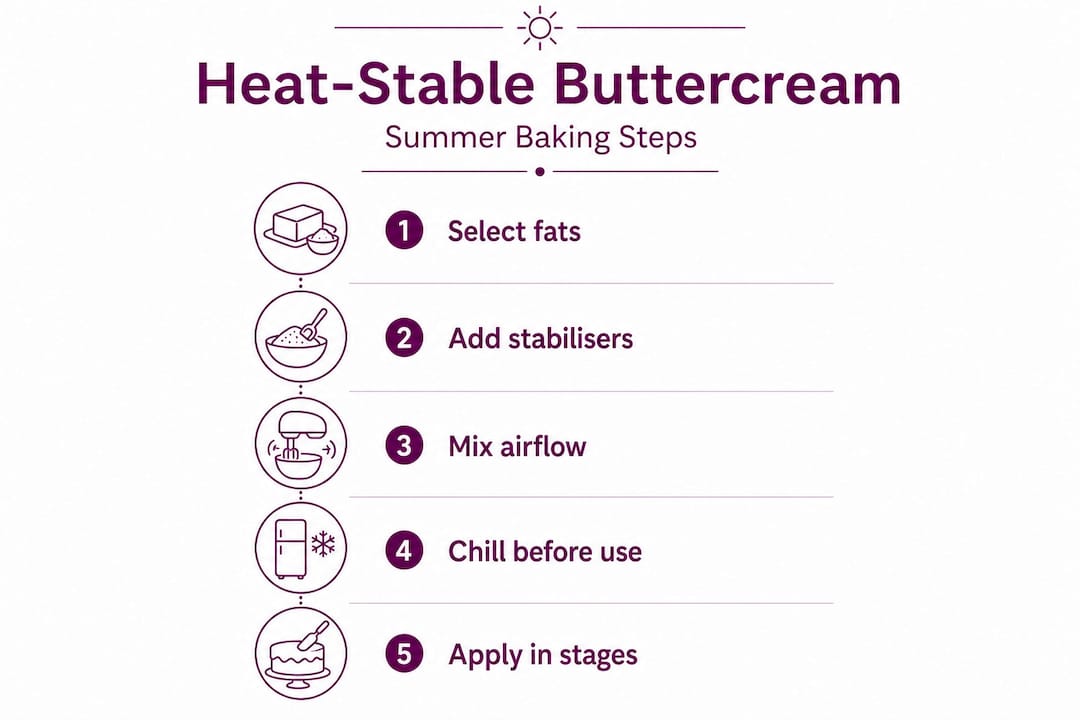
Armed with the best ingredients and tools, the next step is mastering the method for melt-resistant buttercream. Here is a reliable process for a stabilised summer batch.
-
Start cold. Before you begin, chill your mixing bowl in the fridge for 15 minutes. If your kitchen is particularly warm, briefly cool the butter just enough that it is soft but still firm to the touch, not greasy.
-
Beat butter (and shortening) first. Cream your butter and shortening together on medium speed for around three to four minutes until pale and fluffy. This builds the aeration that gives your buttercream body.
-
Sift your icing sugar. Always sift. Lumps not only ruin the texture; they create weak spots in the structure where moisture can creep in.
-
Add meringue powder and cornflour. Mix one to two tablespoons of meringue powder and one teaspoon of cornflour into your icing sugar before you add it to the fat. This distributes the stabilisers evenly throughout the batch.
-
Add icing sugar gradually. Add the sugar mixture in thirds, mixing on low then bringing up to medium speed. Rushing this stage knocks air out and creates a denser buttercream.
-
Add liquid carefully. A splash of milk or cream adjusts consistency, but go slowly. In summer, err on the stiffer side. A slightly stiffer buttercream holds peaks better and resists drooping.
-
Check texture before use. The buttercream should hold a stiff peak and feel cool to the touch. If it feels soft or greasy, pop the bowl in the fridge for ten minutes before continuing.
The best American buttercream recipe confirms that this style is particularly well-suited to warmer conditions because of its high sugar content and crusting properties. Meanwhile, incorporating meringue powder for stability takes that resilience even further by actively managing moisture.
Standard vs stabilised buttercream at a glance:
| Feature | Standard buttercream | Stabilised summer buttercream |
|---|---|---|
| Fat base | Butter only | Butter and shortening blend |
| Stabiliser | None | Meringue powder and cornflour |
| Heat tolerance | Softens above 20°C | Holds shape up to 25°C+ |
| Texture | Softer, creamier | Slightly firmer, crusts well |
| Best for | Cool-weather baking | Summer events and outdoor cakes |
If something still goes wrong during mixing, our guide on fixing common buttercream issues covers the most frequent culprits. And if you are working with white or pastel tones for a summer celebration, you might also find our article on making buttercream white really useful.
Pro Tip: Make your buttercream the day before a summer event and store it in an airtight container in the fridge. Bring it back to room temperature slowly and re-beat briefly before using. This gives the meringue powder time to fully activate and makes the final texture even more stable.
Cooling, storing, and applying buttercream in warm conditions
After preparing sturdy buttercream, it is crucial to preserve that stability through proper handling and storage, especially as you finish and present your cake. Even the most perfectly mixed batch can struggle if you do not manage the environment around it.
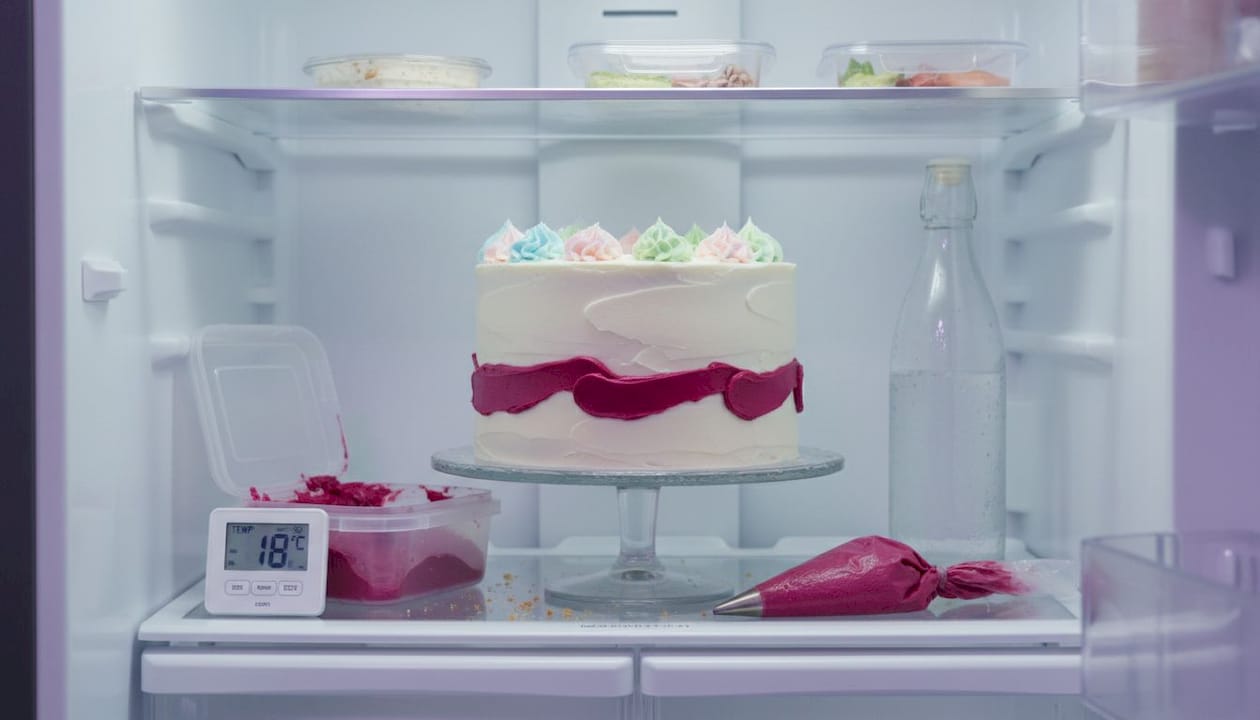
Pre-chilling makes a remarkable difference. Pop your cake layers in the fridge for 30 minutes before you start crumb coating. A firm, cold sponge gives the buttercream something stable to cling to, and it slows the transfer of warmth from the cake into the icing. Chill your palette knives and smoothers too if you can.
When it comes to storing finished cakes, here are the key rules:
- Keep cakes below 20°C wherever possible, ideally in an air-conditioned room or a cool pantry
- Use a cake box to shield from direct airflow, which can dry the surface unevenly and create sticky patches
- Never leave cakes in a car. Even on a mild day, a parked car heats up fast and will ruin buttercream quickly
- Avoid the fridge for fondant-covered cakes, but for buttercream-only cakes, the fridge is your best friend
- Keep out of direct sunlight at all times; UV and heat together are the worst combination for any icing
American buttercream is stable at room temperature for several hours once it has crusted, which is reassuring for shorter outdoor events. But for anything lasting more than two or three hours in warm weather, use a cool box or insulated bag for transport. You can read more about keeping buttercream fresh and storing cakes for freshness in our dedicated guides.
For assembly at a summer event, pipe or spread your buttercream in stages if the temperature is high. Work one section at a time and return the cake to a cool spot between stages. It takes a little longer, but the result is far more controlled.
Quick troubleshooting: common issues and how to fix them fast
Even the best precautions sometimes fall short. Here is how to save your buttercream and your cake when things get tricky.
Signs that your buttercream is failing:
- Surface looks shiny or greasy rather than matte or softly crusted
- Piped details have drooped or spread outward
- The icing feels tacky or sticky to the touch
- The cake is visibly sliding or the layers are shifting
If you spot these signs, act quickly. The faster you respond, the better your chances of saving the cake.
- Refrigerate immediately. Even 15 to 20 minutes in the fridge can firm things up enough to continue working
- Beat in more icing sugar. A tablespoon or two added and re-beaten will stiffen a soft batch
- Add meringue powder. Meringue powder addresses moisture problems by absorbing excess liquid and restoring structural integrity
- Re-smooth after chilling. Use a warmed palette knife to gently smooth any areas that have lost their finish
- If the cake is sliding, use dowels or cake skewers to stabilise tiers before attempting any further decoration
Pro Tip: Keep a small emergency kit when working on summer cakes. A piping bag of spare buttercream in a cool bag, a clean palette knife, and a small pot of meringue powder can save a project in minutes. More detailed fixes are covered in our fixing split or runny buttercream article.
When should you start over? If the cake has been in temperatures above 30°C for more than an hour, or if the buttercream has fully liquefied and the sponge has become soggy, it is safer to begin again. It is a gutting decision, but a fresh batch applied to a chilled sponge will always look better than trying to rescue a fully compromised cake.
The real secret: adaptability and practice in summer baking
Here is something we have learnt after years of helping bakers across the UK tackle warm-weather challenges: there is no single formula that works every time. British summers are gloriously unpredictable. A day that starts overcast and cool can turn humid and warm by noon, and the venue you deliver to might have wildly different conditions from your kitchen.
This is why adaptability matters more than following any one recipe rigidly. We have seen bakers swear by a particular butter-to-shortening ratio, only to find it falls apart when they use a different brand of butter or a new food colour. Gel colours, for example, occasionally add tiny amounts of extra moisture that can tip a borderline batch over the edge. Understanding why buttercream sometimes fails is genuinely useful reading for anyone who wants to build that adaptive instinct.
Keeping a simple baking diary is something we genuinely recommend. Note the temperature, the humidity if you know it, the exact brands and quantities you used, and how the buttercream performed. Over time, patterns emerge. You will start to recognise what your particular recipe needs in different conditions, and that knowledge is worth more than any single perfect formula.
Do not fear the occasional mess-up either. Every baker who has worked through a summer of events has at least one horror story about a melting cake. Those moments teach you things that no article can fully convey. The community of bakers around resources like troubleshooting guides and forums is incredibly generous with hard-won experience, and we love being part of that conversation.
Find quality supplies for stable summer cakes
If this guide has inspired you to revisit your summer baking kit, we would love to help you find exactly what you need. Whether you are looking for meringue powder, high-quality gel colours, or other trusted stabilisers, we stock a brilliant range of supplies suited to both home bakers and working professionals.

At The Vanilla Valley, we have been supporting bakers since 2009, and we genuinely care about helping you get the best results from your cake decorating supplies. As an independently owned shop based in North Cardiff, we offer tailored advice alongside a thoughtfully curated product range. You will find everything from bulk-buy essentials to specialist ingredients, and with free delivery options and next day delivery available, getting your summer baking kit sorted has never been easier. Pop over and explore the shop.
Frequently asked questions
Which buttercream holds up best in hot weather?
American buttercream is generally the most stable in heat because of its high sugar content and tendency to form a protective crust that shields the surface from ambient warmth and humidity.
How can I fix buttercream if it starts melting?
Quickly chill it in the fridge for 15 to 20 minutes, then beat in more icing sugar or a stabiliser. Meringue powder addresses temperature fluctuations by absorbing excess moisture and restoring firmness to a softened batch.
What is the ideal storage temperature for buttercream cakes in summer?
Store buttercream cakes in a cool, air-conditioned environment, ideally below 20°C, and always keep them away from direct sunlight to prevent rapid softening.
Can I use only butter, or should I add shortening in hot months?
A blend of butter and vegetable shortening is far better for summer baking because shortening has a higher melting point, giving your buttercream greater resilience against warm temperatures.
Does meringue powder change the flavour of buttercream?
Meringue powder is almost entirely flavourless in the small quantities needed to stabilise a batch of buttercream, so it will not affect the taste your customers or guests experience.
Recommended
- Buttercream troubleshooting: Fix split, grainy or runny icing fast - The Vanilla Valley
- How to Colour Buttercream Without Ruining the Texture Easily - The Vanilla Valley
- How long does buttercream last? Keep it fresh with proven tips - The Vanilla Valley
- Colour your buttercream without overmixing for silky results - The Vanilla Valley