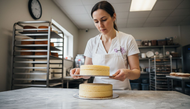
Why quality cake boards matter for stable cakes
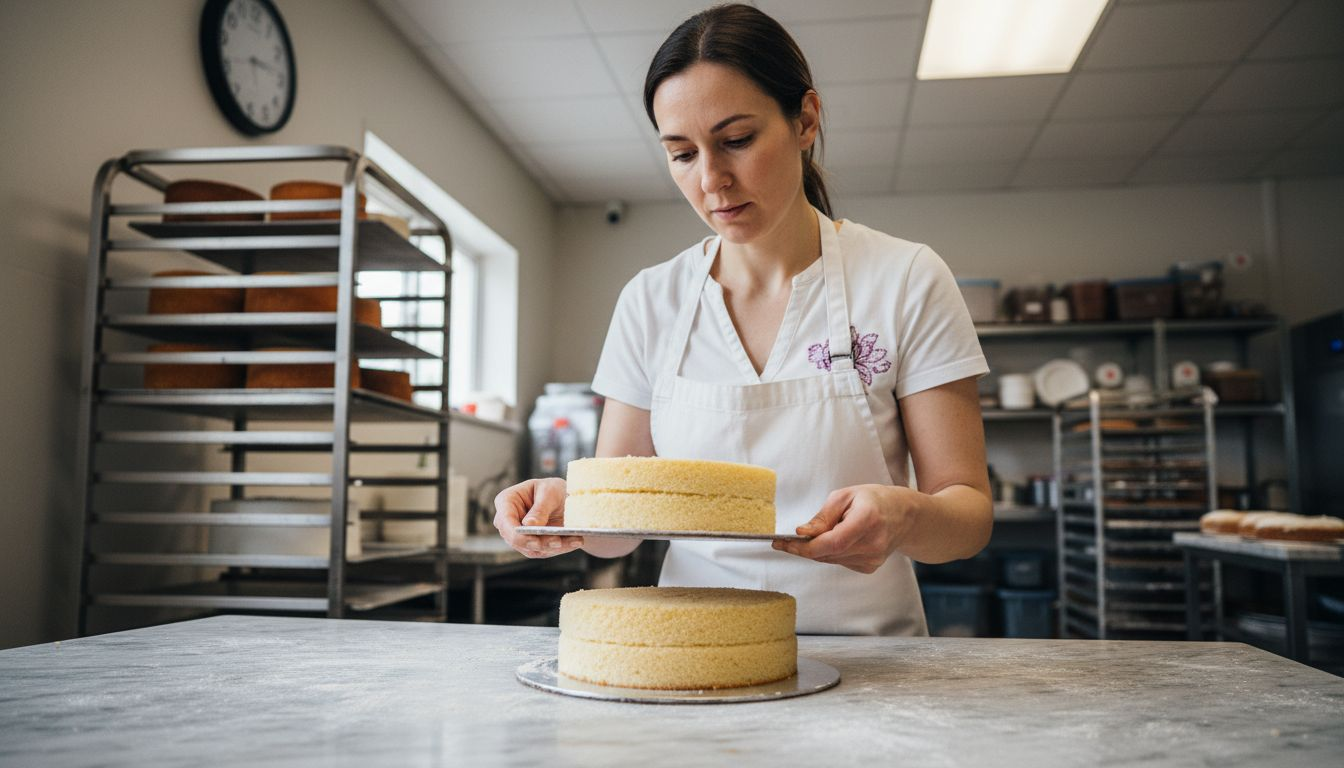
Many bakers assume cake boards are merely decorative accessories, but they serve as critical structural supports that determine whether your creation arrives intact or collapses mid-transport. Understanding the engineering behind these seemingly simple tools transforms how you approach cake stability, presentation, and professional results. This guide reveals why investing in quality boards protects your baking efforts and elevates your finished work.
Table of Contents
- Introduction To Cake Boards
- The Structural Role Of Cake Boards
- Material Types And Their Impact
- Size, Thickness, And Load Capacity
- Common Misconceptions About Cake Boards
- Practical Tips For Using Cake Boards Effectively
- Explore Quality Cake Boards At Vanilla Valley
- Frequently Asked Questions
Key takeaways
| Point | Details |
|---|---|
| Structural support | Cake boards prevent collapse during decoration and transport, especially for multi-tier designs. |
| Material matters | Foil-covered cardboard resists moisture; wood offers superior rigidity; plastic provides durability but limited recyclability. |
| Sizing precision | Boards should extend 2 to 4 cm beyond cake edges to allow safe handling and prevent damage. |
| Thickness determines capacity | Thicker boards support heavier cakes and multi-tier structures up to 10 kg without sagging. |
| Quality investment | Cheap boards compromise stability and can cost more in damaged cakes than quality alternatives. |
Introduction to cake boards
Cake boards are rigid, flat supports positioned beneath cakes to provide structural stability and serve as presentation bases. These essential tools perform dual functions: they reinforce cake integrity during decoration and transport whilst creating a polished foundation for display. Without proper board support, even expertly baked cakes risk collapse, distortion, or damage.
Different cake types demand varying board specifications. Single-tier celebration cakes need basic support, whilst multi-tier wedding cakes require reinforced boards at each level. Heavy fruit cakes, dense chocolate creations, and cream-laden desserts particularly benefit from quality board selection. The board becomes part of your cake’s structural system, not an afterthought.
Common materials include:
- Foil-covered cardboard boards offering moisture resistance and lightweight handling
- Plastic boards providing waterproof surfaces and reusability
- Wooden boards delivering maximum rigidity for professional applications
- MDF boards coated for food safety in commercial settings
These materials facilitate safe transport by distributing weight evenly and preventing base damage. Boards also simplify decoration by providing stable surfaces for icing application, fondant smoothing, and intricate piping work. Professional bakers rely on quality boards as foundational tools, recognising that superior support systems protect hours of skilled labour from preventable disasters.
The structural role of cake boards
The engineering behind cake boards becomes obvious when you consider the forces acting on multi-tier designs. Each tier exerts downward pressure that, without proper distribution, concentrates at contact points and causes structural failure. Quality boards spread this load across their entire surface, preventing localised stress that leads to cracking, sagging, or complete collapse.
Board thickness and material directly determine load-bearing capacity. A thin cardboard board might support a light sponge cake but buckles under dense fruit cake weight. Professional applications require boards that maintain rigidity under substantial pressure whilst resisting moisture absorption that weakens structural integrity. Cake boards provide essential support preventing collapse during critical decoration and transport phases.
Key structural benefits include:
- Prevention of cake distortion during assembly and stacking
- Safe weight distribution across multiple support points
- Resistance to bending during transportation vibrations
- Stable platforms for precision decoration work
“The difference between a cake arriving intact and one collapsing en route often comes down to board quality. Professional bakers understand that structural support isn’t optional, it’s foundational to successful cake delivery.”
During transport, boards absorb vibrations and impacts that would otherwise transfer directly into cake layers. This shock absorption proves critical for delicate sponges, buttercream finishes, and intricate sugar work. The structural role of cake boards extends beyond simple support to active protection of your finished work.

Consider refrigeration environments where moisture condenses on cake surfaces. Quality boards with moisture barriers prevent this condensation from weakening the board itself, maintaining structural integrity throughout storage periods. This resistance becomes essential for cakes requiring extended chilling before service or those travelling in climate-controlled vehicles.
Material types and their impact
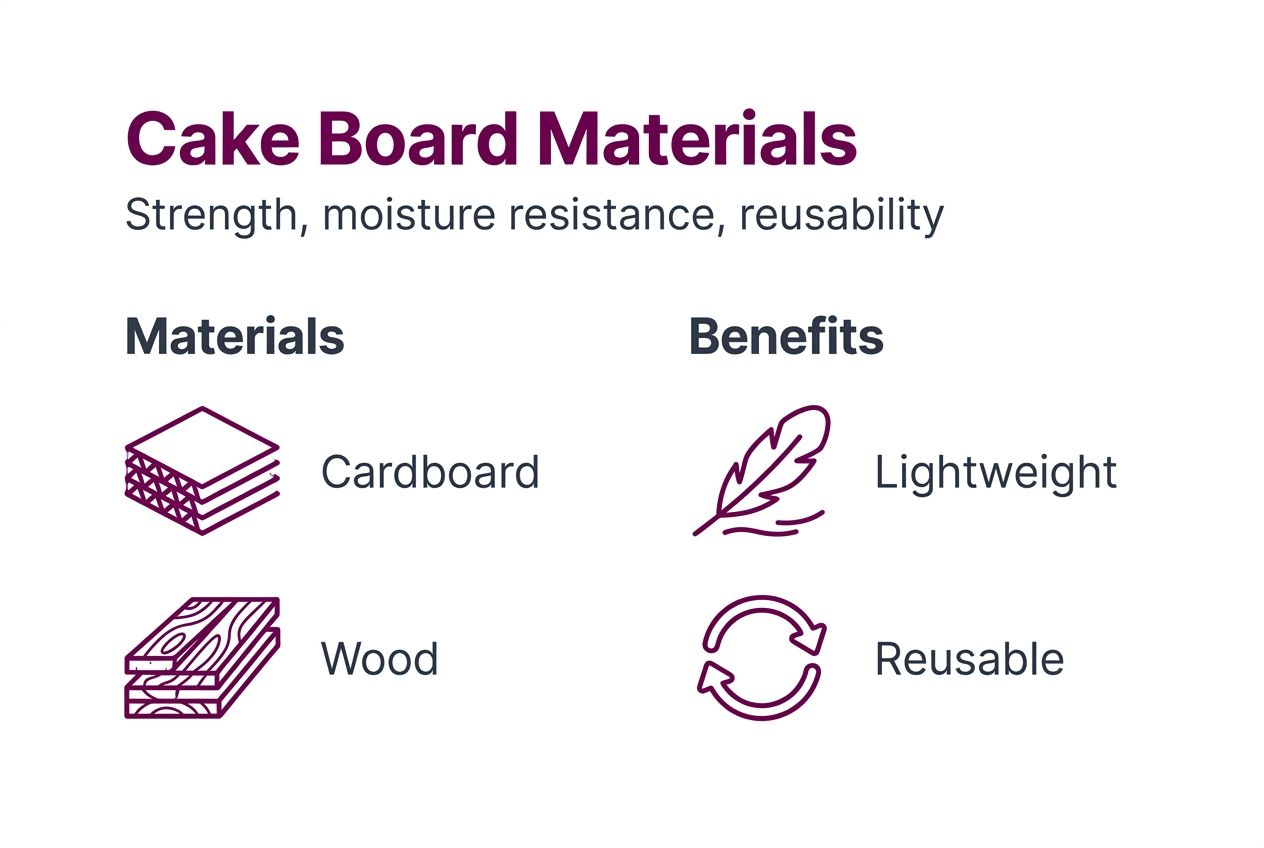
Foil-covered cardboard represents the most popular choice for home bakers and professionals alike. These boards combine lightweight portability with adequate moisture resistance for most applications. The foil coating prevents grease absorption and provides an attractive silver or gold finish that enhances presentation. Cardboard cores offer sufficient rigidity for single-tier cakes and light multi-tier designs whilst remaining recyclable after use.
Wooden boards deliver superior performance for demanding applications. They resist bending under heavy loads, support large multi-tier structures without flexing, and withstand repeated use in commercial settings. Thickness options range from 6 mm for moderate cakes to 18 mm for architectural wedding designs. However, wooden boards cost considerably more than cardboard alternatives and add significant weight to finished cakes.
Plastic boards occupy a middle ground between cardboard and wood. They provide excellent moisture resistance, clean easily for reuse, and maintain rigidity better than cardboard. Food-grade plastic withstands refrigeration without warping and supports moderate to heavy cake weights. The environmental drawback lies in limited recyclability, though reusability offsets some sustainability concerns. Explore the full range of materials in our cake boards explained guide for detailed comparisons.
Moisture barrier coatings dramatically extend board lifespan in humid environments. These treatments prevent water absorption that causes cardboard to weaken and warp. Professional bakers working with buttercream or fresh fruit fillings particularly value moisture-resistant boards that maintain structural integrity throughout refrigeration periods.
| Material | Moisture resistance | Weight capacity | Reusability | Environmental impact |
|---|---|---|---|---|
| Foil cardboard | Moderate | Light to moderate | Single use | Recyclable |
| Wood | Excellent | Heavy | Multiple uses | Reusable, natural |
| Plastic | Excellent | Moderate to heavy | Multiple uses | Limited recycling |
| MDF coated | Good | Heavy | Multiple uses | Composite material |
Pro Tip: Test board moisture resistance by placing a damp cloth on the surface for 30 minutes. Quality boards show no warping or softening, whilst inferior products begin deteriorating immediately.
Material choice influences both practical function and aesthetic presentation. Silver foil suits elegant wedding cakes, wooden boards complement rustic designs, and clear plastic creates modern minimalist presentations. Your selection should balance structural requirements with visual design goals and budget constraints.
Size, thickness, and load capacity
Proper board sizing begins with measuring your cake’s finished diameter, then adding 2 to 4 cm to allow handling space. This extension prevents fingers from touching icing during transport and provides secure grip points for safe lifting. Tiered cakes require boards at each level, with bottom boards sized largest and upper tiers progressively smaller to maintain visual proportion.
Thickness standards correlate directly with cake weight. Light sponge cakes under 2 kg function adequately on 3 mm cardboard boards. Medium density cakes weighing 2 to 5 kg require 6 mm thickness minimum. Heavy fruit cakes, dense chocolate creations, or designs exceeding 5 kg demand 12 mm boards or thicker. Multi-tier cakes up to 10 kg require appropriately thick boards to prevent dangerous sagging.
Follow these steps for accurate board selection:
- Weigh your finished cake including all decorations and fillings
- Calculate required thickness using weight categories above
- Measure cake diameter and add 3 cm for optimal handling clearance
- Select material based on moisture exposure and reuse requirements
- Verify board rigidity by placing weight equivalent to your cake on the board and checking for flex
Load capacity determines safety margins during transport and display. A board rated for 5 kg shouldn’t support a 4.8 kg cake, adequate safety margins prevent failure from unexpected stresses. Professional standards recommend boards support 150% of expected cake weight to account for handling forces, acceleration during transport, and uneven weight distribution.
| Cake weight | Minimum thickness | Recommended material | Safety margin |
|---|---|---|---|
| Under 2 kg | 3 mm | Foil cardboard | 3 kg capacity |
| 2 to 5 kg | 6 mm | Foil cardboard or plastic | 7.5 kg capacity |
| 5 to 10 kg | 12 mm | Wood or thick plastic | 15 kg capacity |
| Over 10 kg | 18 mm | Wood | 20 kg capacity |
Multi-tier constructions require special consideration because each board must support not only its tier but also cumulative weight from tiers above. Bottom boards in three-tier designs might support 15 kg total despite the bottom tier weighing only 6 kg. Calculate cumulative loads when choosing the right cake board for complex structures.
Board sagging becomes obvious when inadequate thickness meets excessive weight. This gradual bending creates stress fractures in cake layers, causes fondant to crack, and risks complete structural failure during transport. Investing in proper thickness prevents these failures and protects hours of skilled decoration work.
Common misconceptions about cake boards
The most persistent myth frames cake boards as purely decorative elements rather than structural necessities. This misunderstanding leads bakers to select boards based solely on appearance, choosing thin, attractive options that lack adequate support capacity. Reality proves that board function determines cake survival during critical transport and display phases.
Environmental concerns create confusion about material sustainability. Many bakers assume foil-covered cardboard harms the environment more than plastic alternatives, but cardboard boards remain recyclable whilst most plastic options cannot be processed through standard recycling streams. The foil layer separates easily during recycling, allowing cardboard cores to be reprocessed. Plastic boards require reuse to justify their environmental impact.
Key misconceptions include:
- Boards serve only aesthetic purposes rather than structural support
- Plastic boards are more environmentally friendly than cardboard options
- Thin boards suffice for all cake types if handled carefully
- Expensive boards waste money when cheap alternatives look identical
- Board size doesn’t significantly affect handling safety
The false economy of cheap boards costs more than quality alternatives when cakes collapse. A thin board might cost 50 pence whilst a proper board costs £2, but replacing a ruined £50 cake because of board failure makes the savings meaningless. Professional bakers factor board costs as essential insurance protecting their labour investment.
Recyclability myths persist because plastic’s durability suggests environmental friendliness. However, single-use plastic boards that cannot be recycled create more waste than biodegradable cardboard options. Reusable plastic boards justify their environmental impact only through multiple uses, requiring proper cleaning and storage between applications.
Quality investment transcends aesthetics because structural integrity remains invisible until failure occurs. A cake might look perfect on an inadequate board until transport vibrations cause collapse. Preventive investment in appropriate board specifications eliminates this risk entirely, protecting both your cake and your reputation.
Practical tips for using cake boards effectively
Safe transport begins with securing your cake to its board using royal icing, buttercream, or professional cake adhesive. This attachment prevents sliding during vehicle movement whilst allowing clean removal at serving time. Apply adhesive in a thin, even layer across the board centre before positioning your cake, ensuring complete contact without air pockets.
Storage practices preserve board integrity between uses. Keep boards flat in dry environments away from direct sunlight or heat sources. Stack boards with protective layers between them to prevent scratching decorative surfaces. Wooden boards benefit from occasional conditioning with food-safe mineral oil to prevent drying and cracking.
Matching board specifications to your environment prevents failures:
- Humid climates require moisture-resistant coatings or plastic boards
- Long transport distances demand thicker boards with higher safety margins
- Outdoor events need waterproof boards resistant to temperature fluctuations
- Refrigerated storage benefits from moisture-barrier treated boards
Avoid common pitfalls by inspecting boards before each use. Check for warping, moisture damage, or structural weaknesses that compromise support. Never reuse boards showing signs of deterioration, particularly those exposed to moisture or bearing previous adhesive residue. Proper cake board selection prevents issues before they occur.
Pro Tip: Mark board undersides with cake weight and date after first use. This tracking system helps you assess board condition over time and identify when replacement becomes necessary.
Decoration adhesion improves when boards are clean and grease-free. Wipe boards with food-safe sanitiser before use, allowing complete drying before cake assembly. This preparation ensures buttercream, fondant, and royal icing bond properly to board surfaces without separation or sliding.
Learn from typical mistakes to avoid with cake boards including inadequate sizing, wrong material selection, and improper storage. Understanding these pitfalls helps you develop reliable systems for board selection and use. Professional results come from consistent application of proven techniques rather than trial and error approaches.
Consider dual-board systems for heavy cakes where a decorative outer board sits atop a structural inner board. This arrangement combines aesthetic appeal with enhanced load capacity, allowing you to use attractive thin boards without sacrificing essential support. The structural board bears the load whilst the decorative board provides visual polish.
Explore quality cake boards at Vanilla Valley
Your cakes deserve the structural support that quality boards provide. Vanilla Valley offers comprehensive ranges of cake decorating supplies including boards engineered for reliable performance across all cake types and sizes. Our selection spans foil-covered cardboard for everyday baking, durable plastic options for frequent use, and premium wooden boards for professional applications.
Each board in our collection meets rigorous quality standards for moisture resistance, load capacity, and food safety. Whether you’re crafting simple celebration cakes or complex multi-tier wedding designs, appropriate board selection protects your creative investment. Browse our catalogue to discover boards matching your specific requirements, supported by expert guidance for confident purchasing decisions.
Frequently asked questions
What is the best material for a cake board?
Foil-covered cardboard excels for moisture resistance and lightweight applications with single-tier or light cakes. Wooden boards suit heavy or multi-tier cakes requiring maximum rigidity and reusability. Plastic boards offer durability and waterproof surfaces but provide limited recyclability compared to cardboard alternatives. Choose material matching your cake type, weight requirements, and environmental priorities.
How much larger should a cake board be than the cake?
Boards should extend 2 to 4 cm beyond your cake’s diameter to provide adequate handling space and prevent damage during transport. This clearance allows secure grip points without touching decorated surfaces and creates visual balance in presentation. Insufficient clearance risks icing damage and makes safe lifting nearly impossible during serving.
Can cake boards be reused safely?
Boards can be reused if they remain clean, structurally sound, and hygienic after previous use. Inspect for warping, moisture damage, or adhesive residue before reusing any board. Avoid reusing boards previously supporting cakes with perishable fillings or moisture exposure unless thoroughly sanitised. Learn proper reusing cake boards hygiene protocols to maintain food safety standards.
Why does cake board thickness matter?
Thickness directly determines load-bearing capacity and resistance to bending under cake weight. Thicker boards support heavier cakes without sagging and reduce collapse risk during decoration and transport. Inadequate thickness causes gradual bending that creates stress fractures in cake layers and potentially catastrophic structural failure. Match thickness to your cake weight using established professional standards for reliable results.